The Anatomy of an Open Circle Necklace: Metals, Gauges & Styling
Master the open circle necklace with our expert guide on metal grades, gauge thickness, clasp mechanics, and neckline geometry for flawless styling.

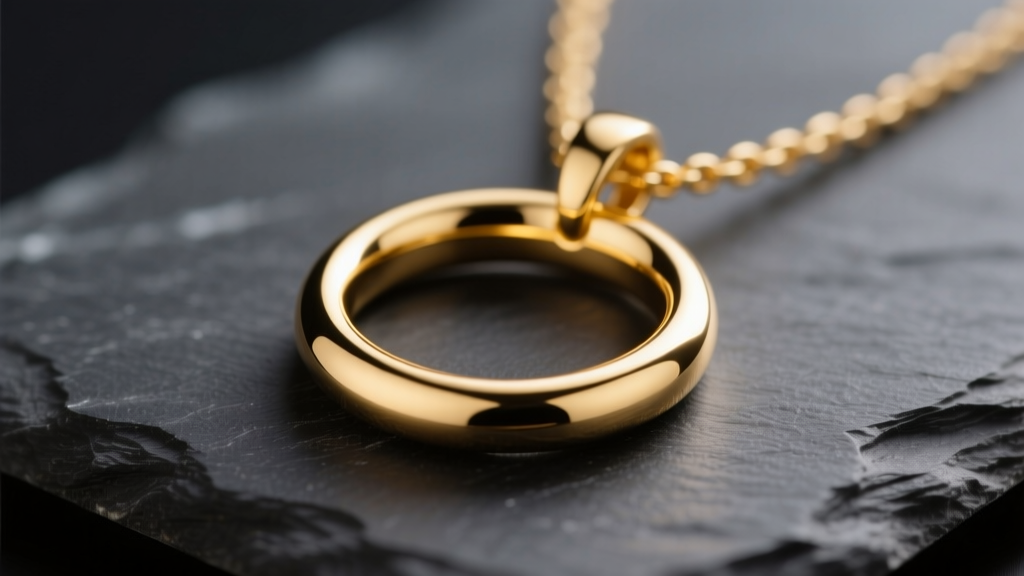
The Geometry and Structural Integrity of Open Circles
When evaluating an open circle necklace from a fabrication standpoint, it is crucial to understand that the 'C' or open 'O' shape lacks the structural cross-bracing inherent in closed geometric pendants. A closed circle or triangle distributes kinetic energy and tension evenly across its entire perimeter. An open circle, however, features two terminal ends that act as independent levers. When subjected to lateral pressure—such as catching on a knit sweater or being pulled by a toddler—the open ends are highly susceptible to splaying outward or warping out of their circular plane.
Because of this structural vulnerability, the wire gauge used to forge the pendant is the single most critical factor in its longevity. While standard delicate chain necklaces often utilize 22-gauge (0.64mm) or 24-gauge (0.51mm) wire, an open circle pendant requires significantly more mass to resist bending. For an open circle with a diameter of 20mm to 30mm, the absolute minimum wire thickness should be 18-gauge (1.02mm). However, for everyday wear, master jewelers strongly recommend 16-gauge (1.29mm) or even 14-gauge (1.63mm) stock. This added thickness increases the moment of inertia of the cross-section, exponentially improving the pendant's resistance to torsional warping without making the piece visually clunky.
Wire Gauge Requirements by Diameter
- 15mm - 20mm Diameter: Minimum 18-gauge (1.02mm). Ideal for lightweight, layered styling.
- 25mm - 35mm Diameter: Minimum 16-gauge (1.29mm). Required to prevent the terminal ends from hooking onto clothing.
- 40mm+ Diameter: Minimum 14-gauge (1.63mm) or hollow-tube construction to maintain structural rigidity without excessive weight.
Metallurgy Deep Dive: Which Alloys Hold the Shape?
The aesthetic appeal of an open circle necklace is often tied to the metal chosen, but from an engineering perspective, the alloy's Vickers Hardness (HV) and yield strength dictate how well the pendant will maintain its geometry over time. Pure 24k gold and fine 999 silver are far too malleable for open geometric shapes; they will bend under their own weight if subjected to minor impacts. Therefore, alloying elements like copper, zinc, and silver are introduced to disrupt the crystalline lattice of the base metal, increasing its hardness.
According to metallurgical data from the Gemological Institute of America (GIA), 14k gold is inherently harder and more scratch-resistant than 18k gold due to its higher percentage of alloying metals. However, Platinum 950 presents a unique metallurgical quirk: it has a relatively low initial Vickers Hardness but exhibits extreme 'work hardening' characteristics. This means that as a platinum open circle is subjected to micro-impacts over time, its crystal structure compresses, making it harder and more brittle. Titanium, specifically Grade 5 (Ti-6Al-4V), offers the highest strength-to-weight ratio, virtually guaranteeing the open circle will never warp, though it is notoriously difficult for jewelers to resize or repair.
| Material | Vickers Hardness (HV) | Yield Strength | Warp Resistance | Market Price Tier |
|---|---|---|---|---|
| 14k Yellow Gold | ~130 HV | Medium-High | Good | $$$ |
| 18k Yellow Gold | ~125 HV | Medium | Moderate | $$$$ |
| Platinum 950 | ~110 HV (Work-hardens) | High | Excellent | $$$$$ |
| Grade 5 Titanium | ~340 HV | Very High | Superior | $$ |
| Sterling Silver (925) | ~65 HV | Low-Medium | Poor | $ |
For buyers prioritizing structural integrity on a budget, Halstead Wholesale Jewelry notes that heat-treated or work-hardened sterling silver can temporarily improve warp resistance, but it remains the most prone to splaying among standard jewelry metals. If choosing a sterling silver open circle, opting for a thicker 14-gauge wire is mandatory to compensate for the metal's inherent softness.
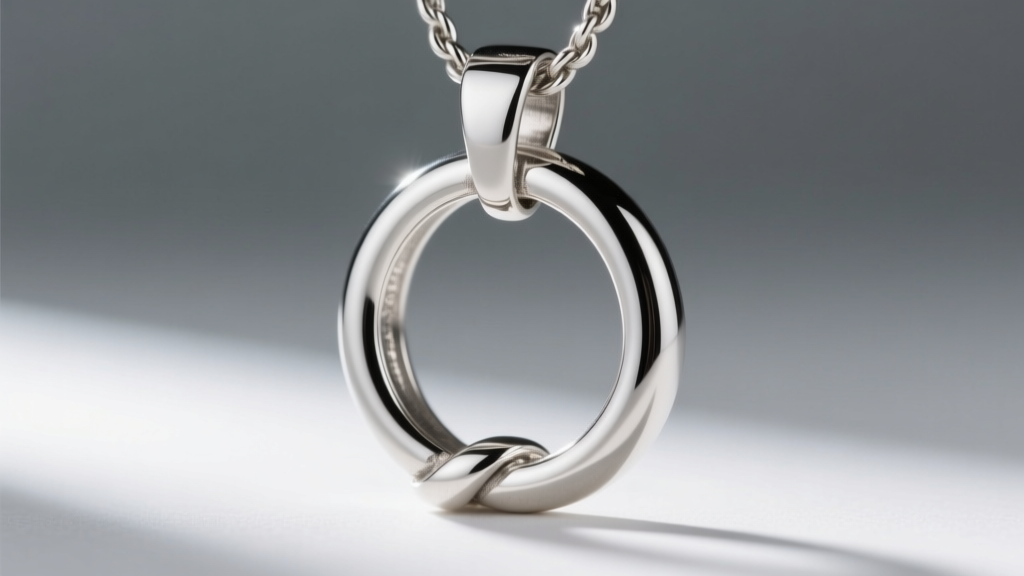
Clasp Mechanics and Bail Engineering
How the chain connects to the open circle pendant is a frequent point of mechanical failure. The continuous movement of the chain against the pendant creates friction, which can slowly erode the metal over a period of three to five years. There are three primary bail engineering methods used for open circle necklaces, each with distinct wear profiles:
1. The Threaded Chain (Direct Threading)
In this design, the chain passes directly through the open center of the circle. While visually minimalist, this creates a high-friction wear point at the top inner curve of the pendant. Over time, a steel or gold chain will act like a saw, slowly cutting a groove into the pendant. Expert fabricators mitigate this by lining the inner top curve with a microscopic layer of ceramic or by using a hardened steel jump ring as a sacrificial buffer between the chain and the pendant.
2. The Wrap-Around Bail
A wrap-around bail is a separate cast or stamped component that hugs the top outer curve of the open circle, secured via laser welding or hard soldering. This completely eliminates friction on the pendant itself, as the chain moves through the bail's loop. The primary failure mode here is solder degradation; if the pendant is caught and pulled, the shear force can snap the bail off the circle. High-quality fabricators use structural solder joints that penetrate at least 0.5mm into the pendant stock.
3. The Offset Drilled Hole
Some modern, architectural open circle designs feature a flush-drilled hole at the top terminal end or directly through the top arc. This requires precision CNC machining to ensure the hole is perfectly deburred. A flush-fitting jump ring is then inserted. This method offers excellent security but limits the thickness of the chain that can be used, as the hole diameter is constrained by the wire gauge of the pendant.
Proportional Styling: Neckline Geometry & Pendant Sizing
Styling an open circle necklace requires an understanding of negative space and neckline geometry. The open center of the pendant frames the skin and fabric beneath it, making the relationship between the circle's diameter and the garment's neckline critical for visual harmony.
- The V-Neck (45-degree angle): A V-neck creates a strong downward vector. To anchor this, an open circle pendant with a diameter between 25mm and 35mm is ideal. The circle interrupts the harsh angle of the V, creating a balanced focal point just above the sternum. A 16-inch chain length is optimal here.
- The Crew Neck (Horizontal curve): Crew necklines sit close to the collarbone and lack vertical depth. A massive 40mm open circle will look top-heavy and clash with the high neckline. Instead, opt for a delicate 12mm to 18mm open circle on a 14-inch or 15-inch chainer, allowing it to rest elegantly just below the fabric line.
- The Boat Neck (Wide horizontal): Boat necks expose the collarbones and shoulders. Asymmetrical open circles, or a layered pairing of a 15mm and 20mm open circle, complement the wide horizontal expanse of the boat neck by introducing organic, overlapping curves.
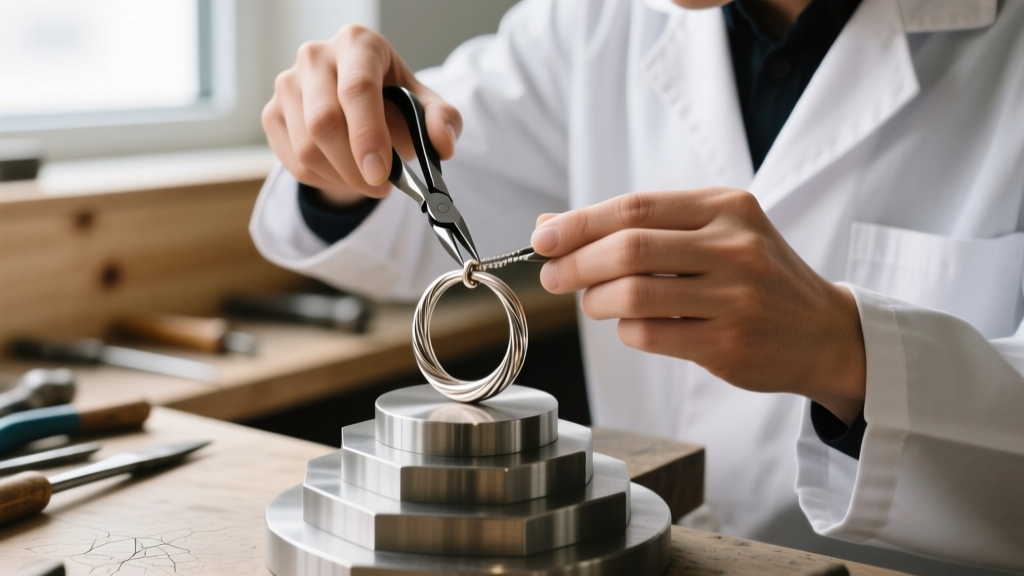
Maintenance and Warp Correction
Despite best efforts in material selection, open circle pendants—especially those crafted in sterling silver or 18k gold—will occasionally warp. When this happens, attempting to bend the metal back into shape with bare hands or standard steel-jaw pliers will inevitably mar the polished finish and introduce micro-fractures into the alloy.
Professional reshaping requires a stepped steel ring mandrel and nylon jaw pliers. The pendant is placed against the mandrel step that most closely matches its intended diameter. The nylon pliers are then used to apply gentle, distributed pressure across the terminal ends, slowly coaxing the metal back into a perfect plane without scratching the surface. According to fabrication guides from Rio Grande Jewelry Supply, if the metal has been severely work-hardened from previous bending, it must be annealed (heated to a specific temperature to relax the crystal structure) before reshaping, otherwise the pendant will snap under the pressure.
Expert Storage Tip: Never store an open circle necklace loosely in a jewelry box where it can be crushed by heavier items. Always hang it from a dedicated necklace stand or lay it perfectly flat in a partitioned velvet tray to preserve its geometric integrity.
Final Verdict on Sourcing
The open circle necklace is a masterclass in minimalist design, but its simplicity belies the complex engineering required to make it durable. When investing in this style, prioritize 16-gauge thickness or higher, opt for 14k gold or Grade 5 Titanium for maximum warp resistance, and carefully inspect the bail mechanism for friction-reducing features. By understanding the metallurgy and geometry behind the piece, you can select an open circle necklace that remains perfectly round and structurally sound for decades.


