How to Wear and Style an Open Necklace Choker: A Beginner Guide
Discover how to choose, fit, and style an open necklace choker. Learn about metals, neckline pairings, and care tips in this beginner-friendly guide.

Understanding the Open Necklace Choker
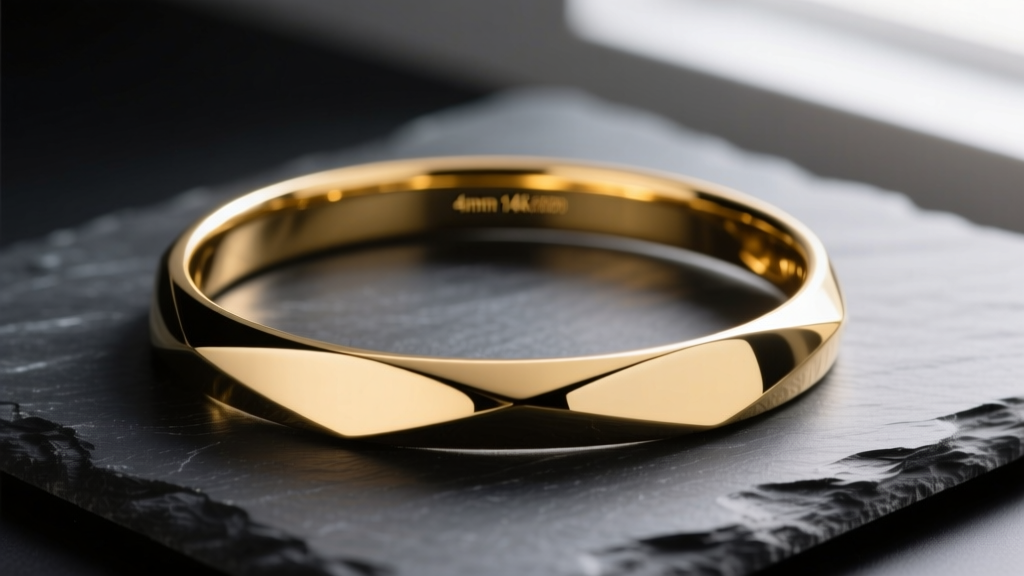
If you are exploring minimalist jewelry trends, the open necklace choker (often referred to as a torque or cuff necklace) is an essential staple. Unlike traditional chain chokers that clasp at the nape of the neck, an open choker is a rigid or semi-rigid band of metal that rests on the collarbone, leaving a deliberate gap at the front or side. This architectural design draws the eye to the neckline and offers a modern, sculptural aesthetic that pairs beautifully with both casual and formal wear.
For beginners, the appeal lies in its simplicity. However, the structural nature of an open necklace choker requires a basic understanding of metallurgy, gauge thickness, and proper handling. Treating a torque necklace like a standard chain is the fastest way to ruin it. In this comprehensive guide, we will break down everything you need to know to confidently select, wear, and maintain your first open choker.
Materials and Thickness: The Foundation of a Quality Torque
Because an open necklace choker relies entirely on the structural integrity of a single piece of metal, material choice is not just about color—it is about durability and flexibility. Torque chokers are typically measured in millimeters (mm) rather than standard wire gauge. A standard beginner-friendly thickness ranges from 3mm to 5mm. Anything thinner than 2mm risks bending out of shape permanently, while anything over 6mm can feel heavy and restrictive.
Here is a breakdown of the most common materials used in open chokers, detailing their specific properties and price ranges for the 2026 market:
| Material Grade | Durability & Flexibility | Tarnish Resistance | Average Price Range |
|---|---|---|---|
| 316L Stainless Steel | Highly rigid, excellent for daily wear | 100% Tarnish-free | $25 - $60 |
| 925 Sterling Silver | Semi-flexible, prone to bending if mishandled | Low (requires polishing) | $45 - $150 |
| 14k Gold-Filled (Brass core) | Moderate rigidity, depends on core thickness | High (if properly sealed) | $60 - $120 |
| Solid 14k or 18k Gold | Heavy, holds shape well but can warp under extreme force | 100% Tarnish-free | $350 - $900+ |
For a first-time buyer, 316L stainless steel offers the best balance of affordability and indestructibility. If you prefer precious metals, Jewelers of America notes that 925 sterling silver is a classic choice, though it requires more mindful handling due to its softer molecular structure compared to steel.
The Mechanics of Fit: How to Put It On Without Breaking It
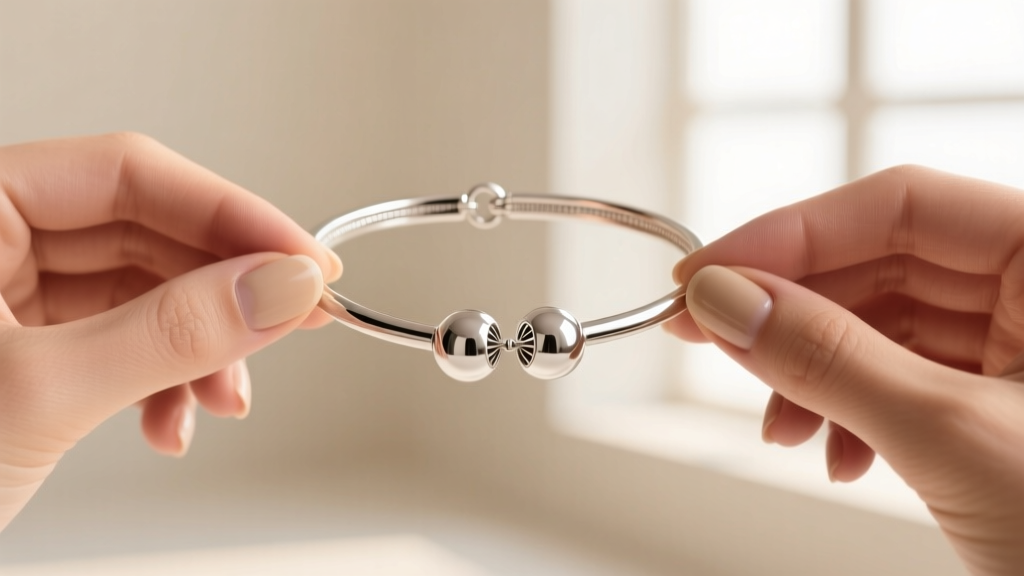
The most common beginner mistake with an open necklace choker is putting it on incorrectly. This leads to metal fatigue, a phenomenon where repeated stress causes microscopic fractures in the metal, eventually leading to a clean snap. To preserve the structural integrity of your choker, you must understand how to manipulate it safely.
The Correct Application Technique
- Never pull from the middle: Bending the center of the arc outward or inward will permanently warp the circle and weaken the metal.
- Grip the terminals: Hold the two ends (terminals) of the choker firmly between your thumb and index finger.
- Push and pull laterally: Gently push one side forward and pull the other side backward, creating a slight spiral gap. Do not pull them strictly away from each other in a straight line.
- Slide and release: Slide the open gap over the thinnest part of your neck (usually the side or the back), then let the metal naturally spring back to its original circular shape.
By twisting rather than pulling, you distribute the kinetic stress evenly across the entire band, preventing the localized stress that causes snapping.
Styling Your Open Choker: Neckline Pairings
An open necklace choker is a statement piece that demands negative space. Because the front of the necklace is interrupted by a gap, it interacts uniquely with different garment necklines. Here is how to style it like a professional:
1. The Deep V-Neck
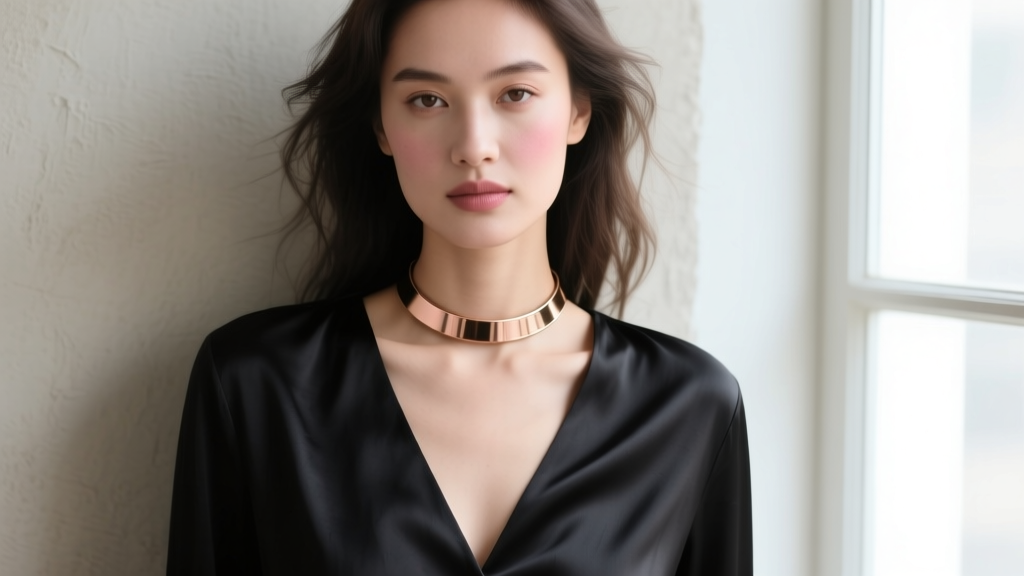
This is the ultimate pairing for an open torque. The V-shape of the garment mimics and extends the visual lines of the open gap in the choker, elongating the neck and drawing the eye downward. A 4mm gold choker over a black silk V-neck blouse creates a striking, editorial look.
2. Off-the-Shoulder and Boat Necks
When wearing horizontal necklines that expose the collarbone, an open choker provides a necessary vertical anchor. Ensure the terminals of the choker rest just above the fabric line so the metal does not catch on the hem of the garment.
3. The Crisp Button-Down
For office-appropriate styling, wear a thin (3mm) silver or gold open choker over a tightly buttoned collared shirt. The rigid metal contrasts beautifully with the structured cotton, offering a subtle, modern edge to corporate attire.
"The beauty of the open choker lies in its architectural negative space. It frames the collarbone without the visual clutter of a dangling pendant or a heavy chain." — Contemporary Jewelry Design Principles
Maintenance and Storage: Avoiding the "Bottom of the Bag" Syndrome
Proper storage is just as critical as proper application. The Gemological Institute of America (GIA) emphasizes that environmental factors and physical pressure are the primary enemies of polished metals.
Storage Best Practices
Never throw your open necklace choker loosely into a handbag or a crowded jewelry box. If heavy items press against the band, it will bend out of its perfect circular geometry. Once a torque choker is warped into an oval or figure-eight shape, it is nearly impossible to bend back into a perfect circle without specialized jewelers' mandrels.
- Use a dedicated tray: Store the choker flat in a lined jewelry drawer or a dedicated velvet tray.
- Hanging is an option: If you must hang it, use a wide, padded hook that supports the center of the band without letting the weight of the terminals drag the metal downward.
- Polishing: For sterling silver or gold-filled pieces, use a microfiber polishing cloth once a month to remove skin oils and environmental oxidation. Avoid harsh chemical dips, which can strip the finish from the terminals.
Final Thoughts on Your First Open Choker
Investing in an open necklace choker is a step toward building a curated, minimalist jewelry wardrobe. By prioritizing high-quality materials like 316L steel or solid 14k gold, mastering the lateral twist application method, and pairing the piece with complementary necklines, you will elevate your daily style effortlessly. Treat the metal with respect, understand its physical limits, and your torque choker will remain a flawless, sculptural staple for years to come.


