Oval Necklace Pendant Value: 2026 Pricing & Budget Guide
Discover how to assess the true value of an oval necklace pendant in 2026. Compare material costs, fair pricing tiers, and smart budget tips.

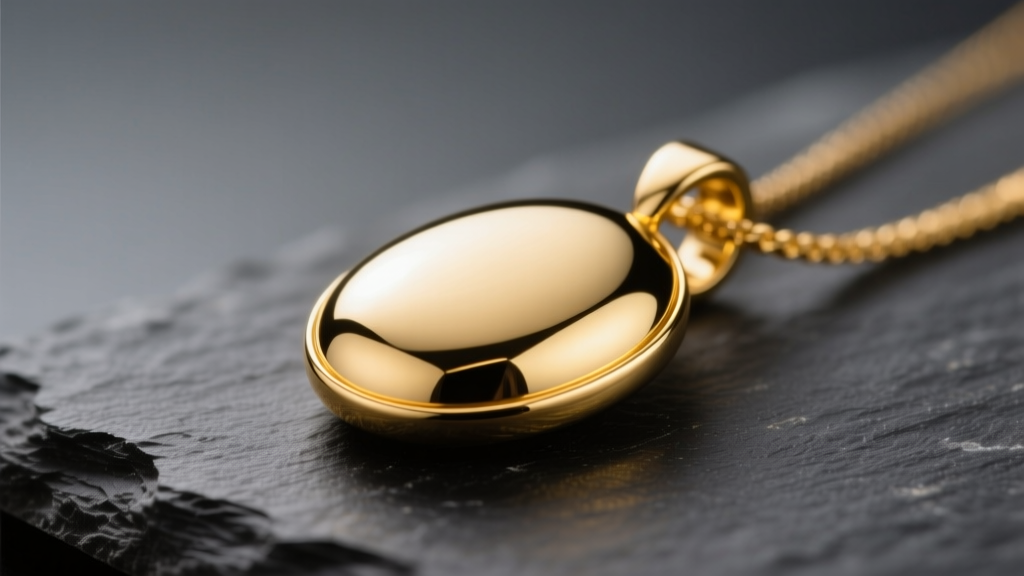
The oval necklace pendant remains a cornerstone of fine and fashion jewelry, prized for its elongating effect on the neckline and its versatility across casual and formal wardrobes. However, as precious metal markets fluctuate and direct-to-consumer brands proliferate, determining the true value of an oval pendant has become increasingly complex. In 2026, shoppers are navigating a landscape where a $40 brass piece and a $400 solid gold piece can look nearly identical in a digital storefront.
This comprehensive budget and value assessment breaks down the exact material grades, manufacturing costs, and pricing matrices you need to evaluate before purchasing your next oval necklace pendant. By understanding the raw economics of jewelry production, you can avoid inflated brand markups and invest in pieces that offer genuine longevity and resale value.
Decoding Material Grades & Base Costs
The foundation of any pendant's value lies in its metallurgy. The oval shape, typically requiring a slightly larger surface area than a simple circular charm, demands more raw material, making the distinction between solid gold, vermeil, and standard plating critical to your budget.
Solid Gold: The Benchmark for Heirloom Value
A standard 15mm x 10mm solid 14k gold oval pendant weighs between 1.8 and 2.5 grams. With 2026 gold spot prices hovering at premium tiers, the raw melt value of 2.5 grams of 14k gold (which is 58.5% pure gold) sits around $105. When you factor in casting, polishing, labor, and a sustainable retail margin, a fair direct-to-consumer price for a basic, unadorned 14k solid gold oval pendant ranges from $220 to $350. If a luxury boutique is charging $850+ for the exact same piece without diamond accents or intricate enamel work, you are paying a 300% brand tax, not a material premium.
Vermeil vs. Standard Plating: The Thickness Trap
For buyers on a stricter budget, gold vermeil is the optimal middle ground. According to the Federal Trade Commission Jewelry Guides, true vermeil must consist of a sterling silver base coated with a minimum of 2.5 microns of gold (usually 14k or 18k).
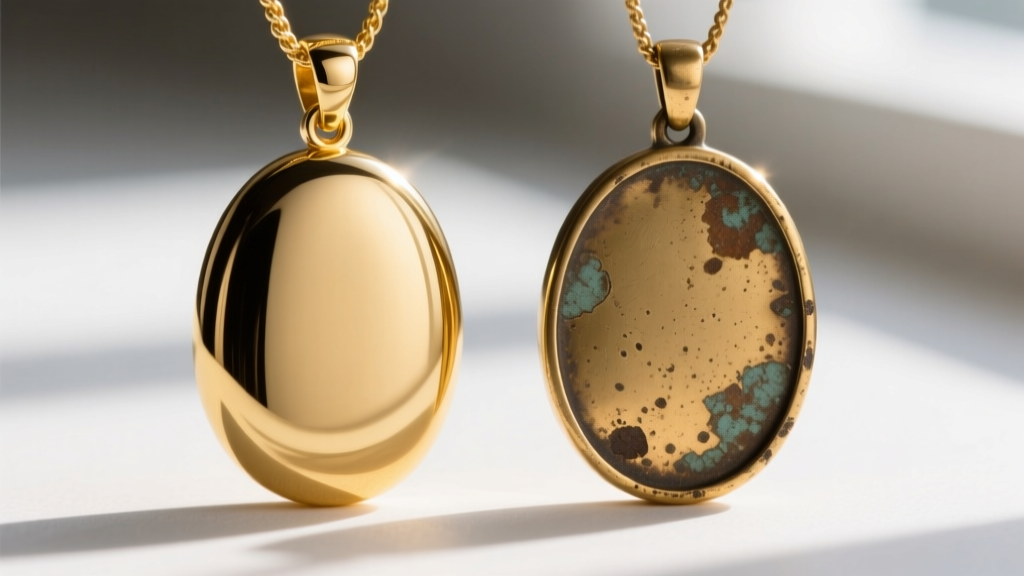
Many fast-fashion brands market "gold-plated" pendants for $45 to $80. These typically feature a brass or copper base with a microscopic 0.1-micron gold flash. While initially cheap, the friction from the oval pendant rubbing against the collarbone will wear through the plating in less than three months, exposing the base metal and causing skin discoloration. Always verify the micron thickness; a fair price for a high-quality 3-micron vermeil oval pendant is $85 to $140.
The 2026 Oval Necklace Pendant Pricing Matrix
To help you benchmark your purchases, we have compiled a fair market value matrix based on current 2026 manufacturing costs, material spot prices, and standard retail margins. Use this chart to identify overpriced items and spot genuine value.
| Material / Composition | Average Retail Price | Fair Market Value (Target) | Expected Lifespan (Daily Wear) |
|---|---|---|---|
| Brass Base + Gold Flash (0.1μm) | $30 - $60 | $15 - $25 | 1 - 4 Months |
| Sterling Silver (Rhodium Plated) | $90 - $150 | $60 - $90 | 3 - 5 Years |
| Sterling Silver Base + Vermeil (2.5μm) | $120 - $180 | $85 - $130 | 1 - 3 Years |
| Solid 14k Gold (2.0g - 2.5g) | $350 - $600 | $220 - $350 | Lifetime / Heirloom |
| Solid 18k Gold (2.5g - 3.0g) | $500 - $800 | $380 - $500 | Lifetime / Heirloom |
Gemstone Inlays: Durability vs. Cost
The oval silhouette is the premier canvas for gemstone and mineral inlays. The elongated shape showcases the natural banding and chatoyancy of stones better than circular or square bezels. However, not all inlays are created equal, and understanding the Mohs hardness scale is vital for assessing long-term value.
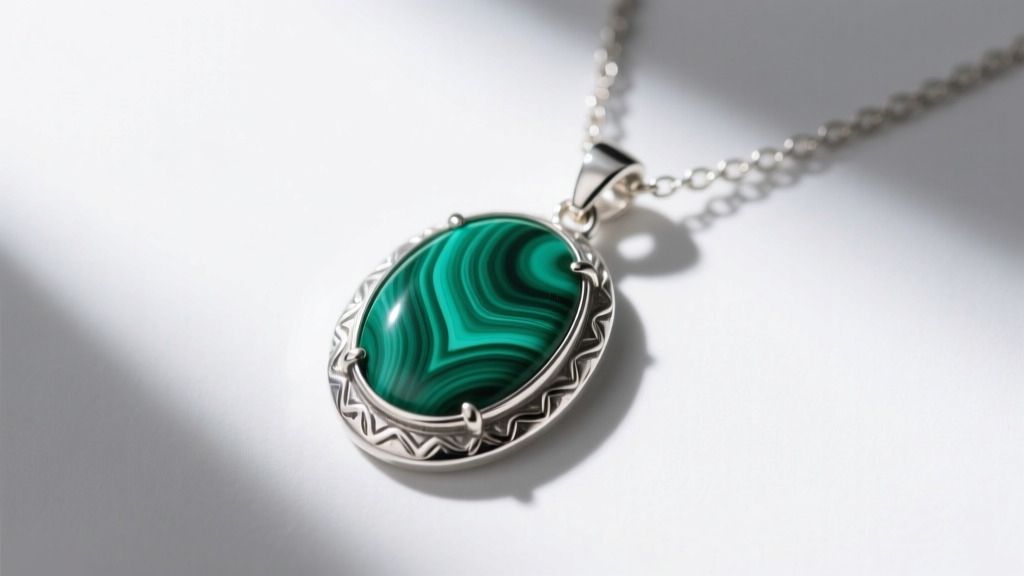
Malachite and Mother of Pearl (Mohs 2.5 - 4.0)
These organic and banded minerals are stunning but highly susceptible to scratching and chemical degradation. Perfumes, lotions, and even natural skin acidity can strip the polish from Mother of Pearl over time. Because these materials are relatively abundant and easy to cut, an oval pendant featuring these stones should not command a massive premium over the metal base. Expect to pay a $30 to $60 markup for the stone cutting and setting labor.
Black Onyx and Lapis Lazuli (Mohs 5.0 - 7.0)
For daily wear, harder stones offer vastly superior ROI. Black Onyx provides a deep, scratch-resistant mirror finish that pairs exceptionally well with both yellow gold and white gold settings. According to the Gemological Institute of America (GIA), treated onyx is highly stable, making it an ideal candidate for heirloom pieces. A genuine onyx inlay justifies a slightly higher price point due to the precision required to cut and fit the harder stone perfectly flush against the metal bezel without chipping.
Chain Pairings: The Hidden Budget Killer
A common budgeting mistake is allocating 90% of the budget to the oval pendant and slapping it on a flimsy, mass-produced chain. The physics of an oval pendant—specifically its top-heavy weight distribution—places unique tensile stress on the chain's jump ring and links.
- The 0.6mm Cable Chain Trap: Often included as a "free" add-on, chains under 0.8mm in thickness will stretch and eventually snap under the pendulum motion of an oval charm. Replacing a broken chain later will cost you $40-$80, negating your initial savings.
- The 1.0mm - 1.2mm Sweet Spot: For a standard 2-gram oval pendant, a 1.0mm box chain or a 1.2mm cable chain provides the necessary structural integrity while remaining delicate enough not to overpower the pendant visually.
- Clasp Quality: Ensure the chain features a solid lobster clasp, not a hollow spring ring. Spring rings are notorious for failing at the solder point, leading to lost pendants.
Red Flags & Overpriced Markups
When shopping for an oval necklace pendant, be highly skeptical of the following marketing tactics that artificially inflate prices without adding intrinsic value:
- "Pave Diamond" Illusions: Brands often use 0.01 total carat weight (tcw) of low-clarity diamond melee around the oval border, marketing it as a "diamond pendant." The actual value of this diamond dust is less than $15, yet it can inflate the retail price by $300. Demand exact carat weights and clarity grades.
- Hollow-Cast Solid Gold: Some manufacturers cast 14k gold pendants with a hollow interior to increase the surface area of the oval while keeping the gold weight under 1 gram. These dent easily and cannot be repaired by a jeweler. Always ask for the exact gram weight before purchasing.
- Anti-Tarnish Coatings on Solid Gold: Pure and alloyed gold does not tarnish. If a brand is marketing a solid 14k or 18k gold oval pendant with a proprietary "anti-tarnish" coating, it is a marketing gimmick designed to justify a higher price point.
Final Verdict: Maximizing Your ROI
Evaluating the budget and value of an oval necklace pendant requires looking past the brand name and focusing on metallurgical transparency, structural integrity, and fair labor markups. For a budget under $150, seek out 3-micron vermeil over sterling silver with a 1.0mm box chain. For investments over $300, demand solid 14k or 18k gold with verifiable gram weights and scratch-resistant gemstone inlays like onyx. By applying these 2026 market benchmarks, you can build a resilient, elegant jewelry collection that retains both its beauty and its financial value.


