How to Clean and Care for Your Padme Amidala Necklace
Learn how to properly clean, store, and maintain your Padme Amidala necklace replica, from Japor snippet pendants to Naboo royal beads.

The Enduring Legacy of Naboo Jewelry
When costume designer Trisha Biggar crafted the wardrobe for Padmé Amidala in the Star Wars prequel trilogy, her jewelry choices became as iconic as the characters themselves. From the deeply symbolic Japor snippet to the opulent Naboo Royal Court beadwork, these pieces are masterclasses in sci-fi worldbuilding. Today, the secondary market and artisan replica community offer everything from mass-produced costume jewelry to museum-quality fine jewelry reproductions. However, caring for a Padme Amidala necklace requires a nuanced understanding of the materials used in your specific replica. What works for a sterling silver Lake Country pendant will instantly ruin a 3D-printed epoxy resin Japor snippet. This comprehensive care guide will help you preserve your galactic treasures for years to come.
Identifying Your Replica Materials
Before applying any cleaning solution, you must accurately identify the base materials of your necklace. The replica market in 2026 is vast, and manufacturers use widely varying techniques to achieve the on-screen look.
- Cast Metals: High-end replicas often use 925 sterling silver, 14k gold vermeil, or solid brass. Lower-tier costume pieces typically use zinc alloy or pewter with a thin electroplated finish.
- Resins and Polymers: Many Japor snippet replicas are cast in polyurethane or epoxy resin to mimic carved wood or bone. Some are 3D printed using UV-cured photopolymer resins.
- Glass and Rhinestones: The Naboo Royal Court necklaces frequently feature foil-backed glass rhinestones, acrylic beads, and genuine or synthetic semi-precious stones like jade and lapis lazuli.
According to the Jewelers of America, treating plated costume jewelry with harsh chemicals meant for solid metals is the leading cause of irreversible finish degradation. Always assume a piece is plated unless you have a hallmark stamp (like '925') or a certificate of authenticity from a fine jeweler.
Cleaning the Japor Snippet Pendant
The Japor snippet, gifted by Anakin Skywalker, is perhaps the most recognized piece of Padmé's collection. While the lore states it is carved from Japor wood, modern replicas are rarely actual wood.
Caring for Resin and Polymer Replicas
If your Japor snippet is made of epoxy or polyurethane resin, your primary enemy is ultraviolet (UV) light and alcohol-based solvents. Prolonged UV exposure causes a chemical reaction known as photodegradation, leading to an irreversible yellowing of the resin. Furthermore, cleaning resin with isopropyl alcohol or acetone will cause micro-fractures and clouding on the surface. To clean a resin pendant, use only a damp microfiber cloth with a drop of pH-neutral dish soap. Dry it immediately and store it away from direct sunlight.
Polishing Sterling Silver and Pewter Snippets
For metal Japor snippets, tarnish is the main concern. Sterling silver reacts with hydrogen sulfide in the air to form silver sulfide, creating a dark patina. Use a dedicated silver polishing cloth infused with anti-tarnish agents. Avoid liquid silver dips, as they can strip the intentional antiquing (dark oxidation) placed in the carved grooves of the snippet, leaving the piece looking flat and overly bright.
Maintaining the Lake Country Floral Necklaces
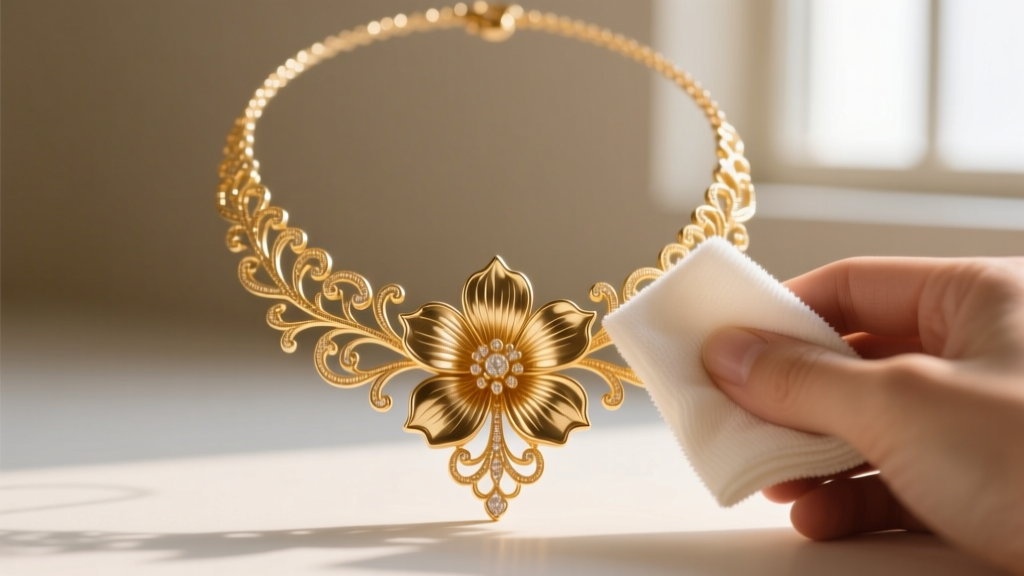
The delicate, floral-motif necklaces Padmé wears during her retreat to the Lake Country on Naboo feature intricate wirework and nature-inspired pendants. These are most commonly replicated in gold-plated brass or sterling silver.
Protecting Gold Vermeil and Plating
Gold vermeil (a thick layer of gold over sterling silver) requires a gentle touch. The Gemological Institute of America (GIA) advises against using ultrasonic cleaners on any plated jewelry, as the high-frequency vibrations can cause the gold layer to flake or peel, especially around the delicate wire joints of the Lake Country designs. Instead, prepare a lukewarm bath of distilled water and a few drops of mild castile soap. Submerge the necklace for no more than three minutes, gently agitate the water, and rinse with distilled water. Pat dry with a lint-free cloth. Never rub gold-plated pieces aggressively, as friction wears away the microscopic gold layer.
Preserving the Naboo Royal Court Beaded Masterpieces
The ceremonial necklaces worn during the Throne Room and Senate scenes are heavy, elaborate, and feature dense beadwork, metallic filigree, and large central gemstones.
The Danger of Water to Foil-Backed Stones
Many replica Naboo court necklaces utilize foil-backed glass rhinestones to achieve a brilliant, diamond-like sparkle on a budget. If water or liquid cleaner seeps behind the stone setting, it will trap moisture against the metallic foil backing. This causes the foil to oxidize and turn black, permanently killing the stone's brilliance. Never submerge a beaded Naboo replica in water. Instead, use a soft, dry makeup brush to dust between the beads and a slightly damp cotton swab to carefully wipe the surface of the stones, avoiding the metal prongs entirely.
Managing Brass and Alloy Oxidation
The metallic spacers and filigree in these beaded necklaces are often made of raw brass or zinc alloy. Human sweat is highly acidic and will rapidly accelerate oxidation, turning the metal green or black. After wearing your Naboo court necklace, always wipe the metal components with a dry, soft cloth to remove skin oils and perspiration before storing it.
Chemical Compatibility Guide for Replica Materials
Using the wrong chemical cleaner can instantly destroy a replica. Refer to this compatibility matrix before attempting to clean your Padme Amidala jewelry.
| Replica Material | Safe Cleaning Agents | Chemicals to Strictly Avoid | Primary Failure Mode |
|---|---|---|---|
| Epoxy / UV Resin | Damp cloth, mild soap | Alcohol, Acetone, Bleach | Clouding, micro-fractures, melting |
| 925 Sterling Silver | Silver polish cloth, mild soap | Chlorine, Liquid dips | Stripping of intentional antiquing |
| Gold Plated / Vermeil | Distilled water, castile soap | Ultrasonic cleaners, Ammonia | Peeling and flaking of gold layer |
| Foil-Backed Rhinestones | Dry brushing, damp cotton swab | Submersion in any liquid | Foil oxidation and blackening |
| Raw Brass / Zinc Alloy | Brass polish (sparingly), dry cloth | Acidic fruit juices, harsh detergents | Pitting and rapid green oxidation |
Proper Storage to Prevent Degradation
How you store your Padme Amidala necklaces is just as critical as how you clean them. The environmental factors in your bedroom or vanity can silently degrade your collection.
Archival-Quality Plastics
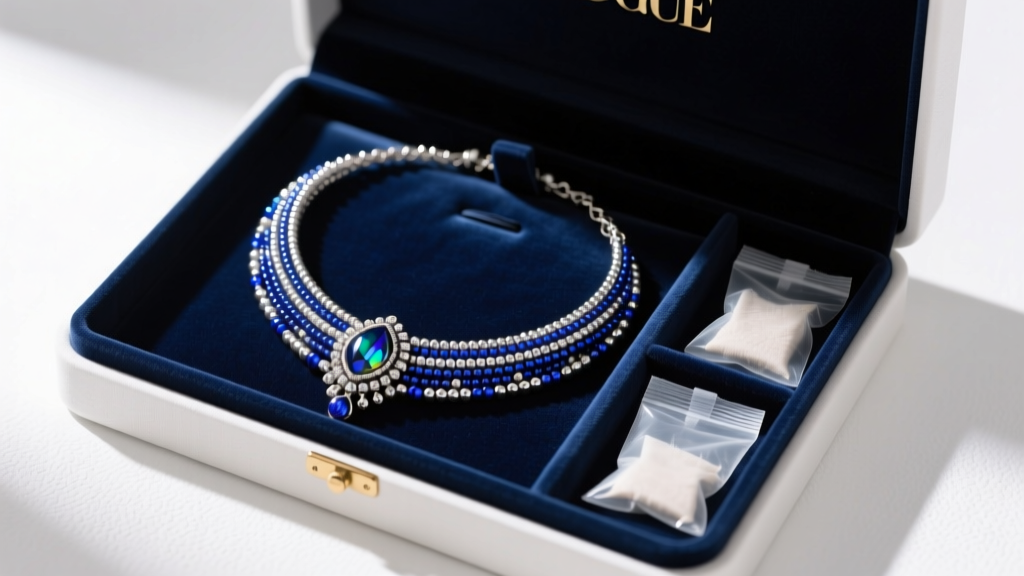
Never store resin or plated jewelry in standard PVC (polyvinyl chloride) plastic bags. PVC off-gasses chemicals over time that can react with metal platings and cause resin to become sticky or brittle. Always use archival-quality polyethylene or polypropylene zip bags for individual piece storage.
Controlling Humidity and Tarnish
For your silver and brass pieces, humidity is the catalyst for tarnish. Store these necklaces in airtight containers alongside 3M anti-tarnish strips, which absorb airborne sulfur compounds before they can react with your metals. For resin Japor snippets, include a small silica gel desiccant packet to control moisture, but keep the piece in a dark drawer to prevent UV-induced yellowing.
Preventing Wirework Tangling
The delicate chains and wirework of the Lake Country necklaces are prone to severe tangling, which can lead to bent links and structural failure. Always fasten the clasp before storage. For added protection, thread the chain through a short piece of archival plastic tubing or a drinking straw before clasping it. This keeps the chain rigid and completely eliminates the possibility of knotting.
Final Thoughts on Galactic Heirlooms
Whether you own a screen-accurate, hand-chased sterling silver Japor snippet or a beloved, mass-produced Naboo court bead set from a convention vendor, proper maintenance ensures these pieces survive the test of time. By respecting the specific material science behind your replicas and avoiding harsh, generic jewelry cleaners, your Padme Amidala necklace collection will remain as pristine as the lakes of Naboo itself. Treat your pieces with the care of a Royal Handmaiden, and they will continue to shine across the galaxy.


