Pakistan Necklace Materials: Properties of Kundan, Polki & Gold
Discover the unique properties of Pakistan necklace materials. Compare Kundan, Polki, Meenakari, and gold alloys for durability, care, and styling.

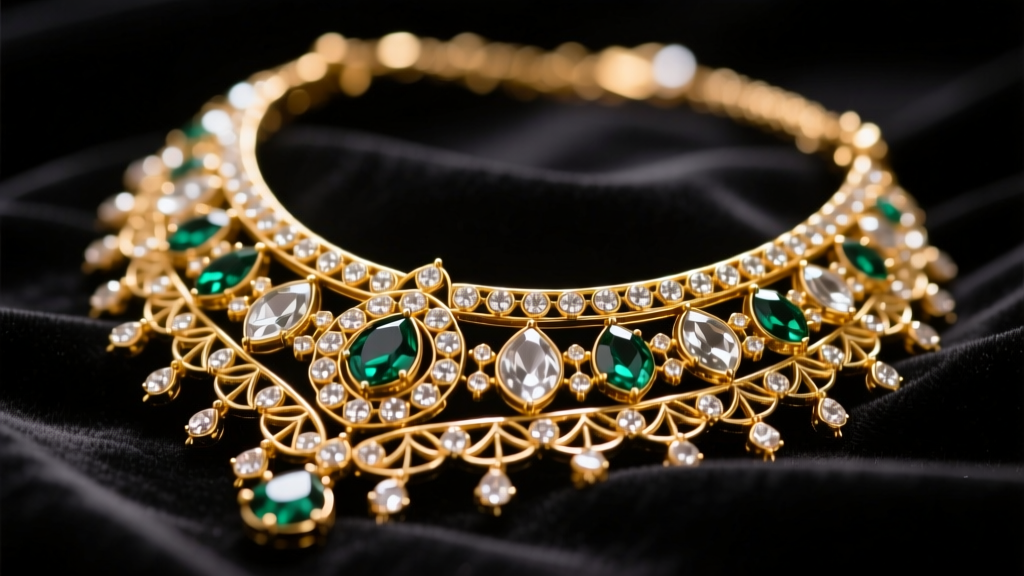
The Metallurgical Heritage of South Asian Jewelry
When evaluating a traditional or contemporary Pakistan necklace, collectors and stylists must look beyond the immediate visual brilliance to understand the underlying material science. These pieces are not merely decorative; they are complex structural feats combining varying grades of gold alloys, organic resins, uncut gemstones, and vitreous enamels. In 2026, as the global market sees a surge in demand for heritage South Asian jewelry, understanding the physical and chemical properties of these materials is critical for authentication, wearability, and long-term preservation.
Unlike Western jewelry traditions that prioritize the structural rigidity of platinum and prong-set faceted stones, the Pakistan necklace relies on the malleability of high-karat gold and the optical manipulation of foil backing. According to the Victoria and Albert Museum (V&A), the historical techniques of Jadau and Meenakari require a deep understanding of thermal expansion and material compatibility. This guide breaks down the exact material properties you need to know before investing in or styling these intricate pieces.
The Core Metals: Gold Alloys and Silver Bases
22K vs. 18K Gold: Malleability and Strength
The foundation of an authentic Pakistan necklace is typically 22-karat gold, which consists of 91.6% pure gold and 8.4% alloy metals (usually copper and silver). From a materials science perspective, 22K gold has a Vickers hardness (HV) of approximately 90-100, making it exceptionally soft. This malleability is a requirement for the Kundan setting technique, where strips of pure gold are burnished at room temperature to secure stones without heat or solder.
However, for structural components like clasps, jump rings, and heavy chain links, jewelers must step down to 18K gold (75% pure, HV ~140) or 14K gold (58.3% pure, HV ~170) to prevent deformation under the weight of heavy pendants. The World Gold Council notes that while 22K gold offers superior tarnish resistance and a rich yellow hue, its low yield strength means a solid 22K chain will stretch permanently if subjected to heavy tensile loads.
Sterling Silver vs. German Silver (White Metal)
For more affordable or fashion-forward iterations of the Pakistan necklace, silver bases are common. Sterling silver (92.5% Ag, 7.5% Cu) is standard, but it is highly susceptible to sulfur-induced tarnishing, especially in humid climates. Conversely, "German Silver" or "White Metal" frequently used in mass-market pieces contains zero actual silver. It is a copper-nickel-zinc alloy (typically 60% Cu, 20% Ni, 20% Zn). While it mimics the color of silver and offers higher tensile strength, it is prone to cupric oxidation (greenish patina) and can cause contact dermatitis in nickel-sensitive wearers. High-quality German silver pieces must be heavily rhodium-plated to create an inert barrier.
Traditional Gemstone & Glass Settings
Polki: Uncut Diamonds and Foil Backing
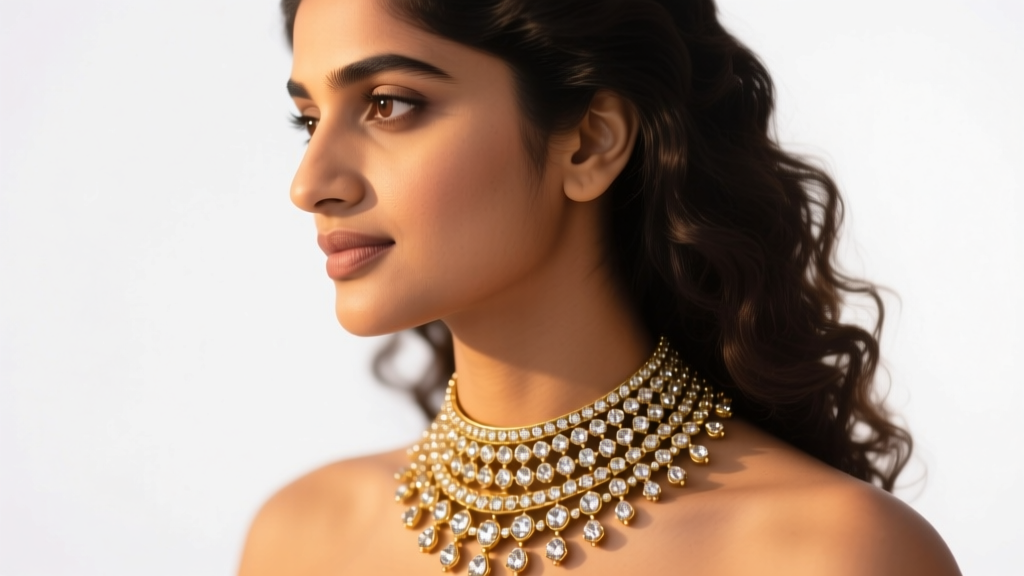
Polki refers to uncut, unfaceted diamonds in their natural, raw crystalline form. Because they lack the geometric facets that bounce light in modern brilliant-cut diamonds, Polki stones rely entirely on foil backing to achieve their luminosity. In a traditional Pakistan necklace, the Gemological Institute of America (GIA) explains that a thin sheet of silver or gold leaf is placed behind the diamond, often tinted with natural dyes to enhance color. The diamond is then sealed into the mount using Lac (a natural shellac resin). While the diamond itself is a 10 on the Mohs hardness scale, the Lac resin is highly vulnerable to moisture, heat, and chemical solvents.
Kundan: Refined Gold and Glass Inlays
Often confused with Polki, Kundan actually refers to the highly refined 24K gold foil used to set the stones, not the stones themselves. Modern Kundan jewelry frequently uses high-quality glass or semi-precious stones (like onyx, jade, or quartz) rather than diamonds. The gold is hammered into microscopic strips and packed tightly around the stone's girdle using a metal stylus. Because no heat is used, the structural integrity relies entirely on the friction and the underlying wax/resin core.
Meenakari: The Enamel Reverse
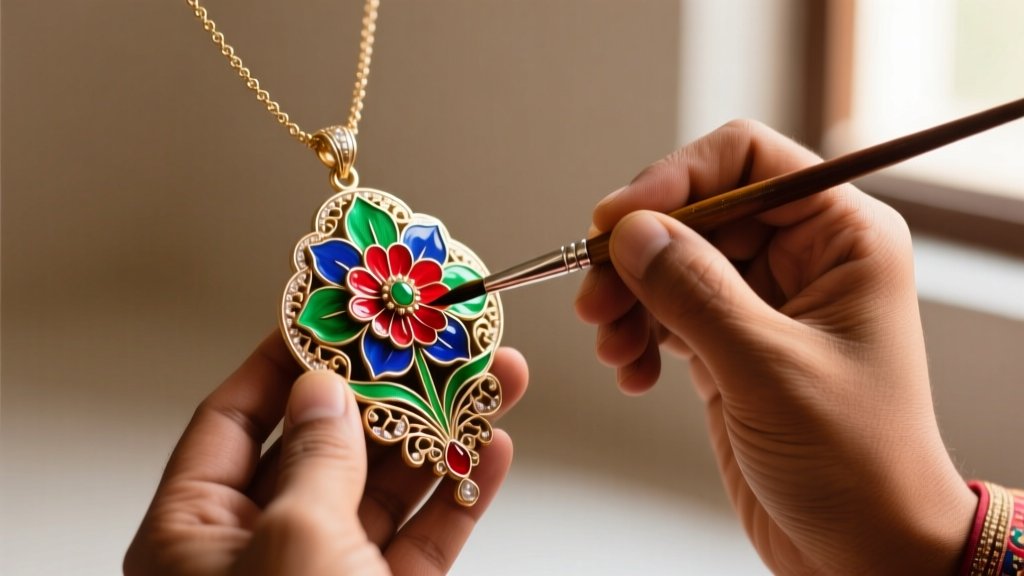
Meenakari is the art of vitreous enameling, usually applied to the reverse side of a Pakistan necklace pendant or choker. It involves fusing silica, soda ash, and metal oxides (cobalt for blue, copper for green, iron for red) onto a gold or silver base at temperatures between 750°C and 850°C. The resulting glass-like surface has a Mohs hardness of 5.5 to 6.5. While highly resistant to chemical tarnish, Meenakari is brittle and susceptible to thermal shock and mechanical chipping if the metal base flexes.
Material Comparison Matrix
| Material / Technique | Core Composition | Mohs / Vickers Hardness | Moisture & Heat Sensitivity | Avg. Price Tier (USD) |
|---|---|---|---|---|
| Polki (Diamond) | Raw Diamond + Silver Foil + Lac Resin | 10 (Stone) / 2 (Resin) | Extreme (Resin degrades in water) | $5,000 - $50,000+ |
| Kundan (Glass/Stone) | Glass/Quartz + 24K Gold Strips + Wax | 6-7 (Stone) / 2.5 (Gold) | High (Wax melts/deforms in heat) | $800 - $12,000 |
| Meenakari (Enamel) | Silica Glass + Metal Oxides + Gold Base | 5.5 - 6.5 (Glass) | Low (Water safe, High thermal shock risk) | $1,200 - $15,000 |
| 22K Solid Gold Chain | 91.6% Au, 8.4% Cu/Ag | ~90 HV (Very Malleable) | None (Highly inert) | $2,000 - $20,000 |
The 2026 Market Shift: Synthetic vs. Organic Adhesives
A critical development in the 2026 jewelry market is the divergence between heritage artisans and commercial manufacturers regarding adhesives. Traditionalists continue to use natural Lac (shellac) and beeswax mixtures, which allow for future restoration; a master jeweler can gently heat the piece to remove and reset a loose stone. However, commercial manufacturers are increasingly using industrial cyanoacrylates and UV-cured epoxy resins. While these synthetic adhesives offer superior initial tensile strength and water resistance, they become brittle over time, yellow under UV exposure, and make non-destructive repair nearly impossible. When appraising a Pakistan necklace, always ask the jeweler to verify the setting medium.
Diagnostic Troubleshooting & Maintenance Protocols
Maintaining the structural and optical integrity of these pieces requires strict adherence to material-specific protocols. Never use ultrasonic cleaners, steam cleaners, or chemical dips on any Pakistan necklace featuring Polki, Kundan, or Meenakari.
- Cloudy Polki Stones: This indicates that moisture has penetrated the setting and oxidized the silver foil backing, or that the Lac resin has degraded. The piece must be disassembled by a specialist, the foil replaced, and resealed.
- Meenakari Micro-Cracks: Often caused by the gold base bending. Because gold is highly malleable, dropping the necklace can flex the metal, causing the rigid glass enamel to fracture. Store flat in a rigid, padded box.
- German Silver Tarnish: If the rhodium plating wears off and the underlying copper-nickel alloy oxidizes, clean only with a dry, untreated microfiber cloth. Liquid polishes will seep into the stone settings and destroy the organic resins.
- Chain Stretching: If a 22K gold chain link begins to elongate, immediately stop wearing it. The structural integrity is compromised, and the work-hardening effect will eventually cause the link to snap under the pendant's weight.
Conclusion
A Pakistan necklace is a masterclass in material juxtaposition—pairing the eternal permanence of gold and diamonds with the fragile, organic nature of lac resins and vitreous enamels. By understanding the specific hardness values, thermal thresholds, and chemical vulnerabilities of Kundan, Polki, and Meenakari, collectors can make informed purchasing decisions and ensure these wearable works of art survive for generations.


