Past Present Future Diamond Necklace: Metal & Stone Guide
Compare metals and diamond grades for your past present future diamond necklace. Expert insights on platinum, gold alloys, and 3-stone matching.

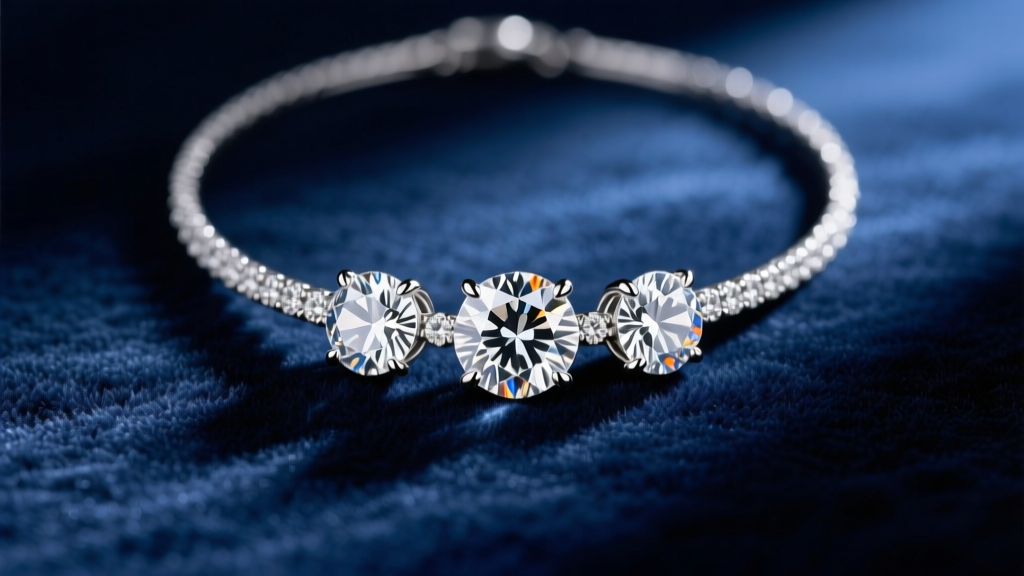
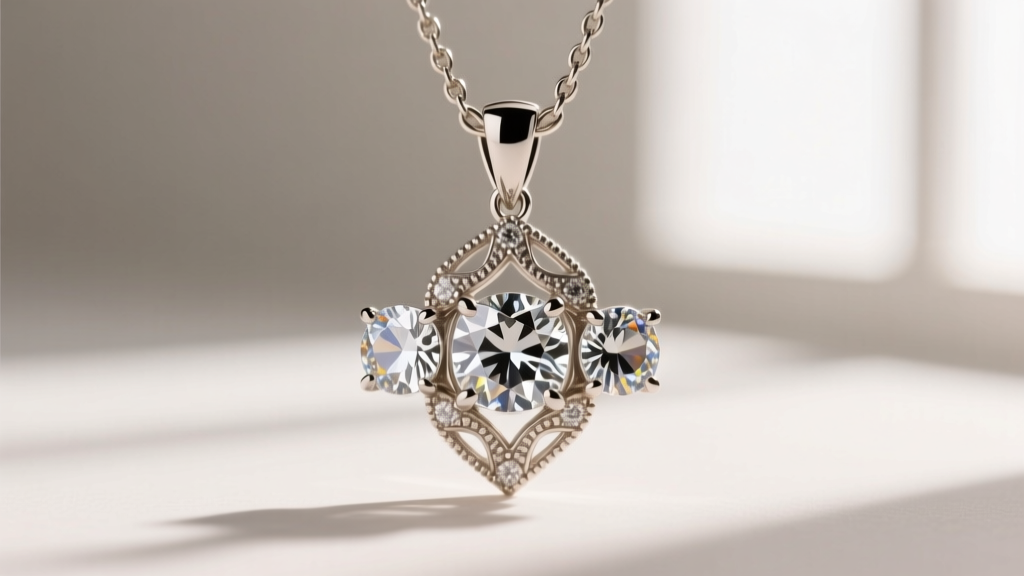
The past present future diamond necklace is a masterclass in symbolic jewelry design. Traditionally featuring three distinct stones—representing a couple's history, current bond, and shared tomorrow—this pendant style demands meticulous material selection to ensure both optical brilliance and structural longevity. Unlike solitaire pendants where a single stone dominates the visual field, a three-stone configuration requires absolute harmony in metalwork, prong tension, and diamond grading. As we navigate the 2026 jewelry market, where advanced lab-grown options and recycled precious metals are more prevalent than ever, understanding the metallurgical and gemological properties of your necklace is critical.
This comprehensive guide dissects the material science behind the past present future diamond necklace, providing actionable frameworks for selecting the ideal metal alloy, diamond origin, and setting architecture.
The Anatomy of a Three-Stone Pendant
Before comparing specific materials, it is essential to understand the structural demands of a three-stone layout. The pendant must distribute weight evenly across the chain to prevent flipping, a common issue with top-heavy solitaires. The central stone typically acts as the anchor, either matching the flanking stones in exact carat weight (e.g., three 0.30ct stones) or stepping down in a graduated ratio (e.g., 0.50ct center with two 0.25ct sides). The metal used for the pendant basket and the connecting bail must possess high tensile strength to support this multi-stone array without warping over time.
Metal Band Comparisons: Platinum vs. Gold Alloys
The choice of precious metal dictates the necklace's color profile, maintenance requirements, and long-term wear resistance. For a past present future diamond necklace, the metal must securely grip multiple stones while complementing their color grade.
Platinum (950 Grade) & Palladium
Platinum 950 (composed of 95% pure platinum and 5% alloying metals like ruthenium or iridium) remains the premier choice for high-value diamond pendants. Its natural white color never requires rhodium plating, ensuring that the metal's reflection never alters the perceived color of the diamonds. Platinum's unique property of 'displacement' rather than 'chipping' means that when scratched, the metal merely moves, preserving the structural integrity of the prongs. According to the Diamond Council, platinum's density provides superior security for multi-stone settings, reducing the risk of stone loss from accidental impacts.
18K vs. 14K Gold (Yellow, White, and Rose)
Gold alloys offer versatility and a lower price point, but they require a deeper understanding of their metallurgical properties. 18K gold contains 75% pure gold, offering a rich, warm hue in its yellow and rose variants. However, 18K white gold requires a rhodium plating (typically 0.05 to 0.10 microns thick) to achieve a bright white finish. Over time, friction against the skin and clothing will wear this plating away, revealing the naturally yellowish-white alloy beneath. 14K gold (58.3% pure gold) is harder due to its higher alloy content (often copper, zinc, and nickel), making it highly resistant to deformation, though it lacks the premium luster of 18K.
Metal Durability & Pricing Matrix
| Metal Type | Composition | Vickers Hardness (HV) | Maintenance Level | Approx. Price Premium |
|---|---|---|---|---|
| 950 Platinum | 95% Pt, 5% Ru/Ir | 120 - 135 HV | Low (Polishing only) | +60% vs 14K |
| 18K White Gold | 75% Au, 25% Alloy | 125 - 140 HV | High (Rhodium replating) | +35% vs 14K |
| 18K Yellow Gold | 75% Au, 25% Cu/Ag | 115 - 130 HV | Medium (Polishing) | +30% vs 14K |
| 14K Rose Gold | 58.3% Au, 41.7% Cu | 140 - 160 HV | Low | Baseline |
Diamond Selection: Natural vs. Lab-Grown Properties
The optical performance of a past present future diamond necklace hinges on the precise matching of the three stones. Because the diamonds are set in close proximity, the human eye easily detects discrepancies in color, cut precision, and fluorescence.
The 4Cs in a Three-Stone Configuration
When sourcing diamonds for this specific pendant style, the standard hierarchy of the 4Cs shifts. Cut quality is non-negotiable; an Excellent/Ideal cut ensures that light reflects uniformly across all three stones, creating a cohesive ribbon of brilliance. Color matching is equally critical. The Gemological Institute of America (GIA) notes that while a single diamond's color grade can be evaluated in isolation, multi-stone pieces require stones to be within a single color grade of each other (e.g., pairing an F color center with G color sides is acceptable, but pairing an E with an H will result in a visibly disjointed pendant).
Lab-Grown Diamonds in 2026: CVD vs. HPHT
The lab-grown diamond market has matured significantly, offering Type IIa purity (lacking the nitrogen impurities common in natural stones) at a fraction of the cost. However, buyers must understand the growth methods:
- Chemical Vapor Deposition (CVD): Often produces stones with exceptional color but may exhibit brownish undertones if not properly treated post-growth. CVD stones are excellent for the side stones in a pendant.
- High Pressure High Temperature (HPHT): Yields stones with superior clarity and colorlessness, closely mimicking the best natural diamonds. HPHT is highly recommended for the prominent center stone of your necklace.
A crucial warning regarding lab-grown diamonds: avoid mixing stones with strong blue fluorescence with those that have none, as UV exposure (even from ambient sunlight) will cause the fluorescent stones to glow slightly, breaking the visual symmetry of the past present future motif.
Prong Settings and Structural Integrity
The setting architecture is where material science meets gemological security. For a three-stone necklace, jewelers typically utilize either individual basket settings or a shared-prong (common prong) configuration.
Individual Basket vs. Shared Prong
Individual martini baskets offer maximum security. Each stone is held by four or six dedicated prongs, allowing the jeweler to adjust the tension independently. This is the recommended route for active wearers or those opting for softer metals like 18K yellow gold. Conversely, shared-prong settings use a single piece of metal folded over the girdles of two adjacent stones. While this maximizes light entry and creates a seamless, bezel-like flow of diamonds, it requires a stiffer metal like Platinum 950 to prevent the shared prongs from lifting and releasing the stones if the pendant is bent.
Chain Selection and Tensile Strength
A past present future diamond necklace is only as secure as its chain. The pendant's weight dictates the required chain gauge:
- Box Chains (1.2mm - 1.5mm): Featuring interlocking square links, box chains offer exceptional tensile strength and resist kinking, making them ideal for heavier graduated pendants.
- Wheat Chains (1.0mm - 1.3mm): Woven in a braided pattern, wheat chains distribute weight evenly and offer a luxurious, fluid drape that complements the romantic symbolism of the three stones.
- Cable Chains: While classic, standard cable chains are prone to stretching and breaking at the solder points under the dynamic weight of a multi-stone pendant. If choosing a cable chain, opt for a minimum 1.5mm gauge with laser-welded links.
Expert Verdict: Choosing Your Material Combination
Selecting the right materials for a past present future diamond necklace requires balancing budget, lifestyle, and aesthetic preferences. For a heritage piece meant to be worn daily and passed down through generations, a Platinum 950 setting with HPHT lab-grown or natural GIA-certified diamonds in a 6-prong individual basket configuration is the ultimate standard. This combination guarantees that the metal will outlast the wearer while providing maximum security for the symbolic stones.
For those prioritizing a warmer aesthetic and a lower initial investment, an 18K yellow gold pendant on a 1.2mm wheat chain offers a timeless, vintage-inspired look. Regardless of the materials chosen, always demand a grading report for the center stone and ensure the jeweler provides a detailed specification sheet confirming the color and clarity matching of the flanking diamonds. By prioritizing structural integrity and optical harmony, your necklace will remain a flawless representation of your timeline for decades to come.


