Patiala Necklace Trends 2026: The Cascading Diamond Revival
Discover how the legendary Patiala necklace inspires 2026's cascading diamond trends. Explore modern styling, tiered bib silhouettes, and high jewelry revivals.

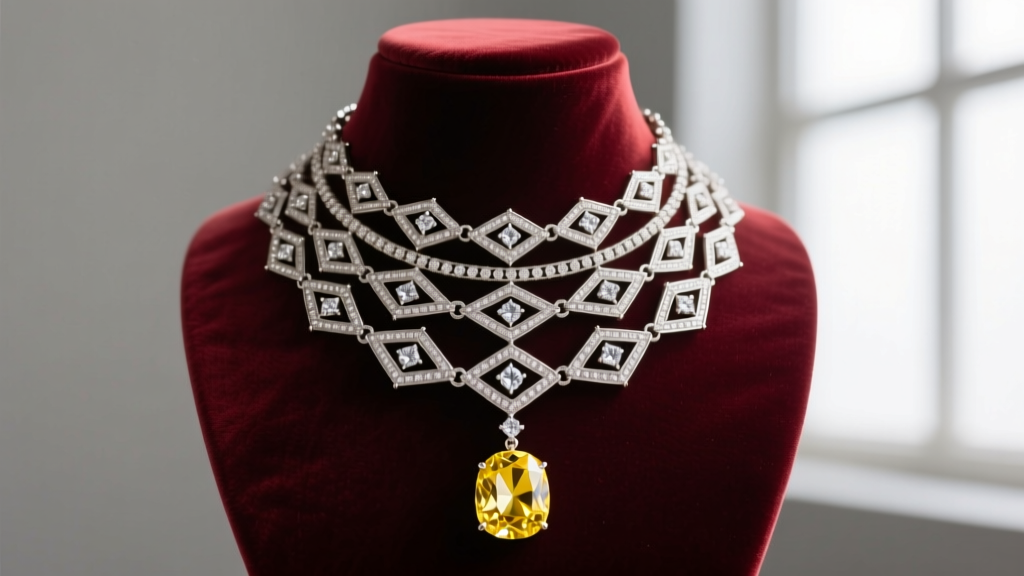
The Legend Reborn: What Defines a Patiala Silhouette?
When discussing the zenith of high jewelry maximalism, no piece commands as much reverence as the original Patiala necklace. Commissioned in 1928 by Maharaja Bhupinder Singh of Patiala from the Cartier Heritage archives, the original masterpiece featured 2,930 diamonds weighing nearly 1,000 carats, anchored by the legendary 234.69-carat De Beers yellow diamond. While the original was dismantled and its whereabouts remain one of history's great mysteries, Cartier's meticulous 1998 reconstruction sparked a lasting fascination with the cascading bib silhouette.
Fast forward to 2026, and the Patiala-inspired multi-tiered necklace is experiencing a massive renaissance. As the industry pivots away from the understated 'quiet luxury' movement of the early 2020s, collectors and red-carpet stylists are embracing 'heirloom maximalism.' The Patiala silhouette—characterized by five to seven concentric, articulated tiers of diamonds that drape like liquid light across the décolletage—has become the ultimate symbol of high jewelry dominance.
2026 Trend Analysis: The Maximalist Bib Returns
According to recent market analyses by Sotheby's High Jewelry department, auction bids for multi-tiered, articulated diamond bib necklaces have surged by 42% since 2024. The modern 2026 interpretation of the Patiala necklace diverges slightly from the rigid Art Deco geometry of the 1920s. Today's master jewelers are prioritizing fluid drape over structural stiffness, utilizing micro-mesh backings and invisible tension settings to allow the diamonds to move organically with the wearer's breathing and posture.
Anatomy of a Modern Cascading Necklace
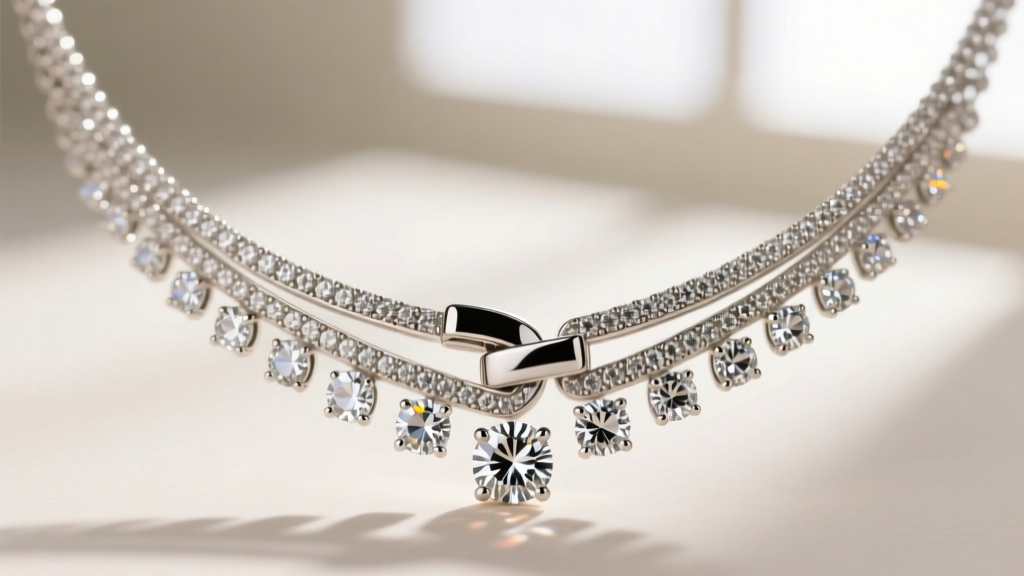
Creating a true Patiala-inspired piece requires masterful engineering. A rigid five-tier necklace will inevitably flip, tangle, and sit awkwardly on the collarbone. To achieve the signature liquid drape, modern high jewelers employ specific structural techniques:
- Micro-Hinge Articulation: Each tier must be connected via platinum micro-hinges rather than simple jump rings. Platinum is preferred over 18k white gold for these joints due to its superior tensile strength and resistance to metal fatigue over decades of wear.
- The 'Flip Test': When evaluating a cascading bib, lift it by the top choker tier. The lower tiers should cascade downward smoothly without locking or catching. If the tiers remain stiffly grouped, the articulation is insufficient for a proper drape.
- Graduated Carat Weight: To maintain visual harmony and physical balance, the diamonds in a Patiala silhouette must graduate in size. The top choker tier typically features 1.5mm to 2.0mm melee diamonds, while the bottom tier showcases 4.0mm to 6.0mm stones, culminating in a massive center drop. This gradient not only mimics the natural flow of water but also distributes the physical weight closer to the collarbone, reducing strain on the lower neck.
- Hidden Counterweights: A heavy diamond front will pull the necklace forward, choking the wearer. Master jewelers embed hidden tungsten or 18k gold beads inside the rear box clasp. The clasp weight must equal at least 15% of the front pendant's total carat weight to maintain equilibrium.
- Clasp Security: Given the immense value and weight, a dual-tongue box clasp with double figure-eight safety catches is non-negotiable for authentic high jewelry pieces.
Material & Pricing Matrix: From Heritage to Accessible
The Patiala silhouette is no longer restricted to sovereign wealth. In 2026, the market is segmented into three distinct tiers, accommodating both museum-grade collectors and demi-fine enthusiasts. The Gemological Institute of America (GIA) notes that the integration of premium lab-grown diamonds has revolutionized the accessibility of the cascading bib style.
| Tier Category | Primary Materials | Diamond Quality & Origin | Estimated Price Range (2026) |
|---|---|---|---|
| Heritage / Museum | Platinum 950 | Natural D-Flawless & Fancy Vivid Yellow | $5,000,000 - $100M+ |
| Modern High Jewelry | 18k White Gold / Platinum | Lab-Grown & Natural Mix (VS1-VVS2, E-F) | $45,000 - $250,000 |
| Demi-Fine Inspired | Gold Vermeil over Brass | Moissanite / High-Grade CZ | $350 - $1,800 |

Styling the Patiala: Necklines and Proportions
The architectural volume of a Patiala necklace demands a strategic approach to wardrobe styling. The wrong neckline will obscure the intricate tiering or cause the metal to snag on heavy fabrics.
The Deep V and Plunge
The optimal canvas for a cascading bib is a deep V-neck or plunge silhouette. This allows the bottom three tiers to rest directly against the skin, creating a high-contrast backdrop that amplifies the diamond's scintillation. Ensure the apex of the V sits at least two inches below the lowest diamond drop to prevent visual crowding.
The Off-Shoulder Architectural Gown
For strapless or off-shoulder gowns, the top tier of the necklace must act as a choker, sitting flush against the base of the neck. This anchors the visual weight and prevents the necklace from looking like it is 'floating' disconnected from the wearer's face. Avoid halter necklines entirely; the competing diagonal lines of the halter will clash violently with the concentric curves of the Patiala tiers.
"A Patiala necklace is not merely an accessory; it is a structural garment. You must dress the necklace, and then dress yourself around it." — High Jewelry Archivist, 2026.
Sourcing, Maintenance, and Authenticity
When investing in a modern high jewelry interpretation of the Patiala style, provenance and metallurgical integrity are paramount. Always request a CAD (Computer-Aided Design) rendering of the articulation joints before commissioning a bespoke piece. Verify that the side-links are stamped with the appropriate platinum or gold hallmarks, as counterfeiters often use rhodium-plated silver which will oxidize and weaken under the immense tensile stress of a 50-carat cascading front.
Maintaining a multi-tiered necklace requires specialized care. Ultrasonic cleaners are strictly forbidden for articulated bibs, as the high-frequency vibrations can loosen micro-pave stones and degrade the lubrication within the micro-hinges. Instead, professional jewelers recommend a gentle soak in a lukewarm solution of distilled water and ammonia-free dish soap, using a soft goat-hair brush to dislodge oils from the pavé settings. Annual professional inspections are mandatory to check for prong wear and hinge fatigue, particularly on the bottom-most tier which experiences the most kinetic movement.
Final Verdict: Is the Tiered Revival Here to Stay?
The 2026 revival of the Patiala necklace is not a fleeting trend; it is a permanent correction toward opulence in the high jewelry sector. As collectors seek pieces that offer both historical gravitas and red-carpet dominance, the multi-tiered cascading bib remains the undisputed apex of necklace design. Whether you are acquiring a multi-million-dollar natural diamond masterpiece or a meticulously crafted demi-fine moissanite homage, understanding the engineering, articulation, and styling nuances of the Patiala silhouette ensures you wear the jewelry, rather than letting the jewelry wear you.


