Is a Pearl Coin Necklace Worth It? 2026 Value & Budget Guide
Discover the true value of a pearl coin necklace in 2026. We break down pricing tiers, nacre grades, and metal hardware to help you budget wisely.

The Anatomy of a Pearl Coin Necklace: What Are You Actually Buying?
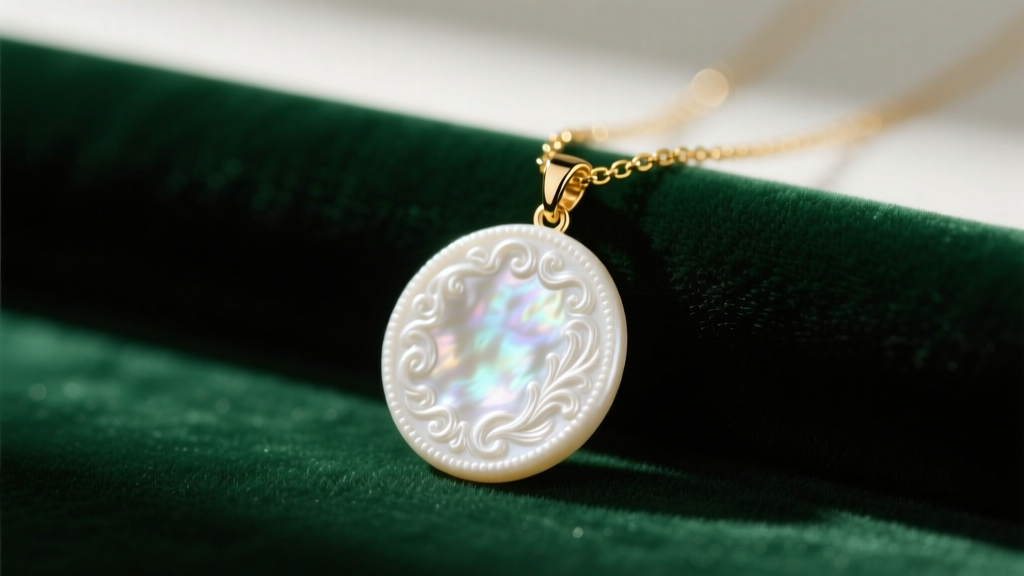
When shopping for a pearl coin necklace, the first step in assessing value is understanding exactly what you are looking at. The term 'coin pearl' does not refer to a metal coin stamped with a pearl emblem, nor does it typically refer to carved Mother of Pearl (MOP). In the gemological world, a coin pearl is a specific type of baroque freshwater pearl. These pearls are bead-nucleated using flat, disc-shaped shell nuclei, which forces the mollusk to deposit nacre in a flat, round, coin-like formation. Because of their unique geometry, coin pearls offer a modern, architectural aesthetic that differs wildly from traditional spherical Akoya or spherical freshwater pearls.
However, this unique shape creates distinct challenges in jewelry manufacturing and valuation. The flat surface area of a coin pearl highlights luster and nacre quality far more than a round pearl, making imperfections, chalky patches, and thin nacre immediately obvious to the trained eye. As we navigate the 2026 jewelry market, supply chain shifts in Zhuji, China—the epicenter of freshwater pearl farming—have caused the price of gem-grade flat nucleated pearls to rise by nearly 18% over the last three years. Consequently, the gap between budget-friendly imitations and true heirloom-quality coin pearls has never been wider.
Nacre Thickness: The Hidden Value Metric
The most critical factor in determining the longevity and value of your pearl coin necklace is nacre thickness. Nacre is the crystalline substance the oyster secretes to coat the nucleus. According to the Gemological Institute of America (GIA), nacre thickness directly dictates a pearl's durability, luster, and orient. Budget coin pearls often feature a nacre layer of just 0.3mm to 0.5mm. At this thickness, the pearl is highly susceptible to peeling, chipping, and revealing the dull shell nucleus underneath if scratched. Mid-tier pieces typically boast 1.0mm to 1.5mm of nacre, offering a solid lifespan of a decade with proper care. True luxury and investment-grade coin pearls feature 2.0mm to 3.0mm of nacre, resulting in a deep, mirror-like luster and a piece that can be passed down through generations.
2026 Market Pricing: The Budget vs. Luxury Breakdown
To accurately assess whether a pearl coin necklace is priced fairly, you must evaluate the intersection of the pearl grade and the metal hardware. Below is a comprehensive breakdown of the current market tiers.
| Market Tier | Price Range (2026) | Pearl Grade & Nacre | Metal Hardware | Expected Lifespan |
|---|---|---|---|---|
| Fast Fashion / Budget | $25 - $75 | Grade A (0.3mm - 0.8mm nacre, visible blemishes) | Gold-plated brass or copper | 6 months - 2 years |
| Mid-Tier / Artisan | $120 - $350 | Grade AA (1.0mm - 1.5mm nacre, high luster) | 14k Gold-filled or heavy Vermeil | 5 - 15 years |
| Fine / Heirloom | $600 - $1,800+ | Grade AAA (2.0mm+ nacre, mirror luster, clean surface) | Solid 14k or 18k Gold, secure bezel | Lifetime / Generational |
If you encounter a necklace marketed as 'AAA Gem Quality' but it is priced in the $40 range and set on a brass chain, you are likely looking at a treated, heavily bleached pearl or a synthetic shell pearl. True AAA coin pearls with thick nacre and flawless surfaces are rare due to the difficulty of maintaining a perfectly flat shape during the 18-to-24-month cultivation process.
Hardware & Chain Assessment: Where Brands Cut Corners
A pearl is only as valuable as the setting that secures it. When conducting a budget and value assessment of a pearl coin necklace, the hardware is often where mid-tier brands attempt to recoup the costs of a higher-quality pearl.
The 'Glued Post' Failure Mode
In budget and even some mid-tier necklaces, the coin pearl is mounted using a simple peg and cyanoacrylate adhesive (jewelry glue). The pearl is drilled halfway, the metal post is dipped in glue, and the pearl is pushed on. This is a catastrophic failure mode for everyday wear. Skin oils, lotions, perfumes, and natural body heat degrade the adhesive over time. It is incredibly common for a glued coin pearl to snap off its post and be lost within 12 to 18 months of regular wear.
High-value pearl coin necklaces utilize a 'capped and pinned' bail or a full bezel setting. In a capped bail, a metal cap sits flush against the flat top of the coin pearl, and a secure pin passes entirely through a full-drill hole, fastened with a mechanical screw or laser-welded loop. When assessing value, always inspect the drill hole. If you see a thick layer of dried glue seeping from the top of the pearl, walk away.
Vermeil vs. Gold-Filled vs. Solid
For buyers in the $100 to $300 range, understanding metal terminology is vital. Gold vermeil requires a base of sterling silver coated with at least 2.5 microns of gold. While beautiful, vermeil will eventually wear through to the silver base if exposed to friction and moisture. 14k Gold-filled metal, by contrast, contains 5% solid gold by weight (1/20th), mechanically bonded to a brass core under extreme heat and pressure. Gold-filled chains and bails will outlast vermeil by a factor of ten, making them the superior value proposition for mid-budget buyers.
How to Spot Overpriced Fakes and Treated Pearls
The 2026 market is flooded with sophisticated imitations designed to mimic the flat, luminous appeal of a genuine coin pearl. Here is how to protect your budget from deceptive practices:
- The Shell Pearl Imitation: Many budget brands sell 'shell pearls,' which are actually glass or mother-of-pearl beads coated in a synthetic pearl essence (often derived from fish scales or guanine). They are perfectly round, completely blemish-free, and unnaturally uniform. The Test: Real coin pearls will feel slightly gritty when gently rubbed against the biting edge of your front tooth. Shell pearls will feel perfectly smooth like glass.
- Irradiation and Dyeing: Some sellers take low-grade, chalky white freshwater pearls and irradiate them to produce a dark, metallic 'Peacock' or 'Tahitian' look, selling them at a massive markup. The Federal Trade Commission (FTC) Jewelry Guides mandate that sellers must disclose permanent treatments like irradiation or dyeing. If a vendor is selling a dark metallic coin pearl but fails to disclose treatment, they are violating FTC guidelines and artificially inflating the value.
- The Temperature Test: Genuine nacre is dense and organic. When you pick up a real pearl coin necklace, the pearl should feel distinctly cool to the touch and take a few seconds to warm to your skin temperature. Glass or plastic imitations will immediately feel room-temperature.

Final Verdict: Building a High-Value Collection on a Budget
So, is a pearl coin necklace worth the investment? The answer depends entirely on your willingness to scrutinize the details. If your budget is under $75, you are better off purchasing a high-quality Mother of Pearl (MOP) carved coin pendant set in sterling silver, rather than risking your money on a thin-nacre, glued-post freshwater coin pearl that will degrade quickly.
However, if you can stretch your budget into the $150 to $300 range, the pearl coin necklace becomes an exceptional value proposition. By prioritizing 14k gold-filled hardware, demanding a minimum of 1.0mm nacre thickness, and insisting on a mechanically secured bail rather than a glued post, you can acquire a breathtaking, architectural piece of jewelry that will maintain its structural integrity and luminous orient for decades.
Expert Sourcing Tip: To maximize your budget, consider purchasing a loose, AAA-grade baroque coin pearl directly from a specialized pearl importer, and take it to a local bench jeweler to be custom-set into a solid 14k gold capped bail. This bypasses the massive retail markups of boutique brands and guarantees you know exactly what you are paying for.


