Evaluating a Pearl Necklace Multi Layer: Technical Expert Guide
Discover the technical mechanics of a pearl necklace multi layer design. Expert insights on grading, stringing tension, drill holes, and clasp engineering.

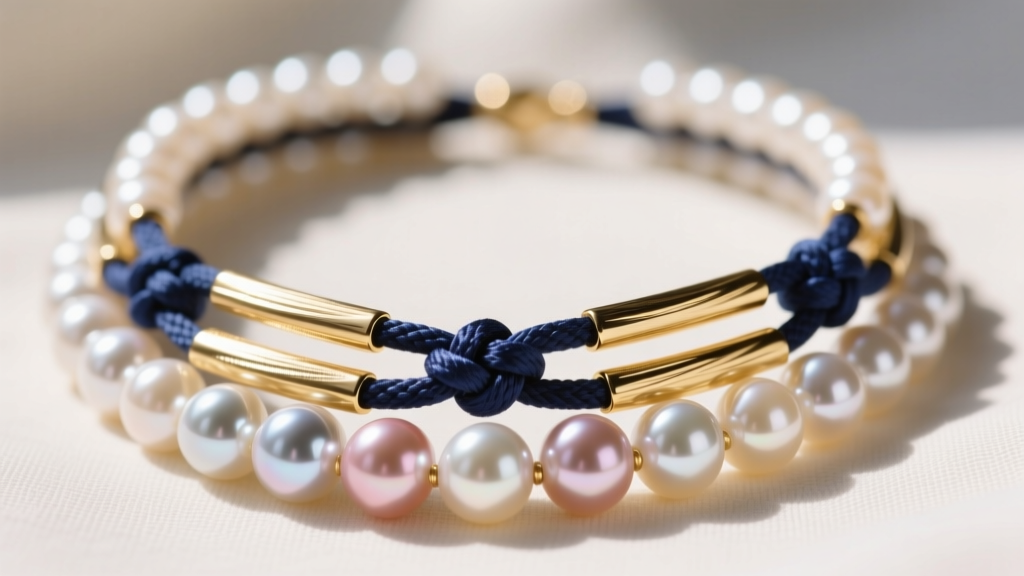
The Geometry of Multi-Layer Pearl Stringing
Constructing a flawless pearl necklace multi layer design requires far more than simply stringing three separate strands and attaching them to a single clasp. The structural geometry must account for the natural drape of the human neck, the diameter of the pearls, and the friction between adjacent layers. When evaluating or commissioning a multi-strand piece, the inner strand typically measures 16 inches (choker length), the middle strand drops to 17.5 inches (princess length), and the outer strand rests at 19 inches. This 1.5-inch graduated drop is mathematically critical; anything less causes the strands to overlap and chafe, leading to premature nacre degradation.
In high-end constructions, jewelers utilize precision-milled 14k gold or platinum spacer bars. These bars, usually featuring 2.5mm to 3.0mm spacing between the thread channels, anchor the layers at the nape of the neck and the clavicle. This prevents the strands from twisting during wear. Without spacer bars, a pearl necklace multi layer design relies entirely on the tension of the clasp and the natural weight of the pearls to maintain separation, which often fails when the wearer moves dynamically. According to the Gemological Institute of America (GIA), structural integrity in multi-strand pearl jewelry is heavily dependent on these spacing mechanics to preserve the delicate surface luster of the pearls.
Pearl Grading and Matching Tolerances
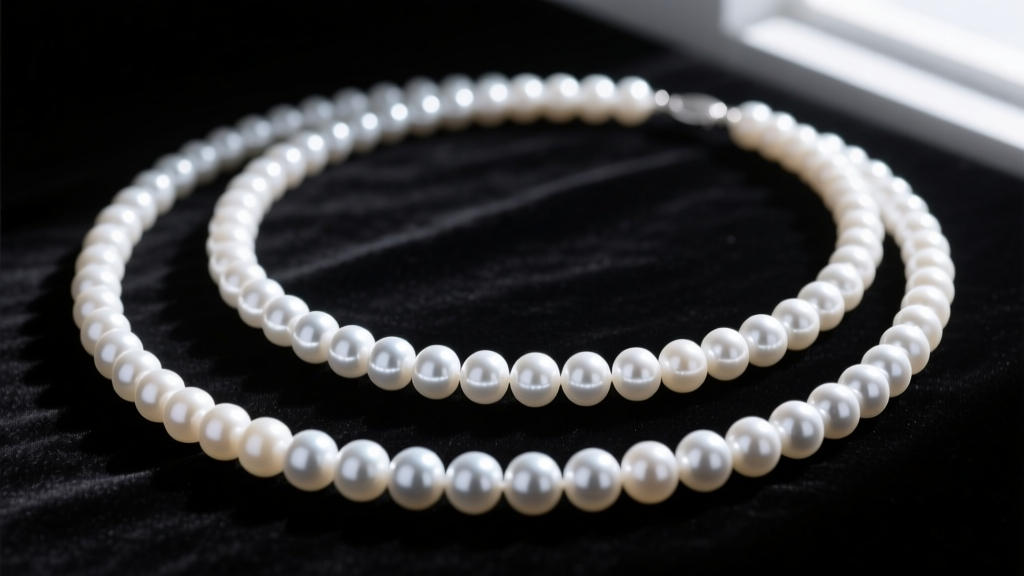
Matching pearls within a single strand is a rigorous process; matching them across three or more layers exponentially increases the difficulty. In a premium pearl necklace multi layer configuration, the gemologist must harmonize not just the diameter and body color, but the overtone and luster depth. A common failure mode in commercial multi-strand necklaces is 'luster banding,' where the inner strand appears duller than the outer strand due to inconsistent nacre thickness.
| Grading Metric | Single Strand Tolerance | Multi-Layer Tolerance |
|---|---|---|
| Diameter Variance | ± 0.3mm | ± 0.15mm across all layers |
| Nacre Thickness (Akoya) | Minimum 0.3mm | Minimum 0.45mm uniform |
| Luster Grade | Very High to Excellent | Strictly Excellent (Mirror) |
| Overtone | Consistent within strand | Harmonized Rosé or Silver across layers |
For saltwater Akoya pearls, the nacre must be a minimum of 0.45mm thick across every single pearl in the multi-layer assembly to ensure the light refraction (luster) reads uniformly when the strands lay against one another. Freshwater pearls, which are solid nacre, bypass the nacre-thickness issue but often struggle with perfect spherical symmetry, making the ± 0.15mm diameter tolerance incredibly difficult to achieve for round multi-strand designs.
Drill Hole Mechanics and Thread Selection
The longevity of a pearl necklace multi layer piece is dictated by the stringing materials and the drill hole finishing. Standard fully-drilled Akoya pearls feature a 0.8mm to 1.0mm drill channel. If the drill hole is not countersunk (slightly beveled at the edges), the sharp edge of the nacre will act as a microscopic blade, slowly fraying the stringing thread from the inside out. Expert stringers always inspect the drill holes under 10x magnification before assembly.
Historically, 100% natural silk thread (such as Griffin Size F for 6-6.5mm pearls or Size FF for 7-7.5mm pearls) has been the industry standard. Silk provides a beautiful, supple drape that allows the pearls to sit flush against the skin. However, silk is highly susceptible to moisture degradation and stretches approximately 10% to 15% over a three-year period of regular wear. In modern multi-layer engineering, some master stringers utilize gel-spun polyethylene threads (like Power Pro) for the inner, high-tension layers to eliminate stretching, while reserving silk for the outer layer to maintain a traditional knotting aesthetic. Between the final pearl and the clasp, a 0.3mm French wire (gimp) made of sterling silver or 14k gold fill must be used to protect the thread from the abrasive metal edge of the clasp ring.
Clasp Engineering for High-Weight Multi-Strands
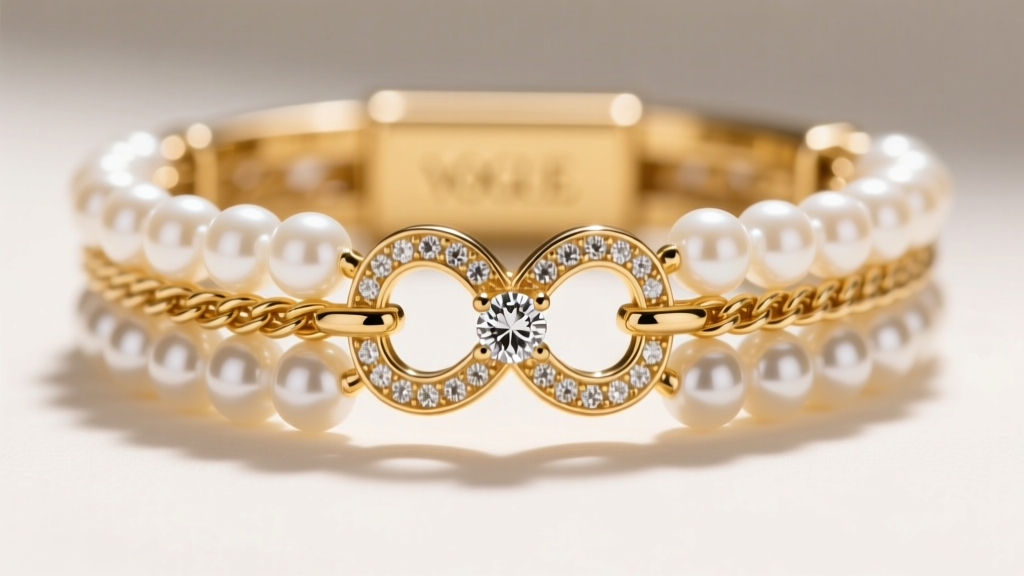
A standard 3-strand, 18-inch Akoya pearl necklace containing 165 pearls weighs between 85 and 110 grams. A traditional spring-ring or lobster clasp is entirely insufficient for this load and will inevitably suffer from latch fatigue or structural shearing. A true pearl necklace multi layer design demands a multi-strand box clasp engineered with a tongue-and-groove mechanism.
The 'tongue' is a folded piece of spring-tempered precious metal that compresses as it slides into the 'box,' snapping securely into place. For pieces exceeding 100 grams, the clasp must feature a dual figure-8 safety catch—two hinged wire loops that lock over opposing pegs on the clasp exterior. This redundancy ensures that if the primary tongue mechanism fails or is accidentally depressed, the necklace remains secured to the wearer. Furthermore, the jump rings connecting the French wire to the clasp must be soldered closed or utilize heavy-gauge oval jump rings that cannot be pried open by the sheer pendulum weight of the pearls.
Maintenance and Restringing Framework
Owning a multi-layer pearl necklace requires adherence to a strict maintenance schedule. Because the tension is distributed across multiple strands, a single failing thread can cause a catastrophic cascade if the clasp fails simultaneously. The GIA Pearl Care guidelines emphasize that cosmetics, perfumes, and human skin acids actively degrade the protein structure of silk thread.
As a technical rule of thumb, a pearl necklace multi layer design worn weekly should be professionally restrung every 24 to 36 months. You can perform a simple diagnostic test: gently pull the thread between two pearls. If you see more than 1mm of exposed thread, or if the pearls slide laterally rather than sitting rigidly against the knot, the silk has lost its structural integrity and requires immediate servicing. When restringing, ensure your jeweler uses the 'French knot' technique, where the thread is looped back through the pearl and the bead tip, creating a triple-lock security node that prevents total strand failure even if the primary knot slips.


