Pebble Necklace Buying Guide: Stones, Settings & Styles
Discover our expert pebble necklace buying guide. Learn about stone durability, Mohs hardness, wire-wrapping techniques, and how to spot fakes.

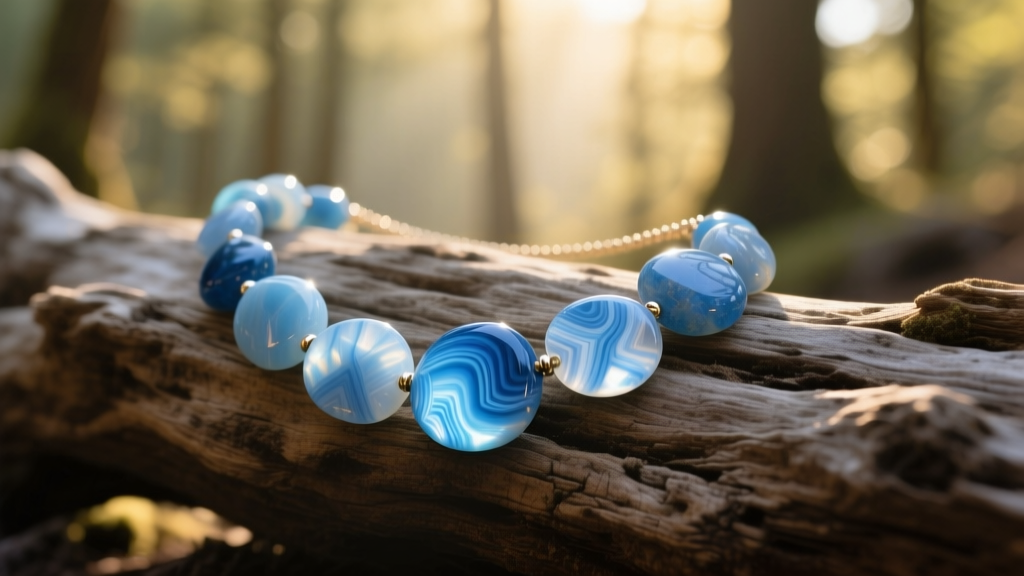
The shift toward organic, unrefined jewelry has cemented the pebble necklace as a staple in modern collections. Unlike traditional faceted gemstones that rely on precise geometric cuts to reflect light, a pebble necklace celebrates the raw, tactile, and naturally smoothed essence of the earth. Whether crafted from river-tumbled jasper, hand-polished agate, or rare ocean jade, these pieces bridge the gap between bohemian crystal aesthetics and refined minimalism.
However, buying a high-quality pebble necklace requires more than just picking a pretty stone. Because these pendants lack the protective prongs and deep bezels used in conventional jewelry, the stone itself must withstand daily wear, friction, and accidental impacts. This comprehensive buying guide breaks down the lapidary processes, material durability, setting techniques, and authentication methods you need to know before making a purchase in 2026.
The Anatomy of a True Pebble Pendant
Not all smooth stones are created equal. In the lapidary world, a true 'pebble' pendant is typically shaped using a rotary tumbler. This process involves placing rough gemstone material into a barrel with silicon carbide grit and water, rotating it continuously for four to six weeks. The stones pass through progressively finer grits—starting at 60/90 for shaping, moving to 120/220 for smoothing, and finishing with cerium oxide or aluminum oxide for a high-gloss polish.
When inspecting a pebble necklace, look for a uniform, glass-like polish without flat spots or 'bruises' (tiny surface chips caused by stones hitting each other too hard in the tumbler). A master lapidary will ensure the stone retains its organic, asymmetric charm while achieving a flawless tactile finish.
Stone Durability: The Mohs Scale Factor
Because pebble pendants often hang freely and are prone to swinging against tables, zippers, and other jewelry, hardness is your primary concern. The Gemological Institute of America (GIA) utilizes the Mohs scale of mineral hardness to determine a stone's scratch resistance. For a daily-wear pebble necklace, you want a stone rated 6.5 or higher.
| Stone Type | Mohs Hardness | Fracture Risk | Best Use Case |
|---|---|---|---|
| Agate / Jasper | 6.5 - 7.0 | Low (Conchoidal fracture) | Everyday wear, active lifestyles |
| Petrified Wood | 6.5 - 7.0 | Low to Medium | Everyday wear, statement pieces |
| Turquoise | 5.0 - 6.0 | Medium (Porous) | Occasional wear, requires stabilization |
| Moonstone | 6.0 - 6.5 | High (Perfect cleavage) | Special occasions, protective settings |
| Opal (Common) | 5.5 - 6.5 | High (Prone to crazing) | Wire-wrapped cages, low-impact wear |
Expert Tip: If you are buying a turquoise or opal pebble, ensure it has been professionally stabilized with a clear resin. Untreated turquoise is highly porous and will absorb skin oils and lotions, permanently darkening and losing its matrix contrast over time.
Setting & Stringing Techniques
The way a pebble is attached to its chain dictates both its aesthetic and its structural integrity. Lapidaries and jewelers generally use one of three methods to mount these organic shapes.
1. Center-Drilled vs. Top-Drilled
Drilling is the most common method for stringing pebbles. High-quality drill holes are created using water-cooled diamond core bits to prevent thermal shock, which can shatter the stone. Furthermore, a skilled artisan will drill from both sides toward the center to prevent 'blowout'—a jagged chipping effect that occurs when the drill bit punches through the opposite side of the stone. Always inspect the drill hole; it should be smooth, symmetrical, and free of white stress fractures.
2. Wire-Wrapping (The Tension Cage)
For stones that are too rare or fragile to drill, wire-wrapping is the ideal solution. Artisans typically use 20-gauge or 22-gauge dead-soft wire (often copper, silver, or gold-filled) to weave a custom tension cage around the pebble. This method secures the stone without adhesives and allows the wearer to see the full, unbroken surface of the gem.
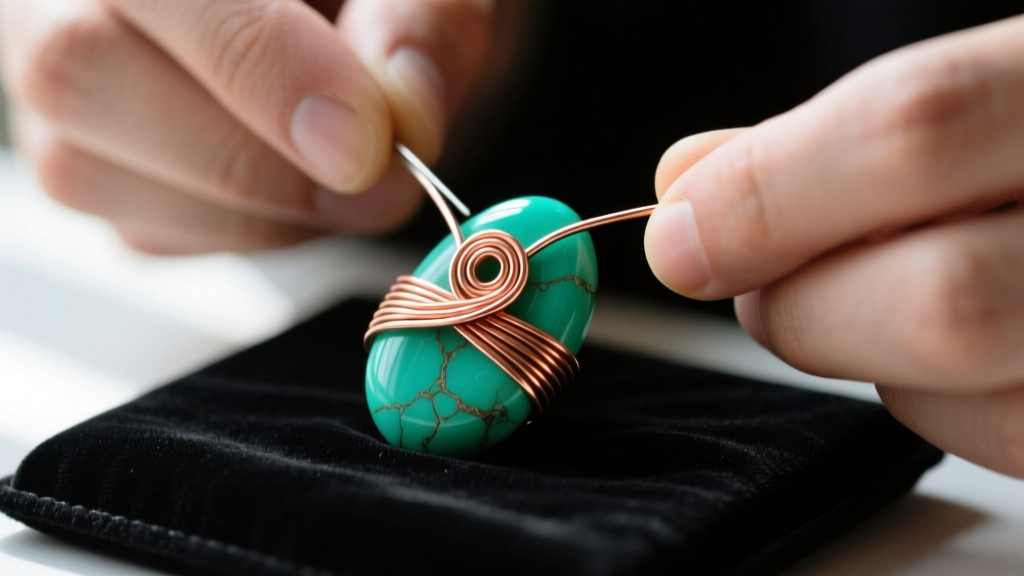
3. Bezel Setting for Sliced Pebbles
Sometimes, a pebble is sliced in half and polished on the flat side to reveal internal banding or dendritic inclusions. These are best secured in a custom-fitted bezel cup, where a thin rim of metal is pushed over the edge of the stone using a bezel roller, locking it in place without the need for drilling.
Selecting the Right Chain or Cord
The organic nature of a pebble pendant demands a chain or cord that complements its earthy aesthetic while providing adequate tensile strength. Heavy agate or jasper pebbles can easily weigh between 15 and 30 grams, which will snap delicate jewelry chains.
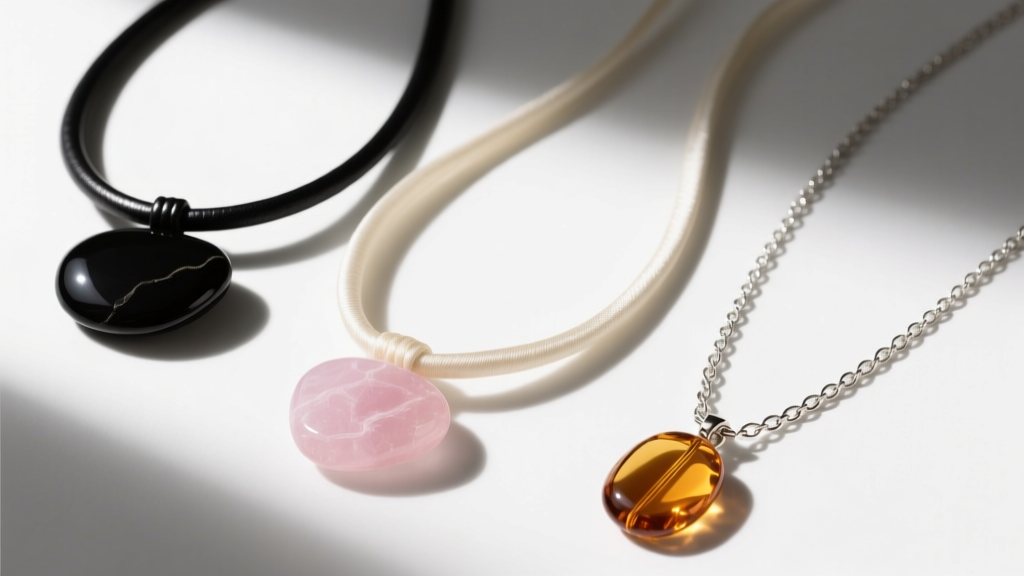
- Leather Cords (1.5mm - 2.0mm): The classic pairing for pebble necklaces. Opt for vegetable-tanned leather, which ages beautifully and develops a patina. Ensure the cord has a secure metal end-cap and a sturdy lobster clasp, rather than a simple slip-knot, to prevent the heavy stone from pulling the cord apart.
- Knotted Silk Thread: Ideal for lighter, high-end pebbles like jade or lapis lazuli. French wire ends (metal coil protectors) should be used where the silk loops through the clasp to prevent the thread from fraying against the metal.
- Wheat or Snake Chains (Sterling Silver/Gold): If you prefer metal, avoid delicate cable chains. Wheat chains (also known as spiga chains) feature tightly woven, directional links that resist kinking and can easily support the weight of a medium-sized stone pendant.
Authentication: Spotting Fakes and Enhancements
The market is flooded with imitation pebble necklaces, particularly in highly sought-after materials like turquoise, lapis lazuli, and jade. According to mineralogical data from Mindat.org, understanding the physical properties of your desired stone is crucial for authentication.
'A genuine tumbled pebble will have microscopic surface variations and natural inclusions. If a stone is perfectly uniform in color, unnaturally heavy, or completely devoid of internal matrix, it is likely dyed agate, howlite, or molded glass.' — Master Lapidary Guidelines
The Acetone Test: Many commercial 'turquoise' or 'lapis' pebbles are actually howlite or magnesite dyed with synthetic colorants. If you lightly rub a cotton swab dipped in pure acetone (nail polish remover) against an inconspicuous area of the stone and the swab turns blue, the stone is dyed.
Thermal Conductivity: Glass imitations will warm up quickly in your hand and feel lightweight. Genuine quartz, agate, and jasper pebbles possess high thermal mass; they will feel distinctly cool to the touch and take much longer to absorb your body heat.
Pricing Tiers & What to Expect
When budgeting for a pebble necklace, pricing is dictated by the rarity of the rough material and the labor intensity of the tumbling and drilling process.
Tier 1: Accessible Earth Stones ($20 - $50)
This tier includes abundant materials like river rock, red jasper, clear quartz, and snowflake obsidian. These stones are tumbled in massive commercial batches, keeping labor costs low. Expect simple center-drilled stones on basic leather cords or cotton macramé.
Tier 2: Semi-Precious & Enhanced ($60 - $150)
Here you will find high-quality lapis lazuli, malachite, amethyst, and stabilized turquoise. The rough material is more expensive, and the lapidary work is more precise. These pieces often feature hand-forged wire wrapping, sterling silver bails, or high-grade braided silk cords.
Tier 3: Rare & Artisan Crafted ($180 - $400+)
The top tier is reserved for rare geological finds such as Larimar (found only in the Dominican Republic), high-grade Sleeping Beauty turquoise, or gem-quality ocean jasper. These pebbles are often custom-shaped by artisan lapidaries and paired with 14k or 18k gold wire-wrapping and bespoke chain links.
Final Care and Maintenance
To maintain the high-gloss polish of your pebble necklace, avoid exposing it to harsh chemicals, chlorinated pool water, or ultrasonic cleaners. Ultrasonic vibrations can exploit microscopic internal fractures, causing the stone to split. Instead, clean your pebble jewelry with a soft, lint-free microfiber cloth and a drop of mild, phosphate-free dish soap diluted in lukewarm water. By understanding the lapidary craft and material science behind these organic gems, you can confidently select a pebble necklace that is as durable as it is beautiful.


