How to Clean a Pendant Black Necklace Without Ruining the Finish
Learn how to safely clean a pendant black necklace. Discover specific maintenance tips for oxidized silver, PVD coatings, and black enamel finishes.

The Chemistry of Black Finishes: Why Standard Cleaners Fail
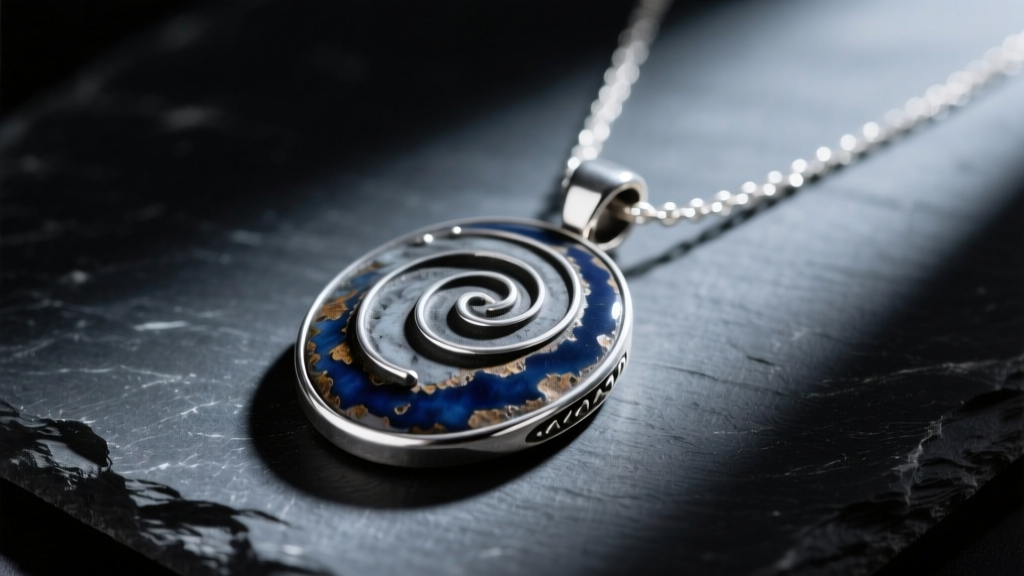
A pendant black necklace is a striking statement piece, but the very treatments that give it that deep, moody aesthetic also introduce unique vulnerabilities. Unlike traditional yellow gold or polished platinum, black jewelry relies on surface alterations—either chemical, physical, or applied coatings. The most common mistake consumers make is applying standard jewelry dips or ultrasonic cleaners to these pieces. According to the Silver Institute, commercial silver cleaners often contain thiourea, a chemical that aggressively strips silver sulfide. If your necklace relies on intentional oxidation (tarnish) for its black color, a standard silver dip will strip the patina in seconds, leaving you with a patchy, dull grey chain and pendant.
To properly care for your jewelry, you must first identify the exact method used to achieve the black finish. The three primary techniques are chemical oxidation, Physical Vapor Deposition (PVD), and electroplated black rhodium or enamel. Each requires a radically different maintenance protocol to preserve its structural integrity and visual depth.
Material-Specific Cleaning Protocols
Oxidized Sterling Silver (The Patina Trap)
Oxidized silver is created by exposing 925 sterling silver to sulfur compounds, intentionally forming a layer of black silver sulfide. This finish is not a plating; it is a surface conversion. Because the black layer is essentially controlled tarnish, any abrasive polishing cloth or chemical dip will remove it.
- Do Use: A mild, phosphate-free dish soap (like Dawn) mixed with distilled water. Use a soft-bristled baby toothbrush to gently lift skin oils and lotions from the crevices of the pendant.
- Do Not Use: Silver polishing cloths (which contain micro-abrasives), ultrasonic cleaners, or any liquid silver dip.
- Pro Tip: If the high points of your pendant have worn down to bright silver, do not attempt to re-blacken it with household sulfur (like boiled eggs), as this creates an unstable, flaky patina. Seek a jeweler who uses liver of sulfur in a controlled gel application.
Black PVD and Rhodium Plating
Physical Vapor Deposition (PVD) involves vaporizing metals like titanium or zirconium in a vacuum chamber, bonding them to a base metal (often surgical steel or titanium) at a molecular level. PVD is incredibly hard—often exceeding 2000 on the Vickers Hardness scale—making it highly scratch-resistant. Black rhodium, conversely, is an electroplated precious metal. It offers a richer, deeper black but is significantly softer and prone to wearing off on high-friction areas.
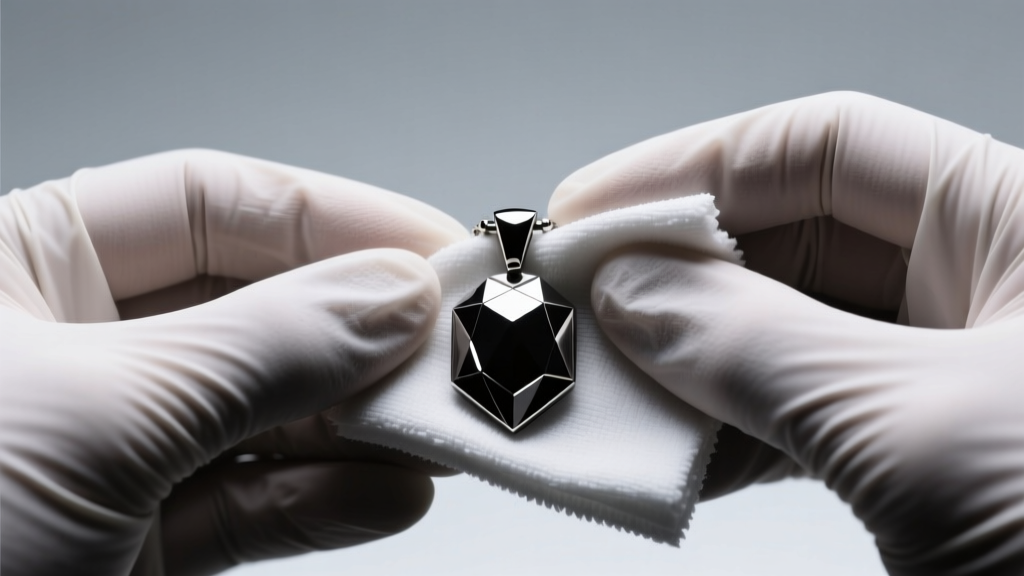
For PVD and rhodium, the enemy is not chemical stripping, but micro-scratching and oil buildup. Skin acidity (pH levels below 5.5) can slowly degrade the binders in lower-quality rhodium plating over time. Clean these pieces using a 70% isopropyl alcohol solution on a lint-free microfiber cloth. The alcohol will instantly dissolve sebum and cosmetics without leaving a residue or requiring the mechanical friction that causes micro-scratches.
Black Enamel and Gemstones (Onyx/Obsidian)
Many pendant black necklaces incorporate vitreous enamel (fused glass) or cold enamel (epoxy resin), alongside black gemstones like onyx. The Gemological Institute of America (GIA) notes that while onyx is a 7 on the Mohs scale, it is often dyed to achieve a uniform black, making it porous and sensitive to harsh chemicals. Cold enamel is even more fragile; it can yellow under prolonged UV exposure and will cloud if exposed to alcohol or acetone.
- Enamel Care: Wipe only with a damp microfiber cloth. Never soak an enameled pendant, as water can seep into microscopic cracks and lift the enamel from the metal backing.
- Onyx Care: Clean with warm water and a drop of mild soap. Avoid ultrasonic cleaners, as the high-frequency vibrations can fracture internal stress points in dyed stones.
Step-by-Step Deep Cleaning Framework
If your pendant black necklace has accumulated heavy buildup from sunscreen, perfume, and daily wear, follow this safe, universal deep-cleaning framework:
- Preparation: Line a glass bowl with a soft towel. Fill it with lukewarm (never hot) distilled water and three drops of pH-neutral baby shampoo.
- Soaking (Conditional): Submerge PVD or solid oxidized silver for 3-5 minutes. Never soak rhodium-plated, enameled, or porous gemstone pieces.
- Agitation: Use a ultra-soft makeup brush (like a clean eyeshadow blending brush) to gently sweep around the pendant bail and jump rings where debris collects.
- Rinsing: Rinse under a gentle stream of distilled water. Tap water contains chlorine and minerals that can leave hard water spots on black finishes, making them look cloudy.
- Drying: Pat dry with a microfiber cloth, then use a hairdryer on the 'cool' setting to blast water out of the clasp mechanisms and chain links.
Cleaning Agent Compatibility Matrix
| Finish Type | Mild Soap & Water | Isopropyl Alcohol | Silver Dip / Polish | Ultrasonic Cleaner |
|---|---|---|---|---|
| Oxidized Silver | Safe (Gentle) | Avoid | Destructive | Risky (Can loosen patina) |
| Black PVD | Safe | Safe (Preferred) | Destructive | Safe (if no gemstones) |
| Black Rhodium | Safe (Quick) | Avoid (Degrades) | Destructive | Destructive |
| Black Enamel/Onyx | Safe (No soaking) | Destructive | Destructive | Destructive |
Pendant Hardware and Chain Maintenance
The structural failure points of any necklace are the hardware components: the jump ring connecting the pendant to the chain, the lobster clasp, and the chain links themselves. On a pendant black necklace, the friction from opening and closing the clasp will inevitably wear away the black finish on those specific contact points, revealing the base metal (usually brass or silver) underneath.
To extend the life of your hardware, apply a microscopic amount of PTFE (Teflon) dry lubricant to the spring mechanism of the lobster clasp once every six months. Unlike liquid oils, which attract dust and create an abrasive paste that accelerates wear, PTFE dries instantly, reducing friction without leaving a residue. Furthermore, always check the pendant bail (the loop the chain passes through). If the black finish inside the bail has worn off, the bare metal will create friction against the chain, acting like a file and eventually snapping the chain links.
Storage and Preventative Care
How you store your pendant black necklace is just as critical as how you clean it. Black finishes, particularly oxidized silver and black rhodium, are highly reactive to environmental sulfides and humidity.
Expert Storage Rule: Never store a black necklace in a bathroom or near a vanity where aerosol hairsprays and perfumes are used. The aerosolized chemicals will settle on the pendant, creating a stubborn, cloudy film that is difficult to remove without damaging the finish.
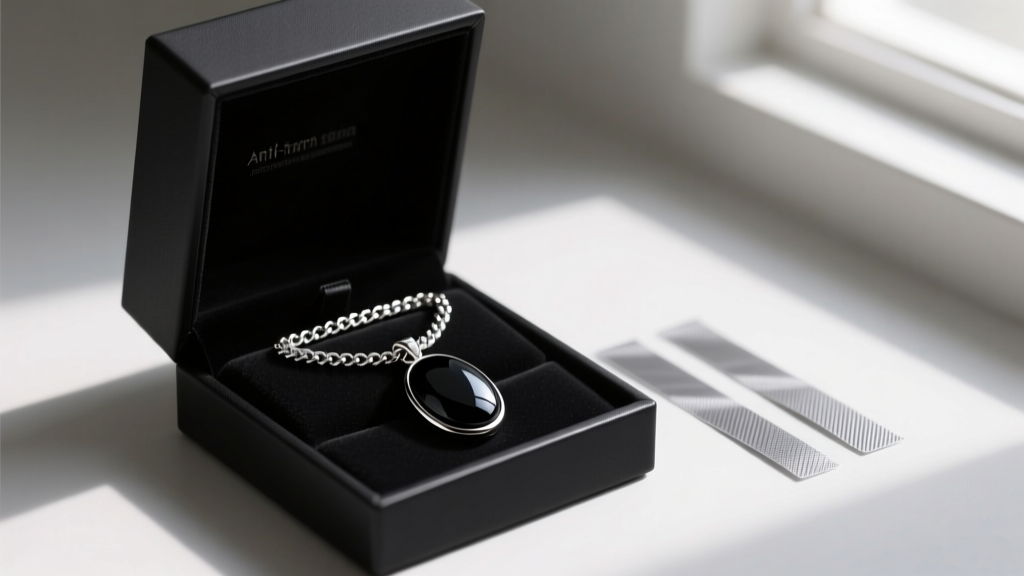
Store the necklace in a dedicated, soft-lined jewelry box with individual compartments. If a black onyx pendant (Mohs 7) is stored loose next to a diamond-accented piece (Mohs 10), the diamond will easily scratch the onyx and the black metal settings. Always include a 3M anti-tarnish strip in the storage compartment. These strips utilize a copper-based polymer that actively absorbs airborne sulfides, neutralizing them before they can react with your jewelry. Replace these strips every 6 months for optimal protection.
When to Seek Professional Replating
No matter how carefully you maintain your jewelry, certain finishes have a finite lifespan. Black rhodium plating, due to its softness and the thinness of the electroplated layer (usually between 0.1 to 0.5 microns), will eventually wear through to the base metal, especially on the back of the pendant that rests against the skin. When you notice a copper or silver hue bleeding through the black on high-contact areas, it is time for professional replating.
Expect to pay between $45 and $90 for a jeweler to polish, clean, and replate a standard-sized pendant in black rhodium. PVD coatings, however, cannot be easily replated by a standard bench jeweler; they require a vacuum chamber. If a PVD coating fails or scratches deeply, the piece usually must be sent back to the original manufacturer or a specialized industrial coating facility for stripping and re-deposition. Understanding the limits of your necklace's specific finish ensures you preserve its dark, sophisticated aesthetic for years to come.


