Petoskey Stone Necklace Trends 2026: Elevated Styling Guide
Discover 2026 petoskey stone necklace trends. Learn how to style fossilized coral pendants, choose durable bezel settings, and layer with mixed metals.

The 2026 Shift: From Regional Souvenir to Quiet Luxury
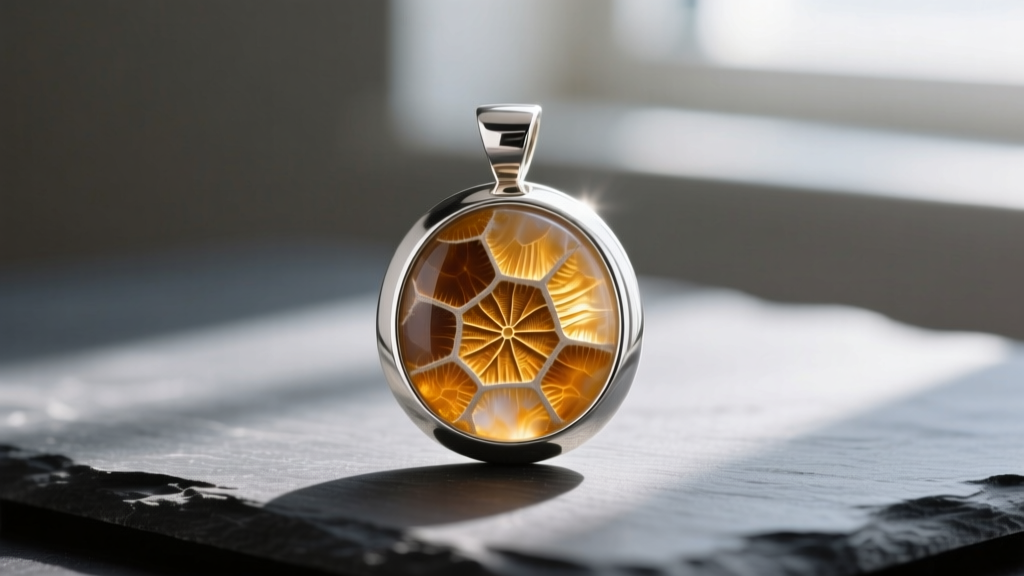
For decades, the petoskey stone necklace was largely confined to the realm of Midwestern souvenir shops, often characterized by rudimentary wire-wrapping and uneven, mass-produced tumbles. However, as we navigate the jewelry landscape of 2026, a profound shift has occurred. Driven by the broader 'quiet luxury' movement and a renewed consumer appetite for geologically significant, traceable materials, the petoskey stone has been reclaimed by artisan lapidaries and high-end independent jewelers. Today, a premium petoskey stone necklace is no longer just a keepsake from the shores of Lake Michigan; it is a sophisticated statement piece that bridges deep-time natural history with contemporary minimalist design.
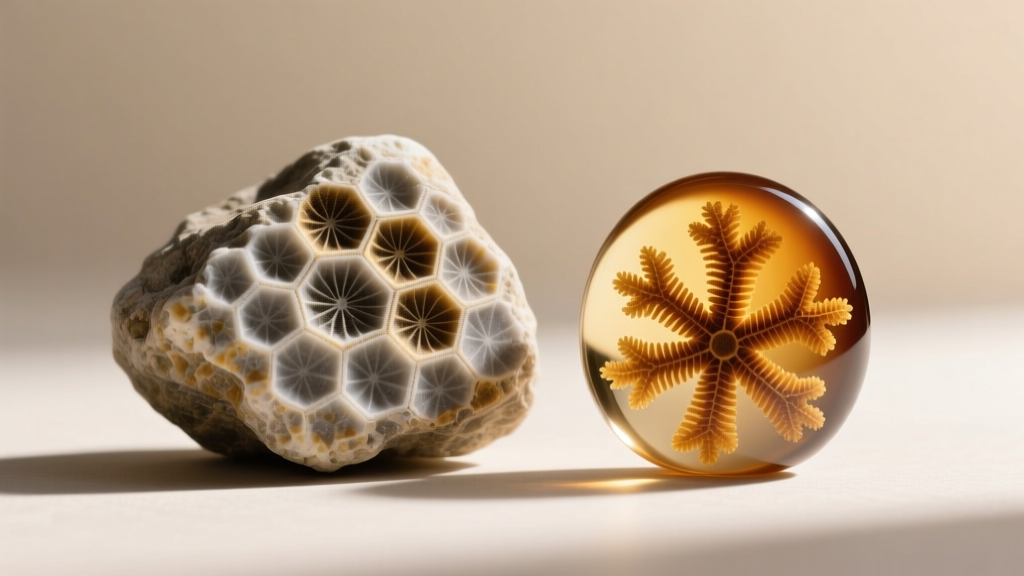
The appeal in 2026 lies in the stone's unique optical properties. Composed of fossilized coral (Hexagonaria percarinata) dating back roughly 350 million years to the Devonian period, the stone's signature hexagonal pattern remains entirely invisible when dry and raw. It is only through expert wet-polishing that the striking, contrasting mosaic of calcite and aragonite is revealed. This dynamic visual texture pairs exceptionally well with the current trend of organic, earth-toned wardrobes, making it a staple for designers focusing on sustainable, nature-inspired collections.
Lapidary Mechanics: The Challenge of Fossil Coral
To truly evaluate a petoskey stone necklace, one must understand the lapidary challenges inherent to the material. Unlike quartz or beryl, petoskey stone is a composite fossil matrix. The 'eyes' of the coral (the corallites) are composed of harder calcite, while the surrounding skeletal matrix is softer. This differential hardness makes flat-lapping and cabochon cutting notoriously difficult. Inexperienced cutters often produce wavy, undulating surfaces where the softer matrix has worn away faster than the coral structures.
The Bezel Mandate
From a structural engineering perspective, the setting of a petoskey pendant dictates its lifespan. With a Mohs hardness rating hovering between 3.0 and 3.5, the stone is highly susceptible to chipping and cleavage. Prong settings are a critical failure mode for this material. The localized point-pressure exerted by metal prongs will inevitably cause the calcium carbonate matrix to fracture under everyday wear. In 2026, the industry standard for high-end petoskey jewelry is the full bezel or architectural half-bezel setting. A properly calibrated sterling silver or 14k gold bezel distributes tension evenly across the perimeter of the cabochon, securing the stone without stressing its fragile internal fossil structures.
Polish Grading & Matrix Clarity
When sourcing a necklace, examine the polish grade under direct light. A master-cut cabochon should exhibit a 'glass-like' finish with zero pitting. If you run your fingernail across the surface of the stone and feel ridges or dips, the lapidary failed to manage the differential hardness of the fossil. Premium stones will show sharp, high-contrast hexagonal boundaries without any cloudy abrasion marks.
Chain Pairings & Gauge Specifications
A common mistake in styling fossil coral pendants is pairing a heavy, oversized cabochon with an inadequate chain. Artisan petoskey stones, particularly those cut into 30x40mm or 40x50mm oval cabochons, can easily weigh between 20 and 45 grams. A standard 0.8mm or 1.0mm chain will not only look visually unbalanced but will also suffer from accelerated link fatigue and eventual snapping.
Below is the structural matrix for pairing chains with petoskey pendants based on weight and aesthetic balance:
| Chain Style | Recommended Width | Clasp Type | Best Pendant Weight | 2026 Trend Status |
|---|---|---|---|---|
| Box Chain | 1.5mm - 2.0mm | Lobster (12mm+) | 15g - 35g | High (Clean, modern) |
| Wheat Chain | 1.8mm - 2.5mm | Spring Ring (10mm) | 20g - 50g | Medium (Textured, organic) |
| Rope Chain | 2.0mm+ | Lobster (15mm) | 40g+ | Low (Too traditional) |
| Snake Chain | 1.2mm - 1.5mm | Lobster (10mm) | Under 15g | High (Sleek, minimalist) |
For the most contemporary look, jewelers are favoring 1.8mm oxidized sterling silver wheat chains. The darkened crevices of the oxidized silver visually echo the natural, earthy tones found within the fossilized coral matrix, creating a cohesive, grounded aesthetic.
Styling Frameworks: Necklines & Layering
The styling of a petoskey stone necklace in 2026 has moved far beyond the solitary pendant on a basic tee. The current ethos favors intentional asymmetry and mixed-material layering.
The Earth-Tone Cascade
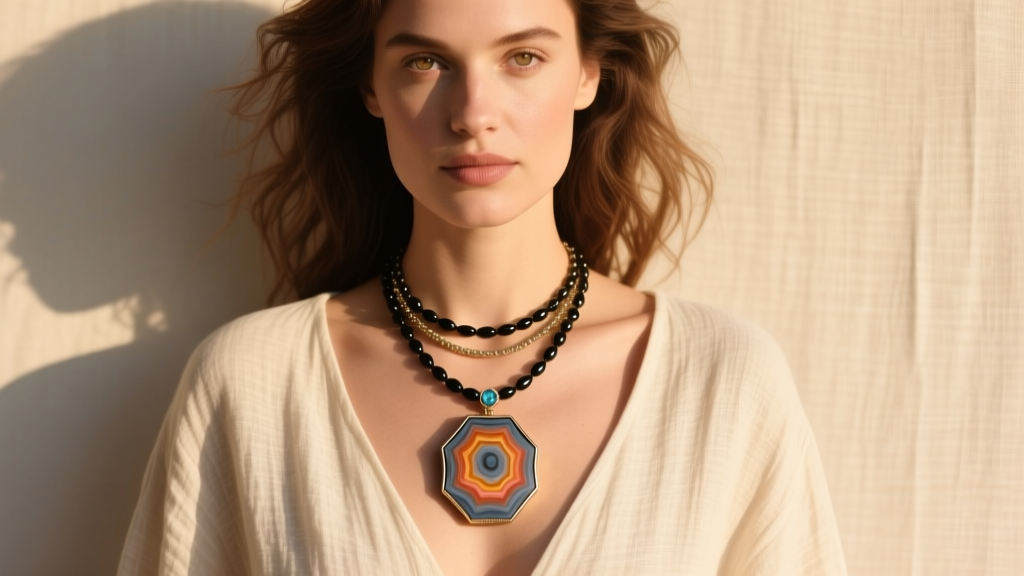
Because the petoskey stone naturally features a palette of grays, tans, and muted browns, it serves as an ideal anchor for an earth-tone cascade. Pair a 20-inch polished petoskey pendant with an 18-inch matte black onyx or dark picture jasper bead chain. This combination works exceptionally well over structured linen shirts or lightweight merino wool turtlenecks. The matte finish of the secondary chain prevents visual competition, allowing the high-polish hexagonal pattern of the petoskey to remain the focal point.
Mixed Metal Contrast
While yellow gold has dominated the broader jewelry market for the past few years, 2026 is seeing a resurgence of mixed metals in regional stone jewelry. A petoskey stone set in a brushed 14k yellow gold bezel, suspended from an oxidized sterling silver chain, creates a striking industrial-meets-organic contrast. This mixed-metal approach allows the necklace to bridge the gap between silver and gold accessories, making it a highly versatile piece for everyday wear.
Sourcing Authentic Michigan Fossil Coral
As the demand for elevated petoskey stone jewelry grows, so does the market for imported imitations. By Michigan law, the term 'Petoskey Stone' specifically refers to Hexagonaria percarinata found within the state's Gravel Point Formation. To ensure authenticity, buyers should request provenance from their jewelers. Reputable artisan lapidaries will specify that their rough material was ethically sourced from the Traverse City or Petoskey regions. According to the Michigan Department of Natural Resources, the stone's unique geological footprint is tied strictly to the ancient Michigan Basin reef systems. For those interested in the deep mineralogical data, the Mindat mineral database provides exhaustive documentation on the calcite and aragonite structures that define these Devonian fossils.
Care & Maintenance of Calcium Carbonate
The longevity of your necklace depends entirely on proper care protocols tailored to calcium carbonate. Because the stone is essentially fossilized limestone, it is highly reactive to acids and extreme heat.
- Never use ultrasonic cleaners: The high-frequency vibrations will shatter the delicate internal fossil matrix and separate the corallites from the surrounding skeletal structure.
- Avoid chemical exposure: Perfumes, hairsprays, and especially acidic substances like vinegar or citrus will etch the surface of the polish, leaving permanent dull spots. Always put your necklace on after applying cosmetics.
- Storage: Store the pendant separately in a soft microfiber pouch. With a Mohs hardness of 3.5, it will easily scratch if tossed into a jewelry box alongside diamonds, sapphires, or even quartz.
- Cleaning: Use only a damp, lint-free cloth with a drop of mild, pH-neutral dish soap. Buff dry immediately with a clean microfiber towel to restore the optical clarity of the hexagonal patterns.
'The true art of working with Petoskey stone isn't just in the cutting; it's in the restraint. You are polishing a 350-million-year-old reef. You must respect the boundary between the hard coral eyes and the soft matrix, or the stone will lose its soul.' — Master Lapidary Insight, 2026 Guild Symposium.
Ultimately, the modern petoskey stone necklace represents a triumph of specialized craftsmanship over mass production. By understanding the geological realities of the stone, demanding proper bezel settings, and styling with intentional, mixed-material layering, you elevate a piece of ancient natural history into a cornerstone of contemporary, mindful adornment.


