Pheonix Necklace OSRS: Technical Guide to Custom Jewelry Replicas
Discover the metallurgy, casting techniques, and vitreous enameling required to craft a durable, real-world Pheonix Necklace OSRS replica.

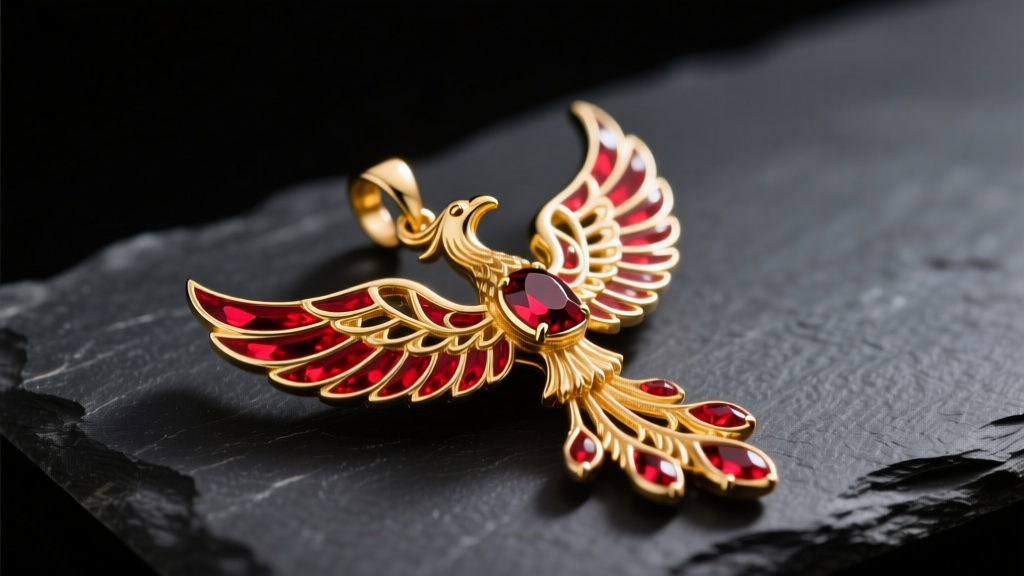
When dedicated collectors and gamers search for a pheonix necklace osrs replica, they are frequently met with a market saturated by cheap, mass-produced alloy trinkets coated in degrading epoxy paint. Translating a beloved digital artifact from Old School RuneScape into a physical, heirloom-quality piece of jewelry requires a profound understanding of metallurgy, 3D CAD engineering, and traditional enameling techniques. As of 2026, advancements in castable resins and precision kiln technology have made it possible for master jewelers to create breathtaking, museum-grade replicas that capture the iconic crimson and gold silhouette of the legendary phoenix pendant. This expert deep dive explores the exact technical specifications, material grades, and fabrication processes required to engineer a real-world phoenix necklace that is as durable as it is visually striking.
Digital Sculpting and CAD Tolerances
The journey from a low-poly in-game asset to a wearable metal pendant begins in the digital realm. The original OSRS model lacks the anatomical depth required for physical casting. A master CAD designer must import the base silhouette into software like ZBrush or MatrixGold to sculpt high-fidelity feather textures and dimensional bevels.
- Wall Thickness: The absolute minimum wall thickness for any cast metal component is 1.2mm. Thinner sections, particularly the tips of the phoenix wings, risk severe porosity or tearing during the quenching phase.
- Undercuts and Sprues: The 3D model must be designed with proper draft angles to allow the castable wax to be pulled from a rubber mold if replication is needed. For direct 3D printing, the CAD file must include virtual sprue channels (minimum 2.5mm diameter) to ensure a smooth flow of molten metal into the wing extremities.
- Enamel Recesses: To hold vitreous enamel, the designer must carve precise 'pools' or 'cloisons' into the digital wax model. These recesses must be exactly 0.8mm to 1.0mm deep to allow for multiple layers of glass powder and subsequent lapidary grinding without exposing the base metal.
Metallurgy and the Lost-Wax Casting Process
Once the master model is 3D printed using a high-resolution castable resin (such as Siraya Tech Cast or Formlabs Castable Wax 40), it undergoes the lost-wax casting process. The resin tree is encased in a phosphate-bonded investment powder inside a steel flask. The burnout cycle is critical: the flask must be slowly ramped to 1,350°F over 8 hours to completely vaporize the resin without leaving ash residue, which causes surface pitting.
Choosing the correct base metal is paramount for both durability and enamel compatibility. Below is a technical comparison of materials commonly used for high-end gaming replicas:
| Material | Vickers Hardness (HV) | Melt Temp (°F) | Enamel Compatibility | Estimated Base Cost |
|---|---|---|---|---|
| 925 Sterling Silver | 60-70 | 1,640 | High (Requires fine silver bezels) | $45 - $85 |
| 10k Yellow Gold | 135 | 1,740 | Moderate (Alloy metals may cause discoloration) | $120 - $180 |
| 14k Yellow Gold | 125 | 1,550 | Excellent (Standard for high-end vitreous) | $250 - $400 |
| Jeweler's Brass | 100 | 1,710 | Poor (Zinc outgassing ruins enamel) | $15 - $30 |
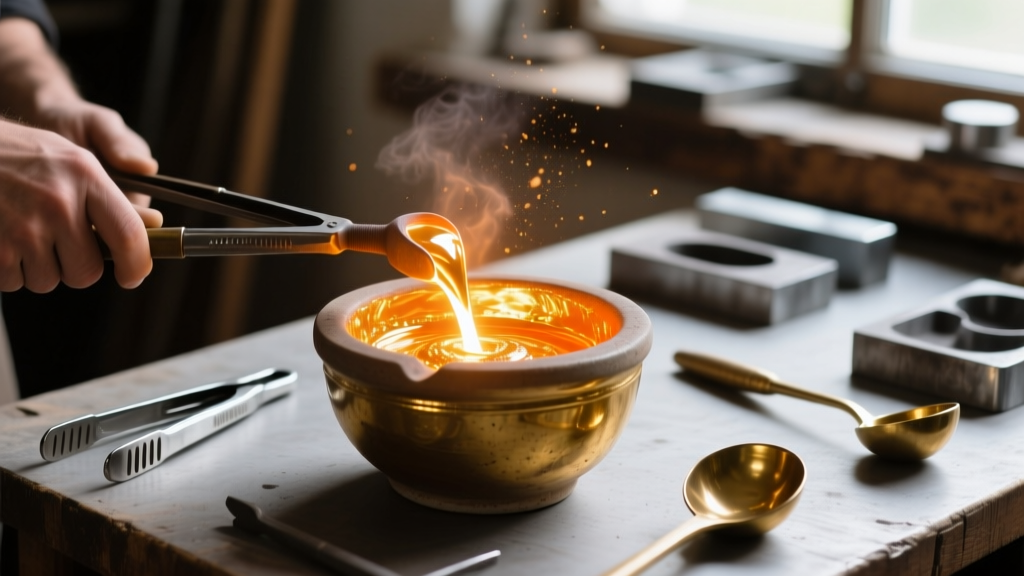
For a true heirloom piece, 14k yellow gold is the superior choice. Its copper and silver alloy composition provides a warm undertone that enhances the red enamel, while its Vickers hardness ensures the delicate wing tips will not bend during daily wear. According to the Rio Grande Casting Guide, maintaining a precise gold-to-alloy ratio prevents the formation of oxides that can later interfere with the glass-to-metal bond during enameling.
Vitreous Enameling: Achieving the Iconic Crimson
The most defining feature of the phoenix pendant is its vibrant, fiery red body. Mass-market replicas use 'cold enamel' (a two-part epoxy resin tinted with pigment). While cheap, epoxy resin yellows under UV exposure, scratches easily, and degrades within a few years. A master jeweler will exclusively use vitreous enamel—finely ground glass powder fused to the metal at extreme temperatures.
The Cloisonné Technique
To achieve the sharp, pixel-perfect boundaries of the OSRS design, jewelers employ the cloisonné technique. This involves bending 28-gauge fine silver wire into the exact shapes of the phoenix's wings and body, soldering them to the base metal to create cellular walls (cloisons). The Ganoksin Project notes that fine silver (99.9% pure) must be used for the wire, as sterling silver contains copper that will oxidize and stain the glass during firing.
True vitreous enamel is not painted; it is packed. Wet enamel frit is carefully packed into the silver cells using a sable brush, dried, and fired in a kiln at 1,450°F. The glass melts, fuses to the metal, and shrinks. This process must be repeated three to four times to fill the cells completely.
Troubleshooting Enamel Cracking
One of the most common failure modes in large enameled pendants is thermal shock cracking. When the front of a large pendant is covered in glass, the differing expansion rates of the metal and glass cause the piece to warp like a bimetallic strip upon cooling. To counteract this, expert enamelers apply a counter-enamel—a layer of flux or opaque enamel on the back of the pendant. This equalizes the surface tension and ensures the structural integrity of the piece for decades.
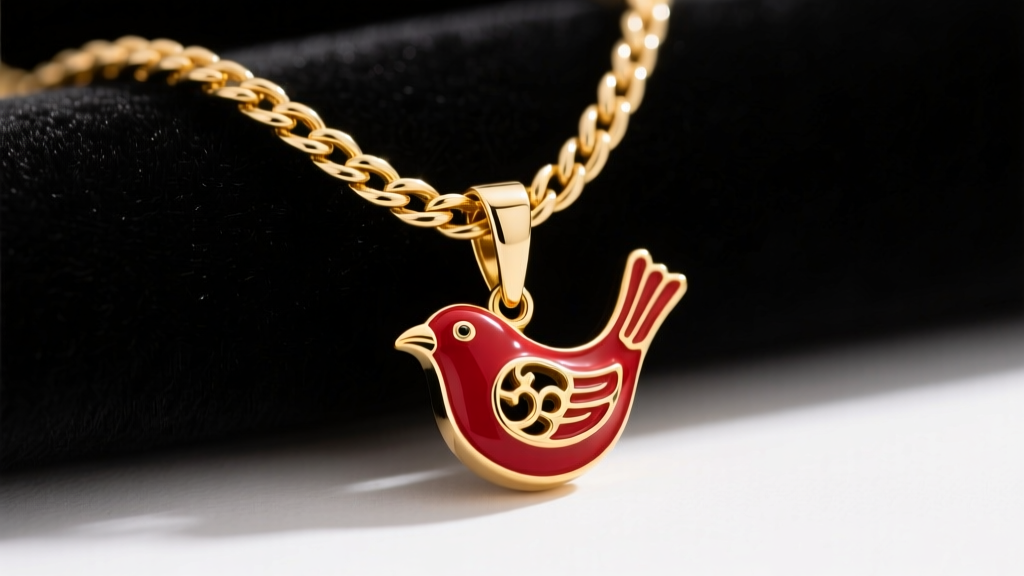
Bail Engineering and Chain Selection
A solid 14k gold phoenix pendant of this scale typically weighs between 14 and 18 grams. Suspending this weight requires robust bail engineering and a high-tensile chain.
- The Bail: Avoid standard loop bails soldered to the top of the wings, which create a weak stress point. Instead, integrate a tapered tube bail directly into the CAD model, hidden behind the phoenix's head or integrated into the upper wings. A 4mm inner-diameter tube bail allows for thicker, more secure chains.
- The Chain: A 2.5mm to 3.0mm solid Wheat (Spiga) chain or a 3.0mm Rope chain is mandatory. Wheat chains offer exceptional tensile strength due to their woven, interlocking link structure, which resists pulling and snapping far better than standard cable or curb chains.
- Clasp Mechanics: The chain must be finished with a heavy-duty lobster claw clasp (minimum 12mm length) and a welded jump ring. Soldered or laser-welded jump rings ensure the chain will never pull apart at the clasp connection point.
Commissioning and Pricing Breakdown
Securing a bespoke, vitreous-enameled phoenix necklace is an investment in wearable art. As of 2026, the pricing structure for a master-crafted 14k gold replica generally breaks down as follows:
- CAD Design & 3D Printing: $150 - $300 (Depending on the complexity of the feather texturing and custom sizing).
- 14k Gold Casting & Finishing: $350 - $600 (Fluctuates with the daily spot price of gold and the weight of the final casting).
- Cloisonné Vitreous Enameling: $400 - $800 (Enameling is highly specialized labor; packing, firing, and lapidary grinding can take 15+ hours).
- 14k Gold Wheat Chain (20 inches): $250 - $450.
While the total commission can range from $1,150 to over $2,150, the result is a mathematically precise, metallurgically sound heirloom. By understanding the rigorous technical details of lost-wax casting and vitreous enameling, collectors can bypass the disposable novelty market and acquire a physical manifestation of digital history that will endure for generations.


