How to Safely Clean and Maintain a Pink Chain Necklace
Learn how to safely clean, store, and maintain your pink chain necklace. Expert tips for rose gold, PVD coated, and pink plated jewelry to prevent fading.

The Science of Pink Jewelry: Why Material Dictates Care
A pink chain necklace is a versatile, romantic staple in modern jewelry boxes, but the term 'pink' does not refer to a single, uniform metal. The blush hue you see is the result of specific metallurgical alloys, advanced vacuum coatings, or delicate electroplating processes. As of 2026, treating all pink jewelry with the same commercial silver dip or ultrasonic cleaner is the fastest way to ruin your investment.
To properly care for your necklace, you must first identify the source of its color. Solid rose gold derives its pink tint from copper alloys, which are prone to oxidation. Conversely, pink PVD (Physical Vapor Deposition) coatings on stainless steel rely on titanium nitride layers that are incredibly hard but vulnerable to micro-scratching. Meanwhile, pink rhodium flash-plating over brass or silver requires an entirely non-abrasive approach. Below, we break down the exact, professional-grade maintenance protocols for every type of pink chain.
Material Identification Matrix
Before applying any cleaning solution, use this matrix to identify your necklace's material and its primary vulnerabilities.
| Material Type | Source of Pink Color | Primary Vulnerability | Safe Cleaning Agent |
|---|---|---|---|
| 14k / 18k Rose Gold | Copper & Silver Alloy | Chlorine exposure, sulfur tarnish | Mild dish soap & distilled water |
| PVD Coated 316L Steel | Titanium/Zirconium Nitride | Abrasive friction, harsh acids | Damp microfiber cloth only |
| Pink Rhodium Plated | Electroplated surface layer | Plating wear, chemical stripping | Dry polishing cloth |
| Enameled Pink Chain | Fused glass/resin coating | Impact chipping, heat warping | Soft brush & lukewarm water |
Protocol 1: Cleaning Solid Rose Gold (14k & 18k)
Solid rose gold is typically alloyed with roughly 22.25% copper (in 14k) to achieve its signature warm pink tone. While copper provides structural integrity and color, it is highly reactive to environmental sulfur and household chemicals.
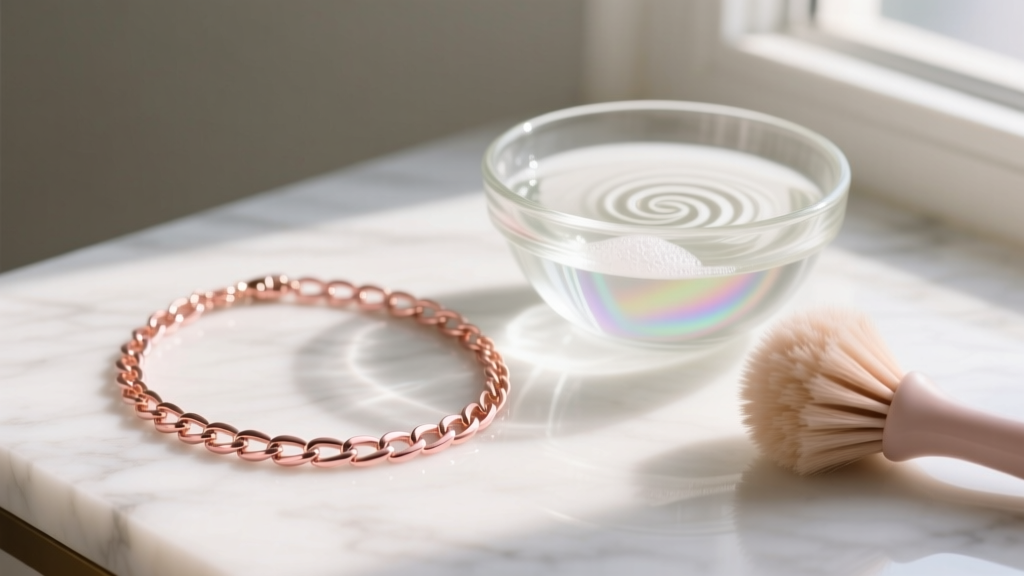
The Distilled Water Soak Method
Never use tap water to soak your rose gold chain. Municipal tap water contains trace amounts of chlorine and fluoride, which can cause stress corrosion cracking in copper-heavy alloys over time. Instead, follow this protocol:
- Fill a glass bowl with distilled water and warm it slightly (no more than 95°F / 35°C).
- Add three drops of a pH-neutral, phosphate-free dish detergent (such as Dawn Free & Clear).
- Submerge the pink chain necklace for exactly 5 to 7 minutes. Do not exceed this, as prolonged moisture exposure can weaken the solder points at the clasp.
- Gently agitate the chain using a baby-soft toothbrush, focusing on the interior links where sebum and lotion accumulate.
- Rinse under a slow stream of distilled water and pat dry with a lint-free cotton cloth. Air-drying will leave hard water spots.
What to Avoid: The Chlorine Threat
According to the Gemological Institute of America (GIA), exposure to chlorine (found in swimming pools and household bleach) can permanently damage the structural integrity of gold alloys, leading to microscopic fractures and eventual breakage of the chain links.
Protocol 2: Maintaining Pink PVD-Coated Stainless Steel
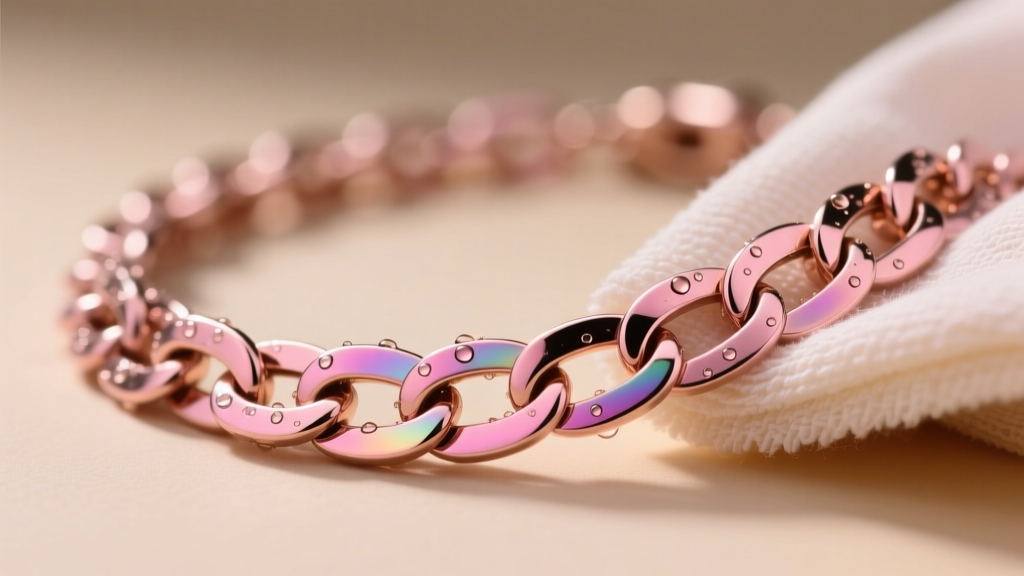
Physical Vapor Deposition (PVD) is the standard for high-quality pink stainless steel jewelry in 2026. The pink color is achieved by vaporizing titanium or zirconium in a vacuum chamber, bonding it to the 316L surgical steel at a molecular level. This creates a surface hardness exceeding 2000 HV (Vickers Hardness), making it highly resistant to tarnish. However, it is not scratch-proof.
The Microfiber Wipe-Down
PVD coatings do not require chemical cleaning. In fact, chemical solvents like acetone, alcohol, or commercial jewelry dips can degrade the clear protective top-coat often applied over the PVD layer.
- Daily Maintenance: After wearing, gently wipe the chain with a clean, dry microfiber cloth to remove skin oils and acidic sweat, which can slowly etch the coating over months of continuous wear.
- Deep Cleaning: If the chain is visibly soiled, lightly dampen a microfiber cloth with distilled water and wipe the links. Immediately follow up with a dry cloth.
- The Toothpaste Myth: Never use toothpaste to clean PVD jewelry. Toothpaste contains hydrated silica, an abrasive that will create micro-scratches in the PVD layer, causing the pink finish to look dull and cloudy.
Protocol 3: Caring for Pink Rhodium Plated and Enameled Chains
If your pink chain necklace is made of sterling silver or brass that has been plated with pink rhodium, you are dealing with a surface layer measured in microns. The Federal Trade Commission (FTC) Jewelry Guides note that standard flash plating can be as thin as 0.1 to 0.5 microns, while heavy vermeil must be at least 2.5 microns.
Because the pink color is essentially a microscopic skin over a base metal, liquid cleaning is strictly prohibited. Submerging plated jewelry accelerates the delamination of the plating, especially around the high-friction areas of the chain links and the lobster clasp. Instead, use a specialized dry-jewelry polishing cloth infused with mild anti-tarnish agents. Gently glide the cloth over the chain without pulling or stretching the links. For pink enameled chains, avoid ultrasonic cleaners entirely; the high-frequency vibrations will shatter the glass-like enamel resin.
Critical Failure Modes: Why Your Pink Chain is Fading
Understanding how pink jewelry fails helps you preemptively protect it. Here are the most common reasons a pink chain necklace loses its color or breaks:
- Friction Wear at the Clasp: The lobster clasp and jump rings experience the most metal-on-metal friction. On plated pieces, this is where the pink color will turn brassy or yellow first. Apply a microscopic drop of jeweler's wax to the jump ring to reduce friction.
- Cosmetic Chemical Reactions: Hairsprays, perfumes, and self-tanners contain alcohols and DHA (dihydroxyacetone) which will instantly strip pink rhodium plating and cause rose gold to develop a dark, oxidized patina. Always put your necklace on after your beauty routine is complete.
- Improper Polishing: Using a traditional red rouge polishing cloth on a rose gold chain will actually polish away the copper-rich outer layer, leaving the chain looking more yellow than pink over time.
Long-Term Storage: Preserving the Blush Hue
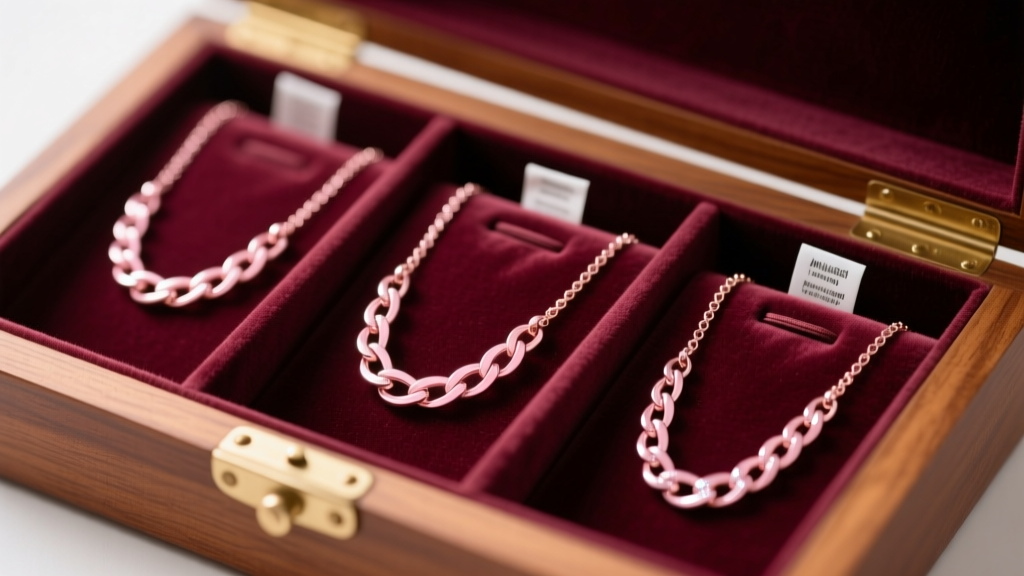
How you store your pink chain necklace when it is not being worn is just as critical as how you clean it. Copper alloys (rose gold) and bare silver (underneath plating) are highly susceptible to atmospheric sulfur, which causes rapid tarnishing.
Do not store your necklace in a standard plastic zip-lock bag. Many commercial plastics contain polyvinyl chloride (PVC) or sulfur-based compounds that trap humidity and accelerate tarnishing. Instead, store the chain in an airtight, UV-blocking polyethylene pouch. Include a small 3M anti-tarnish strip inside the pouch; these strips absorb airborne sulfur and hydrogen sulfide, protecting the pink finish for up to 12 months. Always fasten the clasp before storage to prevent the delicate chain links from tangling and knotting, which can lead to structural stress and stretching.
Final Thoughts
Maintaining the vibrant, romantic hue of a pink chain necklace requires moving away from generic, one-size-fits-all jewelry cleaners. By identifying whether your piece relies on copper alloys, PVD molecular bonding, or delicate micron plating, you can tailor your maintenance routine to protect the specific metallurgy of your jewelry. Treat your pieces with material-specific care, and your pink chains will retain their flawless blush tone for decades to come.


