Expert Guide: Finding the Perfect Necklace to Wear With Low Cut Dress
Master the technical rules for selecting the perfect necklace to wear with low cut dress styles, including chain gauges and lengths.

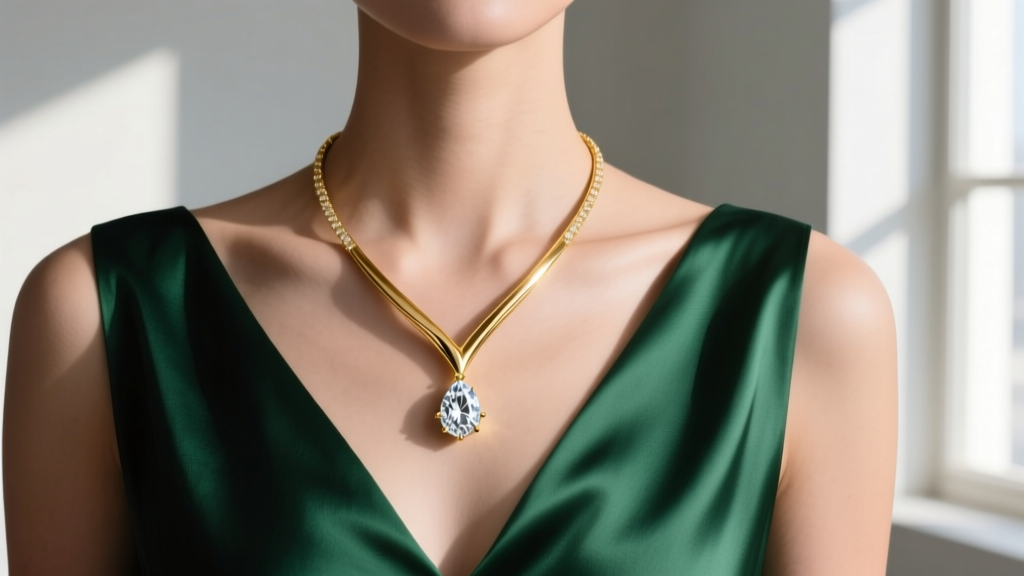
The Geometry of the Plunge: Mapping Neckline Depths
Selecting the correct necklace to wear with low cut dress silhouettes is not merely an aesthetic choice; it is an exercise in applied geometry. The décolletage acts as a visual frame, and the necklace must mathematically align with the garment's apex to avoid visual clutter or structural interference. To engineer the perfect pairing, we must first measure the plunge depth from the suprasternal notch (the hollow at the base of the neck) to the garment's lowest point.
Standard V-Neck vs. Deep Plunge Measurements
A standard V-neck typically drops 4 to 6 inches below the collarbone. For this geometry, a 20-inch to 22-inch chain with a 1.5-inch pendant drop sits precisely in the 'negative space' triangle created by the fabric. However, deep plunge and illusion-neckline dresses drop 8 to 12 inches, often terminating near the xiphoid process (lower sternum). Wearing a standard 18-inch princess-length chain with a deep plunge creates a harsh horizontal line that bisects the chest, visually shortening the torso and disrupting the designer's intended drape.
| Dress Silhouette | Plunge Depth (Inches) | Optimal Chain Length | Pendant Profile & Drop |
|---|---|---|---|
| Standard V-Neck | 4' - 6' | 20' - 22' | Teardrop or Marquise (1' - 1.5') |
| Deep Plunge / Wrap | 7' - 9' | 24' - 28' (Matinee) | Y-Drop or Lariat (2' - 4') |
| Illusion / Keyhole | 10' - 12'+ | 30' - 34' (Opera) | Graduated Bib or Cascading Stations |
Metallurgy and Skin Contact: Preventing Oxidation on the Décolletage
The sternum and cleavage area represent a high-friction, high-moisture microenvironment. Skin oils, perspiration, and cosmetic products (like body shimmers or SPF) accelerate metallic oxidation and galvanic corrosion. When choosing a necklace to wear with low cut dress styles for extended evening events, the base metallurgy is critical.
Hypoallergenic Grades for Prolonged Sternum Contact
According to the Blue Nile Metals Guide, alloys containing copper or nickel are highly reactive to the acidic pH of human sweat. Gold vermeil (a thin layer of gold over a sterling silver or brass base) is strongly discouraged for deep plunges. The friction against the skin and the dress fabric will rapidly degrade the vermeil plating, exposing the base metal and causing green discoloration or contact dermatitis.
For deep-cut necklines, insist on:
- Solid 14k or 18k Gold: 14k (58.5% pure gold) offers superior tensile strength and scratch resistance compared to 18k, making it ideal for delicate chains that rest against the sternum.
- Platinum (950 Grade):strong> Naturally white, hypoallergenic, and highly resistant to tarnish, though its high density requires thicker chain gauges to prevent sagging.
- 316L Surgical Stainless Steel: Compliant with the EU Nickel Directive (94/27/EC), which limits nickel release to less than 0.5 µg/cm²/week. It is an exceptional, budget-friendly alternative for heavy, avant-garde body chains.
Expert Troubleshooting: If you must wear a vintage or costume piece with an unknown base metal over bare skin, apply a micro-thin layer of clear, cosmetic-grade setting spray or a specialized jewelry barrier coating to the back of the pendant and the lower chain links. This creates a temporary polymer shield against sweat-induced oxidation.
Weight Distribution and Clasp Mechanics for Y-Drop and Lariat Styles
The Y-necklace and the lariat are the undisputed champions of the deep plunge. Their vertical lines elongate the torso and draw the eye downward, perfectly mirroring the dress's architecture. However, the physics of a lariat chain present unique mechanical challenges.
The Physics of the Lariat Slide
A traditional lariat relies on friction to hold the 'Y' drop in place. If the chain gauge is too smooth (like a 1.0mm snake chain) or the pendant drop is too heavy (exceeding 8 grams), gravity will continuously pull the drop downward, requiring constant, distracting adjustments. To solve this, modern jewelers engineer lariats with integrated tension mechanisms.
Look for lariats featuring a silicone-lined slide bead or a magnetic tension lock. The silicone creates high kinetic friction against the metal links without causing abrasion, locking the drop precisely at the xiphoid process. Furthermore, the chain gauge must be carefully calibrated. A 0.8mm cable chain lacks the structural integrity to support a 5-gram gemstone drop without stretching or snapping. For Y-drops weighing between 3 and 10 grams, specify a 1.2mm to 1.5mm box chain or a reinforced wheat chain. These weaves distribute tensile stress across multiple interlocking planes, preventing micro-fractures at the solder points.
Gemstone Refraction and Lighting Environments
The optical performance of a pendant resting on the décolletage is heavily dictated by the ambient lighting of the venue and the gemstone's faceting geometry. The GIA Gem Encyclopedia details how different cut styles manipulate light return, which is crucial when the jewelry is in constant motion against the skin.
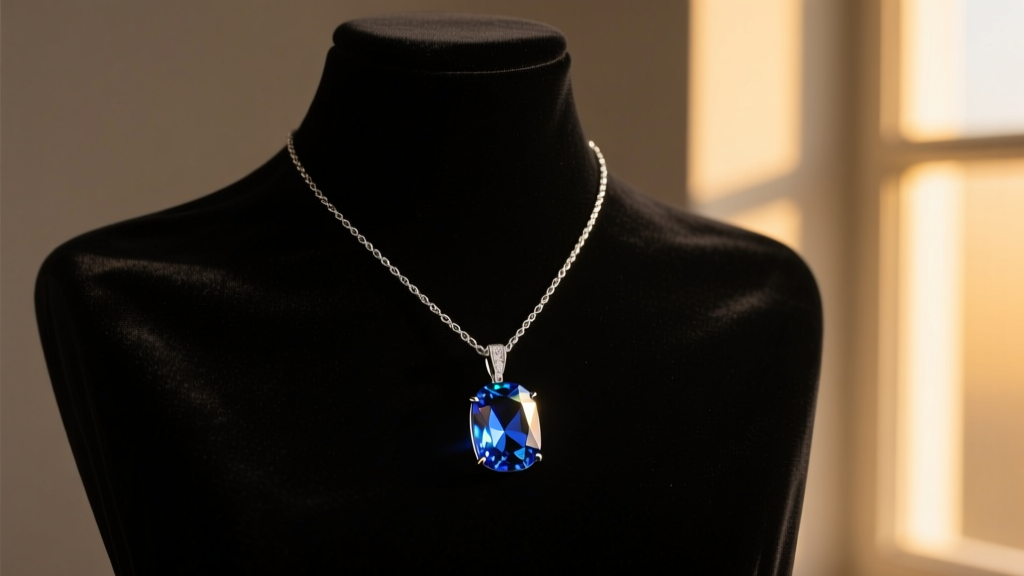
Faceting Styles for Evening vs. Daylight
For evening galas and low-lit receptions, brilliant-cut gemstones (such as round or oval diamonds, sapphires, and moissanite) are mandatory. Their 57 or 58 facets are mathematically angled to maximize internal reflection and scintillation (sparkle), ensuring the necklace captures and amplifies even the faintest ambient candlelight or chandelier glare.
Conversely, for daytime events, garden parties, or outdoor weddings, step-cut gemstones (like emeralds or baguettes) or cabochons (like moonstone or opal) perform beautifully. Step cuts produce broad, elegant flashes of light (the 'hall of mirrors' effect) that look sophisticated in direct sunlight without blinding the wearer or observers. Cabochons rely on adularescence or play-of-color, which interacts softly with natural daylight, providing a subtle, organic glow against the skin.
Summary Checklist for the Perfect Plunge Pairing
Before finalizing your selection, run your necklace through this technical checklist to ensure flawless execution:
- Length Verification: Does the chain terminate at least 1 inch above the dress's absolute lowest point to prevent fabric-snagging?
- Gauge Integrity: Is the chain thickness (minimum 1.2mm) rated to support the pendant's specific gram weight?
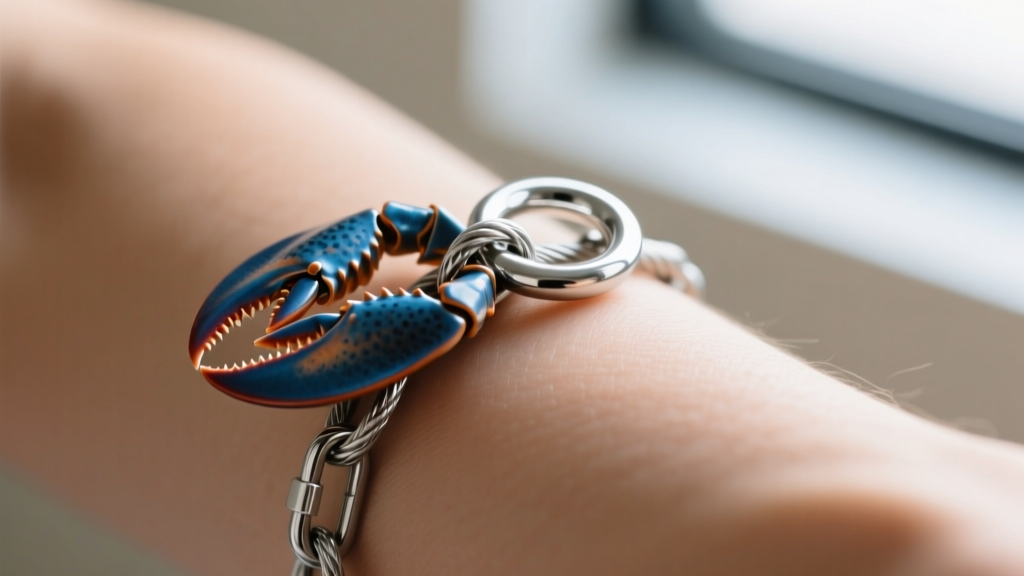
- Clasp Security: Are you using a lobster claw or a reinforced spring ring? (Avoid standard magnetic clasps for heavy Y-drops, as sudden movements can break the magnetic seal).
- Metallurgical Safety: Is the piece solid gold, platinum, or 316L steel to prevent sternum discoloration from perspiration?
- Optical Alignment: Does the gemstone faceting match the primary lighting environment of your event?
By treating the selection of your jewelry as a precise engineering challenge rather than an afterthought, you ensure that your necklace to wear with low cut dress styles will remain secure, comfortable, and visually devastating throughout the entire event.


