The Ultimate Pretzel Necklace Buying Guide: Metals, Sizing & Care
Discover what to look for when buying a pretzel necklace. Compare metal purities, enamel types, sizing charts, and chain pairings in our expert guide.

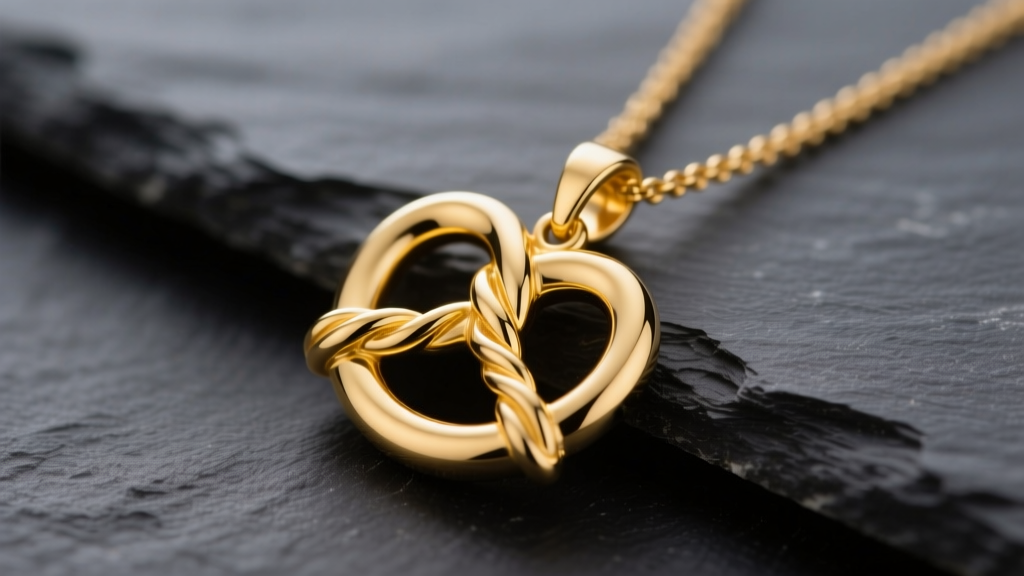
The pretzel necklace has transcended its origins as a quirky foodie motif to become a sophisticated symbol of eternity, good luck, and intertwined love. Because the pretzel shape relies on a complex, overlapping three-loop structure, manufacturing a high-quality piece requires precise metallurgy and structural foresight. A poorly cast pretzel pendant will snap at the crossover points, while a well-engineered one becomes a lifelong staple. Whether you are shopping for a micro-pavé diamond piece or a bold, enameled statement pendant, understanding the mechanics of this specific design is crucial.
The Anatomy of a High-Quality Pretzel Necklace
The defining feature of a pretzel pendant is its folded, overlapping dough structure. From a manufacturing perspective, these overlapping zones are structural weak points. When evaluating a pretzel necklace, you must examine how the jeweler handled these intersections.
Casting Methods and Structural Integrity
Mass-market fashion jewelry often uses stamped metal or thin hollow-casting to save on material costs. For a pretzel shape, this is disastrous. The crossover loops require solid density to withstand the lateral torque applied when the chain is pulled. Look for pendants created via lost-wax casting or 3D-printed resin casting, which allows for solid, dense metal formation. The metal thickness at the overlapping loops should never be less than 1.2mm. If the loops appear flattened or paper-thin from a side profile, the piece will easily bend or snap during daily wear.
Metal Purity and Plating Thickness
The metal grade dictates both the color and the longevity of your necklace. According to the Federal Trade Commission (FTC) Jewelry Guides, specific terminology must be met for gold-plated items. Here is what you should look for based on your budget and wear habits:
- Solid 14k Gold (58.5% purity): The gold standard for daily wear. It offers the perfect balance of rich color and tensile strength, ensuring the thin pretzel loops do not warp.
- Solid 18k Gold (75% purity): Yields a deeper, warmer yellow hue but is inherently softer. If choosing 18k, ensure the pendant is slightly heavier (over 3 grams) to compensate for the softer alloy.
- Gold Vermeil: A step above standard plating. By law, vermeil must feature a sterling silver base coated with a minimum of 2.5 microns of 10k, 14k, or 18k gold. Anything less will rub off the raised pretzel ridges within months.
Always check for hallmark stamps on the back of the pendant bail or the top loop. Legitimate pieces will be stamped with '14K', '585', '18K', or '925' for sterling silver bases.
Enamel Work: Cold vs. Vitreous
Many pretzel necklaces incorporate enamel to mimic the golden-brown baked crust or to add vibrant, playful colors. The type of enamel used drastically affects the price and durability of the piece.
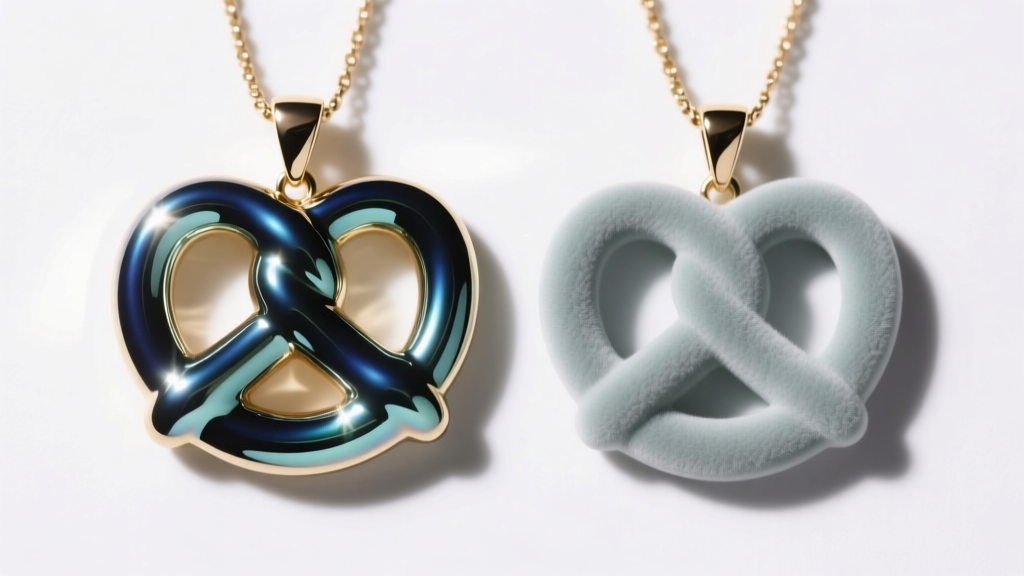
Vitreous (Kiln-Fired) Enamel
Vitreous enamel is created by fusing powdered glass to the metal base in a kiln at temperatures exceeding 1400°F. This process creates a hard, scratch-resistant, and brilliantly glossy finish that will not yellow or fade over time. High-end jewelers use vitreous enamel, and it is highly recommended for pretzel pendants where the raised metal ridges (cloisons) separate the colored glass. You can identify vitreous enamel by its glass-like depth and the fact that it feels cool to the touch.
Cold (Epoxy) Enamel
Cold enamel is essentially a two-part epoxy resin painted into the metal recesses and air-dried. While it allows for a wider array of colors and is significantly cheaper to produce, it is prone to micro-scratches, chipping at the edges, and UV-yellowing over time. If you are buying a fashion-tier pretzel necklace under $100, it will almost certainly feature cold enamel. Inspect the edges where the enamel meets the metal; if there is visible seepage or a cloudy finish, avoid the piece.
Sizing and Proportion: Choosing the Right Dimensions
The pretzel motif is visually 'busy' due to its intersecting lines. Choosing the correct millimeter width is vital to ensure the necklace looks intentional rather than overwhelming. Use the following sizing matrix to match the pendant to your preferred chain and wardrobe.
| Pendant Width | Metal Weight | Recommended Chain | Best Neckline |
|---|---|---|---|
| 8mm - 12mm (Micro) | 0.8g - 1.5g | 0.9mm - 1.1mm Cable | V-Neck, Scoop, Layering |
| 15mm - 22mm (Standard) | 2.0g - 4.5g | 1.2mm - 1.5mm Box | Crew, Boatneck, Button-down |
| 30mm+ (Statement) | 6.0g+ | 2.0mm+ Rope or Figaro | Collared, Off-Shoulder, Solid Tees |
For a versatile, everyday piece that rests perfectly in the clavicle hollow, the 15mm to 18mm range is the industry sweet spot. It provides enough surface area to appreciate the pretzel's twisted details without looking like a costume accessory.
Chain Pairing: Matching the Bail and Link Style
One of the most overlooked aspects of buying a pretzel necklace is the bail (the loop that connects the pendant to the chain). Because the top loop of a pretzel is inherently asymmetrical compared to the bottom two loops, a standard soldered bail can cause the pendant to hang crookedly.
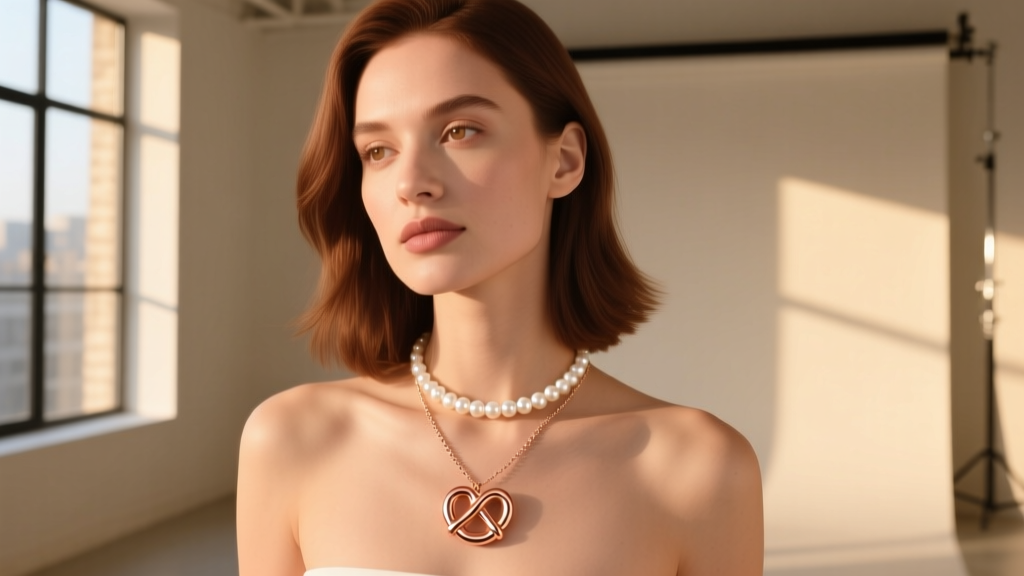
The Integrated Bail Solution
The highest-quality pretzel pendants feature an integrated bail, where the top loop of the pretzel itself is elongated and engineered to act as the chain pass-through. This eliminates the need for a soldered jump ring, reduces weak points, and ensures the pendant hangs perfectly centered. If the piece uses a traditional bail, ensure it is a 'hidden bail' soldered directly to the back of the top crossover, allowing the pretzel shape to remain uninterrupted from the front.
Chain Link Recommendations
Because the pretzel features curved, organic lines, pairing it with a chain that complements those geometry is key. According to the Gemological Institute of America (GIA), matching the visual weight of the chain to the pendant is essential for structural balance.
- Box Chains (1.2mm - 1.5mm): The geometric, square links of a box chain provide a brilliant contrast to the organic curves of the pretzel. They are also highly resistant to kinking.
- Rope Chains (1.5mm - 2.0mm): The twisted metal strands of a rope chain visually mimic the twisted dough of the pretzel, creating a highly cohesive, unified look.
- Avoid Snake Chains: Snake chains are prone to bending and kinking. Because a pretzel pendant has a concentrated center of gravity, it will pull on a snake chain and permanently damage the links over time.
Pricing Tiers: What You Should Actually Pay
Understanding the market value prevents you from overpaying for plated metals or underpaying for suspiciously cheap 'solid gold' claims. Here is the current pricing framework for pretzel necklaces:
- Fashion / Plated ($30 - $85): Brass or stainless steel base with flash plating (under 0.5 microns) and cold enamel. Expect a lifespan of 1-2 years with regular wear.
- Demi-Fine / Vermeil ($95 - $250): Sterling silver base with 2.5+ microns of 14k or 18k gold. May feature cubic zirconia or synthetic spinel accents. Excellent for trend-focused buyers.
- Fine / Solid Gold ($350 - $900): Solid 14k or 18k gold, weighing between 2.5g and 6g. May feature small melee diamond accents (SI1-SI2 clarity, G-H color). A lifetime investment piece.
- High Jewelry / Pavé ($1,500+): Solid 18k gold fully encrusted with high-grade VS-clarity diamonds, featuring intricate milgrain detailing on the metal ridges.
Care and Maintenance for Intricate Crevices
The folded loops of a pretzel necklace create deep crevices that trap skin oils, lotions, and environmental dust. Proper maintenance is non-negotiable to keep the piece looking pristine.
Do not use ultrasonic cleaners if your pretzel necklace features enamel, pavé diamonds, or oxidized (blackened) detailing in the grooves. The high-frequency vibrations can shatter vitreous enamel, loosen diamond adhesives, and strip intentional oxidation. Instead, use a soft-bristled baby toothbrush dipped in a solution of warm water and a single drop of mild, phosphate-free dish soap. Gently brush the overlapping loops, rinse under lukewarm water, and pat dry with a microfiber cloth. Store the necklace flat or hanging to prevent the chain from tangling in the pendant's loops.
Final Verdict on Your Purchase
A pretzel necklace is a brilliant blend of whimsical design and complex jewelry engineering. By prioritizing solid casting methods, verifying metal hallmarks, and selecting a chain that balances the pendant's visual weight, you will secure a piece that is as durable as it is meaningful. Whether you opt for a minimalist 14k gold micro-pendant or a bold, vitreous-enameled statement piece, focusing on these structural details ensures your investment withstands the test of time.


