Prism Necklace Troubleshooting: Fix Cloudy Pendants
Is your prism necklace cloudy or breaking? Learn expert troubleshooting steps to clean optical glass, fix bail failures, and restore light refraction.

The Anatomy of a Prism Necklace Failure
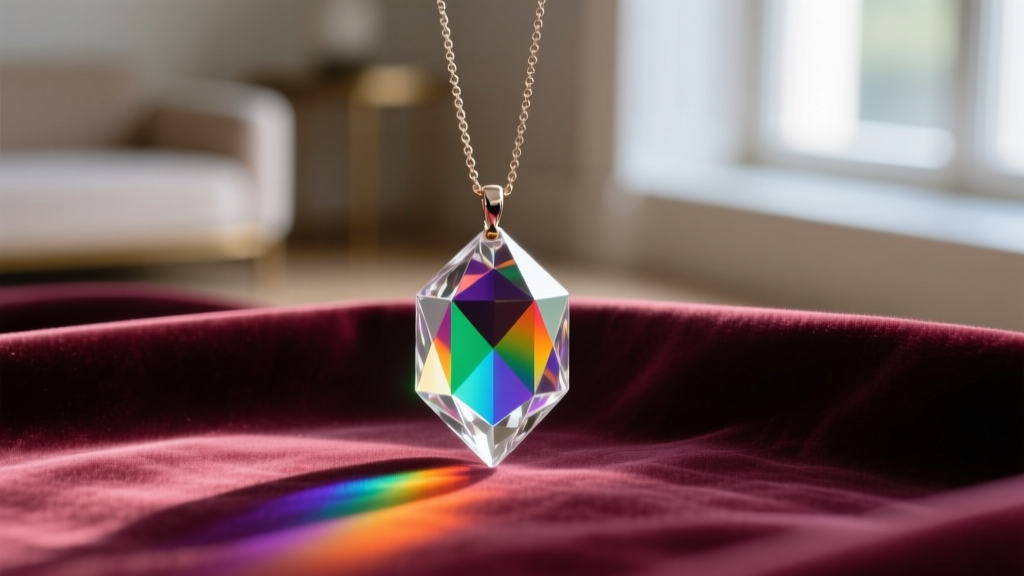
Prism necklaces are captivating pieces of optical jewelry, relying on precise geometric angles and flawless material clarity to refract ambient light into vivid rainbows. However, because they function as wearable optics, they are highly susceptible to specific failure modes that standard gemstone pendants do not face. Whether your pendant is crafted from K9 optical glass, borosilicate, or cast acrylic, issues like cloudy facets, micro-abrasions, and structural bail failures can completely destroy the necklace's refractive properties.
As we move through 2026, the market has seen a surge in lab-grown dichroic glass and precision-cut crystal prisms. Yet, the fundamental physics of light refraction means that even a microscopic layer of sebum (skin oil) or a hairline fracture will scatter light, turning a brilliant rainbow projector into a dull, lifeless paperweight. This guide provides deep, actionable troubleshooting protocols to diagnose, clean, and repair your prism necklace.
Issue 1: Cloudy Facets and Lost Refraction
The most common complaint with prism pendants is a sudden loss of brilliance. Light must enter the prism, bounce off the pavilion (bottom) facets via total internal reflection, and exit back to the viewer. If the surface is compromised, this optical path is broken.
Troubleshooting by Material Type
Before applying any cleaning agent, you must identify your prism's material. Using the wrong solvent will permanently ruin the optical surface.
- K9 Optical Glass & Borosilicate: These are highly durable but attract oils. Clean with 99% isopropyl alcohol and a lint-free microfiber optical cloth. Never use ammonia-based glass cleaners (like Windex), as ammonia will permanently degrade anti-reflective or dichroic coatings often applied to modern prisms.
- Acrylic & Cast Resin: Alcohol will cause acrylic to craze, cloud, and micro-fracture. Instead, use a drop of mild dish soap (like Dawn) in lukewarm water. To remove micro-scratches that cause haziness, gently polish the facets with a specialized plastic polish like Novus 2, applying it in straight lines rather than circles to avoid creating optical distortions.
- Hard Water Calcium Deposits: If you shower with your necklace, calcium buildup will block light entry. For glass prisms only, soak the pendant in a 50/50 mix of distilled white vinegar and water for exactly 5 minutes, then rinse with distilled water and dry immediately with an optical cloth.
Issue 2: Bail Failure and Chain Snapping
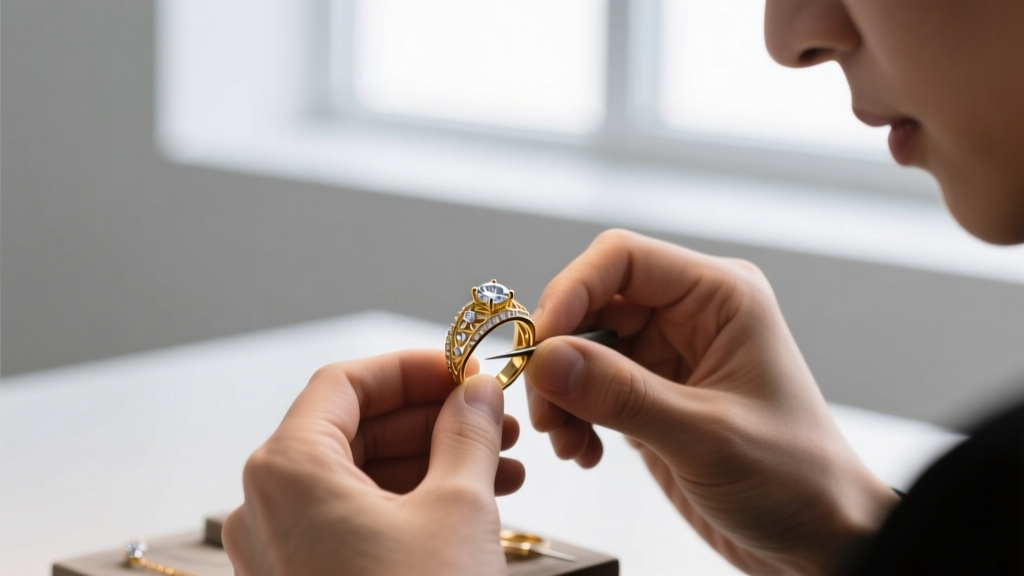
Glass is dense. A standard 20x30mm teardrop K9 glass prism weighs between 15 and 22 grams. When paired with delicate, mass-market chains, the dynamic shock of daily wear (such as the pendant swinging and suddenly stopping) creates sheer force that easily snaps jump rings or breaks the chain.
Weight-to-Gauge Diagnostic Table
To troubleshoot a snapping chain, you must match the chain's wire gauge and link style to the static weight of the prism. According to jewelry manufacturing standards from suppliers like Rio Grande, tensile strength drops significantly on chains thinner than 1.0mm.
| Prism Weight | Minimum Chain Gauge | Recommended Chain Style | Bail Type Required |
|---|---|---|---|
| Under 10g | 0.9mm - 1.0mm | Cable or Curb | Glued Pinch Bail |
| 10g - 20g | 1.2mm - 1.5mm | Box or Wheat | Wire-Wrapped or Screw Bail |
| Over 20g | 1.8mm+ | Mariner or Rope | Bezel Setting or Custom Wire Wrap |
The Glued Bail Trap: Many commercial prism necklaces use glued pinch bails. The cyanoacrylate adhesive degrades when exposed to body heat and skin acidity. If your bail feels loose, do not simply add more superglue. Remove the bail, clean the glass with alcohol, and re-set it using a two-part jeweler's epoxy (like G-S Hypo Cement or Devcon 5-Minute Epoxy) which offers superior shear strength.
Issue 3: Dichroic Coating Degradation
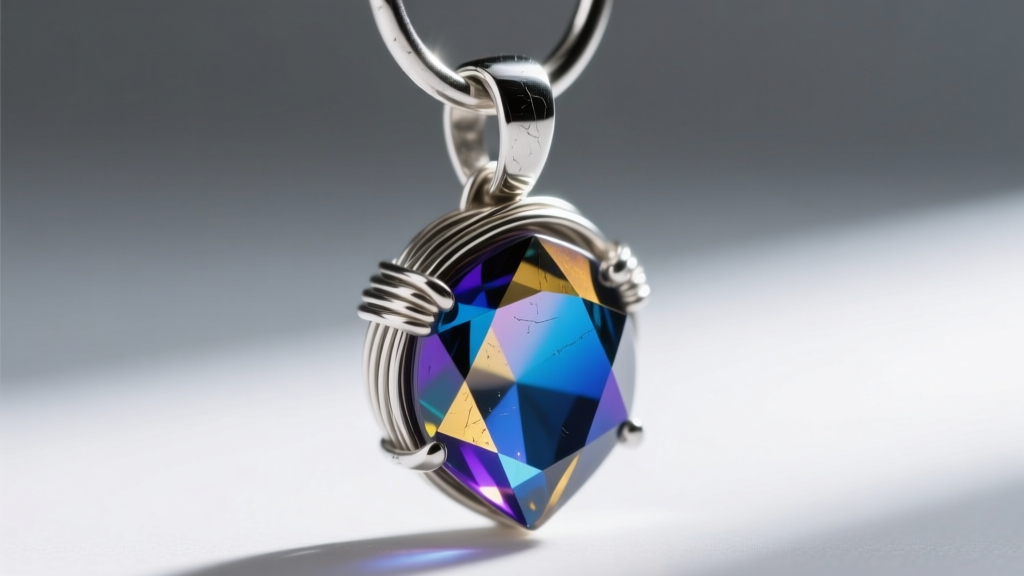
Dichroic prism necklaces feature micro-layers of metal oxides vaporized onto the glass, creating shifting, iridescent colors. If your dichroic prism is bubbling, peeling, or flaking, you are experiencing adhesive failure or moisture ingress.
Why Dichroic Layers Fail
True dichroic glass is created in a vacuum kiln. However, in lower-cost jewelry, manufacturers often use a 'dichroic film' glued to a standard glass backing. Over time, UV exposure and moisture break down the epoxy bond, causing the film to separate from the glass. This creates microscopic air gaps that scatter light, resulting in a cloudy, milky appearance.
According to gemological care guidelines outlined by Jewelers of America, coated and treated optical surfaces require strict avoidance of ultrasonic cleaners. The high-frequency cavitation bubbles generated by ultrasonic waves will aggressively strip delaminating dichroic films and shatter internally fractured acrylic prisms.
The Fix: You cannot re-adhere a peeling dichroic film at home without introducing optical distortion. If the peeling is localized to the edges, a lapidary can carefully seal the perimeter with a micro-layer of clear UV-curing resin to prevent further moisture ingress. If the center of the facet is peeling, the optical integrity is permanently lost, and the pendant must be replaced.
Diagnostic Guide: Identifying Your Prism Material
If you are unsure whether your cloudy prism necklace is glass, crystal, or acrylic, use this non-destructive troubleshooting framework to identify the material before attempting repairs.
| Test Method | Glass / K9 Crystal | Acrylic / Resin |
|---|---|---|
| Temperature Test | Feels distinctly cool to the touch, takes time to warm up against the skin. | Feels room temperature or slightly warm, adapts to skin heat almost instantly. |
| Sound Test | Produces a sharp, high-pitched 'clink' when gently tapped with a metal tool. | Produces a dull, muted 'thud' or plastic-like click. |
| Hardness Test | Cannot be scratched by a copper coin; requires a steel file or quartz to scratch. | Easily scratched by a fingernail, copper coin, or brass key. |
Preventative Maintenance for Optical Clarity
To maintain the refractive index and structural integrity of your prism necklace, adopt a strict maintenance protocol. Store the necklace in a soft, anti-tarnish pouch where the glass facets do not rub against metal clasps or other jewelry. Never sleep in a prism necklace, as the lateral pressure against a mattress can snap the bail or chip the delicate girdle (the widest edge) of the glass. By understanding the specific material science of your pendant, you can ensure your prism necklace continues to cast perfect rainbows for years to come.


