Purple Butterfly Necklace Materials: Enamel vs Gemstone
Discover the best materials for a purple butterfly necklace. We compare amethyst, sugilite, and vitreous enamel for durability, color, and value.

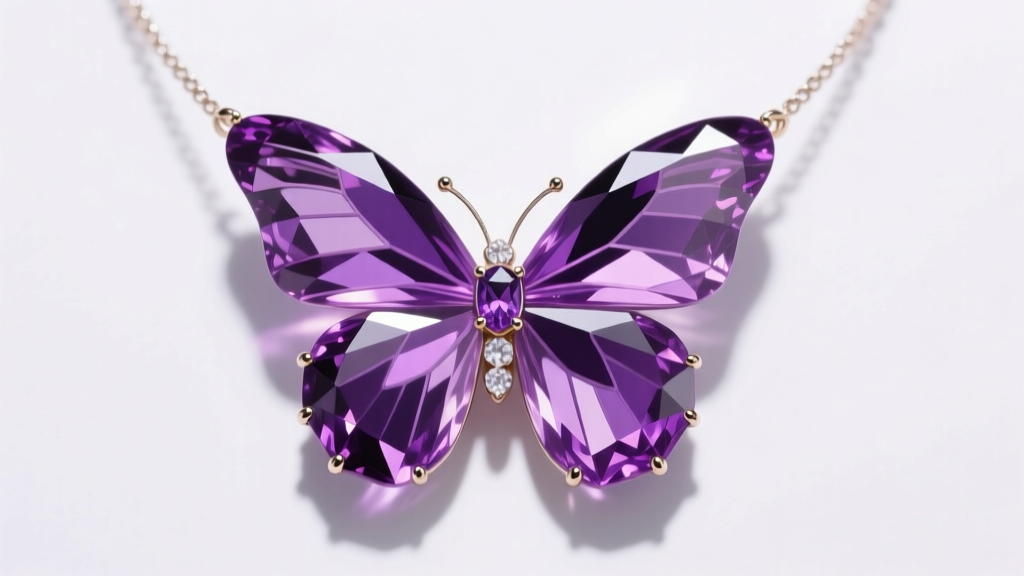
The Anatomy of a Purple Butterfly Necklace
The purple butterfly necklace has evolved far beyond its early-2000s pop-culture origins, cementing itself as a sophisticated staple in contemporary jewelry design. As we navigate the 2026 market, collectors and everyday wearers alike demand more than just a whimsical silhouette; they require structural integrity, colorfastness, and material transparency. Whether you are investing in a high-jewelry piece or selecting an everyday talisman, understanding the physical properties of the materials used is critical. The choice between natural gemstones and artisanal vitreous enamel fundamentally dictates the pendant's longevity, light performance, and care requirements.
The Core Debate: Gemstone Carving vs. Vitreous Enamel
When designers conceptualize a purple butterfly necklace, the wings present a unique canvas. The two dominant techniques for achieving a rich violet hue are gemstone lapidary work and vitreous enameling. Each method interacts with light and physical stress in vastly different ways.
Vitreous Enamel: The Artisan's Canvas
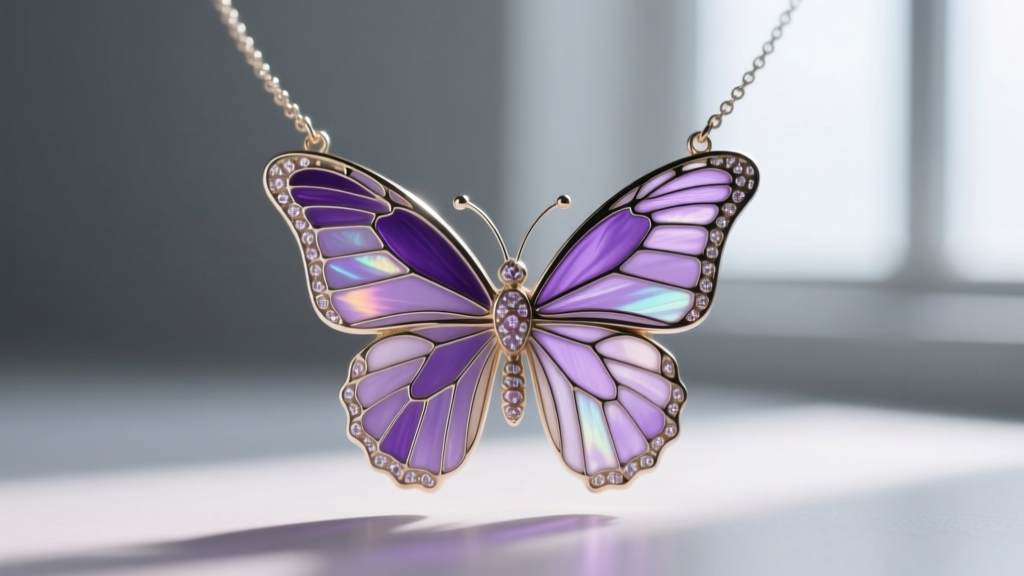
Vitreous enamel is essentially glass fused to a metal substrate at extreme temperatures, typically around 1450°F (788°C). For purple hues, artisans rely on precise ratios of cobalt and manganese oxides. The most prized technique for butterfly wings is plique-à-jour, a method where the enamel is held within a metal framework without a backing, creating a stained-glass effect that allows light to pass directly through the wings. While visually breathtaking, enamel possesses a Mohs hardness of 5.5 to 6.5 and is highly susceptible to thermal shock and blunt impact. A dropped enamel pendant on a tile floor will almost certainly result in micro-fractures or catastrophic chipping.
Gemstone Lapidary: Refraction and Depth
Carved or faceted gemstones offer superior durability and natural light refraction. However, achieving a uniform purple across a symmetrical butterfly shape is notoriously difficult due to natural color zoning. Master lapidaries must carefully orient the rough stone to ensure both wings exhibit matching saturation, a process that results in significant material waste and drives up the final price.
Gemstone Profiles: Amethyst, Sugilite, and Sapphire
If you opt for a gemstone-based purple butterfly necklace, you will likely encounter one of three primary materials. Here is how they compare in a professional gemological context.
- Amethyst (Crystalline Quartz): The most accessible option. With a Mohs hardness of 7, it resists scratching well but possesses a conchoidal fracture, meaning it can chip if struck against a hard surface. The most valued grade is "Siberian," featuring a primary purple hue with secondary red and blue flashes. According to the Gemological Institute of America (GIA), amethyst can fade under prolonged UV exposure, making it less ideal for daily outdoor wear in high-sunlight climates.
- Sugilite: A rare, manganese-rich cyclosilicate that ranges from pale lilac to deep, opaque grape purple. With a Mohs hardness of 6 to 6.5, it is softer than amethyst and requires protective bezel settings. Gem-grade sugilite with high translucency has seen a 40% price increase since 2023 due to depleted mines in South Africa.
- Purple Sapphire (Corundum): The ultimate luxury choice. Scoring a 9 on the Mohs scale, it is virtually impervious to everyday scratching. The purple coloration is derived from trace amounts of vanadium and chromium. While exceptionally durable, the high cost per carat means purple sapphire butterfly pendants are usually smaller, more delicate, and set in premium platinum or 18k gold.
Material Properties & Durability Matrix
To make an informed decision, it is essential to look at the empirical data governing these materials. The table below outlines the physical properties and market realities of the most common purple butterfly necklace components.
| Material | Mohs Hardness | Toughness / Cleavage | Avg. Price Range (Pendant) | Primary Failure Mode |
|---|---|---|---|---|
| Vitreous Enamel | 5.5 - 6.5 | Brittle / None | $150 - $800 | Chipping from thermal shock or impact |
| Amethyst | 7.0 | Fair / Conchoidal Fracture | $80 - $450 | Color fading (UV), edge chipping |
| Sugilite | 6.0 - 6.5 | Fair / Uneven Fracture | $300 - $1,200 | Surface scratching, chemical etching |
| Purple Sapphire | 9.0 | Excellent / None | $1,500 - $5,000+ | Prong wear (metal failure, not stone) |
| Anodized Titanium | 6.0 (Metal) | Exceptional / Malleable | $120 - $350 | Voltage layer scratching, denting |
Base Metals and Structural Integrity
The purple elements of the necklace must be supported by a structurally sound base metal. The choice of alloy affects everything from the pendant's weight to its hypoallergenic properties.
Sterling Silver vs. White Gold
Standard 925 sterling silver is highly reflective and cost-effective, but it is prone to tarnishing, especially when exposed to the sulfur compounds in everyday environments. Rhodium plating is often applied to silver butterfly necklaces to mimic the look of white gold and prevent oxidation. However, this plating wears off over time, requiring periodic re-dipping. 14k or 18k white gold, alloyed with nickel or palladium, offers superior tensile strength for the delicate prongs holding gemstone wings, though nickel alloys can trigger contact dermatitis in sensitive wearers.
The 2026 Standard: Anodized Titanium
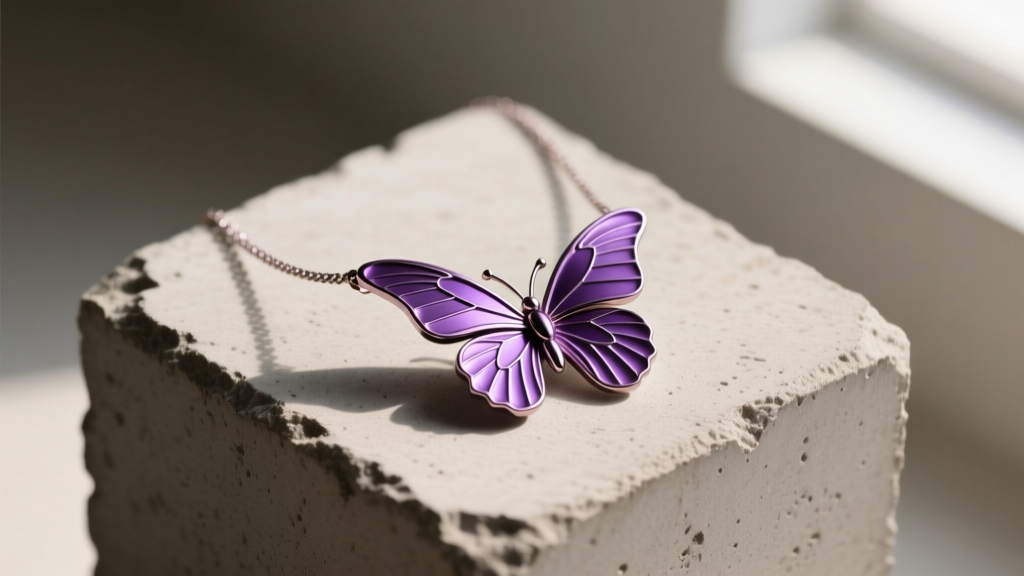
For a modern, hypoallergenic approach, aerospace-grade titanium (Ti-6Al-4V) has become a favorite among avant-garde jewelers. Titanium can be anodized to produce a vibrant, permanent purple without the use of dyes or chemicals. By running an electrical current through the metal in an electrolyte bath, the surface oxide layer thickens. Precisely controlling the voltage to between 75 and 80 volts yields a deep, iridescent purple. This method ensures the color will never fade, and the metal itself is entirely nickel-free and biocompatible.
Care Protocols and Failure Modes
Maintaining a purple butterfly necklace requires a tailored approach based on its material composition. The most common mistake consumers make is applying a universal cleaning method to mixed-media jewelry.
Expert Warning: Never place an enamel or fracture-filled amethyst necklace in an ultrasonic cleaner. The high-frequency cavitation bubbles will shatter the glass enamel and widen internal fissures in treated gemstones, leading to irreversible structural failure.
For gemstone pieces, a soft-bristled brush with a mild, phosphate-free dish soap and lukewarm water is the gold standard. Enamel pieces should only be wiped with a damp microfiber cloth and stored in a padded, individual compartment to prevent the metal framework from scratching the glass surface. When verifying the precious metal hallmarks on your piece's chain or bail, always consult standardized guidelines, such as those provided by The London Assay Office, to ensure you are getting the alloy purity you paid for.
Ultimately, the perfect purple butterfly necklace depends on your lifestyle. If you prioritize heirloom durability and natural brilliance, a purple sapphire or high-grade amethyst set in 14k white gold is unmatched. If you value artisanal craftsmanship and vibrant, opaque color, a vitreous enamel piece offers unparalleled artistic expression. By understanding the exact material properties outlined above, you can select a piece that remains as captivating in a decade as it is today.


