Purple Color Necklace Value Guide: Budget to Luxury 2026
Discover how to evaluate a purple color necklace in 2026. Compare amethyst, tanzanite, and sapphire values, spot fakes, and maximize your jewelry budget.

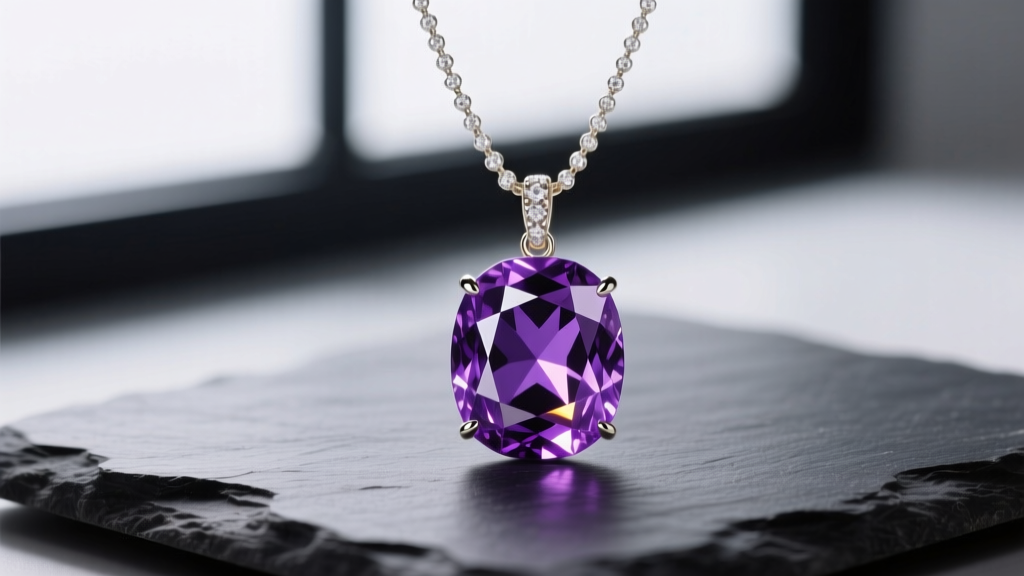
The market for a purple color necklace is notoriously fragmented. In 2026, consumers are faced with a dizzying array of options ranging from $30 dyed quartz pendants to $30,000 untreated purple sapphire chokers. As a buyer, distinguishing between genuine gemological value and inflated retail markup requires a deep understanding of material grades, treatment disclosures, and market scarcity. This comprehensive value assessment breaks down exactly what you should pay for purple gemstones, how to identify structural weaknesses in the setting, and where to allocate your budget for maximum long-term retention.
The Gemstone Hierarchy: Decoding Purple Value Tiers
Not all purple stones are created equal. The refractive index, Mohs hardness, and geological scarcity dictate the baseline value of your necklace. Here is how the primary purple gemstones stack up in the current market.
Tier 1: Purple Sapphire (The Luxury Investment)
Purple sapphires (corundum) possess a Mohs hardness of 9, making them exceptionally durable for daily wear. Unlike blue sapphires, high-quality purple variants often do not require heat treatment to achieve their vivid saturation. According to the Gemological Institute of America (GIA), untreated purple sapphires with VS1 clarity and medium-dark tone command a massive premium, often ranging from $1,200 to over $4,000 per carat in 2026. If a jeweler offers a 'purple sapphire' necklace for under $300, you are likely looking at synthetic spinel or heavily fracture-filled material.
Tier 2: Tanzanite (The Scarcity Play)
Found only in a five-square-kilometer mining area near Mount Kilimanjaro, tanzanite is a pleochroic gem that shifts between blue, violet, and burgundy. As surface deposits have been exhausted, mining operations have pushed deeper, drastically increasing extraction costs. A high-quality, AAA-grade tanzanite pendant (5-10 carats) with a rich violet-purple hue typically costs between $400 and $800 per carat. Beware of stones that appear overly dark or inky; this indicates poor cutting that traps light, significantly reducing the stone's brilliance and value.
Tier 3: Amethyst (The Budget-Friendly Classic)
Amethyst remains the most accessible purple gemstone. However, value varies wildly by origin. Brazilian amethyst is generally lighter and less expensive ($10–$25 per carat), while Zambian amethyst boasts a deep, saturated 'Siberian' purple with reddish flashes, fetching $40–$80 per carat. For a budget-conscious buyer, a Zambian amethyst necklace set in 14k gold offers the best aesthetic-to-cost ratio in the purple spectrum.
Treatment Disclosures: The Hidden Cost Factor
The most common way buyers overpay for a purple color necklace is by ignoring treatment disclosures. Treatments alter a stone's appearance but heavily impact its resale value and structural integrity.
- Heat Treatment: Nearly 95% of tanzanite on the market is heated to remove brownish undertones and enhance the violet-purple hue. This is an accepted industry standard, but unheated, naturally vivid tanzanite commands a 40% premium.
- Irradiation: Some lighter quartz varieties are irradiated to produce a deep purple color. Over time, or with prolonged exposure to direct sunlight, these stones can fade to a muddy gray.
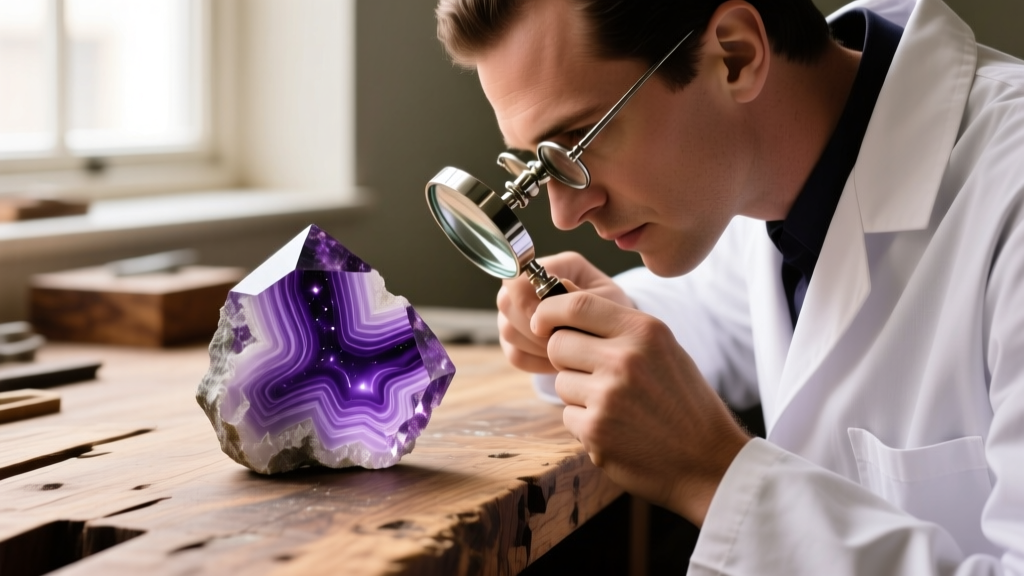
- Fracture Filling: Low-grade amethyst and sapphire are often filled with lead glass or synthetic resins to mask internal cracks. These fillings can be destroyed by standard ultrasonic jewelry cleaners or even mild acids like lemon juice. Always demand a loupe inspection to check for flash effects (rainbow reflections inside the fissures) that indicate glass filling.
'A gemstone's beauty is only half the equation. Without full disclosure of enhancements, a buyer is essentially purchasing a depreciating asset masked as a natural treasure.' — International Gem Society Market Report, 2025.
2026 Market Pricing: Budget vs. Luxury Comparison
To help you benchmark your next purchase, we have compiled a comparative matrix of average retail pricing for a standard 5-carat faceted purple gemstone pendant, excluding the metal setting costs.
| Gemstone | Avg. Price/Carat (5ct) | Mohs Hardness | Best Metal Pairing | Value Retention |
|---|---|---|---|---|
| Purple Sapphire (Untreated) | $1,500 - $3,500 | 9.0 | Platinum / 18k White Gold | Excellent |
| Tanzanite (Heated, AAA) | $450 - $750 | 6.5 - 7.0 | 18k Rose Gold | Good |
| Sugilite (Opaque Cabochon) | $80 - $150 | 5.5 - 6.5 | Sterling Silver / 14k Gold | Moderate |
| Zambian Amethyst | $40 - $80 | 7.0 | 14k Yellow Gold | Low (High Supply) |
| Dyed Purple Quartz | $2 - $10 | 7.0 | Vermeil / Brass | None |
Imitation Traps: Spotting Fakes and Synthetics
When shopping for a purple color necklace online or in tourist districts, synthetic corundum and dyed glass are rampant. Synthetic purple sapphires (created via the Verneuil flame fusion process) possess the exact same chemical composition as natural stones but cost a fraction of the price. While synthetics are great for budget fashion jewelry, they should never be sold at natural prices.
How to verify: Use a dichroscope. Natural tanzanite and sapphire will exhibit strong pleochroism (showing different colors when viewed from different crystal axes). Glass and cubic zirconia are singly refractive and will show no color shift. Furthermore, examine the girdle of the stone under 10x magnification; molded glass imitations often have rounded facet edges and tiny surface bubbles, whereas natural faceted gems have sharp, crisp junctions.
Hardware and Chain Value: Don't Overpay for the Setting
The gemstone is only part of the value equation. The chain and clasp hardware dictate the longevity and secondary market value of the necklace. In 2026, gold prices remain elevated, making the metal weight a critical factor in your budget assessment.
Chain Weight and Length Economics
A standard 18-inch 14k solid gold cable chain weighs approximately 2.5 to 4 grams. With gold spot prices fluctuating, expect to pay a baseline of $250–$400 for the chain alone. If a vendor offers a 'solid gold' amethyst necklace with an 18-inch chain for $150, the chain is undoubtedly hollow-core, gold-plated brass, or gold vermeil (silver base). Hollow chains are prone to kinking and crushing, rendering them unrepairable.
Clasp Mechanics
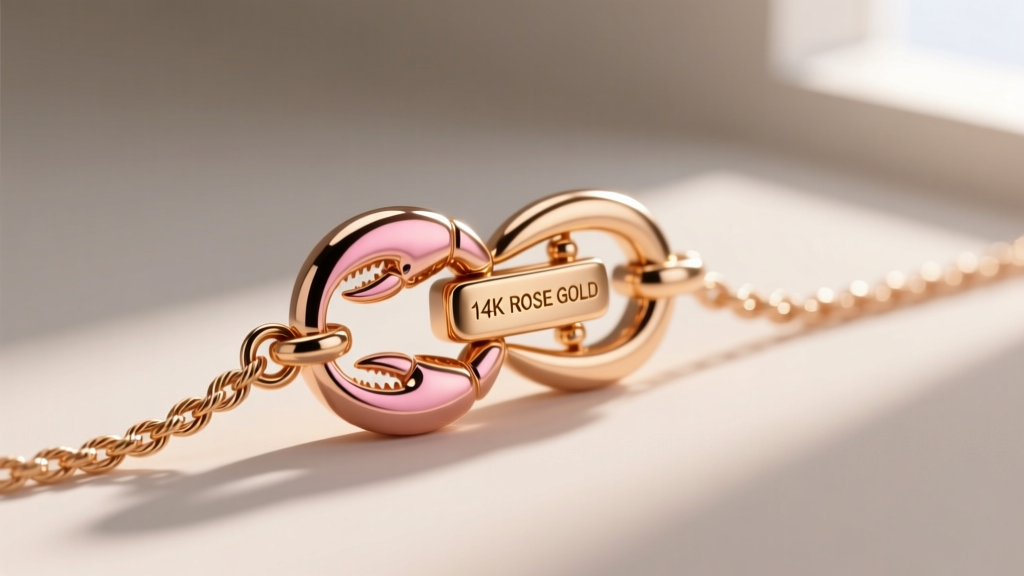
Never accept a spring-ring clasp on a pendant valued over $1,000. Spring rings rely on a tiny internal wire spring that degrades over time, leading to catastrophic loss. Insist on a solid lobster clasp or a secure box clasp with a figure-eight safety catch. The clasp should bear the same hallmark stamp (e.g., '14K' or '750') as the chain and pendant bail.
The Jewel Style Radar Verdict: Where to Spend and Save
If your goal is heirloom value and daily wearability, allocate your budget toward an untreated purple sapphire or a high-carat Zambian amethyst set in solid 18k gold. Avoid paying premiums for 'designer' brand names on tanzanite necklaces, as the markup on the setting often eclipses the intrinsic value of the gemstone. For fashion-forward, trend-based styling, opaque stones like sugilite or charoite set in heavy oxidized sterling silver offer immense visual impact and durability without the financial risk associated with high-clarity faceted gems. Always demand a third-party gemological certificate (GIA, AGS, or AGL) for any purple color necklace exceeding $1,500 to ensure your investment is protected against modern synthesis and treatment deception.


