Purple Cross Necklace Troubleshooting: Fading & Repair Guide
Is your purple cross necklace fading or catching on clothes? Learn expert troubleshooting for amethyst, tanzanite, and enamel pendant repairs.

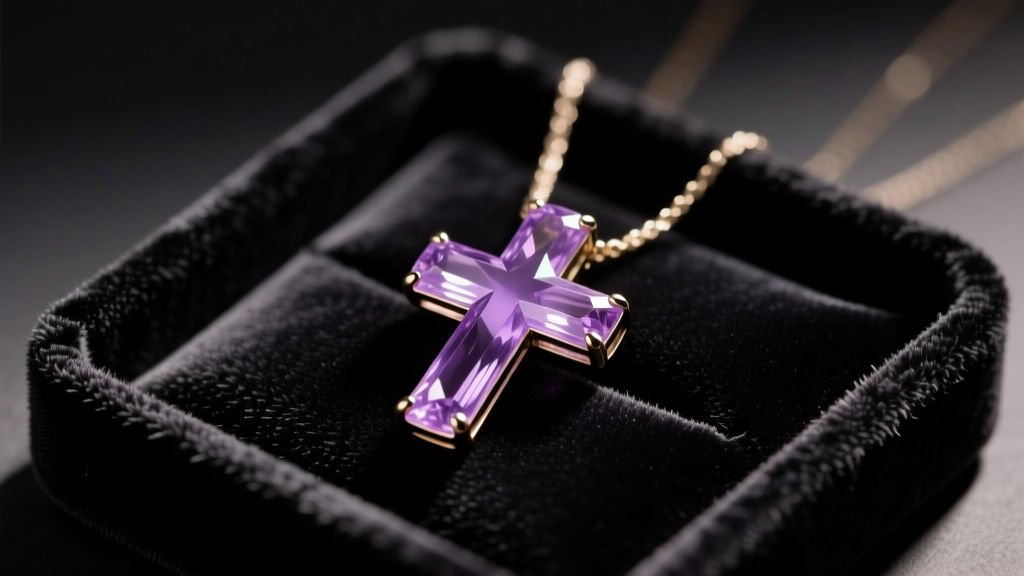
A purple cross necklace is a profound statement piece, blending spiritual symbolism with the regal, calming aesthetics of violet gemstones. Whether your pendant features deep Siberian amethyst, pleochroic tanzanite, rare sugilite, or intricate guilloché enamel, these necklaces demand specialized care. Unlike simple solitaire pendants, the geometric complexity of a cross creates unique structural vulnerabilities, while specific purple gemstones are highly susceptible to environmental degradation.
As a senior bench jeweler and style analyst, I frequently see purple cross necklaces brought in for preventable damage: color loss from UV exposure, snagged prongs on the outer corners, and galvanic tarnishing where the chain meets the bail. This comprehensive troubleshooting guide will help you diagnose, treat, and prevent the most common failures associated with purple gemstone and enamel crosses.
Diagnosing Color Loss in Purple Gemstones
The most common complaint we receive is a purple cross necklace slowly turning brown, yellow, or dull gray. The root cause depends entirely on the specific material used in the pendant.
Amethyst and UV Degradation
Amethyst (Mohs 7) gets its purple hue from iron impurities and natural irradiation within the quartz crystal lattice. However, prolonged exposure to direct sunlight or high heat (above 300°C) can alter the oxidation state of the iron, causing the stone to fade to a dull yellow or brownish-green. If you leave your amethyst cross on a sunny dashboard or windowsill, you are actively destroying its color. According to the GIA Amethyst Care Guide, once an amethyst has been heat-faded, the color loss is permanent and cannot be chemically reversed.
Tanzanite and Thermal Shock
Tanzanite (Mohs 6.5–7) is a violet-blue variety of zoisite. It is heavily included and sensitive to sudden temperature changes. If your tanzanite cross looks cloudy or dull, it may not be fading; it may be coated in microscopic skin oils and lotion that fill the stone's natural surface-reaching fissures. Furthermore, tanzanite exhibits strong pleochroism, meaning it shows different colors from different angles. A poorly cut tanzanite cross may appear brownish when viewed from the side profile.
Enamel Yellowing and Chipping
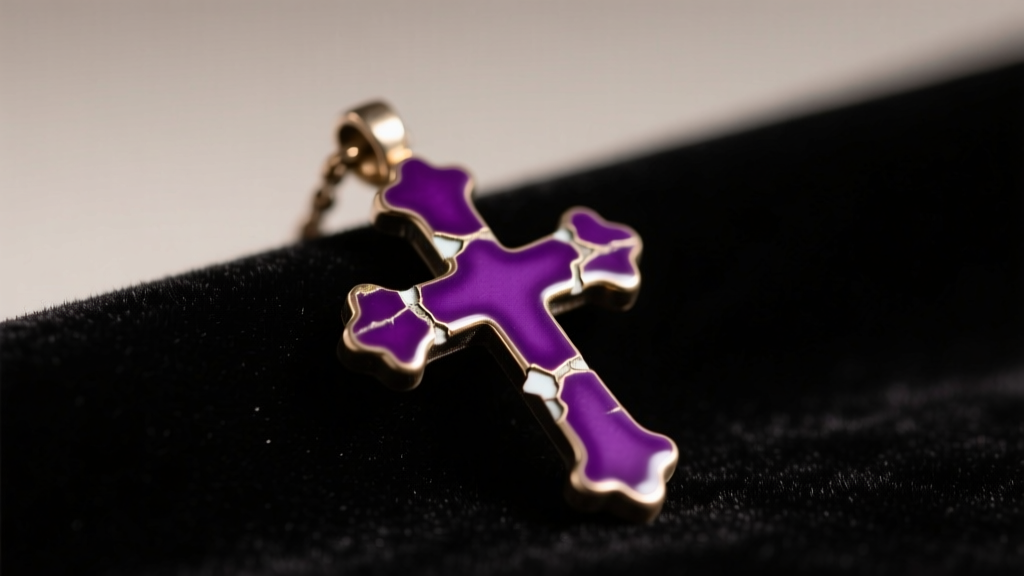
For fashion or vintage jewelry, purple enamel crosses are common. Epoxy-based cold enamels will inevitably yellow when exposed to UV light over a 3-to-5-year period. Traditional vitreous enamel (fired glass) will not yellow, but it is highly brittle and will chip if the cross pendant is dropped on a hard surface.
Structural Vulnerabilities: The 'Snag-Point' Problem
The anatomy of a cross pendant inherently features multiple protruding corners—typically four main arms, plus the inner intersecting angles. This geometry makes a purple cross necklace a magnet for snagging on knitwear, lace, and seatbelts.
"The number one reason gemstones fall out of cross pendants is prong failure at the outer corners. Standard round prongs lack the structural footprint to protect the sharp 90-degree angles of a faceted gemstone." — Master Bench Jeweler
If your amethyst or sapphire cross features stones set at the extreme tips of the cross arms, inspect the prongs monthly. Solution: Have your jeweler upgrade the corner settings to V-prongs. A V-prong wraps around the 90-degree corner of the stone, distributing the impact force if the necklace is snagged, reducing the risk of a chipped girdle or lost stone by up to 80%.
Chain Compatibility and Galvanic Tarnishing
The chain you pair with your purple cross necklace affects both the aesthetic and the chemical longevity of the piece. The bail (the loop connecting the pendant to the chain) experiences constant friction, which can accelerate metal wear and tarnish.
| Chain Material | Mohs Hardness | Tarnish Risk | Best Paired With |
|---|---|---|---|
| Sterling Silver (925) | 2.5 - 3.0 | High (Oxidizes with sulfur) | Amethyst, Enamel, Charoite |
| 14k White Gold | 3.5 - 4.0 | Low (Requires Rhodium) | Tanzanite, Purple Sapphire |
| Platinum (950) | 4.0 - 4.5 | None (Develops patina) | Heirloom / High-Value Crosses |
| Gold Vermeil | 2.5 (Silver core) | Medium (Wears to silver) | Lightweight Fashion Pendants |
Troubleshooting Tarnish: If your sterling silver chain is turning black near the bail, this is standard silver sulfide formation. However, if the chain is turning your skin green or the pendant's copper alloy is reacting with acidic sweat, you need to upgrade to a higher-purity metal or apply a microscopic barrier coating like Renaissance Wax to the back of the pendant.

Safe Cleaning Protocols by Material
Improper cleaning destroys more purple cross necklaces than daily wear. The jewelry industry's standard ultrasonic cleaner operates at 20–40 kHz, creating microscopic cavitation bubbles that blast away dirt. While excellent for diamond, this process is catastrophic for many purple stones.
- Amethyst: Avoid ultrasonics if the stone has liquid inclusions or internal fractures. The vibrations will propagate the fracture, splitting the stone in half.
- Tanzanite: Strictly avoid ultrasonics and steam cleaners. Thermal shock will shatter the stone. Clean only with warm water, mild dish soap, and a baby-hair brush.
- Sugilite & Charoite: These opaque, softer stones (Mohs 6) are often stabilized with resins. Harsh chemicals and ultrasonics will dissolve the resin, leaving the stone porous and chalky.
- Enamel: Never use silver dip liquids or ultrasonics on enamel crosses. The chemicals will strip the vitreous glaze and cause cold enamel to peel.
For safe, routine maintenance of your purple cross necklace, use a few drops of phosphate-free dish soap in lukewarm water. Soak for 3 minutes, gently agitate with a soft-bristled makeup brush, rinse under distilled water, and dry with a microfiber cloth. For deep cleaning and prong tightening, consult the GIA Tanzanite and Gemstone Care Guidelines or visit a certified gemologist.
When to Seek Professional Bench Repair
Do not attempt DIY fixes with superglue or household pliers. If you notice any of the following, take your necklace to a professional bench jeweler immediately:
- Rattling Sounds: If you shake the pendant near your ear and hear a faint click or rattle, a stone is loose in its setting. Stop wearing it immediately to prevent losing the gemstone.
- Bail Thinning: The bail rubs against the chain 24/7. If the metal loop is worn down to less than 0.5mm thickness, it will snap. A jeweler can solder a new sterling silver or gold bail for roughly $35 to $65.
- Prong Re-tipping: If a prong is sheared off from a snag, re-tipping (adding new metal to the prong and reshaping it over the stone) typically costs $25 to $45 per prong.
- Enamel Restoration: If a vintage purple enamel cross is chipped, a specialist can carefully remove the damaged glass and fire new enamel to match, though this specialized service can range from $150 to $300 depending on the complexity of the guilloché pattern.
By understanding the specific material science and structural geometry of your purple cross necklace, you can transition from reactive repairs to proactive preservation, ensuring your pendant remains a vibrant, flawless heirloom for decades to come.


