Purple and Gold Necklace Materials: Amethyst, Enamel & Alloy Guide
Explore the material science behind a purple and gold necklace. We compare amethyst, sugilite, vitreous enamel, and gold alloys for optimal durability.

The Metallurgical and Gemological Architecture of Purple and Gold
The visual contrast between purple and gold relies on color theory—specifically, the interplay between the warm, reflective properties of yellow gold and the cool, light-absorbing depths of purple gemstones or enamels. However, when sourcing or designing a purple and gold necklace, aesthetic harmony is only the first hurdle. The true challenge lies in material compatibility. The thermal expansion rates, Mohs hardness scales, and tensile strengths of purple materials vary wildly, dictating exactly how they must be paired with specific gold alloys to prevent structural failure. This guide bypasses generic styling advice to examine the precise material properties, failure modes, and pricing frameworks of purple and gold combinations in 2026.
Gemstone Options: Crystalline vs. Opaque Purple
The most common route to a purple pendant is through gemstones, but not all purple stones possess the structural integrity required for daily wear on a necklace. The choice of stone directly dictates the required gold setting technique.
Amethyst (Crystalline Quartz)
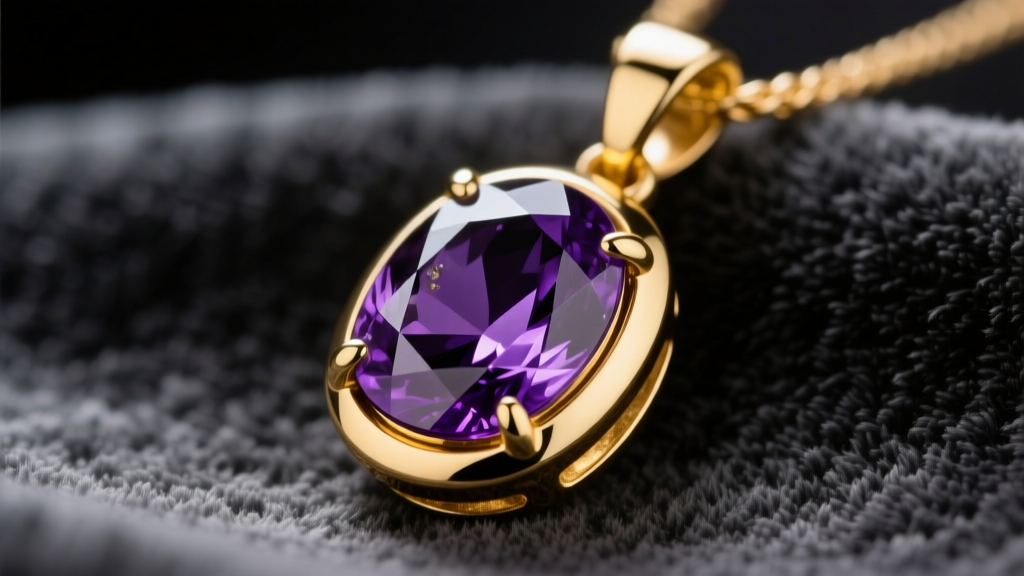
Amethyst remains the benchmark for purple jewelry. With a Mohs hardness of 7 and a specific gravity of 2.65, it is durable enough for prong settings. However, gemologists grade amethyst primarily on color saturation. The most prized variant, 'Siberian' amethyst, features a primary purple hue with secondary red and blue flashes under incandescent light. According to the GIA Amethyst Guide, deep color zoning is common, meaning lapidaries must use concave faceting to distribute color evenly. Failure Mode: Amethyst is highly sensitive to thermal shock. If a jeweler uses a standard torch to resize a gold chain or repair a prong without removing the stone, temperatures exceeding 300°C can permanently alter the crystal lattice, turning the purple stone yellow (creating citrine) or causing internal fracturing.
Sugilite and Charoite (The Opaque Alternatives)
For a bold, opaque purple, sugilite (Mohs 5.5–6.5) and charoite (Mohs 5–6) are unparalleled. Gem-grade sugilite, often called 'gel' sugilite due to its translucent, jelly-like luster, commands premium prices ($100–$300 per carat). Unlike faceted amethyst, these stones are cut en cabochon. Setting Requirement: Because sugilite possesses distinct cleavage planes and charoite is fibrous and prone to splintering, prong settings are strictly prohibited. A purple and gold necklace featuring these stones must utilize a 14k or 18k gold bezel setting with a slightly rolled lip to protect the dome's apex from impact abrasion.
Purple Sapphire (Corundum)
For high-end investment pieces, purple sapphire (Mohs 9) offers superior scratch resistance. The violet hue is caused by trace amounts of iron and titanium. When evaluating a purple sapphire pendant, buyers must request a lab report to check for beryllium diffusion—a heat treatment process documented by the GIA Sapphire Overview that artificially enhances color but significantly lowers the stone's resale value compared to unheated specimens.
The Enamel Route: Vitreous vs. Cold Enamel on Gold
When gemstones are bypassed in favor of a solid purple and gold necklace aesthetic, enamel becomes the primary medium. The material properties of the enamel used will determine the necklace's lifespan.
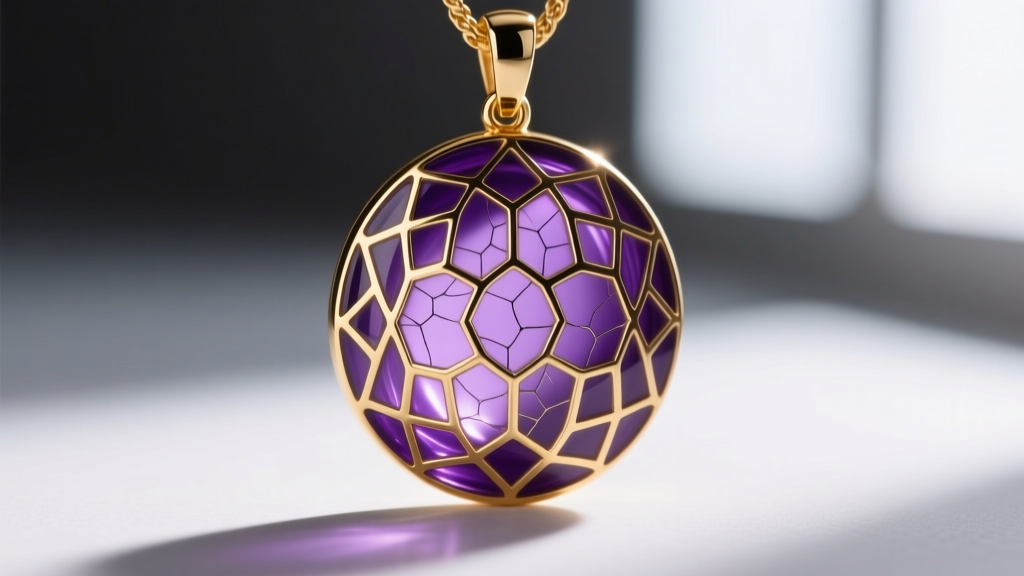
- Vitreous (Fired) Enamel: This is a glass powder fused to a gold substrate at temperatures between 760°C and 850°C. Because 18k gold has a melting point of roughly 925°C, it serves as an ideal base. Vitreous enamel boasts a Mohs hardness of 5–6, meaning it resists scratching from daily wear. Its primary vulnerability is brittleness; a hard impact against a marble countertop can cause the glass to shatter or pop out of the gold cloisonné cells.
- Cold Enamel (Epoxy Resin):strong> Often used in mass-produced fashion jewelry, cold enamel is essentially a pigmented polymer resin. It cures at room temperature and is highly impact-resistant. However, it has a Mohs hardness of only 2–3, making it highly susceptible to micro-scratches. More critically, the purple pigments in cold enamel are prone to UV degradation, often shifting to a muddy brown after 3 to 5 years of sun exposure.
The 'Purple Gold' Metallurgical Reality
Many consumers search for a 'purple gold necklace' assuming the gold itself can be alloyed to a purple hue. This is metallurgically possible but structurally complex. Purple gold is an intermetallic compound composed of 79% gold and 21% aluminum (AlAu2). While it contains enough gold to be classified as 18k, the aluminum alters the crystal structure from a malleable face-centered cubic lattice to a brittle fluorite structure. Application Limit: Purple gold cannot be drawn into wire or forged into a chain. It is strictly used as an inlay material. A genuine purple gold necklace will feature a standard 18k yellow or white gold chain and setting, with purple gold cast into geometric inlays within the pendant. According to data from the World Gold Council, intermetallic gold alloys require specialized casting environments to prevent aluminum oxidation, making true purple gold pendants rare and expensive.
Gold Alloy Selection: Setting the Purple Stones
The karatage of the gold used in a purple and gold necklace is not just a measure of purity; it dictates the tensile strength of the setting. The richer the yellow of the gold, the more vibrant the purple stone appears by contrast, but higher karat gold is softer.
| Gold Alloy | Purity | Tensile Strength | Best Use Case |
|---|---|---|---|
| 14k Yellow Gold | 58.5% | High | Bezel settings for opaque stones (Sugilite); durable cable chains for heavy pendants. |
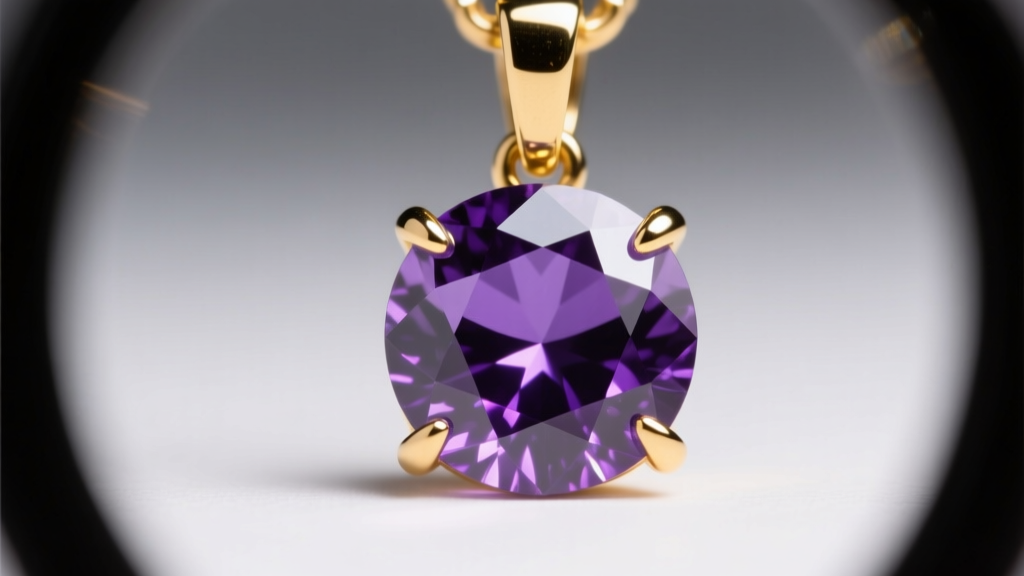
| 18k Yellow Gold | 75.0% | Medium | Prong settings for faceted Amethyst/Sapphire; vitreous enamel bases due to higher melting point. |
| 22k Yellow Gold | 91.6% | Low | Strictly for bezel-set, low-impact amulets. Too soft for secure prong settings or enamel firing. |
Chain Pairing and Structural Load
A frequent failure point in purple and gold necklaces is the chain snapping under the pendant's weight. Purple gemstones like amethyst and sugilite are relatively dense. A 20mm sugilite cabochon set in a thick 18k gold bezel can easily exceed 15 grams. Actionable Specification: Avoid standard 1.0mm cable or curb chains for pendants over 10 grams. Instead, specify a 1.5mm to 2.0mm wheat (spiga) chain or a 1.5mm rope chain. The interlocking geometry of a wheat chain distributes tensile stress across multiple wire links, preventing the localized stretching that causes oval cable links to pull apart at the solder joints.
Final Verdict: Choosing Your Material Profile
Selecting the right purple and gold necklace requires aligning the material properties with your wear habits. For daily, low-maintenance wear, a 14k gold bezel-set amethyst on a 1.5mm wheat chain offers the best balance of scratch resistance and structural integrity. For collectors seeking high-contrast opacity, an 18k gold vitreous enamel pendant provides a glass-like finish that will outlast the wearer, provided it is protected from blunt impacts. By understanding the thermal, structural, and optical properties of these materials, you can invest in a piece that maintains both its physical integrity and its striking visual contrast for decades.


