Quartz Necklace Properties: Natural vs Treated Stones Compared
Compare natural, treated, and synthetic quartz necklace properties. Learn about Mohs hardness, inclusions, and durability for everyday wear.

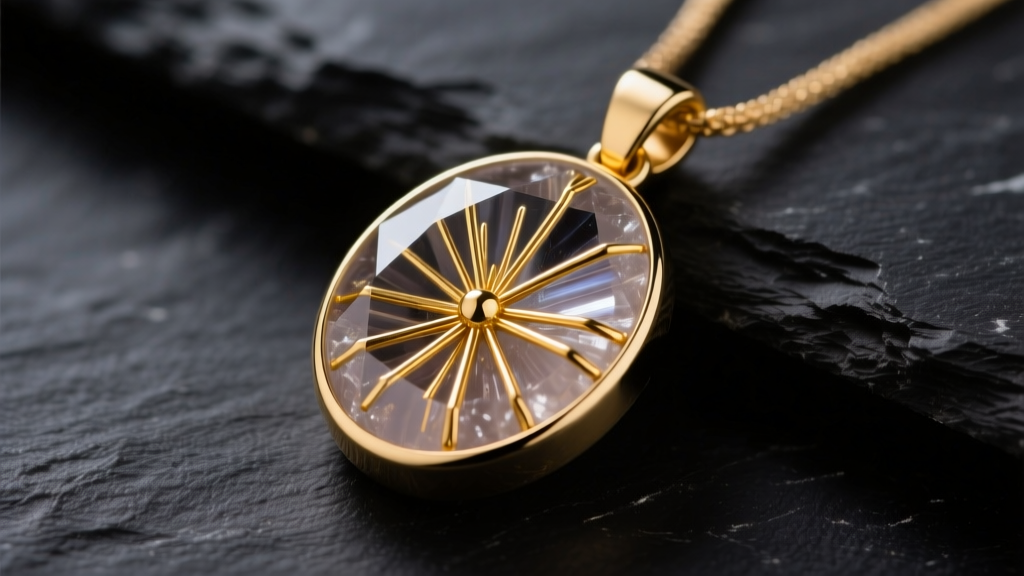
The Mineralogy of Quartz: Why It Dominates Pendant Design
When selecting a quartz necklace, understanding the underlying mineralogy is critical for predicting how the stone will wear over time. Quartz (silicon dioxide, SiO2) crystallizes in the trigonal system and ranks at a 7 on the Mohs hardness scale. While this makes it highly resistant to everyday scratches from dust and debris (which typically contains quartz particles at a hardness of 6.5 to 7), it is not impervious to damage from harder gemstones like topaz, sapphire, or diamond. According to the Gemological Institute of America (GIA), quartz possesses an indistinct cleavage, meaning it does not split along defined crystallographic planes. Instead, it exhibits a conchoidal fracture, breaking with smooth, curved surfaces similar to chipped glass. This physical property heavily dictates how a quartz pendant must be cut, set, and worn.
The refractive index (RI) of quartz sits between 1.544 and 1.553, with a low birefringence of 0.009. This optical profile means a quartz necklace will not display the fiery dispersion of a diamond or the neon brilliance of a zircon. Instead, quartz offers a subtle, glassy luster and exceptional depth, particularly in heavily included varieties. Its specific gravity of 2.65 makes it relatively lightweight, allowing for substantial, oversized pendant designs that remain comfortable for all-day wear without placing excessive strain on delicate chain links.
Natural, Treated, and Synthetic: A Material Breakdown
The market for quartz pendants is flooded with natural, enhanced, and lab-created stones. Distinguishing between these categories requires an understanding of the specific treatments applied to alter color and clarity.
Natural Quartz and Structural Inclusions
Natural quartz necklaces often feature macroscopic inclusions that define their value and structural integrity. Rutilated quartz contains needles of rutile (titanium dioxide), while tourmalinated quartz hosts black tourmaline crystals. While visually stunning, these inclusions create internal stress points. Because rutile and tourmaline have different thermal expansion rates than the host quartz, sudden temperature changes can cause the stone to fracture along these inclusion planes. According to mineralogical data from Mindat.org, the hardness of the rutile inclusions (Mohs 6-6.5) is also slightly lower than the quartz itself, meaning the surface can polish unevenly over decades of wear.
Heat-Treated and Irradiated Varieties
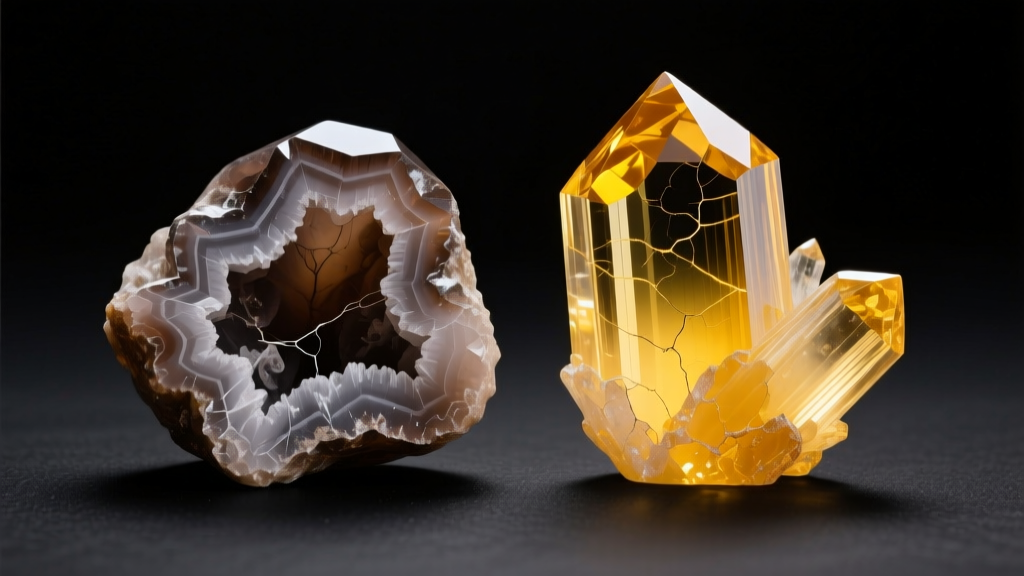
A significant portion of the citrine and smoky quartz used in commercial necklaces is treated. Natural citrine is rare; most commercial citrine is actually amethyst heated to temperatures between 470°C and 560°C. This heat treatment alters the oxidation state of iron impurities, shifting the color from purple to yellow-orange. Similarly, smoky quartz is often created by irradiating colorless or pale quartz with gamma rays. While these treatments are permanent and do not compromise the Mohs hardness of the stone, they can affect color stability. Prolonged exposure to intense ultraviolet light (such as direct summer sunlight) can cause some heat-treated citrine to fade or become brittle over time.
Hydrothermal Synthetic Quartz
Synthetic quartz is grown in laboratories using the hydrothermal method, mimicking the natural geological processes but in a fraction of the time. Synthetic quartz pendants are chemically and physically identical to natural quartz but are typically flawless. Gemologists identify them by looking for "bread-crumb" inclusions or the absence of natural twinning lines. For a quartz necklace, synthetic stones offer maximum durability due to the lack of internal stress fractures, though they lack the unique character of natural specimens.
Comparative Durability and Setting Requirements
Not all quartz varieties are created equal when it comes to pendant settings. The presence of inclusions, the specific cut, and the treatment history all influence how the stone should be mounted.
| Quartz Variety | Mohs Hardness | Toughness / Fracture Risk | Recommended Setting |
|---|---|---|---|
| Clear / Rock Crystal | 7.0 | High (Low internal stress) | Prong or Bezel |
| Rutilated Quartz | 7.0 (Rutile: 6.0) | Moderate (Inclusion planes) | Full Bezel |
| Smoky Quartz | 7.0 | High (Unless heavily irradiated) | Prong or Partial Bezel |
| Rose Quartz | 7.0 | Moderate (Often heavily included) | Bezel or Cabochon Bezel |
| Ametrine (Bi-color) | 7.0 | Moderate (Twinning planes) | V-Prong on points, Bezel |
The Physics of Conchoidal Fracture in Pendant Design
Because quartz lacks true cleavage, it does not split cleanly like a diamond or topaz. However, its conchoidal fracture means that sharp corners on faceted stones—such as the points of a pear, marquise, or princess cut—are highly vulnerable to chipping upon impact. When designing or purchasing a quartz necklace with these specific silhouettes, the setting must incorporate V-prongs. A standard rounded prong places uneven pressure on a sharp 90-degree or 45-degree facet junction. A V-prong, custom-fabricated from 14k or 18k gold, wraps securely around the apex of the stone, distributing kinetic energy away from the vulnerable tip if the pendant is struck against a hard surface.
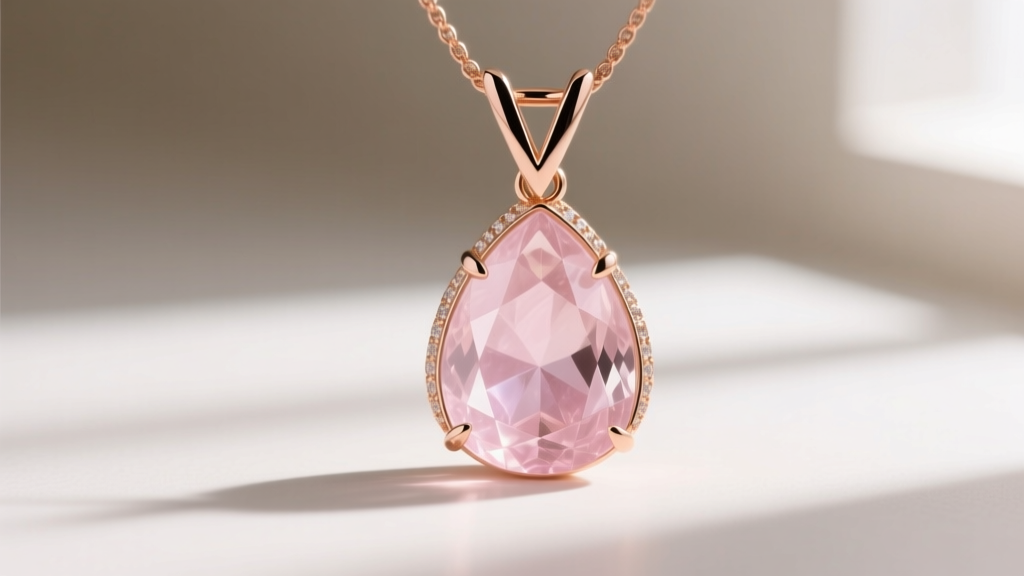
For cabochon cuts, which are frequently used for opaque or heavily included varieties like rose quartz, dumortierite quartz, or chalcedony (a microcrystalline quartz), a bezel setting is paramount. The smooth, domed surface of a cabochon lacks sharp edges, but the girdle (the outer edge) can easily chip if knocked against a table or doorframe. A flush bezel crafted from sterling silver or gold provides a continuous metal barrier that absorbs lateral shocks.
Care and Maintenance: Preventing Micro-Abrasions and Thermal Shock
Maintaining a quartz necklace requires specific protocols to avoid degrading the polish or causing catastrophic structural failure. The most common mistake consumers make is using ultrasonic cleaners on included quartz. While a flawless rock crystal pendant can survive an ultrasonic bath, the high-frequency vibrations will aggressively exploit the microscopic fissures surrounding rutile needles or tourmaline crystals in rutilated and tourmalinated quartz, eventually causing the stone to crack or the inclusions to loosen.
Furthermore, thermal shock is a severe risk for treated quartz and heavily included natural stones. Moving from a freezing outdoor environment into a hot sauna, or washing hands in scalding water while wearing a quartz pendant, can cause rapid expansion and contraction. Because the inclusions and the host quartz expand at different rates, this thermal stress can result in internal "frosting" or complete fracture. The safest and most effective cleaning method for any quartz necklace is a simple soak in lukewarm water with a mild, phosphate-free dish soap, followed by gentle agitation with a soft-bristled baby toothbrush and drying with a microfiber cloth. Avoid steam cleaners entirely, as the localized heat and pressure can permanently damage heat-treated citrine and amethyst.
Conclusion
A quartz necklace is a versatile and durable addition to any jewelry collection, provided the specific material properties are respected. By understanding the differences between natural, treated, and synthetic stones, and by selecting the appropriate setting to mitigate the risks of conchoidal fracture, collectors can ensure their pendants remain pristine. Whether you prefer the raw, untamed beauty of a rutilated quartz cabochon or the precise geometry of a heat-treated citrine emerald cut, matching the stone's physical properties to its metal mounting is the key to lifelong wearability.


