Queen Camilla Ruby Necklace Detail: A Gemological Deep Dive
Explore every queen camilla ruby necklace detail, from Burmese pigeon's blood gemology to Boucheron's antique platinum setting techniques and provenance.

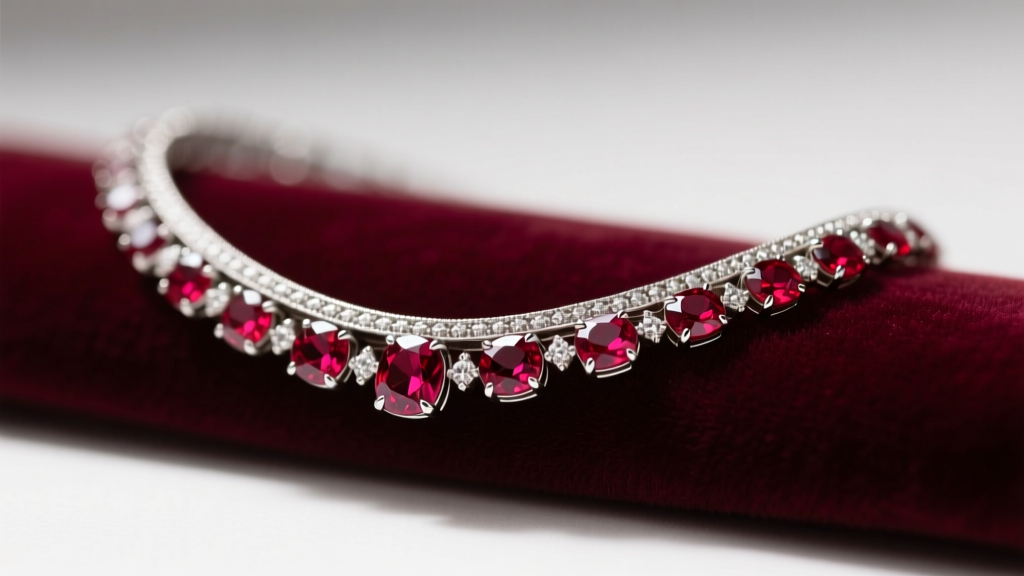
When royal jewelry makes a public appearance, the internet inevitably floods with high-resolution searches and macro-photography analysis. Among the most searched and scrutinized pieces in recent years is the historic ruby and diamond collier often worn by the Queen Consort. For gemologists and jewelry historians, examining every queen camilla ruby necklace detail reveals far more than just royal prestige; it uncovers a masterclass in early 20th-century lapidary arts, platinum metallurgy, and the uncompromising standards of Burmese gem sourcing. In this expert deep dive, we bypass the tabloid fascination and focus strictly on the technical, gemological, and structural realities of this iconic necklace.
The Provenance: Tracing the Greville-Boucheron Connection
To understand the architectural details of the necklace, one must first understand its origins. The piece is widely attributed to the historic bequests of Mrs. Ronald Greville, a prominent British socialite whose vast jewelry collection was left to Queen Elizabeth (the Queen Mother) in 1942. Boucheron, the venerable Parisian maison, was responsible for crafting and modifying many of Greville's most significant ruby pieces during the 1920s and 1930s. According to archives documented by the Royal Collection Trust, the transition of these pieces into the modern royal vault required meticulous structural maintenance, preserving the original Art Deco and Edwardian sensibilities while ensuring the clasps and links could withstand modern state-banquet wear.
Unlike contemporary necklaces that rely on laser welding and CAD-designed uniformity, this antique piece was forged entirely by hand. The articulation of the festoon drops and the precise tension of the diamond halos represent a high-water mark in Parisian jewelry engineering.
Gemological Breakdown: Analyzing the "Pigeon's Blood" Standard
The rubies anchoring this necklace are not merely red corundum; they are textbook examples of unheated Mogok Valley Burmese rubies. In the 2026 gemological market, sourcing unheated Mogok rubies of this caliber requires navigating a highly constrained supply chain, as most modern stones undergo thermal enhancement to dissolve silk and improve clarity.
Chromium-to-Iron Ratios and Fluorescence
The vivid, almost neon saturation seen in the queen camilla ruby necklace detail shots is a direct result of the stone's chemical composition. Burmese rubies possess a high chromium content and remarkably low iron levels. Iron acts as a fluorescence inhibitor; therefore, the low-iron profile of these specific stones allows them to fluoresce fiercely under ultraviolet light (and sunlight, which contains UV rays). This internal glow gives the stones a "liquid" appearance that Mozambican or Thai rubies, which are naturally higher in iron, simply cannot replicate.
Rutile Silk: The Fingerprint of Authenticity
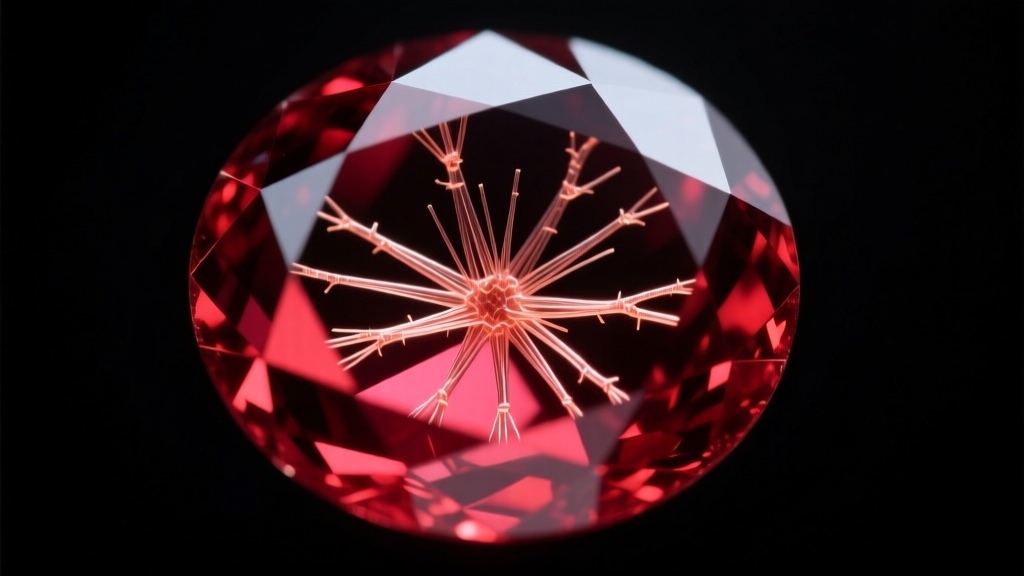
Under 40x magnification, a gemologist will look for rutile silk—microscopic needle-like inclusions of titanium dioxide. In the Greville-Boucheron pieces, the presence of intact, unbroken silk needles is the primary diagnostic feature proving the stones have never been subjected to the 1,800°C heat treatments common in today's market. As noted by the Gemological Institute of America (GIA), the specific geometric intersection of these needles (often at 60- and 120-degree angles) is the definitive fingerprint of natural, untreated Burmese origin.
Structural Engineering of the Platinum Settings
The metalwork supporting these priceless gems is 950-part platinum, the standard for high jewelry of the 1920s and 30s. Unlike 18k white gold, which requires rhodium plating to mask its yellowish-grey undertone, antique 950pt platinum develops a desirable, soft patina over time. The structural details of the necklace include:
- Millegrain Edging: The diamond halos surrounding the central rubies are bordered by millegrain—a technique where a specialized knurling tool is rolled along the platinum edge to create tiny, bead-like textures. This not only catches the light but also visually softens the transition between the metal and the gemstone.
- Articulated Linkages: The necklace is not a rigid collar. The drops are connected via microscopic platinum jump rings, allowing the piece to articulate fluidly against the clavicle. This fluidity is critical; a rigid necklace would transfer kinetic energy directly to the gemstone settings during movement, increasing the risk of a fractured girdle.
- Pavé Diamond Halos: The melee diamonds (typically ranging from 0.01 to 0.03 carats each) are set using traditional bright-cut pavé. The graver tool pushes the platinum over the girdle of the diamond, meaning no prongs are visible, maximizing the light return of the melee stones.
Market Replication: Sourcing High-Caliber Rubies Today
For high-end collectors and bespoke jewelers attempting to replicate the visual impact of this royal piece in 2026, understanding the origin-based differences in ruby grading is essential. While Burmese stones remain the historical benchmark, modern alternatives offer different structural and visual properties.
| Origin | Typical Treatment | Visual Profile | Market Price per Carat (2026 Est.) |
|---|---|---|---|
| Mogok, Burma | None (Unheated) | High fluorescence, neon red, visible silk | $150,000 - $1,000,000+ |
| Montepuez, Mozambique | Often Heated | Deeper purplish-red, higher clarity, less UV glow | $15,000 - $80,000 |
| Mong Hsu, Burma | Almost Always Heated | Darker core, requires heat to remove blue zoning | $8,000 - $35,000 |
| Chanthaburi, Thailand | Heated / Beryllium | Garnet-like darkness, low fluorescence, high iron | $2,000 - $12,000 |
Replicating the exact queen camilla ruby necklace detail requires sourcing unheated Mogok stones, a feat that often requires direct negotiation with legacy gem dealers in Geneva or Bangkok, as these stones rarely appear on the open retail market.
Maintenance and Preservation of Antique Ruby Settings
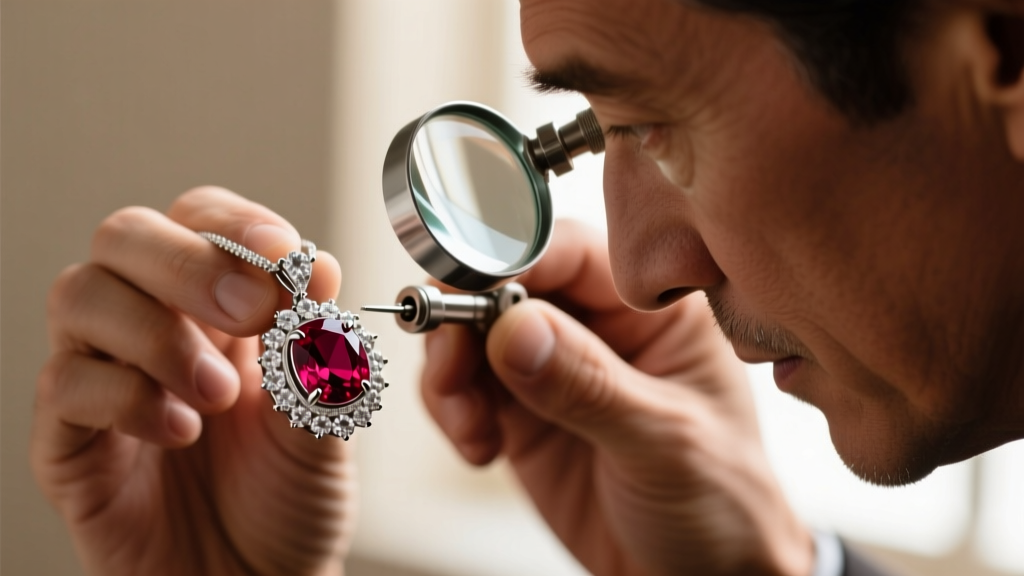
Owning or curating a piece of this historical magnitude requires strict adherence to antique jewelry conservation protocols. The most common failure mode in 1920s platinum jewelry is prong shear. While platinum is incredibly durable and resistant to wear, the microscopic prongs holding the pavé diamonds can become brittle over a century of micro-impacts.
"When conserving Art Deco platinum ruby necklaces, we never use ultrasonic cleaners. The high-frequency cavitation can easily dislodge a century-old friction-set melee diamond or fracture a ruby along a pre-existing twin plane. We rely exclusively on warm, distilled water, a neutral pH surfactant, and a ultra-soft sable brush."
— Senior Conservator, London Antique Jewelry Guild
Furthermore, the tongue-and-groove box clasps used on these heavy festoon necklaces must be inspected annually. The internal tension springs, often crafted from steel or hardened gold alloys in the 1930s, can lose their temper over decades of use. A master jeweler will carefully re-tension the safety catches and inspect the solder joints where the clasp meets the main platinum chain, ensuring the structural integrity remains uncompromised.
Final Thoughts on Royal Gemology
The fascination with royal jewelry is often driven by the romance of its provenance, but for the true jewelry aficionado, the magic lies in the technical execution. The queen camilla ruby necklace detail analysis proves that the piece is not just a collection of expensive rocks; it is a surviving artifact of peak European metalwork and elite Burmese gemology. Whether you are a historian, a gemologist, or a collector seeking to commission a modern homage, respecting the intricate balance of chromium-rich corundum and hand-forged platinum is the key to understanding true high jewelry mastery.


