Rainbow Obsidian Necklace Properties: Durability, Fakes & Care
Discover the optical properties, Mohs hardness, and care tips for a rainbow obsidian necklace. Learn to spot fakes and compare it to other volcanic glass.

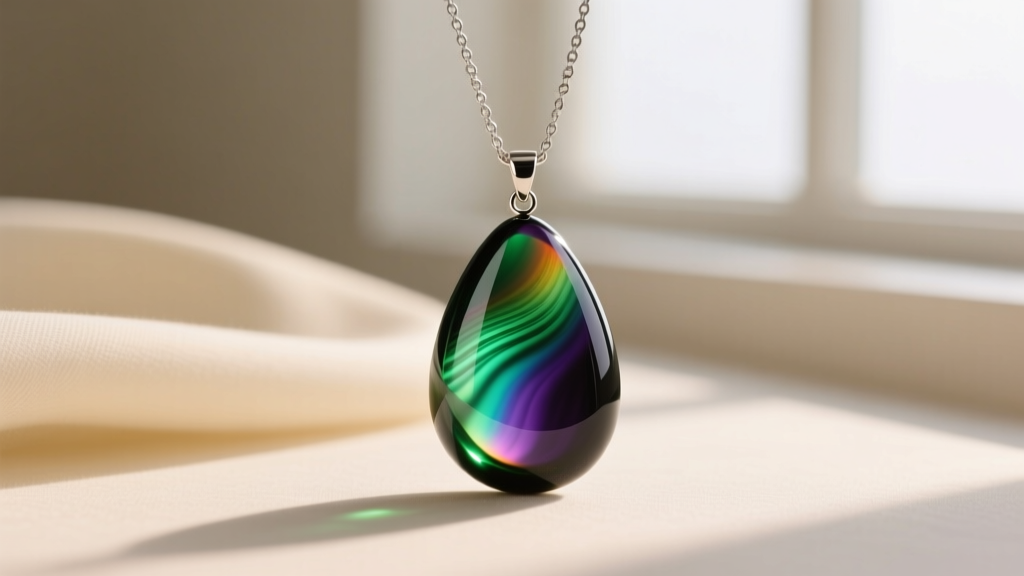
The Mineralogy and Optical Magic of Rainbow Obsidian
When shopping for a statement piece, a rainbow obsidian necklace stands out due to its mesmerizing, multi-colored sheen. But to truly appreciate and care for this volcanic glass, one must understand its unique gemological profile. Unlike crystalline gemstones such as quartz or amethyst, obsidian is an amorphous mineraloid. It lacks a defined crystal lattice, forming instead when silica-rich lava cools so rapidly that atoms are unable to arrange into a structured pattern.
According to the Mindat.org mineral database, obsidian is primarily composed of silicon dioxide (SiO2), usually 70% or more. The 'rainbow' variety gets its striking iridescence not from surface coatings, but from internal nanoparticle inclusions. Specifically, microscopic bubbles of gas and nanoparticles of magnetite align in thin layers during the cooling process. When light hits these layers, it undergoes thin-film interference—the same optical phenomenon that creates the swirling colors on an oil slick or a soap bubble. This results in the vivid bands of green, purple, gold, and blue that flash across the stone's surface when tilted.
Key Gemological Specifications
- Chemical Formula: SiO2 (with trace MgO, Fe3O4)
- Hardness (Mohs): 5.0 to 5.5
- Specific Gravity: 2.35 to 2.60
- Refractive Index: 1.48 to 1.51
- Luster: Vitreous (glassy)
- Primary Sources: Glass Butte (Oregon, USA), Armenia, Mexico
Durability and Wearability: Is It Safe for Daily Wear?
A common question among jewelry enthusiasts is whether a rainbow obsidian necklace can withstand daily wear. The short answer is yes, but with strict caveats regarding its structural integrity. With a Mohs hardness of 5.0 to 5.5, obsidian is softer than everyday dust (which contains quartz particles at a 7.0). This means it can easily accumulate micro-scratches if wiped with a dry, dirty cloth.
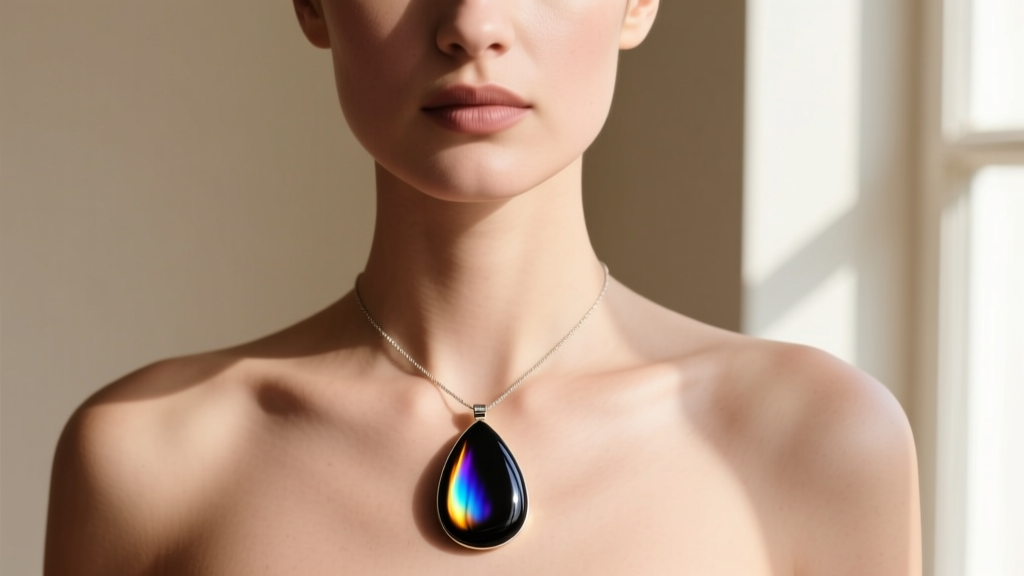
More critically, obsidian exhibits no true cleavage but is famous for its conchoidal fracture. This means that if struck against a hard surface, it will chip or shatter in smooth, curved, shell-like patterns, leaving razor-sharp edges. For a necklace pendant, which is prone to swinging and hitting desks or doorframes, this brittleness is a primary concern. To mitigate this risk, jewelers strongly advise against prong settings for obsidian. Instead, a full or partial bezel setting in sterling silver or gold is mandatory to protect the girdle (the outer edge) of the cabochon from impact damage.
Expert Insight: Never wear an obsidian pendant while exercising, lifting weights, or doing manual labor. The combination of sweat (which can degrade certain metal settings over time) and the high risk of blunt-force impact makes it a recipe for a shattered stone.
Material Comparison: Rainbow Obsidian vs. Lookalikes
The market is flooded with iridescent stones, and unscrupulous sellers often mislabel cheaper alternatives. Below is a comparative breakdown to help you identify genuine rainbow obsidian against common substitutes.
| Material | Mohs Hardness | Iridescence Cause | Average Pendant Price | Visual Clues |
|---|---|---|---|---|
| Rainbow Obsidian | 5.0 - 5.5 | Magnetite nanoparticles / Gas bubbles | $40 - $150 | Dark base color; sheen appears in distinct, directional bands. |
| Labradorite | 6.0 - 6.5 | Labradorescence (twinning lamellae) | $30 - $120 | Lighter grey base; sharp, metallic flashes of blue/green. |
| Mystic Topaz | 8.0 | Titanium vapor surface coating | $50 - $200 | Faceted stone; rainbow colors are on the surface, not deep inside. |
| Goldstone (Glass) | 5.5 | Copper flecks suspended in glass | $15 - $40 | Glittery, metallic sparkles rather than a smooth sheen; often contains bubbles. |
How to Authenticate Genuine Rainbow Obsidian
Because obsidian is essentially natural glass, it is easily mimicked by manufactured slag glass or molded resins. The International Gem Society notes that synthetic imitations often lack the natural flow lines and specific inclusion patterns found in authentic volcanic glass. Here is a practical framework for authentication:
1. The Flashlight Test
Shine a strong LED flashlight directly through the edge of the pendant. Genuine rainbow obsidian will usually reveal a dark, smoky interior with subtle flow bands. If the light passes through uniformly or reveals perfectly spherical air bubbles, you are likely looking at molded factory glass. Natural obsidian may contain tiny, elongated, or irregularly shaped gas cavities, but never perfect spheres.
2. The Temperature Test
Natural obsidian has a higher thermal conductivity than plastic resins. When you press a genuine stone to your cheek or the inside of your wrist, it should feel distinctly cool to the touch and take a few seconds to warm up to your body temperature. Resin fakes will feel room-temperature or warm almost instantly.
3. Examining the Sheen Geometry
The rainbow sheen in natural obsidian is highly directional. As you rotate the pendant, the colors should 'turn on' and 'turn off' in distinct bands or layers. Molded glass imitations often have a sprayed-on iridescent coating that looks uniformly glittery from all angles, lacking the layered depth of natural thin-film interference.
Setting Styles and Chain Pairings for Necklaces
Designing or selecting the right hardware for a rainbow obsidian necklace is crucial for both aesthetics and longevity. Due to the stone's deep, dark base color, the metal you choose will dramatically alter its visual impact.
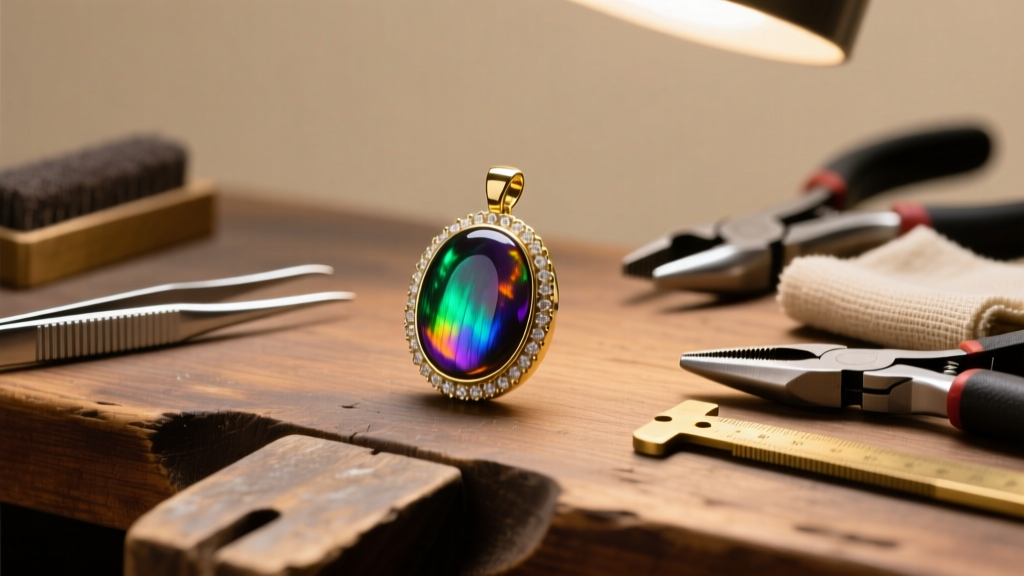
Optimal Metal Pairings
- Sterling Silver (925): The cool, bright tone of polished silver provides a high-contrast backdrop that makes the blue and green flashes of the obsidian pop. It is the most popular and affordable choice.
- Yellow Gold (14k or 18k): Gold enhances the warmer, golden-bronze undertones that sometimes appear in rainbow obsidian, giving the piece a vintage, earthy aesthetic.
- Oxidized Silver: A darkened, antiqued silver setting blends seamlessly with the black base of the stone, creating a moody, gothic, or rustic look where only the rainbow sheen stands out.
Chain Gauge and Clasp Mechanics
Obsidian cabochons are relatively dense. A standard 30mm x 40mm teardrop pendant can easily weigh between 15 and 25 grams. To support this weight without risking chain failure:
- Chain Thickness: Avoid delicate chains under 1.0mm. Opt for a 1.5mm to 2.0mm cable, rope, or wheat chain to ensure the tensile strength can handle the pendant's swing.
- Clasp Type: Spring ring clasps are notorious for failing under heavy loads. Always ensure your necklace is equipped with a sturdy lobster clasp or a secure magnetic locking clasp.
- Length: For optimal display of the sheen, a 20-inch to 24-inch chain (matinee length) is ideal, allowing the pendant to rest on the sternum where it catches overhead and ambient light most effectively.
Care, Cleaning, and Energetic Maintenance
Proper maintenance of your rainbow obsidian necklace ensures the vitreous luster remains sharp and the metal setting stays secure. Because of its amorphous structure and fracture risk, standard jewelry cleaning methods must be modified.
What to Avoid
Never place obsidian in an ultrasonic cleaner. The high-frequency vibrations can easily exploit microscopic internal stress fractures, causing the stone to crack or shatter completely. Similarly, avoid steam cleaners, as sudden thermal shock (rapid heating and cooling) can fracture the glass.
Safe Cleaning Protocol
- Mix a few drops of mild, phosphate-free dish soap into a bowl of lukewarm (not hot) water.
- Submerge the necklace for 3 to 5 minutes to loosen skin oils and lotion residue.
- Gently agitate the water with your fingers. Do not use a hard-bristled brush; a baby-soft toothbrush or a microfiber cloth is sufficient.
- Rinse under a gentle stream of lukewarm water.
- Pat dry immediately with a lint-free jeweler's cloth to prevent water spots on the metal setting.
When storing your necklace, keep it in a separate soft flannel pouch or a dedicated compartment in your jewelry box. Because obsidian is softer than diamonds, sapphires, and even quartz, tossing it into a communal jewelry box will guarantee a scratched, dull surface over time. By respecting its material properties and limits, your rainbow obsidian pendant will remain a captivating, iridescent staple in your collection for years to come.


