Razor Blade Necklace Care: Cleaning and Maintenance
Learn expert cleaning and maintenance tips for your razor blade necklace, covering 316L steel, PVD coatings, and safe ultrasonic methods.

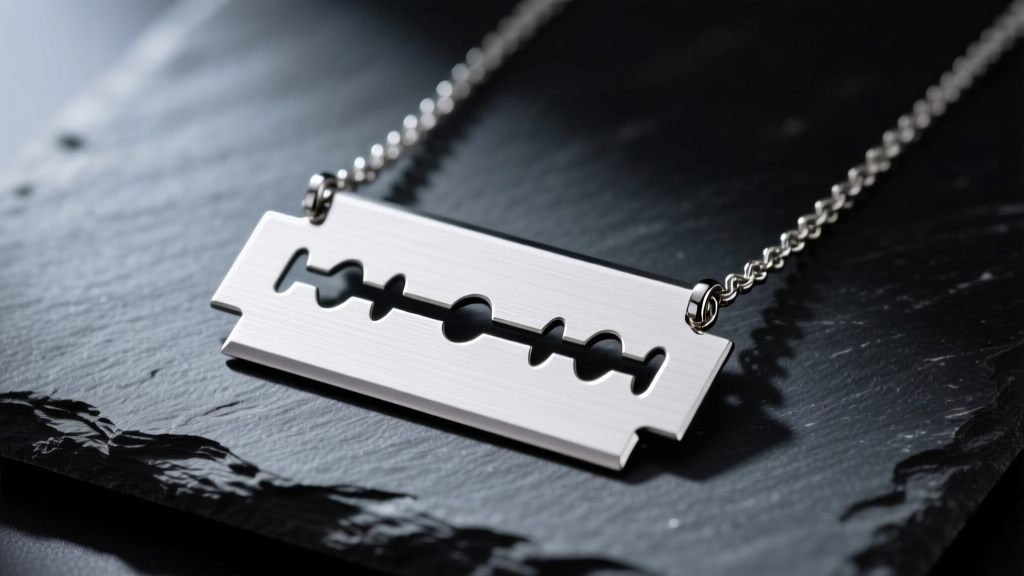
The razor blade necklace has cemented its place in contemporary jewelry, bridging the gap between punk-rock heritage and modern high-fashion layering. However, the very design elements that make this pendant iconic—sharp bevels, deep central slots, and angular crevices—also make it a magnet for sebum, dead skin cells, and clothing lint. Proper maintenance is not just about aesthetics; it is crucial for preserving the structural integrity of the metal and preventing skin irritation.
In this comprehensive guide, we break down the exact metallurgical properties of modern razor blade pendants and provide a meticulous, step-by-step cleaning protocol to keep your piece pristine.
The Anatomy of a Razor Blade Necklace: Why Care is Different
Unlike smooth, domed pendants, a razor blade necklace features a high surface-area-to-volume ratio with multiple sharp transitions. The central elongated slot and the beveled edges act as physical traps for microscopic debris. When worn daily, the natural oils from your chest mix with environmental pollutants and dead skin, creating a stubborn, waxy film that adheres tightly to the metal's microscopic pores. Furthermore, the sharp edges are highly susceptible to micro-abrasions if cleaned with improper tools, which can dull the pendant's reflective finish and compromise its edgy aesthetic.
Material Breakdown: Identifying Your Metal Grade
Before applying any cleaning agent, you must identify the exact material of your razor blade necklace. The cleaning protocol for solid stainless steel differs vastly from that of Physical Vapor Deposition (PVD) coated titanium or sterling silver.
| Material Grade | Tarnish Resistance | Safe Cleaning Agents | Strictly Avoid |
|---|---|---|---|
| 316L Surgical Steel | High | Mild dish soap, 42kHz ultrasonic | Bleach, Hydrochloric acid |
| 304 Stainless Steel | Moderate | Mild soap, manual wiping | Saltwater, Chlorine pools |
| .925 Sterling Silver | Low | Silver dip, polishing cloth | Rubber bands, sulfur environments |
| PVD Coated Titanium | High | Warm water, microfiber only | Ultrasonic, abrasive pastes |
According to the International Stainless Steel Forum (ISSF), 316L steel contains 2-3% molybdenum, which drastically increases its resistance to chloride pitting compared to standard 304 steel. If you wear your necklace in the ocean or sweat heavily during workouts, 316L is the superior choice.
The PVD Coating Factor
Black or gold razor blade necklaces are often crafted from titanium or steel using PVD (Physical Vapor Deposition). This coating is incredibly hard but exceptionally thin—typically between 0.5 and 2 microns. Using abrasive polishes like jeweler's rouge or Brasso will strip the PVD layer, exposing the base metal and ruining the pendant.
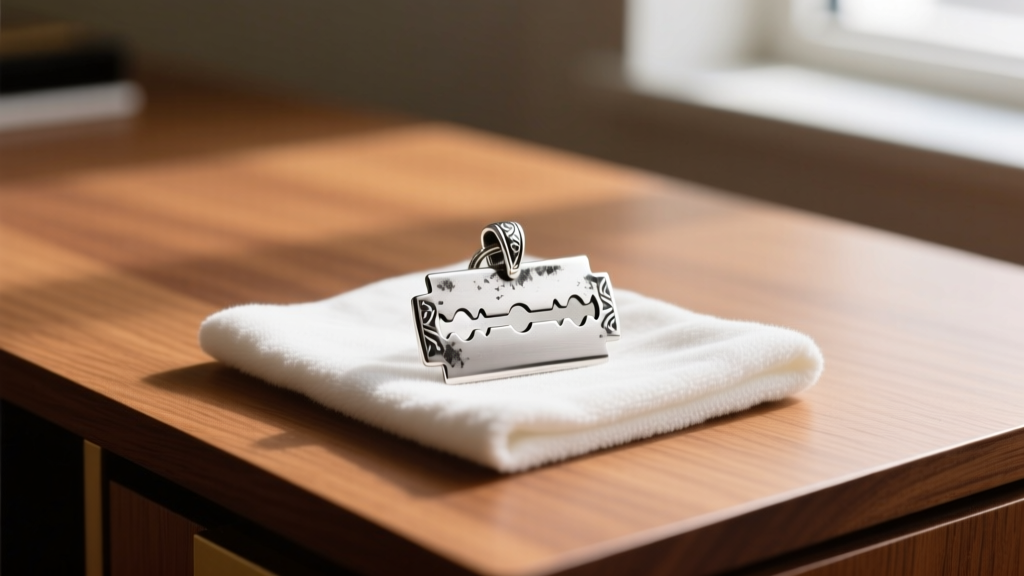
Step-by-Step Cleaning Protocol for Razor Blade Pendants
Follow this exact sequence to safely remove buildup without damaging the metal or any integrated gemstones.
Step 1: The Dry Brush Debris Removal
Never apply liquid cleaners to a pendant caked with dry lint and dust; this creates an abrasive paste. Use a clean, ultra-soft baby toothbrush or a dedicated jewelry brush to gently sweep the central slot and beveled edges. Brush away from your body to prevent debris from embedding deeper into the chain links.
Step 2: The Surfactant Soak
Prepare a solution of warm distilled water (around 95°F or 35°C) and a few drops of phosphate-free dish soap. The Gemological Institute of America (GIA) recommends mild, non-detergent soaps for most jewelry metals to avoid chemical reactions with alloyed metals. Submerge the razor blade pendant and its chain for 10 to 15 minutes. The surfactant will break the surface tension of the water, allowing it to penetrate the microscopic crevices and lift the sebum film.
Step 3: Agitation and Rinsing
After soaking, use your soft brush to gently agitate the central slot. For solid 316L steel or sterling silver, you can use a 42kHz ultrasonic cleaner for 3 minutes to cavitate the debris out of the sharp corners. However, never use an ultrasonic cleaner on PVD-coated pieces or pendants with glued-in cubic zirconia, as the high-frequency vibrations can cause micro-fractures in the coating or shatter the adhesive bond.
Rinse thoroughly under a gentle stream of lukewarm distilled water. Tap water contains trace minerals and chlorine that can leave water spots or initiate localized corrosion on lower-grade steels.
Step 4: Capillary Drying
Do not rub the sharp edges with a standard towel, as lint will catch and tear. Instead, lay the necklace on a paper towel and use a hair dryer on the 'cool' setting to blow the water out of the crevices. Finish by gently patting the flat surfaces with a clean, lint-free microfiber cloth.
The Dangers of Chlorine and Bleach
One of the most common ways wearers destroy stainless steel razor blade necklaces is through exposure to household bleach or heavily chlorinated swimming pools. Chlorine attacks the passive chromium oxide layer that protects stainless steel from rust. Once this invisible layer is compromised, the underlying iron reacts with oxygen and moisture, leading to irreversible pitting and rust spots. If your necklace is exposed to chlorinated water, you must immediately rinse it with fresh, distilled water and neutralize the surface with a mild baking soda solution.
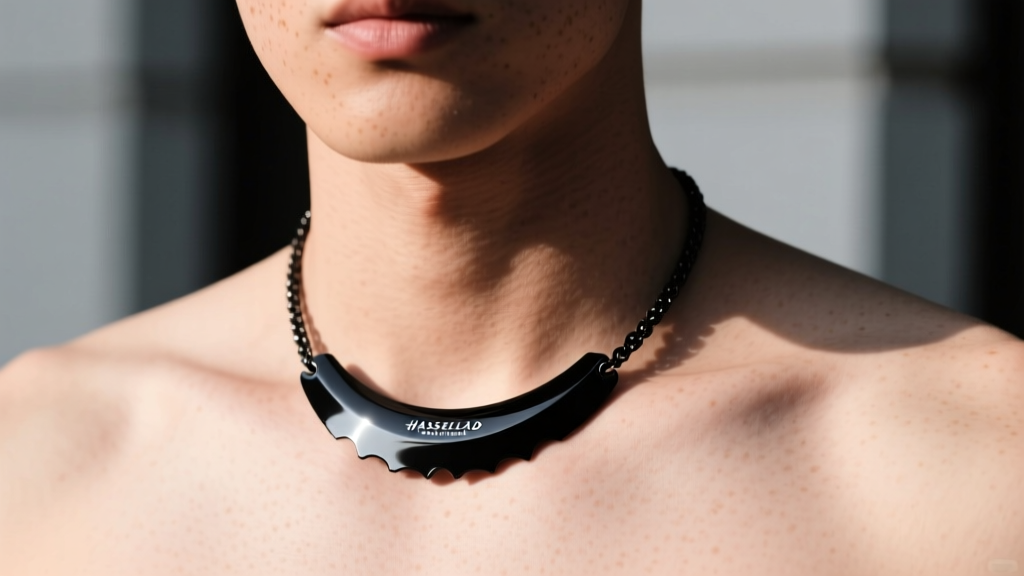
Storage and Daily Wear Best Practices
How you store your razor blade necklace when it is not around your neck dictates its long-term polish and structural integrity.
- Isolate the Sharp Edges: Never toss a razor blade pendant into a communal jewelry box. The sharp corners will easily scratch softer metals like gold or silver chains, and conversely, harder gemstones can gouge the steel. Store it in an individual polyethylene ziplock bag.
- Anti-Tarnish Strips: If your piece is .925 sterling silver, place a 3M anti-tarnish strip inside the storage bag. These strips absorb airborne sulfur compounds before they can react with the copper alloyed in the silver, preventing the black oxidation that plagues silver crevices.
- Chain Selection Matters: The type of chain you use affects maintenance. Box chains and curb chains tend to shed microscopic metal dust and catch lint, which then transfers to the razor blade's slot. Smooth, continuous chains like snake chains or wheat chains generate less friction debris and keep the pendant cleaner for longer.
Frequently Asked Questions
Can I use toothpaste to polish my stainless steel razor blade necklace?
No. Most commercial toothpastes contain hydrated silica or calcium carbonate, which rank between 3 and 4 on the Mohs hardness scale. While this is effective for tooth enamel, it is highly abrasive to polished steel and will leave a web of microscopic scratches on the flat surfaces of your pendant, turning a mirror finish into a dull, matte haze.
How often should I clean my necklace if I wear it daily?
For daily wearers, a quick wipe-down with a microfiber cloth at the end of the day removes sweat and oils before they can cure. A full surfactant soak and ultrasonic cleaning should be performed every 3 to 4 weeks, depending on your activity level and environment. As noted by Jewelers of America, consistent, gentle cleaning is always preferable to aggressive, infrequent deep cleans.
My sterling silver razor blade has black gunk in the slot. How do I remove it?
That black gunk is silver sulfide (tarnish) mixed with skin oils. Dip a cotton swab in a dedicated liquid silver dip (thiourea-based) and carefully trace the inside of the slot. Let it sit for 10 seconds, then rinse immediately with distilled water. Do not let the dip dry on the metal, as it can cause chemical etching.


