Expert Care and Cleaning Tips for a Real Jade Necklace
Learn how to safely clean, store, and maintain your real jade necklace. Discover expert tips to protect jadeite and nephrite from damage.

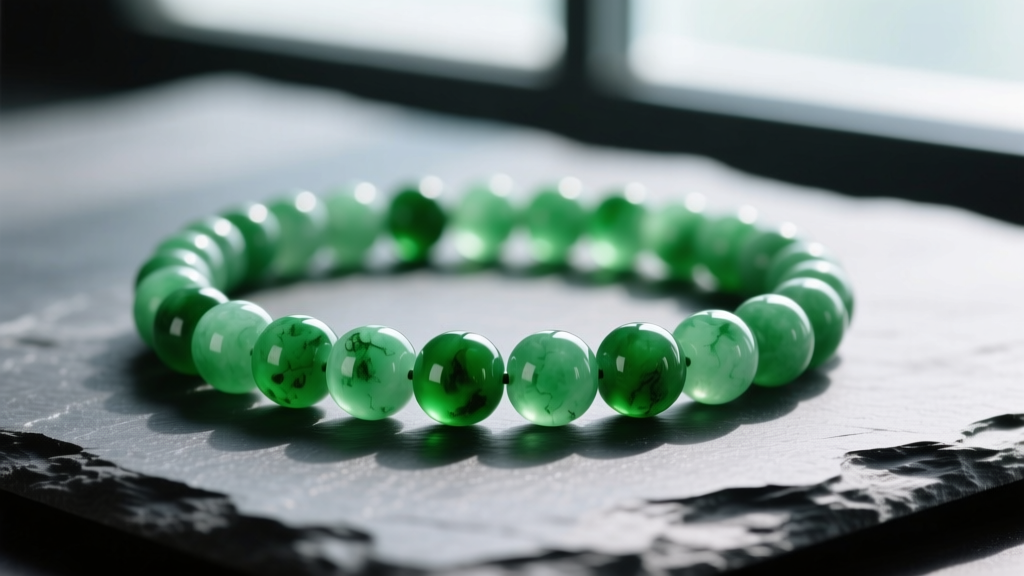
Owning a real jade necklace is an investment in both history and natural beauty. Whether you possess a vibrant green jadeite bead necklace or a deeply carved nephrite pendant, this remarkable gemstone requires specific, knowledgeable care to maintain its structural integrity and luster. Unlike diamonds or sapphires, jade is a complex mineral aggregate with unique porosity and treatment sensitivities. In this comprehensive guide, we break down the exact gemological protocols for cleaning, storing, and maintaining your real jade necklace to ensure it survives for generations.
Understanding Your Jade: Hardness, Toughness, and Treatments
Before applying any water or cloth to your necklace, you must understand the physical properties of your specific jade. The term 'jade' encompasses two distinct minerals: Jadeite (sodium aluminum silicate) and Nephrite (calcium magnesium iron silicate). According to the GIA Jade Description Guide, jadeite ranks between 6.5 and 7 on the Mohs scale of hardness, while nephrite ranks slightly lower at 6 to 6.5. However, nephrite possesses superior toughness due to its interlocking fibrous crystal structure, making it highly resistant to chipping and breaking.
The Critical Role of Jade Treatments
Your cleaning method must be dictated by the jade's treatment grade. The gemological industry categorizes real jade into three distinct types:
- Type A (Untreated): This is pure, natural jade that has only been treated with a traditional hot wax coating (usually beeswax or paraffin) after polishing to fill microscopic surface pores and enhance luster. Type A jade is the most valuable and requires gentle care to preserve the wax layer.
- Type B (Bleached and Polymer-Impregnated): This jade has been soaked in harsh acids to remove brown or yellow impurities, leaving it porous. It is then vacuum-impregnated with a polymer resin to restore structural integrity. Type B jade is highly sensitive to heat and solvents.
- Type C (Dyed): This jade has been artificially colored. The dye can fade or bleed if exposed to harsh chemicals, ultrasonic vibrations, or prolonged sunlight.
The Step-by-Step Cleaning Routine for Real Jade
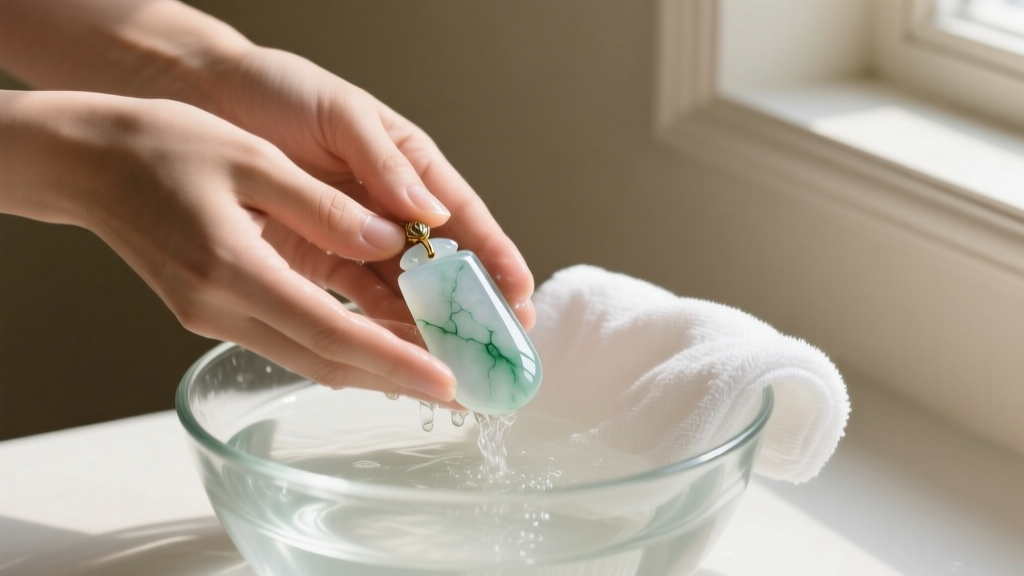
When cleaning a real jade necklace, the goal is to remove accumulated body oils, cosmetics, and environmental dust without stripping the stone's natural or applied wax coating. Never use commercial jewelry dips, enzymatic cleaners, or abrasive pastes.
- Prepare the Solution: Fill a glass or ceramic bowl with lukewarm water. The water should be room temperature or slightly warm—never hot, as thermal shock can cause internal fracturing in jadeite. Add two drops of a pH-neutral, non-detergent liquid soap, such as pure Castile soap or a mild baby shampoo.
- Soak Briefly: Submerge the jade necklace for no more than 3 to 5 minutes. Prolonged soaking can weaken the silk cord used for stringing and may seep into the drill holes of the beads, causing long-term degradation.
- Gently Agitate: Using a clean, ultra-soft microfiber cloth or a dedicated makeup brush with incredibly soft bristles, gently wipe the surface of each bead or pendant. Pay special attention to the back of the pendant and the areas around the clasp where sebum and dead skin cells accumulate.
- Rinse Thoroughly: Rinse the necklace under a gentle stream of cool, distilled water to prevent hard water spots or mineral deposits from forming on the stone's surface.
- Dry Completely: Pat the jade dry with a lint-free cotton cloth. Lay the necklace flat on a dry towel in a well-ventilated area to ensure the silk cord dries completely before storage. Storing a damp silk cord will lead to mildew and eventual snapping.
What to Avoid: The Enemies of Jade
Because jade is often treated or waxed, and because it possesses natural cleavage planes, it is highly vulnerable to specific environmental and chemical stressors. The Gemological Institute of America (GIA) strongly advises against using mechanical cleaning systems on jade.
| Cleaning Method / Substance | Effect on Type A Jade | Effect on Type B/C Jade |
|---|---|---|
| Ultrasonic Cleaners | High risk of shattering along internal fracture lines. | Will dissolve polymer resin and strip dye. |
| Steam Cleaners | Thermal shock can cause micro-fractures; melts surface wax. | Will melt polymer fillers and ruin the stone. |
| Chlorine / Bleach | Can dull the polish and degrade the stringing material. | Will cause severe discoloration and structural failure. |
| Alcohol / Acetone | Strips the protective wax coating, leaving jade dull. | Dissolves resin, turning the jade opaque and chalky. |
| Hard Bristle Brushes | Can scratch the wax layer and softer nephrite varieties. | Will scratch the relatively soft polymer surface fillers. |
Storage and Wearability Best Practices
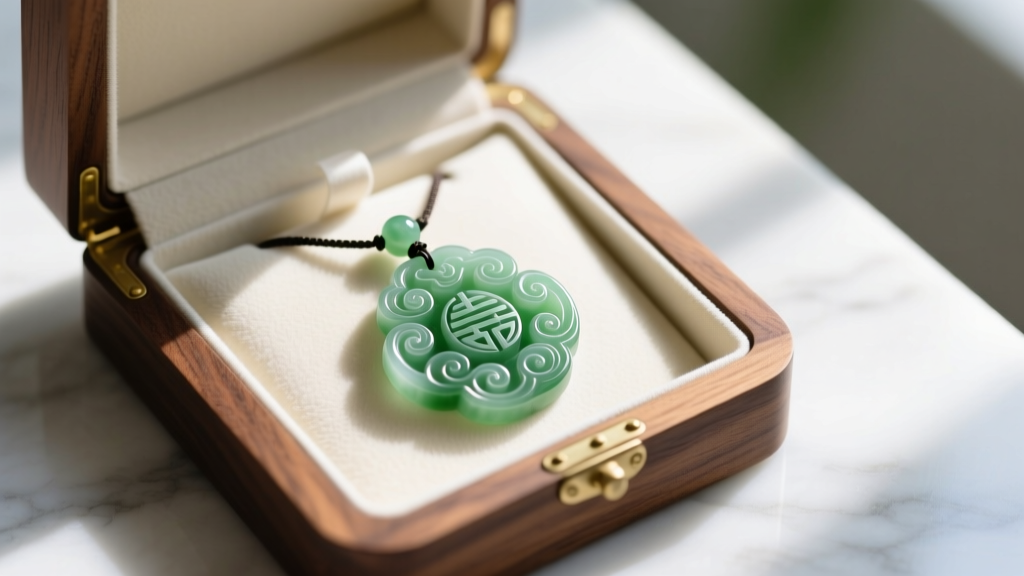
Proper storage is just as critical as proper cleaning. While jade is relatively tough, it can easily be scratched by harder gemstones. Diamonds (Mohs 10), sapphires (Mohs 9), and even quartz (Mohs 7) will leave permanent abrasions on a jade surface if they come into contact.
The 'Last On, First Off' Rule
Always put your real jade necklace on after applying makeup, hairspray, perfumes, and lotions. The alcohol and volatile organic compounds (VOCs) in cosmetics can degrade the wax coating on Type A jade and cloud the surface of the stone. When you return home, the necklace should be the first item you take off, gently wiping it down with a dry microfiber cloth to remove the day's accumulation of skin oils before placing it in storage.
Isolation in Storage
Store your jade necklace in a dedicated, fabric-lined jewelry box or a soft silk pouch. If the necklace features a gold or platinum clasp, ensure the metal does not rest directly against the jade beads during storage, as friction over time can cause localized wear. For long bead necklaces, hang them on a padded jewelry stand or lay them completely flat; hanging heavy jade beads on a thin hook can put undue stress on the top drill holes and the silk cord.
Restringing and Professional Maintenance
A real jade necklace is only as strong as its stringing material. Traditional jade bead necklaces are strung on pure silk cord with individual knots placed between every single bead. This knotting technique serves two purposes: it prevents the beads from rubbing against each other, and if the cord snaps, you will only lose one bead instead of the entire necklace.
Silk is a natural protein fiber that degrades rapidly when exposed to human sweat, cosmetics, and humidity. If you wear your jade necklace daily, it must be professionally restrung every 12 to 18 months. If worn occasionally, a restringing interval of 3 to 5 years is acceptable. You can test the integrity of the cord by gently pulling the necklace taut; if you see gaps between the knots and the beads, or if the cord appears frayed near the clasp, take it to a professional jeweler immediately.
Expert Tip: When having your necklace restrung, request that the jeweler use 'French knots' or 'overhand knots' with a 1-millimeter gap between the bead and the knot. This gap allows the necklace to drape fluidly and prevents the silk from stretching unevenly over time.
By adhering to these meticulous care, cleaning, and storage protocols, your real jade necklace will retain its captivating translucency, deep color, and structural integrity, serving as a flawless heirloom for decades to come.


