Real Opal Necklace Gold: 2026 Value & Pricing Guide
Discover if a real opal necklace gold setting is worth the investment. Our 2026 guide breaks down pricing, opal grades, and gold purity for smart buyers.

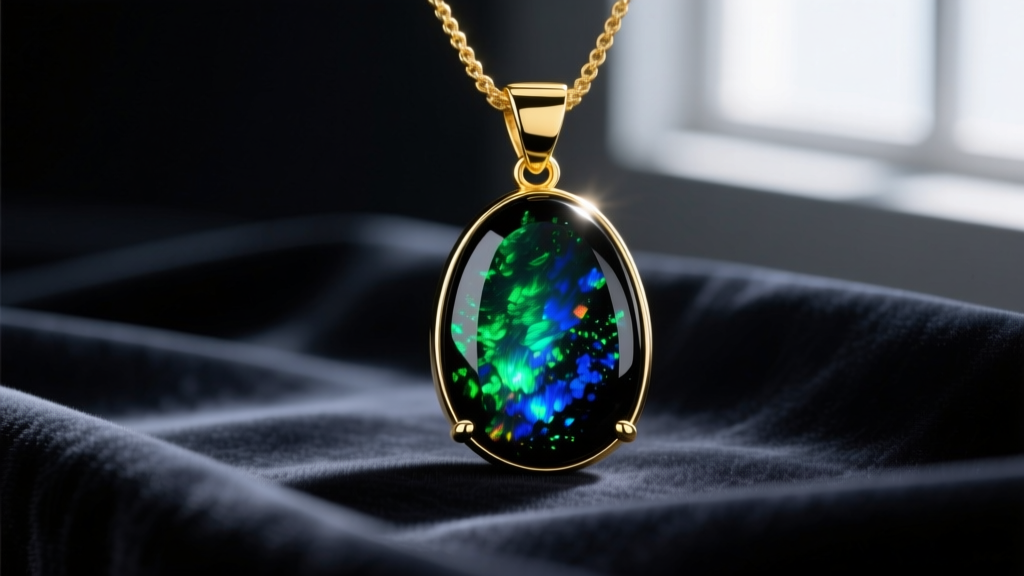
The True Cost of a Real Opal Necklace in Gold
Navigating the colored gemstone market requires a sharp eye, especially when evaluating a real opal necklace gold settings and stone origins can drastically alter the final price. As we move through 2026, the demand for unique, non-traditional gemstones has surged, pushing opal prices into new territories. However, the term 'opal' encompasses a massive spectrum of quality, from $20 assembled stones to $20,000 solid black opals. For budget-conscious buyers and serious collectors alike, understanding the intersection of opal grading and gold metallurgy is the only way to ensure you are paying a fair market price.
This comprehensive value assessment breaks down the exact pricing tiers, material failure modes, and structural considerations you must know before purchasing an opal pendant. Whether you are looking at commercial-grade white opals or investment-grade Lightning Ridge black opals, the rules of value remain rooted in gemological science and jewelry manufacturing realities.
Decoding Opal Value: Solid vs. Assembled Stones
The single biggest factor in opal pricing is its structural integrity. According to the Gemological Institute of America (GIA), opals are generally categorized into three structural types, each with vastly different market values:
- Solid Opals: Cut from a single piece of rough opal. These are the only stones that hold long-term investment value and can be safely passed down as heirlooms. They command the highest price per carat.
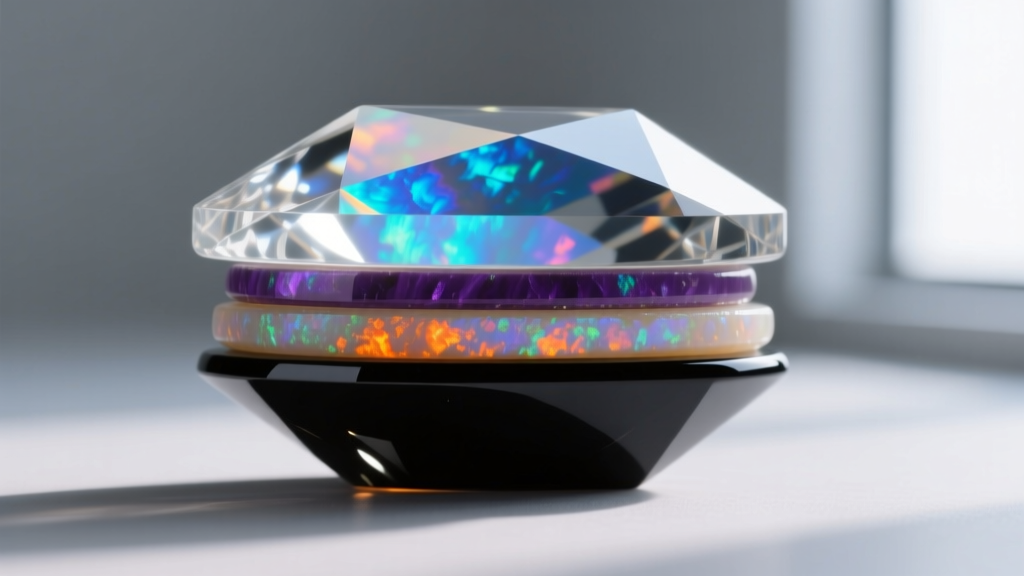
- Doublets: A thin slice of precious opal glued to a backing of common opal, ironstone, or black glass. The dark backing enhances the color, making a cheap slice look like a valuable black opal. These cost roughly 10% to 15% of a solid equivalent.
- Triplets: A doublet with an additional clear quartz or glass cap glued on top to protect the soft opal and magnify the color. These are considered costume jewelry and hold virtually no resale value.
The Hydrophane Trap: Ethiopian vs. Australian Opals
Origin dictates stability. Ethiopian Welo opals have dominated the budget market over the last decade due to their intense fire and low cost. However, they are highly hydrophane, meaning they absorb water like a sponge. If an Ethiopian opal absorbs moisture, it can temporarily lose its play-of-color or, worse, suffer from 'crazing'—a network of internal fractures caused by rapid moisture loss or thermal shock. The GIA's care guidelines specifically warn against exposing hydrophane opals to liquids or extreme humidity changes.
In contrast, Australian opals (from Lightning Ridge, Coober Pedy, or Queensland) are non-porous and geologically stable. While an Ethiopian opal might cost $30 per carat for a stunning display of color, a comparable Australian solid white opal will start around $150 per carat, and gem-grade black opals can easily exceed $5,000 per carat. For a lifelong piece of jewelry, the premium for Australian origin is a necessary budget allocation to prevent stone failure.
Gold Purity and Prong Failure Rates
When designing a real opal necklace gold purity is not just about color and prestige; it is a structural necessity. Opals rank between 5.5 and 6.5 on the Mohs hardness scale, making them relatively soft and prone to chipping. The metal used to secure them must balance malleability with grip strength.
| Gold Karat | Prong Durability | Opal Setting Risk | Average Price Premium |
|---|---|---|---|
| 10k Gold | Very High | High (Metal is too rigid; prong tightening can fracture the opal) | Base Price |
| 14k Gold | Optimal | Low (Perfect balance of grip and malleability for soft stones) | +25% over 10k |
| 18k Gold | Moderate | Moderate (Prongs can wear down or bend, risking stone loss) | +60% over 10k |
| 22k/24k Gold | Poor | Severe (Metal is too soft to securely hold a cabochon long-term) | +100%+ over 10k |
For daily wear pendants, 14k gold is the undisputed industry standard. It provides enough tensile strength to keep the bezel or prongs secure without requiring excessive force during the setting process, which could crack the gemstone. If you are buying an 18k gold opal necklace, ensure the setting utilizes a bezel or a heavy gallery wire rather than delicate claw prongs, which will inevitably bend and drop the stone over time.

2026 Pricing Tiers: What You Should Actually Pay
To assess if you are getting a fair deal, you must separate the cost of the gold mounting from the cost of the gemstone. Here is a realistic breakdown of 2026 market pricing for a standard 16-inch pendant necklace featuring a 2-carat to 4-carat center stone:
Tier 1: The Budget/Commercial Range ($150 - $450)
At this price point, you are looking at Ethiopian hydrophane opals or Australian white opals with minimal play-of-color, set in 10k gold or gold vermeil. The stones will likely be calibrated (machine-cut to standard sizes) rather than custom-cut. Doublets and triplets also live in this tier, often masquerading as solid black opals in unbranded online marketplaces.
Tier 2: The Mid-Range/Enthusiast Range ($800 - $2,500)
This is the sweet spot for value. Expect solid Australian white or crystal opals with strong, multi-colored play-of-color (broad flash or pinfire patterns), set in solid 14k yellow or white gold. Boulder opals from Queensland, which feature natural ironstone backing and brilliant blue/green flashes, also fall into this category. The gold weight will typically range from 2 to 4 grams, providing a sturdy chain and bail.
Tier 3: The Investment/Collector Range ($5,000 - $20,000+)
This tier is reserved for solid Lightning Ridge black opals displaying rare patterns like Harlequin or Rolling Flash, set in 18k gold with diamond accents. Black opals with a dark body tone (N1 to N4 on the Opal Body Tone Chart) and vivid red fire are exceptionally rare and command auction-level premiums.
Chain Mechanics: The Overlooked Value Factor
A common failure point in opal jewelry is the chain-to-pendant weight ratio. Solid opals, especially boulder opals or stones in heavy gold bezels, can be surprisingly dense. If a jeweler pairs a 12-gram opal pendant with a delicate 1mm 14k gold rope chain, the necklace will constantly flip upside down, resting the clasp on your collarbone while the pendant hides behind your neck.
For pendants weighing over 5 grams, the gold chain must have a minimum width of 1.5mm to 2.0mm, and the bail (the loop connecting the pendant to the chain) must be reinforced. A well-engineered bail will feature a hidden counterweight or a wider surface area to distribute the pendant's mass, ensuring the opal remains face-up. When assessing the total value of the piece, factor in the gram weight of the chain; a flimsy chain is a hallmark of cost-cutting manufacturing.
Red Flags and Appraisal Tactics
When shopping, be highly skeptical of the term 'created opal' or 'simulated opal.' These are synthetic stones, often produced using the Gilson process in a laboratory. While they possess the same chemical makeup as natural opals (hydrated silica), they lack the geological history and rarity that drive financial value. Synthetic opals can be identified under a loupe by their distinct 'snakeskin' or columnar growth pattern, which never occurs in nature.
Furthermore, beware of 'smoked opals.' This is a treatment primarily applied to porous Ethiopian or low-grade white opals, where the stone is wrapped in paper and heated until carbon penetrates the surface, turning it black to mimic expensive Lightning Ridge black opal. A smoked opal will feel unnaturally light and may show a distinct black line just below the surface when viewed from the side profile. Always demand a disclosure of treatments from the seller.
Final Verdict: Maximizing Your Budget
A real opal necklace gold setting and all, is a magnificent investment when purchased with an understanding of its material realities. If your budget is under $500, prioritize a high-quality Australian solid white opal in 14k gold over a large, unstable Ethiopian stone. If your budget exceeds $1,500, you enter the realm of exceptional boulder and crystal opals that offer incredible durability and unique, one-of-a-kind color patterns. By prioritizing structural stability, non-porous origins, and appropriate gold karats, you ensure your necklace remains a vibrant, intact heirloom for decades to come.


