Material Guide: Choosing a Red Necklace Chunky Style That Lasts
Compare materials for your next red necklace chunky statement piece. Expert insights on gemstones, resin, enamel, weight distribution, and hardware.

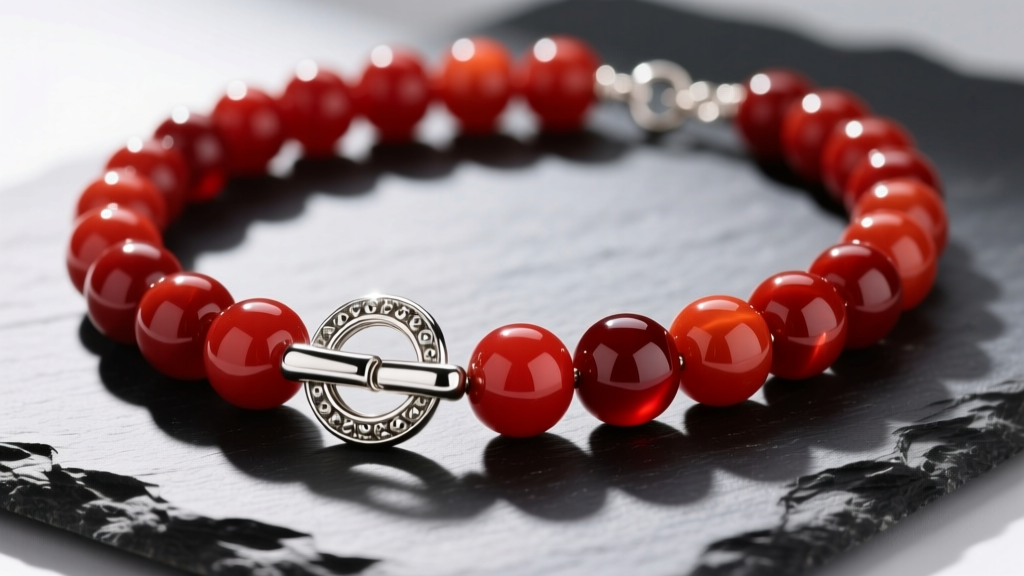
The search for the perfect red necklace chunky enough to anchor your wardrobe requires looking beyond mere aesthetics. A bold, oversized necklace is not just a visual statement; it is an exercise in structural engineering, weight distribution, and material science. Whether you are drawn to the deep, vitreous shine of enamel, the organic warmth of carnelian, or the modern edge of cast acrylic, understanding the physical properties of these materials is critical to ensuring your piece drapes correctly, lasts for years, and remains comfortable to wear.
In this comprehensive guide, we break down the exact material properties, hardware requirements, and failure modes associated with heavy, oversized red necklaces, giving you the expert knowledge needed to make an informed purchase or design.
The Physics of Drape and Weight Distribution
Before diving into specific materials, we must address the physics of a chunky silhouette. A standard delicate chain weighs between 5 and 15 grams. A chunky statement necklace can easily exceed 150 grams. This massive increase in weight introduces two primary mechanical challenges: clasp migration and nape strain.
When the front of a necklace is significantly heavier than the back, the center of gravity shifts. The lightweight clasp will inevitably slide around to the front of the neck, resting awkwardly against the collarbone. To prevent this, jewelry engineers utilize the 1:10 clasp-to-weight ratio. If the beads and pendants weigh 100 grams, the clasp and back-chain assembly must weigh at least 10 grams to act as a proper counterbalance. Furthermore, the drape must be carefully calibrated; a chunky necklace that sits too high (choker length) will cause severe nape strain, whereas a matinee length (20-24 inches) allows the weight to distribute across the upper chest and shoulders.
Material Breakdown: What Makes the Best Statement Piece?
The "red" in your necklace can be achieved through several distinct mediums, each with vastly different densities, hardness levels, and wear characteristics.
Natural Gemstones: Carnelian, Garnet, and Red Jasper
Natural stones offer unparalleled optical depth and a satisfying, cool-to-the-touch thermal conductivity. According to the Gemological Institute of America (GIA), carnelian (a variety of chalcedony) ranks at 6.5 to 7 on the Mohs hardness scale, making it highly resistant to everyday scratching. Red jasper, an opaque microcrystalline quartz, shares similar durability.
However, the primary failure mode for chunky gemstone necklaces is bead fracture at the drill hole. When beads are oversized (12mm or larger), the tension exerted by the stringing wire on the inner rim of the drill hole is immense. If the beads were drilled with low-quality diamond core bits, micro-fractures will form inside the hole. Over time, the friction of the wire will cause the bead to crack and eventually shatter. Always inspect the drill holes of chunky stone beads for smooth, polished interiors.
High-Grade Acrylic and Cast Resin
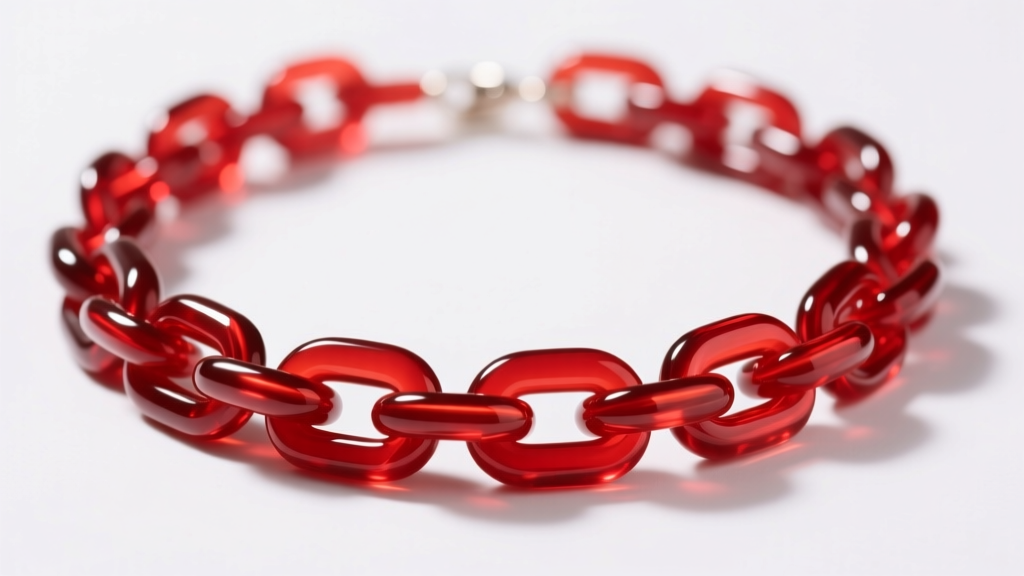
For those who want massive, oversized links or geometric beads without the punishing weight of stone, PMMA (Polymethyl methacrylate) acrylic and cast polyurethane resins are the industry standard. Acrylic has a density of roughly 1.18 g/cm³, compared to carnelian’s 2.6 g/cm³. This means an acrylic chunky necklace will weigh less than half as much as its stone counterpart of the exact same volume.
The critical factor here is UV stabilization. Cheap, non-stabilized red acrylic will degrade when exposed to ultraviolet light, causing the vibrant crimson to oxidize into a dull, muddy orange within a single summer. High-end acrylic jewelry uses optical-grade UV inhibitors. Additionally, while acrylic is shatter-resistant, it is soft (Mohs 2-3) and highly susceptible to micro-scratches from friction against other beads. Chunky acrylic pieces should feature spaced knots or silicone spacers to prevent bead-on-bead abrasion.
Vitreous Enamel vs. Cold Enamel
Enamel provides the most saturated, opaque, and glossy red finish available. It is vital to distinguish between vitreous enamel and cold enamel.
- Vitreous Enamel: This is actual glass fused to a metal base (usually copper or sterling silver) in a kiln at temperatures exceeding 1400°F. It is incredibly durable, UV-proof, and will never yellow. However, because it is glass, a heavy vitreous enamel pendant dropped on a tile floor will shatter.
- Cold Enamel (Epoxy Resin): A two-part resin poured into metal cloisons. It is much cheaper and shock-resistant but lacks the refractive depth of glass. Cold enamel is prone to peeling away from the metal housing if exposed to extreme temperature fluctuations or harsh chemicals like perfume.
Comparative Data Matrix: Material Properties
Use the following table to compare the physical properties and engineering requirements of the most common materials used in heavy red necklaces.
| Material | Density (g/cm³) | Mohs Hardness | Primary Failure Mode | Ideal Hardware |
|---|---|---|---|---|
| Carnelian / Jasper | 2.58 - 2.64 | 6.5 - 7.0 | Drill-hole fracture, wire fatigue | 49-strand .024" wire, silver crimps |
| Cast Acrylic (PMMA) | 1.17 - 1.20 | 2.0 - 3.0 | Surface scratching, UV yellowing | Thick jump rings, silicone spacers |
| Vitreous Enamel | 2.40 - 2.80 | 5.0 - 7.0 | Shattering on impact, chipping | Padded bezels, secure toggle clasps |
| Murano Glass | 2.50 - 2.80 | 5.5 - 7.0 | Thermal shock cracking, dropping | Wire-wrapping, soft flex wire |
Engineering the Hardware: Stringing and Clasps
The most exquisite chunky red beads are useless if the stringing material fails. Never use nylon threads (like Nymo or Silamide) or elastic cords for heavy, oversized necklaces. Nylon stretches permanently under heavy loads, causing the necklace to sag and the beads to gap awkwardly. Elastic degrades rapidly when exposed to skin oils and UV light, leading to catastrophic snapping.
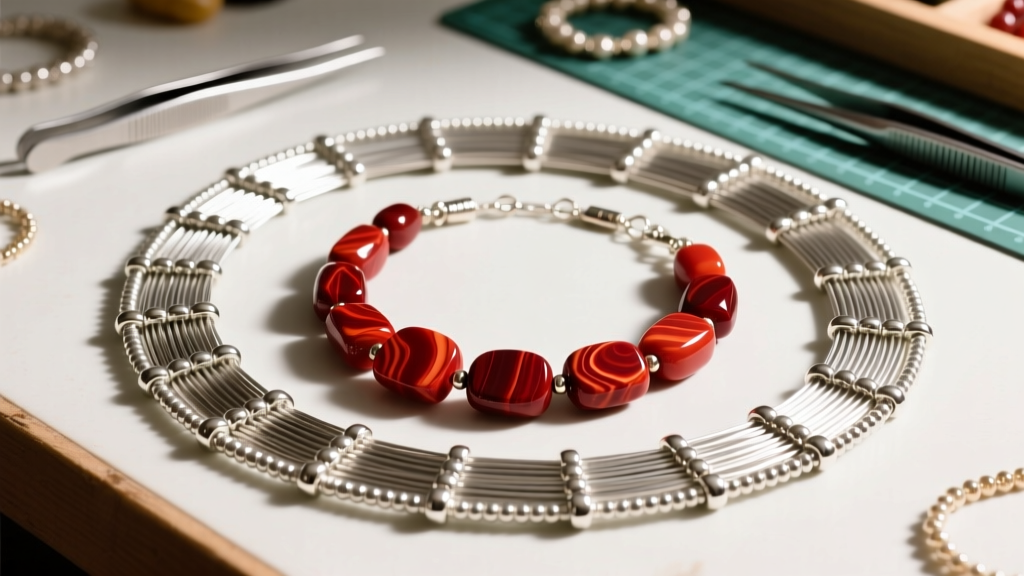
Industry experts and suppliers like Rio Grande recommend using 49-strand micro-braided stainless steel beading wire coated in nylon. For a chunky necklace, the wire diameter must be at least 0.024 inches. This specific gauge offers the necessary tensile strength to hold up to 40 pounds of dead weight while remaining flexible enough to drape elegantly around the collarbone.
Clasp Selection for Heavy Loads
Standard lobster clasps and spring rings are entirely inappropriate for chunky necklaces. The internal springs are not rated for the lateral torque exerted by a heavy, swinging necklace, and the small solder rings on the clasp will easily pull apart.
Instead, utilize a heavy-duty toggle clasp or a magnetic neodymium clasp with a safety chain. A toggle clasp relies on gravity and tension to stay closed; the heavier the necklace, the more securely the T-bar is pulled through the O-ring. Ensure the O-ring is fully soldered (no gaps) and that the T-bar is at least 20% wider than the inner diameter of the ring to prevent accidental slippage.
Care, Cleaning, and Failure Prevention
Maintenance protocols must be strictly tailored to the material of your chunky red necklace. A one-size-fits-all approach will result in irreversible damage.
- Gemstones (Carnelian/Garnet): Safe for ultrasonic cleaners, but avoid steam cleaners if the stones have been fracture-filled with oil or resin, as the heat will melt the filler and cloud the stone. Wash with warm water and mild dish soap.
- Acrylic and Resin: Never use ultrasonic cleaners; the high-frequency vibrations can exacerbate internal stress lines and cause the acrylic to crack. Never use alcohol-based cleaners, which will cause the surface to craze and turn opaque. Polish only with a microfiber cloth and a specialized plastic polish like Novus.
- Vitreous Enamel: Avoid sudden temperature changes (thermal shock). Clean with a soft, damp cloth. Do not use abrasive jewelry dips, which can oxidize the underlying metal if the enamel has micro-cracks.
Final Thoughts on Proportion and Wearability
A chunky red necklace is an investment in bold personal style. By prioritizing high-grade materials, respecting the physics of weight distribution, and insisting on properly engineered hardware, you ensure that your statement piece remains a functional, comfortable, and stunning addition to your jewelry collection for decades. Always verify the stringing gauge and clasp weight before purchasing, and treat your materials with the specific care they require to maintain their vibrant crimson allure.


