The Ultimate Guide to Styling a Necklace Initial K for Beginners
Discover how to choose, style, and care for a necklace initial K. Learn about metal grades, chain types, and layering techniques in this guide.

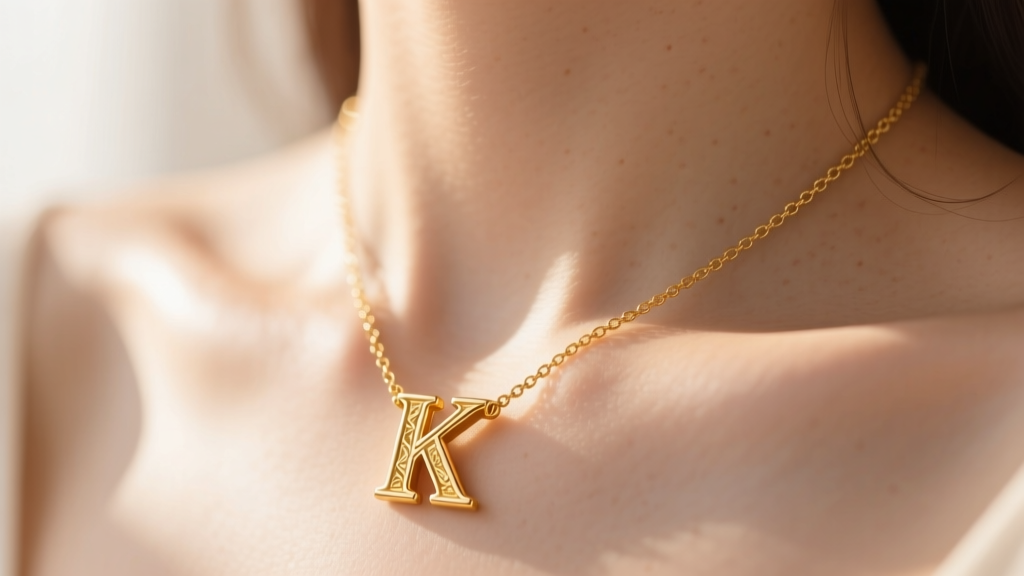
Initial jewelry has transitioned from a fleeting trend to a permanent staple in modern accessory wardrobes. Among the alphabet, the letter K stands out for its sharp geometry and striking visual balance. Whether you are shopping for a Katherine, a Kevin, or simply love the aesthetic of the letter, choosing the right necklace initial K requires more than just picking a font. From structural vulnerabilities in the casting process to selecting the correct chain gauge, this beginner-friendly explainer breaks down the exact specifications you need to make a confident, informed purchase.
Why the Letter K? The Geometry of Initial Jewelry
The letter K is structurally unique in jewelry design. Unlike the continuous loops of an 'S' or the solid base of an 'A', the K features a vertical spine intersected by two diagonal arms. This creates a dynamic, forward-pointing silhouette that naturally draws the eye. However, this geometry also introduces a specific manufacturing challenge: the junction points where the diagonal arms meet the vertical spine.
If a jeweler casts a K pendant too thinly, these junctions become stress points. When caught on clothing or subjected to daily tension, a poorly cast K can snap at the waist. For a durable necklace initial K, always inspect the product specifications or ask the jeweler for the pendant's thickness. A high-quality cast should feature a spine thickness of at least 1.5 millimeters to ensure long-term structural integrity.
Decoding Metal Grades: What You Are Actually Buying
When shopping for an initial necklace, the metal grade dictates the price, the longevity, and how the piece reacts to your skin chemistry. Here is a breakdown of the three most common metals used for initial pendants, complete with realistic 2026 pricing expectations.
1. Solid 14k Gold (The Investment Standard)
Solid 14k gold consists of 58.5% pure gold alloyed with metals like copper and silver for tensile strength. According to the Gemological Institute of America (GIA), this alloy ratio provides the perfect balance of rich color and scratch resistance. A solid 14k gold K pendant on a matching chain will typically cost between $250 and $450. It will not tarnish, flake, or cause contact dermatitis, making it the definitive choice for daily wear.
2. Gold Vermeil (The Budget-Conscious Alternative)
Vermeil (pronounced ver-may) is not standard gold plating. The Federal Trade Commission (FTC) strictly mandates that for a piece to be labeled vermeil, it must have a sterling silver base coated with at least 2.5 microns of 10k or higher gold. Standard plated jewelry uses a brass base and a microscopic 0.5-micron gold wash that rubs off in months. A high-quality vermeil necklace initial K will cost between $80 and $150 and should last 2 to 5 years with proper care before requiring professional re-plating.
3. Sterling Silver (The Classic Cool Tone)
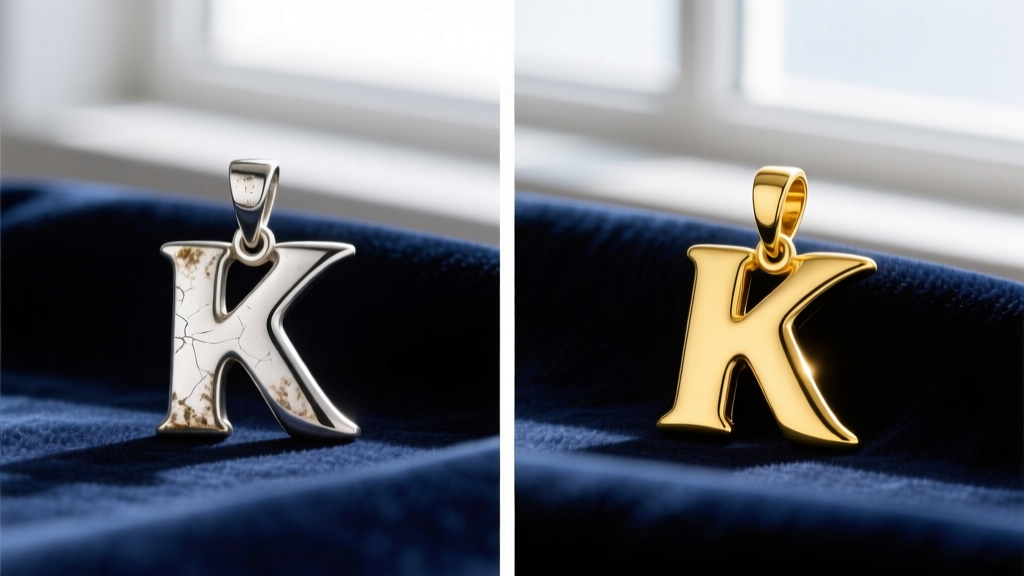
Stamped as '925', sterling silver is 92.5% pure silver and 7.5% copper. The copper adds necessary hardness but also makes the metal susceptible to sulfur-induced tarnishing. If you live in a humid climate or frequently swim in chlorinated pools, a silver K pendant will require monthly polishing. Expect to pay $40 to $90 for a well-crafted sterling silver piece.
Font and Pendant Styles: Serif, Sans-Serif, and Script
The typography of your necklace initial K drastically alters its formality and vibe. Understanding these three primary categories will help you match the pendant to your personal style.
- Sans-Serif (Block/Minimalist): Features clean, straight lines with uniform thickness. A sans-serif K is modern, gender-neutral, and highly durable because it lacks fragile, thin extremities. This is the best choice for active lifestyles.
- Serif (Classic/Editorial): Includes small decorative 'feet' at the ends of the strokes. A serif K feels academic, vintage, and sophisticated. However, the thin serifs on the diagonal arms can be prone to bending if the pendant is larger than 15mm.
- Script (Cursive/Handwritten): Mimics calligraphy with sweeping, connected lines. A script K is romantic and highly personalized. Because the letter is usually formed from a single continuous wire or cast, it often incorporates a bottom loop that can be used to attach a secondary charm or birthstone.
Chain Selection: Matching the K Pendant to the Right Chain
The chain is the unsung hero of any pendant necklace. A heavy K pendant will pull a delicate chain out of shape, while a bulky chain will overwhelm a minimalist K. Furthermore, the clasp type dictates the chain's lifespan. Avoid spring-ring clasps, which rely on a microscopic internal spring that degrades and fails within 12 to 18 months. Always opt for a lobster clasp for secure, long-term closure.
Below is a structural comparison of the three best chain styles for initial pendants:
| Chain Style | Visual Profile | Recommended Gauge | Pros & Cons |
|---|---|---|---|
| Cable Chain | Classic, uniform oval links | 1.0mm - 1.5mm | Pros: Traditional, lightweight. Cons: Links can easily catch on fine hair or knit sweaters. |
| Box Chain | Geometric, square interlocking links | 1.2mm - 1.8mm | Pros: Extremely strong, lays flat, complements blocky sans-serif K pendants. Cons: Can kink if bent sharply. |
| Rope Chain | Twisted, spiral weave mimicking rope | 1.5mm - 2.0mm | Pros: Highly reflective, durable, hides scratches well. Cons: Deep grooves trap lotions and perfumes, requiring frequent cleaning. |
Length, Layering, and Neckline Pairing
Where the letter K rests on your chest is just as important as the metal it is cast in. Standard necklace lengths serve distinct anatomical purposes, and choosing the right one depends on your wardrobe and layering goals.
The 16-Inch Choker Length
A 16-inch chain sits snugly at the base of the throat. This length is ideal for open-neck blouses, V-necks, and off-the-shoulder tops. If you are wearing a single, small (8mm-10mm) diamond-accented K pendant, a 16-inch chain keeps the letter centered and highly visible.
The 18-Inch Princess Length
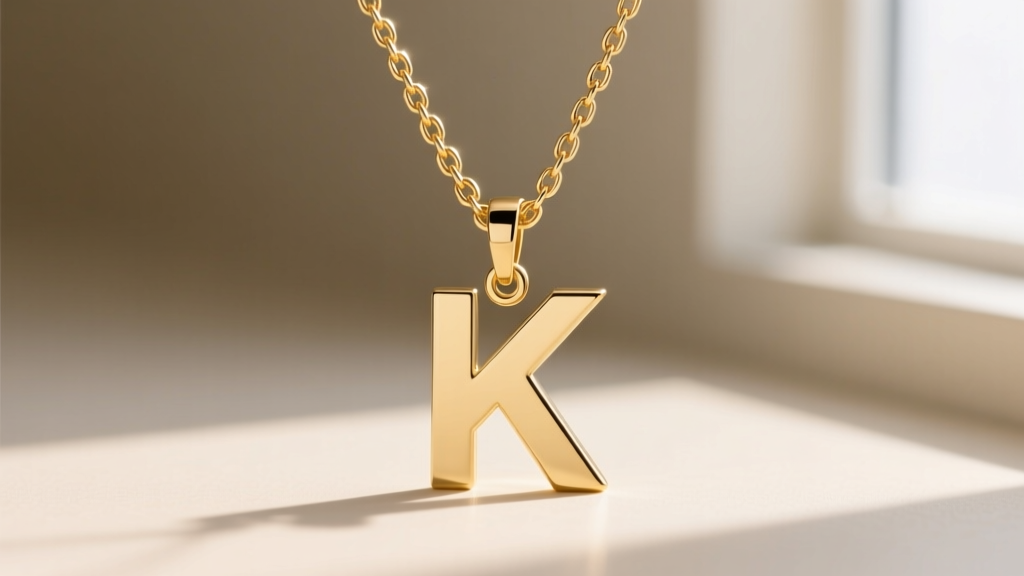
Falling precisely on the collarbone, the 18-inch length is the industry standard for a reason. It clears the neckline of standard crew-neck t-shirts and sits perfectly in the hollow of the throat. This is the most versatile length for a standalone necklace initial K.
The 20-Inch Matinee Length
Dropping just above the bust line, a 20-inch chain is designed for layering or for wearing over higher necklines like turtlenecks and button-down shirts.
Pro Layering Formula: To layer your K pendant without tangling, adhere to the 'Two-Inch Rule.' Pair your 18-inch K necklace with a 14-inch plain herringbone choker and a 22-inch textured rope chain. The minimum two-inch gap between chains prevents the clasps and pendants from catching on one another, reducing friction-induced wear.
Caring for Your Initial Necklace: Maintenance and Storage
Initial pendants, especially those with intricate serif fonts or diamond pavé settings, require specific maintenance to retain their brilliance. The Jewelers of America recommends avoiding ultrasonic cleaners for any jewelry featuring glued-in gemstones or oxidized (blackened) detailing, as the high-frequency vibrations can loosen the adhesive and strip the intentional patina.
For routine cleaning of your necklace initial K, follow this safe protocol:
- Soak: Mix three drops of mild, phosphate-free dish soap into a bowl of lukewarm distilled water. Submerge the necklace for 10 minutes.
- Agitate: Use a brand-new, ultra-soft baby toothbrush to gently sweep the bristles behind the letter K, where skin oils and dead cells accumulate against the metal.
- Rinse & Dry: Rinse under a gentle stream of lukewarm water. Do not air dry, as tap water leaves mineral spots. Instead, pat the chain and pendant completely dry with a lint-free microfiber cloth.
Finally, never store your K necklace hanging on a jewelry tree. The weight of the pendant pulling on the chain 24/7 can slowly stretch the links over time, particularly with softer metals like 22k gold or pure silver. Always lay the necklace flat in a lined jewelry box or an anti-tarnish ziplock bag, ensuring the clasp is left unfastened to prevent the chain from knotting.


