Red Necklace Gold Settings: Ruby, Garnet & Coral Compared
Compare ruby, garnet, coral, and enamel for your red necklace gold setting. Expert guide on 14k vs 18k alloys, Mohs hardness, and durability.

The Metallurgy of Gold: Choosing the Right Alloy for Red Gems
When designing or purchasing a red necklace gold combination, the structural integrity and optical synergy of the metal alloy are just as critical as the gemstone itself. Gold in its pure 24k state (99.9% Au) is far too malleable for daily-wear pendants, possessing a Vickers hardness (HV) of merely 60. To secure red gemstones safely, jewelers alloy gold with copper, silver, and zinc. The specific ratio not only dictates the metal's durability but also dramatically alters how the red gemstone is perceived by the human eye.
14k vs. 18k Gold: Durability and Prong Wear
For a pendant that will be worn daily, the choice between 14k and 18k gold hinges on the setting style. 18k yellow gold (75% Au, 12.5% Cu, 12.5% Ag) sits at roughly 125 HV. It offers a rich, buttery yellow hue that provides a high-contrast backdrop for cool-toned reds like purplish rhodolite garnet. However, if your red necklace gold design relies on delicate micro-prongs (under 0.8mm in thickness), 18k gold will succumb to prong wear and metal fatigue within 3 to 5 years of daily friction against clothing.
Conversely, 14k gold (58.3% Au) boasts a Vickers hardness of approximately 150 HV. This 20% increase in structural rigidity makes 14k the superior choice for intricate prong settings holding brittle stones like garnet. For bezel settings, where the metal is rubbed over the gemstone's girdle, 18k gold is actually preferred; its higher malleability allows the jeweler to burnish the metal tightly against the stone without risking the micro-fractures that stiffer 14k gold might induce during the setting process.
The Optical Advantage of Rose Gold
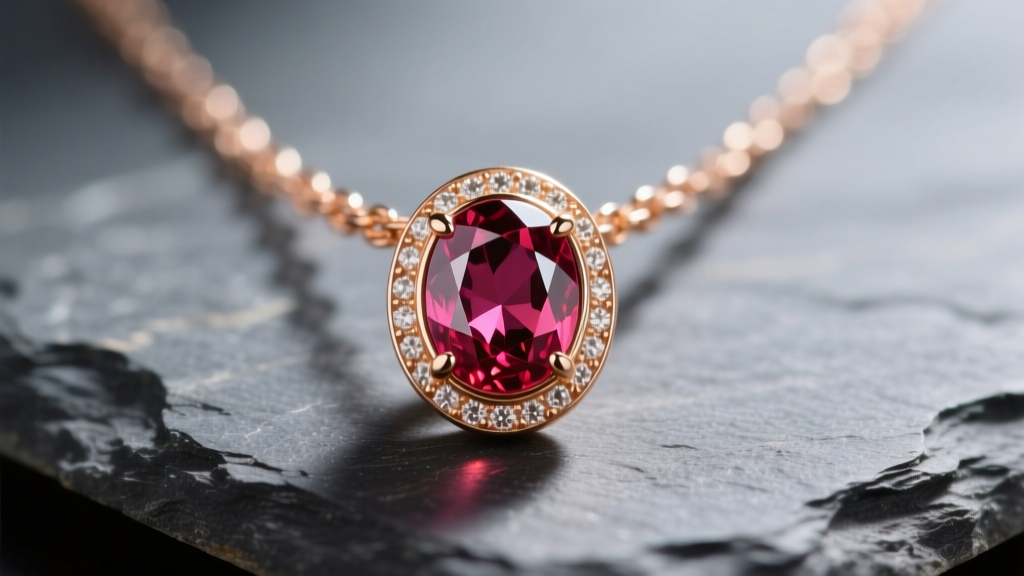
Rose gold achieves its pinkish-red hue through a high copper content (up to 25% in 14k rose gold). From a color-theory perspective, pairing a red gemstone with a rose gold setting creates an analogous color harmony. The copper undertones reflect warm light back into the pavilion of the gemstone, effectively masking the brownish or orangey modifiers often found in lower-grade rubies and garnets. If you are working with a budget-friendly Mozambique ruby that leans slightly orange, a 14k rose gold setting will visually neutralize the orange shift, making the stone appear as a more saturated, pure pigeon-blood red.
Gemstone & Material Properties: Beyond the Color Red
The term "red" encompasses a vast spectrum of materials, each with distinct crystallographic properties, cleavage planes, and environmental vulnerabilities. Understanding these traits is non-negotiable when selecting a red necklace gold pendant for long-term wear.
Ruby (Corundum): The Indestructible Classic
As the red variety of corundum, ruby ranks at a 9 on the Mohs scale of hardness, second only to diamond. According to the Gemological Institute of America (GIA), ruby possesses excellent toughness and lacks true cleavage, meaning it will not split along structural planes if struck. This makes ruby the only red gemstone recommended for exposed, high-prong settings on active-wear necklaces. However, buyers must be wary of fracture-filled rubies. Lead-glass filled stones are highly unstable; exposure to mild acids like lemon juice or common jewelry cleaning solutions will etch the filler, leaving the stone pitted and dull.
Garnet: The Vulnerable Beauty
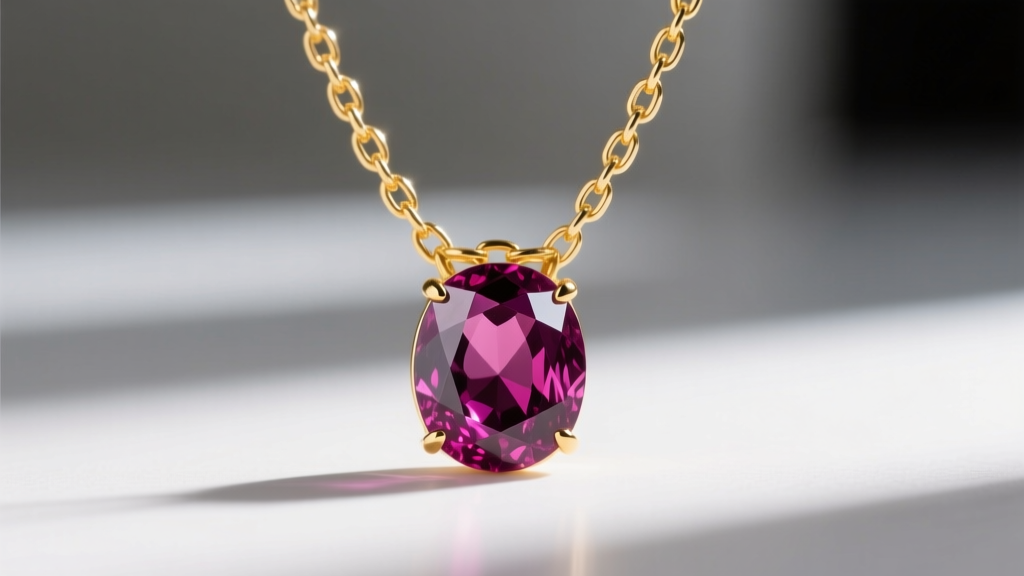
Garnet is not a single mineral but a group of silicate minerals. The most common red varieties are almandine (deep, dark red) and pyrope (lighter, vibrant red). While garnet sits at a respectable 7 to 7.5 on the Mohs scale, it is notoriously brittle. The GIA Garnet Guide notes that garnet is highly susceptible to chipping at the facet junctions and the girdle. When setting a garnet in a gold necklace, V-prongs are mandatory to protect the sharp corners of pear or princess cuts. Furthermore, garnets should never be cleaned in ultrasonic cleaners, as the high-frequency vibrations can easily propagate internal stress fractures, causing the stone to shatter.
Red Coral & Guilloché Enamel: Organic and Fragile Alternatives
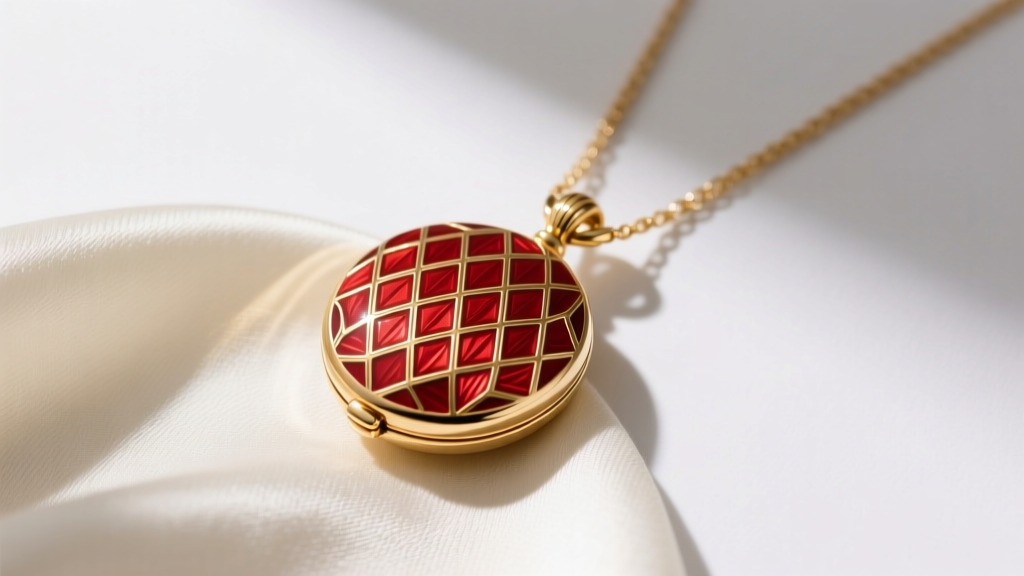
For those seeking opaque or artistic reds, Mediterranean red coral and fired enamel are historic choices. Coral is an organic calcium carbonate structure with a Mohs hardness of just 3.5 to 4. It is highly porous and reacts violently to skin acidity, perfumes, and hairsprays. A coral pendant must be set in a protective bezel and removed before bathing. Similarly, red guilloché enamel (translucent glass fused over an engraved gold base) is prone to thermal shock. Dropping an enamel pendant on a tile floor will result in immediate, irreparable spider-web cracking. Both materials require low-profile, bezel-heavy gold settings to survive daily life.
Comparative Data: Hardness, Pricing, and Setting Requirements
The following matrix synthesizes the critical physical and economic data required to make an informed purchase or design decision for your jewelry piece.
| Material | Mohs Hardness | Ideal Gold Setting | Price Range (USD) | Primary Failure Mode |
|---|---|---|---|---|
| Burmese Ruby | 9.0 | 18k Yellow (Prong) | $3,000 - $15,000+ / ct | Prong wear over decades |
| Mozambique Ruby | 9.0 | 14k Rose (Bezel/Prong) | $800 - $3,500 / ct | Color zoning visibility |
| Rhodolite Garnet | 7.0 - 7.5 | 14k Yellow (V-Prong) | $150 - $600 / ct | Girdle chipping, facet abrasion |
| Mediterranean Coral | 3.5 - 4.0 | 18k Yellow (Full Bezel) | $200 - $1,500 (per piece) | Acid etching, surface pitting |
| Red Guilloché Enamel | 5.5 - 6.0 (Glass) | 18k Gold (Recessed) | $1,200 - $4,000 (artisan) | Impact shattering, thermal shock |
Chain Gauge and Weight Distribution
A common oversight when buying a red necklace gold pendant is ignoring the chain's structural capacity. A solid 14k gold cable chain at 0.8mm gauge can safely support up to 4 grams of pendant weight. However, a faceted 12mm garnet pendant set in a heavy 18k gold bezel can easily exceed 12 grams. Pairing a heavy pendant with a delicate chain leads to rapid work-hardening of the chain links, resulting in sudden snapping at the clasp or the jump ring.
For pendants exceeding 8 grams, upgrade to a 1.5mm to 2.0mm box chain or a solid wheat chain. Box chains distribute tensile stress evenly across their square links, preventing the localized stretching seen in rope or cable chains. Always ensure the pendant's bail (the loop that slides over the chain) has an interior diameter at least 1mm larger than the chain's thickness to prevent abrasive friction between the bail and the chain links.
Maintenance and Real-World Troubleshooting
"The most common repair I see for red gemstone necklaces isn't broken gold—it's damaged stones caused by improper at-home cleaning. Ultrasonic waves and harsh chemical dips are the enemies of garnets, corals, and treated rubies. Stick to warm water, a drop of mild dish soap, and a soft baby toothbrush."
— Master Bench Jeweler, GIA Alumni Network
When maintaining your red necklace gold jewelry, inspect the setting every six months. Run a piece of silk fabric over the prongs; if the silk snags, a prong has lifted and requires immediate professional burnishing. For coral and enamel pieces, wipe them down with a damp, lint-free cloth immediately after wearing to remove acidic skin oils and environmental pollutants that degrade the surface luster over time.
Final Verdict on Red Necklace Gold Pairings
Choosing the perfect red necklace gold combination requires balancing aesthetic desires with material science. If your priority is heirloom durability and daily wearability, an unheated ruby set in an 18k yellow gold prong setting remains the undisputed champion. For those seeking maximum color saturation on a moderate budget, a rhodolite garnet protected by V-prongs in 14k rose gold offers unparalleled visual impact. By respecting the Mohs hardness, Vickers rigidity, and environmental sensitivities of these materials, you ensure your red pendant remains as vibrant a century from now as the day it was forged.