Red Necklace Materials: Ruby, Garnet, and Coral Compared
Compare ruby, garnet, and coral for your next red necklace. Explore Mohs hardness, treatments, and pricing to choose the perfect crimson gem.

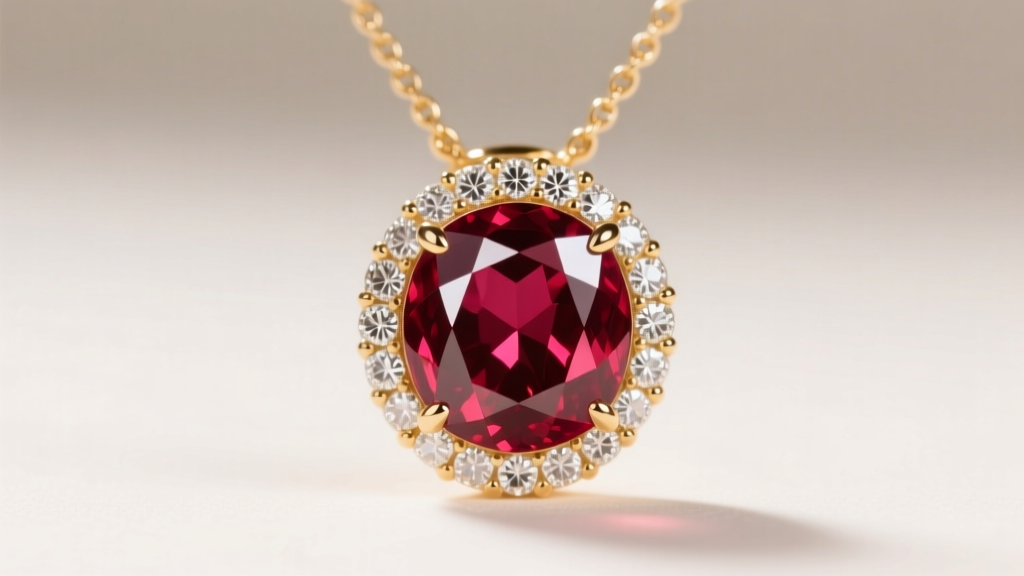
The Allure of Crimson in Neckwear
When selecting a statement piece for your neckline, few colors command attention quite like red. However, the term 'red necklace' encompasses a vast spectrum of gemological and organic materials, each with distinct physical properties, durability profiles, and market values. As we navigate the jewelry landscape in 2026, understanding the material science behind your pendant is no longer optional—it is essential for making an informed investment. Whether you are drawn to the fluorescent fire of a Burmese ruby, the deep, wine-rich tones of a pyrope garnet, or the historic elegance of Mediterranean coral, the structural integrity of these materials dictates how they must be set, worn, and maintained.
In this comprehensive material comparison, we dissect the big three red necklace materials. We will move beyond basic color grading to examine refractive indices, specific gravity, cleavage planes, and the reality of modern gemological treatments.
Ruby: The Corundum Standard
Ruby is the red variety of the mineral corundum (aluminum oxide, Al2O3). Its crimson hue is caused by trace amounts of chromium replacing aluminum in the crystal lattice. According to the Gemological Institute of America (GIA), chromium not only provides the red color but also causes fluorescence, which amplifies the stone's brilliance in daylight.
Crystallography and Durability
Corundum crystallizes in the trigonal system and boasts a Mohs hardness of 9, making it the second hardest natural material on earth after diamond. However, hardness does not equal toughness. Ruby exhibits no true cleavage, but it does have parting along the rhombohedral plane, often due to polysynthetic twinning. This means that while a ruby pendant will easily resist scratching from daily wear, a sharp, direct impact against a hard surface can cause internal fracturing. For a necklace that rests on the collarbone, the risk of impact is lower than in a ring, making ruby an exceptional, lifelong choice for pendants.
The 'Silk' Factor
High-quality rubies often contain microscopic rutile needles, known as 'silk.' In 2026, completely flawless rubies are exceptionally rare and often command a premium, but a slight amount of silk is actually prized by connoisseurs as it scatters light, softening the stone's appearance and proving its natural, untreated origin.
Garnet: The Isotropic Alternative
While ruby is the undisputed king of red gems, garnet offers a compelling, often more accessible alternative. Garnet is not a single mineral, but a group of silicate minerals that share a common crystal structure. The red varieties most commonly used in necklaces are pyrope, almandine, and their solid-solution hybrid, rhodolite.
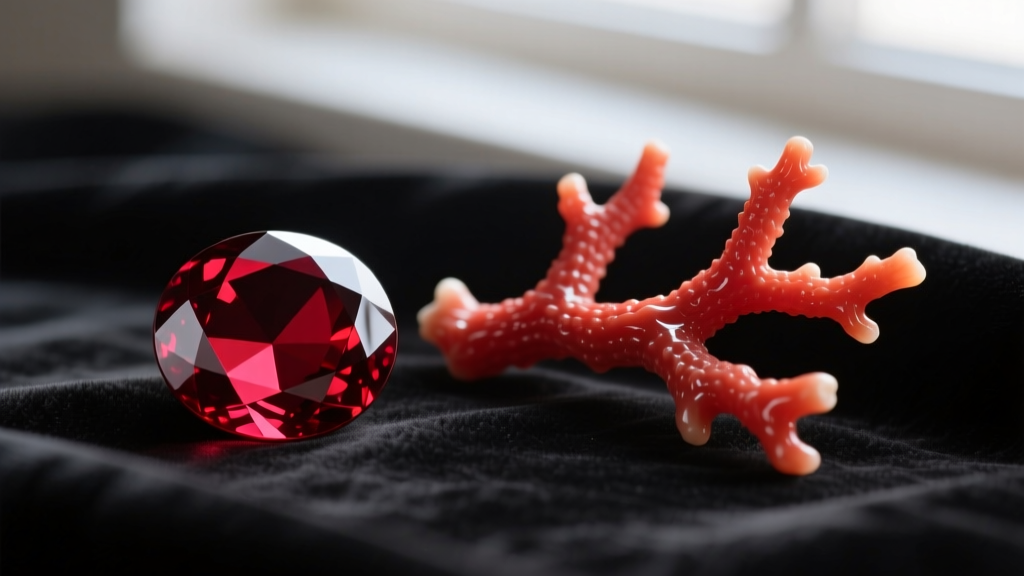
Optical Properties and Toughness
Unlike ruby, which is doubly refractive (anisotropic), garnet is singly refractive (isotropic). This means light entering a garnet is not split into two rays, resulting in a deep, velvety red color that lacks the secondary orange or purple flashes sometimes seen in corundum. Pyrope garnets, in particular, can exhibit a pure, fiery crimson that rivals fine rubies. On the Mohs scale, red garnets range from 7 to 7.5. While this is sufficient for necklace pendants, it means garnets are susceptible to scratching by airborne quartz dust (Mohs 7) over decades of wear, necessitating careful storage.
The No-Treatment Advantage
One of the most significant material advantages of garnet in the modern market is its natural purity. According to GIA's garnet profile, red garnets are virtually never subjected to heat treatment, irradiation, or fracture filling. What you see is exactly what the earth produced, eliminating the guesswork and valuation penalties associated with treated corundum.
Red Coral: The Organic Vulnerability
Shifting from inorganic crystals to organic gemstones, red coral (*Corallium rubrum*) has been carved into beads and pendants for millennia. Unlike the crystalline structure of ruby or garnet, coral is composed primarily of microcrystalline calcium carbonate (CaCO3) secreted by marine polyps.
Porosity and Chemical Sensitivity
With a Mohs hardness of just 3.5 to 4, coral is remarkably soft. More critically, its calcium carbonate composition makes it highly reactive to acids. Even the mild acidity of human perspiration, citrus juices, or commercial perfumes can etch the surface of a coral pendant, dulling its polish over time. Furthermore, coral is inherently porous. In the 2026 market, ethical sourcing is paramount; the harvesting of Mediterranean red coral is strictly regulated under CITES guidelines to prevent overexploitation, making authentic, untreated *Corallium rubrum* increasingly rare and expensive.
Material Properties & Durability Matrix
To visualize how these three materials stack up against one another for necklace applications, refer to the gemological matrix below:
| Property | Ruby (Corundum) | Pyrope/Almandine Garnet | Red Coral (Organic) |
|---|---|---|---|
| Mohs Hardness | 9.0 | 7.0 - 7.5 | 3.5 - 4.0 |
| Specific Gravity | 3.99 - 4.01 | 3.65 - 4.32 | 2.60 - 2.70 |
| Refractive Index | 1.762 - 1.770 | 1.730 - 1.760 | 1.48 - 1.65 |
| Cleavage | None (Parting present) | None | N/A (Conchoidal fracture) |
| Ultrasonic Safe? | Yes (if unfractured) | Yes | Absolutely Not |
Treatment Realities & Market Enhancements
Understanding how materials are altered is critical for valuation. The modern gem trade relies heavily on enhancements to make red necklace materials commercially viable.
- Ruby Heat Treatment: Over 90% of rubies on the market are heat-treated to dissolve rutile silk and improve clarity. This is a stable, universally accepted practice. However, lead-glass filled (composite) rubies are a different story. These heavily fractured stones are infused with high-lead-content glass to improve transparency. They are extremely fragile, damaged by mild acids like lemon juice, and hold virtually no resale value.
- Coral Dyeing: Due to the scarcity of deep red Mediterranean coral, the market is flooded with 'bamboo coral' (a different, more abundant species) that has been bleached and dyed red. While visually similar from a distance, dyed coral will show color concentration in its pores under magnification and will fade when exposed to prolonged sunlight or chemicals.
2026 Pricing Framework & Value Retention
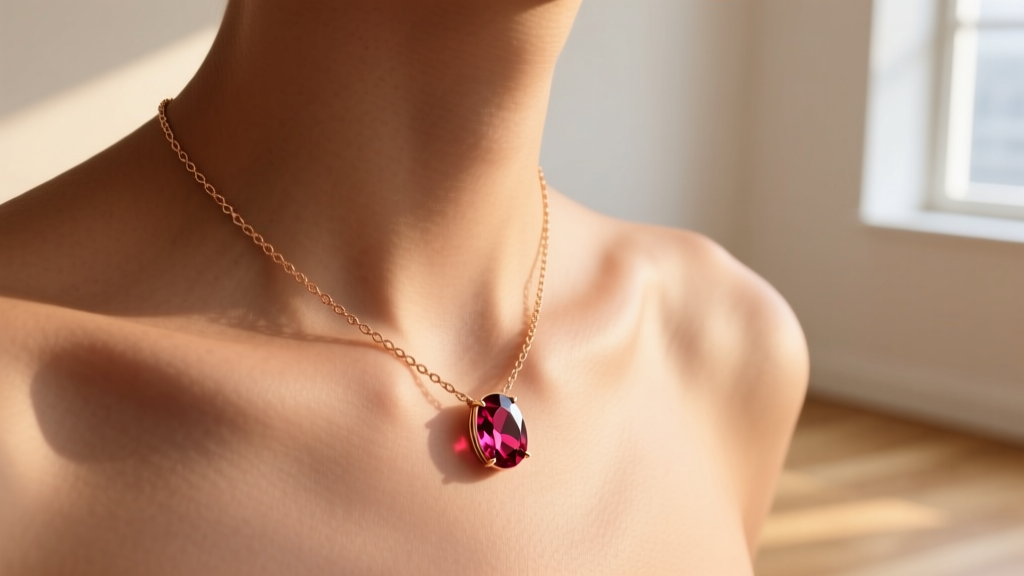
Pricing for red necklace centerpieces varies wildly based on origin, treatment, and material rarity. Here is the current market framework per carat (or gram for coral):
'A true pigeon blood ruby from the Mogok Valley of Myanmar remains one of the most concentrated stores of portable wealth in the gemological world, easily outpacing diamond in per-carat value at auction.' — Global Gemological Market Report, 2025
- Ruby: Heated commercial-grade Mozambican rubies range from $150 to $500 per carat. Unheated, high-clarity Burmese rubies with 'pigeon blood' certification from labs like Gübelin or SSEF command $15,000 to over $100,000 per carat.
- Garnet: Standard almandine cabochons remain highly affordable at $10 to $30 per carat. Fine, large rhodolite garnets with a purplish-red hue range from $100 to $400 per carat, offering exceptional visual impact for a fraction of a ruby's cost.
- Coral: Authentic, untreated Mediterranean *Corallium rubrum* is now priced by the gram rather than the carat, with premium 'ox-blood' branches fetching $150 to $400 per gram from specialized lapidaries.
Care Protocols by Material
A necklace rests directly against the skin, exposing it to cosmetics, perfumes, and friction. Your care protocol must match the material's chemical stability.
Ruby and Garnet Care
Both ruby and untreated garnet can be safely cleaned using warm water, a mild dish soap, and a soft-bristled brush. Ultrasonic cleaners are generally safe for these stones unless they possess significant internal fractures or have been subjected to fracture-filling treatments. Always remove your ruby or garnet pendant before engaging in heavy physical labor to prevent hard knocks against the cleavage planes.
Coral Care
Coral requires a meticulous, chemical-free approach. Never use ultrasonic cleaners, steamers, or commercial jewelry dips. To clean a coral pendant, gently wipe it with a soft, damp cloth and dry it immediately. Always apply perfumes, hairsprays, and lotions before putting on your coral necklace to prevent chemical etching. Store coral separately from harder gems like diamonds or rubies to prevent severe surface scratching.
Final Verdict: Choosing Your Red Pendant
The ideal red necklace material depends entirely on your lifestyle and budget. If you demand a legacy piece with unmatched hardness and fluorescent brilliance, and you have the budget to secure an unheated, ethically sourced stone, ruby is the undisputed champion. If you seek deep, velvety red tones with guaranteed natural purity and a more accessible price point, garnet is a gemologist's secret weapon. Finally, if you are a collector of organic antiquities willing to commit to rigorous care protocols, a genuine Mediterranean coral pendant offers a historical and textural warmth that no crystalline mineral can replicate.


