How to Repair and Restore a Kate Spade Flower Necklace
Learn how to troubleshoot, clean, and repair your Kate Spade flower necklace. Fix tarnished gold plating, broken clasps, and missing enamel.

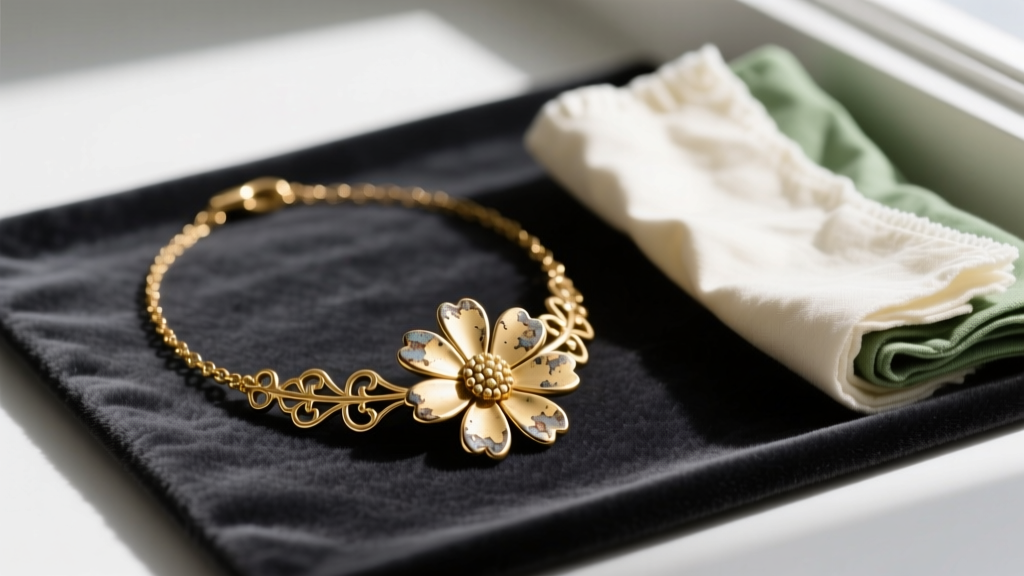
The Kate Spade flower necklace—whether featuring the iconic Heritage Spade Flower or the delicate Daisy motif—remains a beloved staple in fashion jewelry collections. However, because these pieces are typically crafted from gold-plated brass or gold vermeil with cold enamel and cubic zirconia (CZ) accents, they require specific troubleshooting when wear and tear inevitably strike. If your favorite floral pendant has lost its luster, suffered a clasp failure, or lost a pavé stone, do not toss it. With the right metallurgical knowledge and gentle techniques, you can restore your necklace to its original glory.
Diagnosing the Damage: Anatomy of Your Necklace
Before attempting any repairs, it is crucial to understand the materials you are working with. Most Kate Spade fashion necklaces utilize a brass base (an alloy of copper and zinc) coated with a micro-layer of gold flash plating, typically ranging from 0.5 to 1.5 microns in thickness. When this thin layer wears away due to friction or acidic skin pH, the underlying copper reacts with oxygen and sulfur in the air, resulting in a dark, tarnished appearance or a greenish hue on your skin.
Additionally, the 'enamel' used on the flower petals is rarely traditional vitreous enamel (fired glass). Instead, it is a cold enamel—a durable epoxy resin that can chip, crack, or yellow over time when exposed to UV light and harsh chemicals. The pavé stones are usually machine-set cubic zirconia, held in place by tiny gold-plated prongs that can easily snag and bend.
Step-by-Step Cleaning and Tarnish Removal
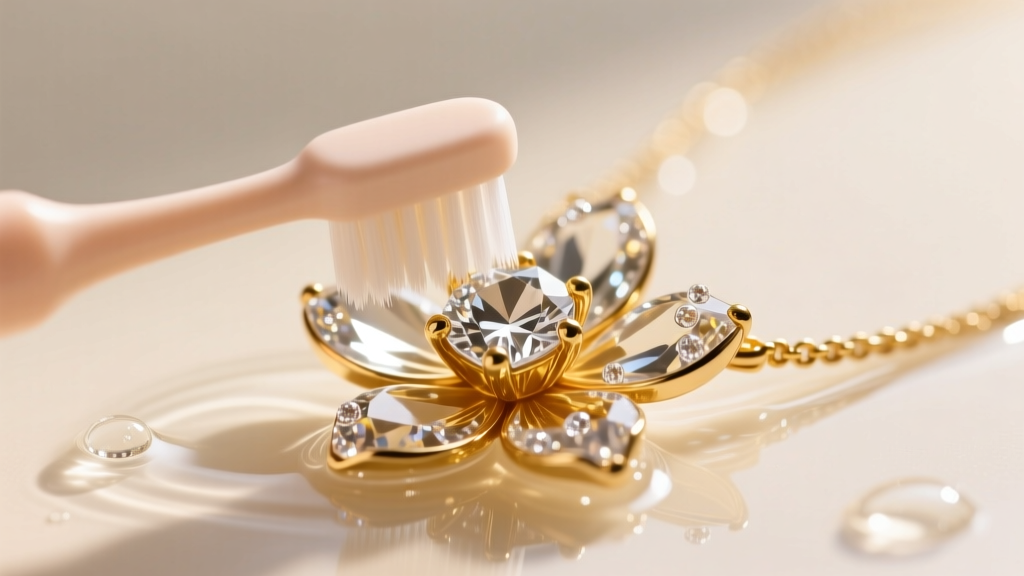
When your necklace looks dull, your first instinct might be to use a commercial silver dip or an ultrasonic cleaner. Do not do this. According to the Gemological Institute of America (GIA), harsh chemical dips will instantly strip the remaining gold plating from brass jewelry, leaving you with a raw, easily oxidized base metal. Furthermore, Jewelers of America warns that the high-frequency vibrations (typically 40kHz) of ultrasonic cleaners can shatter cubic zirconia stones and loosen the adhesive used in cold enamel settings.
The Safe Cleaning Protocol
- Mix a Gentle Solution: Combine a few drops of mild, phosphate-free dish soap (like Dawn) with lukewarm distilled water. Avoid tap water, as chlorine and heavy minerals can cause spotting.
- Soak Briefly: Submerge the necklace for no more than 3 to 5 minutes to loosen body oils and lotion buildup.
- Agitate Gently: Use a brand-new, extra-soft baby toothbrush to lightly sweep over the CZ stones and into the crevices of the flower pendant. Never use stiff bristles, which will scratch the soft gold plating.
- Rinse and Dry: Rinse under a gentle stream of distilled water. Pat dry immediately with a lint-free microfiber cloth. Do not air dry, as water spots will form on the metal.
Cleaning Agents Comparison for Plated Brass
| Cleaning Agent | Effect on Gold Plating | Effect on CZ & Enamel | Verdict |
|---|---|---|---|
| Mild Dish Soap | Safe | Safe | Highly Recommended |
| Baking Soda Paste | Abrasive; strips plating | Scratches CZ | Avoid Completely |
| Commercial Silver Dip | Dissolves gold flash | Clouds stones | Avoid Completely |
| Ultrasonic Cleaner | Can cause peeling | Shatters stones | Avoid Completely |
| Jewelry Polishing Cloth | Safe if unplated areas | Safe | Use with Caution |
Hardware Troubleshooting: Clasps and Jump Rings
The most common mechanical failure on a Kate Spade flower necklace is the lobster clasp. The internal steel spring can rust from sweat exposure, causing the lever to stick or fail to snap shut. Additionally, the jump ring connecting the clasp to the chain is often a weak point, easily pulled apart if the necklace snags on clothing.
How to Replace a Faulty Lobster Clasp
To fix this, you will need a replacement 12mm or 14mm gold-plated brass lobster clasp, an 18-gauge or 20-gauge brass jump ring (matching the original wire thickness), and two pairs of chain-nose pliers. Pro Tip: Wrap the tips of your pliers in painter's tape or use nylon-jaw pliers to prevent marring the soft gold plating.
- Remove the Old Clasp: Use your pliers to twist the existing jump ring open. Never pull the ring apart laterally; always twist it in a push-pull motion to maintain its perfect circular shape.
- Detach and Discard: Slide off the broken lobster clasp and set the original jump ring aside if it is still structurally sound.
- Attach the New Hardware: Thread the new jump ring through the end link of the chain and the loop of the new lobster clasp.
- Close Securely: Twist the jump ring closed until you feel the two ends 'snap' flush against each other. Run your fingernail over the seam; if it catches, the ring is not fully closed and will eventually pull apart.
Restoring Missing Pavé Stones and Enamel
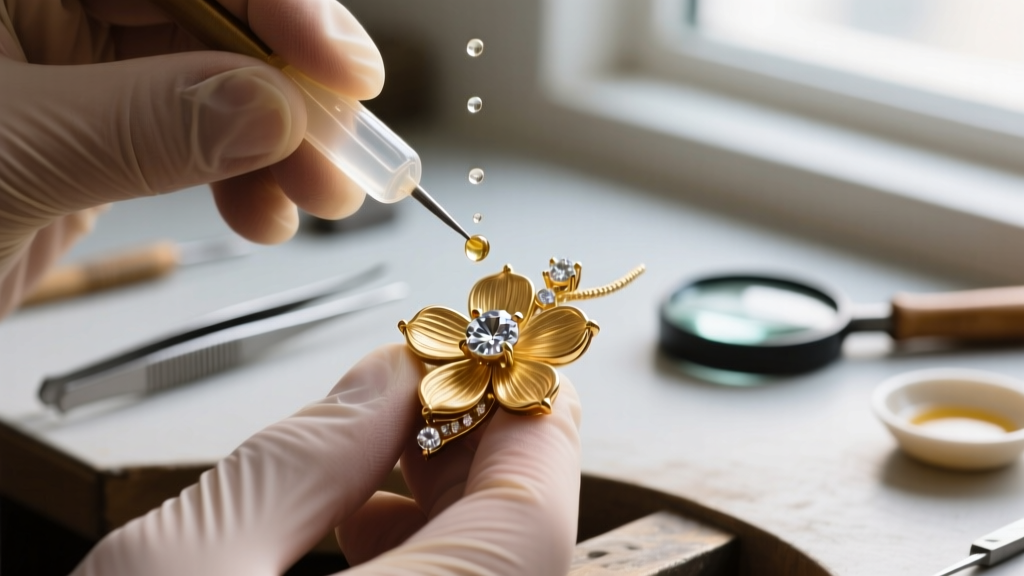
If your flower necklace has lost a tiny pavé stone, the empty prong setting can snag on fabrics and cause further damage. Replacing micro-pavé CZ stones requires precision and the right adhesive.
Stone Replacement Technique
Do not use super glue (cyanoacrylate). Super glue dries brittle, leaves a white frosty residue on the stones, and will eventually yellow. Instead, use GS Hypo Cement or E6000 Jewelry & Bead. GS Hypo Cement features a micro-needle applicator perfect for tiny prong settings.
- Clean the empty setting with a cotton swab dipped in isopropyl alcohol to remove old adhesive and skin oils.
- Apply a microscopic dot of GS Hypo Cement into the base of the setting.
- Using a wax-tipped jewelers' pick or a piece of sticky tack, pick up a replacement round-brilliant CZ stone (measure the setting with digital calipers first; they are typically 1.0mm to 1.5mm).
- Press the stone gently into the setting and use a wooden toothpick to carefully push the tiny gold prongs over the girdle of the stone.
- Let it cure undisturbed for 24 hours.
Addressing Chipped Cold Enamel
If the black or white enamel on the flower petals has chipped, traditional jewelry repair shops cannot easily fix it without stripping the entire piece. For a DIY solution, use a high-quality enamel repair marker or a two-part clear jeweler's epoxy tinted with a tiny amount of mica powder to match the original color. Apply it with a fine needle, let it self-level, and cure it under a UV lamp if using a UV-resistant resin.
Preventative Care for Long-Term Preservation
'The longevity of gold-plated fashion jewelry is dictated not by how often you wear it, but by how it is stored when you take it off.' — Master Bench Jeweler
To prevent your Kate Spade flower necklace from requiring future troubleshooting, implement these storage rules:
- Use Anti-Tarnish Strips: Store the necklace in an airtight ziplock bag with a 3M anti-tarnish strip. These strips absorb the sulfur and hydrogen sulfide gases in the air that cause brass to oxidize.
- Control Humidity: Toss a small silica gel packet into your jewelry box to keep the ambient moisture low, preventing the internal steel spring of the lobster clasp from rusting.
- The 'Last On, First Off' Rule: Always put your necklace on after applying perfume, hairspray, and lotions, and take it off before showering or exercising. The alcohol and acids in cosmetics are the primary enemies of thin gold plating.
By understanding the specific materials and construction of your Kate Spade flower necklace, you can confidently troubleshoot common issues, perform delicate repairs at home, and ensure your favorite floral piece continues to bloom for years to come.


