Troubleshooting Your Resin Baby Necklace Succulent Pendant
Is your botanical jewelry fading? Learn how to troubleshoot resin yellowing, plant rot, and chain breakage in your baby necklace succulent pendant.

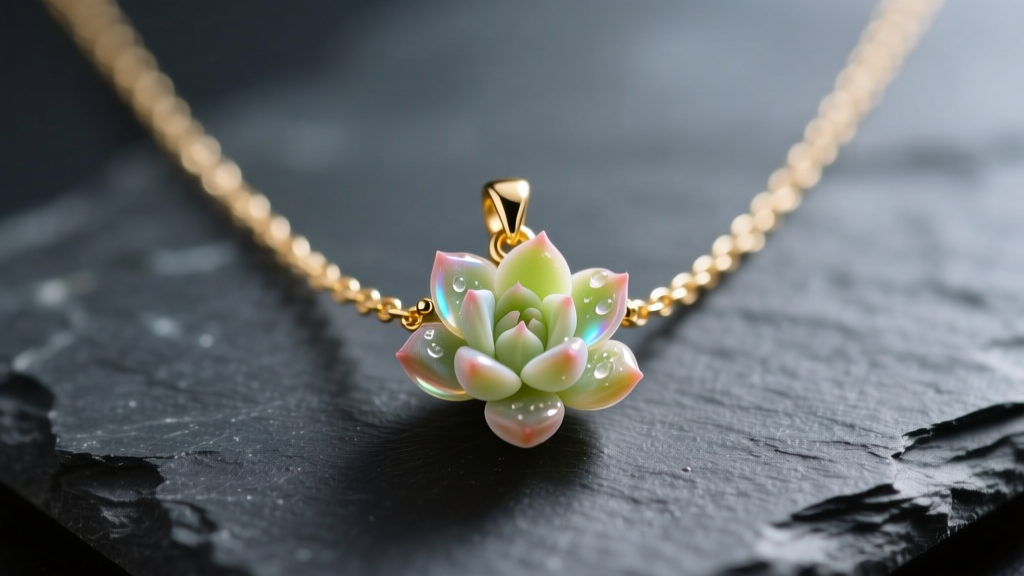
Botanical jewelry has surged in popularity, with artisans and hobbyists alike attempting to preserve nature’s most delicate forms. Among the most sought-after designs is the preservation of miniature plant offsets, frequently resulting in a baby necklace succulent pendant. These tiny, geometric rosettes—often harvested from Sempervivum arachnoideum or Echeveria 'Lola'—look stunning when suspended in clear resin. However, combining organic plant matter, synthetic polymers, and delicate jewelry findings creates a unique matrix of potential failures.
If your botanical pendant is turning brown, yellowing, or snapping at the clasp, you are not alone. In this comprehensive 2026 troubleshooting guide, we break down the exact material science behind these failures and provide actionable, professional-grade solutions to restore and protect your jewelry.
The Anatomy of a Botanical Resin Failure
To troubleshoot a resin-encased succulent, we must first understand the conflicting nature of the materials involved. Succulents are xerophytic plants, meaning their leaves are highly specialized for water storage. A fresh "baby" succulent offset can contain up to 85% cellular moisture. Epoxy resin, conversely, is a hydrophobic polymer that traps whatever is inside it. When moisture is sealed inside an anaerobic resin environment, it cannot evaporate. Instead, it triggers enzymatic browning and cellular collapse, turning a vibrant green rosette into a mushy brown smudge.
Furthermore, the physical weight of cast resin places immense stress on the delicate chains typically used for these pendants, leading to structural fatigue. Let us address the three most common failure modes and how to fix them.
Issue 1: Cellular Rot and Discoloration Inside the Resin
If your succulent looks brown, translucent, or "cooked" inside the pendant, moisture was trapped during the casting process. This is the most common mistake beginners make when creating a baby necklace succulent design.
The Silica Gel Desiccation Protocol
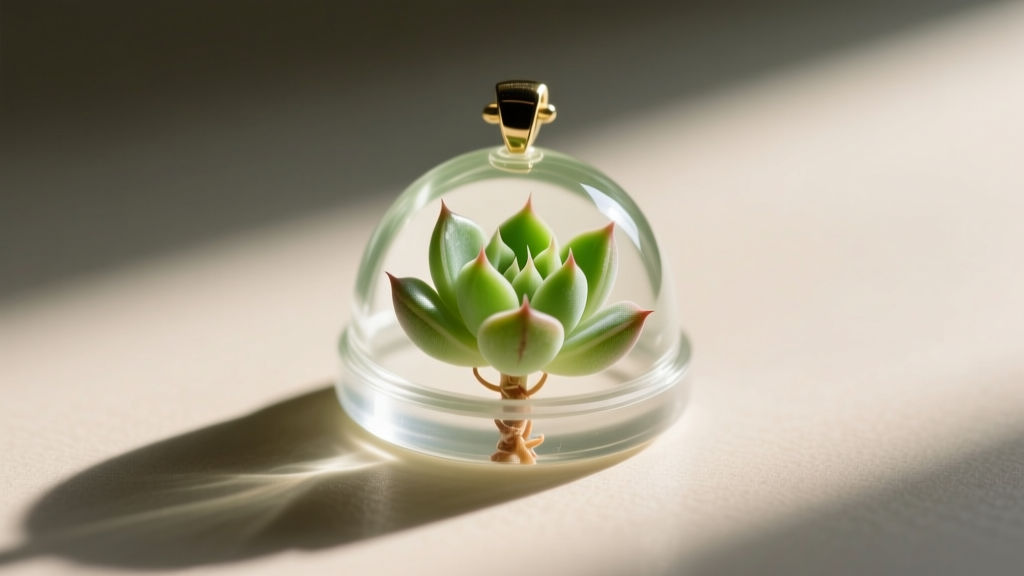
You cannot cast a fresh succulent directly into resin. The plant must be completely desiccated while retaining its 3D structure and color. Air-drying will cause the succulent to shrivel and lose its iconic rosette shape. Instead, use a chemical desiccant.
- Step 1: Harvest the baby succulent and let it callous over for 24 hours in a dry, shaded area.
- Step 2: Submerge the plant entirely in a bath of fine-grade silica gel beads (specifically the non-indicating, fine sand variety to avoid indenting the delicate leaves).
- Step 3: Seal the container and leave it undisturbed for 5 to 7 days. Thicker varieties like Haworthia may require up to 10 days.
- Step 4: Once fully desiccated, seal the plant with two thin coats of a PVA-based craft glue or a specialized botanical moisture sealant. This creates a hydrophobic barrier between the plant tissue and the liquid epoxy.
Issue 2: UV Degradation and Epoxy Yellowing
Even if your succulent is perfectly preserved, the resin matrix itself is highly susceptible to photodegradation. Standard Bisphenol-A (BPA) based epoxies will inevitably yellow when exposed to ultraviolet light. This occurs because UV photons break the chemical bonds in the polymer chain, creating chromophores—molecules that absorb blue light and reflect yellow.
According to material testing data from Resin Obsession, no epoxy is 100% UV-proof forever, but the addition of HALS (Hindered Amine Light Stabilizers) and UVAs (Ultraviolet Absorbers) can delay yellowing by several years.
Resin Selection Comparison Chart
Choosing the right resin is critical for botanical jewelry. Below is a comparison of the three primary resin types used in pendant casting as of 2026.
| Resin Type | UV Resistance | Cure Time | Best For | Drawbacks |
|---|---|---|---|---|
| Standard Epoxy (BPA) | Poor (Yellows in 3-6 months) | 24-48 Hours | Deep molds, budget crafts | High yellowing, toxic fumes |
| HALS-Infused Epoxy | Excellent (Delays 3-5 years) | 24-72 Hours | High-end botanical pendants | Expensive, sensitive to humidity |
| Polyurethane Resin | Superior (Non-yellowing) | 10-20 Minutes | Professional production runs | Moisture sensitive, bubbles easily |
| UV-Cure Resin | Good (But requires UV to cure) | 2-5 Minutes | Thin layers, quick repairs | Cannot cure thick/opacity molds |
Expert Recommendation: For a high-clarity baby necklace succulent pendant, always opt for a premium HALS-infused epoxy (such as ArtResin or Teexpert) or a clear jewelry-grade polyurethane. Never use hardware-store epoxy, as it lacks optical clarifiers and UV stabilizers.
Issue 3: "Baby" Chain Tensile Failure
A frequent complaint among wearers of botanical jewelry is chain breakage. A 25mm diameter resin dome pendant, complete with a metal bail and the dried plant matter, typically weighs between 14 and 18 grams. While this sounds light, the dynamic torque applied to a necklace during daily wear (catching on clothing, sudden movements) creates localized stress points that easily snap delicate chains.
The term "baby chain" in jewelry making refers to ultra-fine chains, usually ranging from 0.8mm to 1.0mm in width. According to tensile strength guidelines from jewelry suppliers like Rio Grande, a 0.9mm sterling silver cable chain has a breaking point of roughly 2.5 to 3.5 kg under static load. However, the failure rarely occurs in the middle of the chain; it almost always occurs at the jump ring or the clasp spring mechanism due to metal fatigue and improper soldering.
How to Upgrade Your Chain and Bail System
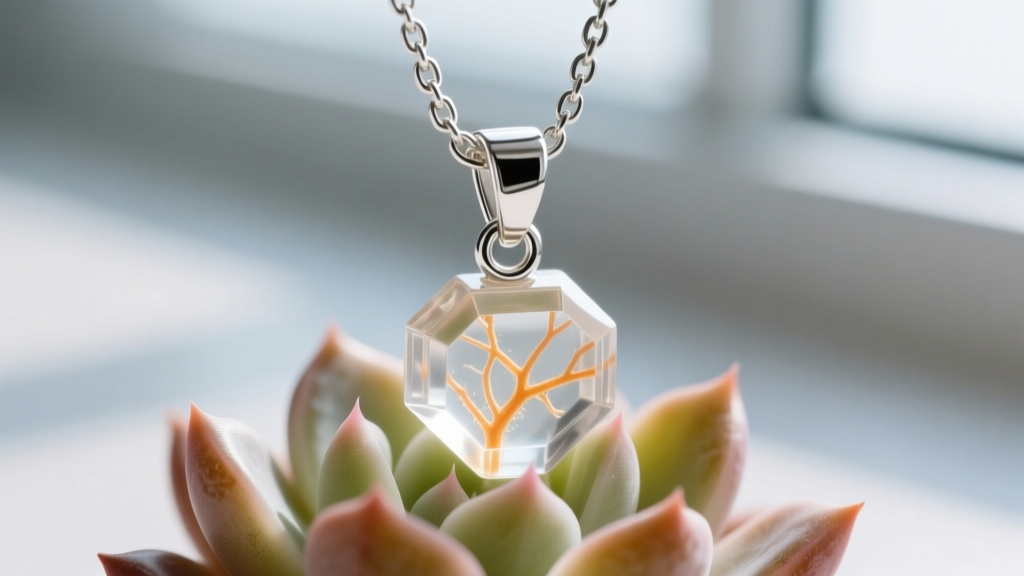
To prevent your baby necklace succulent from falling off and shattering on the floor, implement the following structural upgrades:
- Ditch the Open Jump Rings: Never attach a heavy resin pendant to an open (unsoldered) jump ring. The lateral force of a swinging pendant will easily twist the wire open. Always use a soldered jump ring or a closed loop bail.
- Upgrade the Chain Gauge: Move away from 0.9mm cable chains. Opt for a 1.2mm to 1.5mm box chain or rope chain. Box chains distribute weight more evenly across their interlocking square links, offering superior tensile strength without sacrificing a delicate aesthetic.
- Reinforce the Bail: If you are casting the resin yourself, embed a sturdy metal eye-pin or a specialized resin bail directly into the back of the silicone mold before pouring. This anchors the hanging mechanism into the core of the resin, rather than relying on a glued-on surface bail which will eventually fail due to adhesive degradation.
Step-by-Step Restoration: Fixing a Yellowed Pendant
If you already own a baby necklace succulent pendant that has succumbed to UV yellowing, all is not lost. While you cannot reverse the chemical breakdown of the polymer, you can remove the oxidized surface layer through wet-sanding and polishing.
The Wet-Sanding Process
Because the yellowing is often most concentrated on the outermost layer of the resin (where UV exposure is highest), sanding away the top 0.1mm can reveal the crystal-clear resin beneath.
- Preparation: Remove the pendant from the chain. Tape off the metal bail to prevent scratching it.
- 800 Grit: Wet-sand the entire surface with 800-grit sandpaper until the glossy finish is completely removed and the pendant looks uniformly frosted.
- 1500 to 3000 Grit: Progress through 1500, 2000, and finally 3000-grit micro-mesh pads, keeping the surface lubricated with water. This removes the scratches from the previous grit level.
- Polishing: Apply a specialized plastic and resin polishing compound (such as Novus Plastic Polish #2 or a cerium oxide paste) using a microfiber cloth or a rotary tool with a felt buffing wheel. Buff until the optical clarity returns.
- UV Protection: Finish by applying a clear, UV-resistant acrylic spray sealant to act as a sacrificial barrier against future sun exposure.
Final Thoughts on Botanical Jewelry Care
Creating and maintaining a baby necklace succulent pendant requires a harmonious balance of biology, chemistry, and metallurgy. By ensuring your botanical specimens are fully desiccated and sealed, selecting a HALS-stabilized resin, and pairing the heavy pendant with a structurally sound 1.5mm box chain, you can create a piece of jewelry that remains vibrant and intact for years to come. Remember that all organic jewelry requires mindful care—store your pendants in a dark, dry jewelry box when not in use to minimize UV exposure and preserve the delicate beauty of nature encased within.


