How to Restore and Repair a Damaged Shell Pieces Necklace
Learn how to clean, repair, and restore a damaged shell pieces necklace. Expert tips on fixing cracks, restringing, and preventing nacre discoloration.

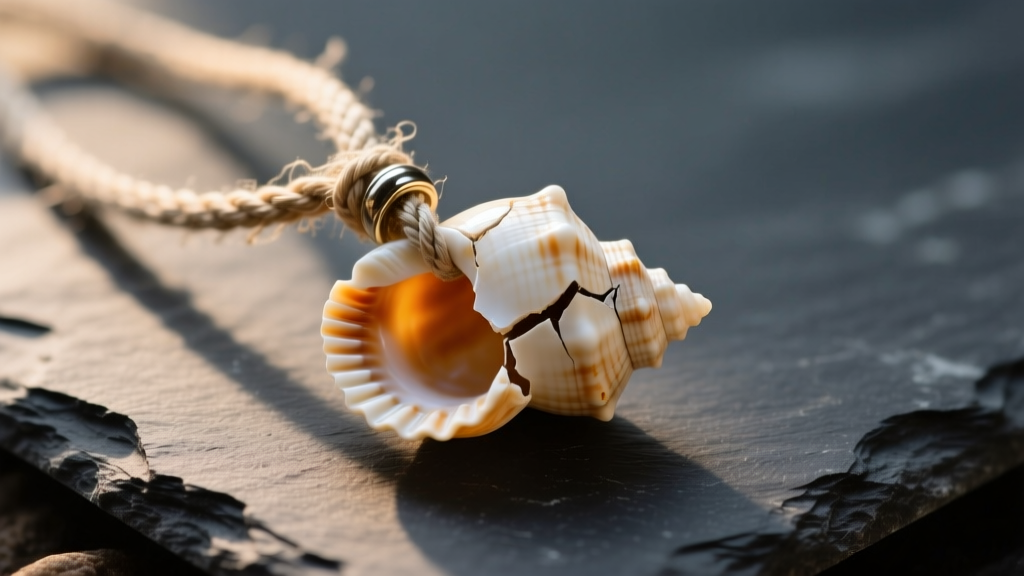
Shell jewelry has dominated coastal and bohemian aesthetics for decades, but the organic nature of these materials makes them uniquely vulnerable to environmental and structural damage. When your favorite shell pieces necklace suffers from fraying cords, dull nacre, or cracked pendants, throwing it away is unnecessary. With the right lapidary and jewelry-making techniques, you can restore these organic gems to their original luster. This comprehensive troubleshooting guide addresses the most common failure modes of shell jewelry, providing actionable, expert-level solutions for cleaning, repairing, and restringing.
Diagnosing Nacre Damage: Dullness vs. Chemical Etching
Nacre (mother-of-pearl) and exterior shell layers are composed of microscopic aragonite (calcium carbonate) platelets held together by a conchiolin protein matrix. This structure is breathtakingly beautiful but highly reactive. Human sweat typically has a pH between 4.5 and 7.0. When the pH drops below 5.5, the acidic environment begins to dissolve the calcium carbonate, leading to microscopic etching. This manifests as a chalky, dull film that cannot be wiped away with a standard jewelry cloth.
According to care guidelines from the Gemological Institute of America (GIA), ultrasonic cleaners and ammonia-based solutions will instantly destroy the conchiolin matrix, causing irreversible delamination. Never use commercial silver dips or acidic home remedies like vinegar on a shell pieces necklace.
Restoring the Luster
To fix mild etching, you must physically polish the surface. Do not use standard silver polish, which contains harsh abrasives that will scratch the Mohs 2.5-4.5 surface. Instead, use a cerium oxide or tin oxide polishing paste. Apply a pea-sized amount to a damp, lint-free microfiber cloth and buff the shell in small, circular motions for 3 to 5 minutes. For deep chemical burns from perfume or hairspray, wet-sand the affected area using 2000-grit silicon carbide paper before polishing to level the etched craters.
Structural Troubleshooting: Repairing Cracks and Chips
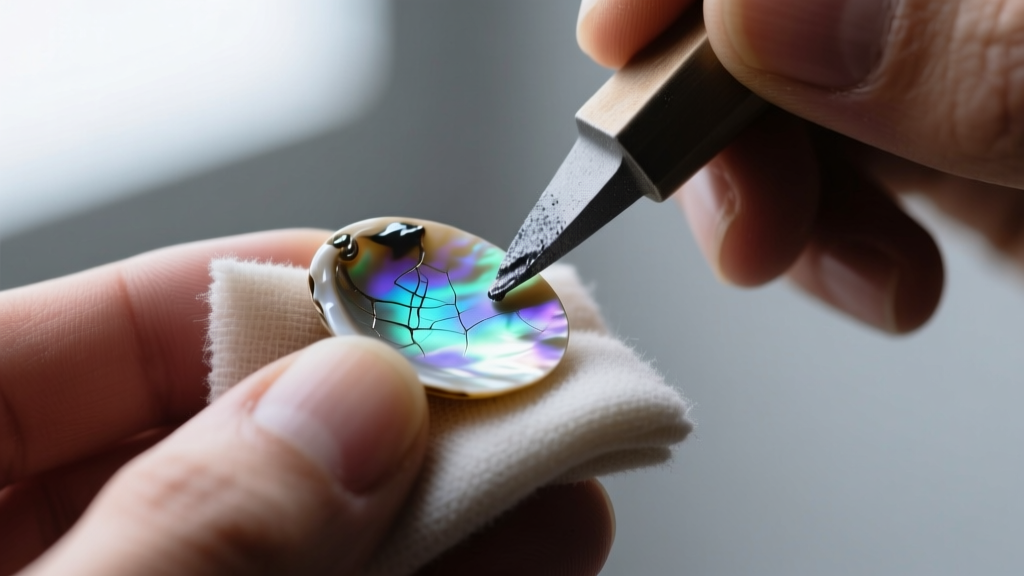
Shells are brittle and prone to cleaving along their natural growth lines. If a pendant in your shell pieces necklace snaps, cyanoacrylate (super glue) is often the wrong choice. While it bonds quickly, it wicks into the porous edges of the shell via capillary action, leaving a dark, visible stain that cannot be sanded out.
The Epoxy Repair Protocol
For clean breaks and load-bearing fractures, a two-part clear epoxy (such as Devcon 5 Minute Epoxy) is the industry standard. Follow these steps for an invisible repair:
- Preparation: Clean both fracture edges with 99% isopropyl alcohol to remove skin oils and debris. Allow to dry completely.
- Application: Mix the epoxy and apply a microscopic layer to one side using a toothpick. Avoid over-application to prevent squeeze-out.
- Clamping: Press the pieces together and secure them using silicone-tipped tweezers or a padded jewelry clamp. Standard metal clamps will crush the brittle shell edges.
- Cleanup: If any epoxy squeezes out, wait until it becomes tacky (about 3 minutes) and gently roll it off with a wooden skewer. Do not wipe it, as this will smear the resin into the shell's pores.
Restringing and Hardware Failures
The most common point of failure in a shell pieces necklace is the stringing material. Mass-produced shell beads are often punched rather than drilled, leaving microscopic, razor-sharp silica edges inside the channel. These edges act like tiny saws, slicing through organic fibers over time.
| Stringing Material | Tensile Strength | Best For | Vulnerability |
|---|---|---|---|
| Silk Thread (Size F) | Low (approx. 12 lbs) | Lightweight, smooth pearls | Frays rapidly against sharp shell edges |
| Nylon (C-Lon / Superlon) | Medium (approx. 18 lbs) | Seed beads, small shell chips | Susceptible to UV degradation over time |
| 49-Strand Beading Wire (.018) | High (up to 30 lbs) | Heavy, sharp-edged shell pieces | Kinks permanently if bent at a sharp angle |
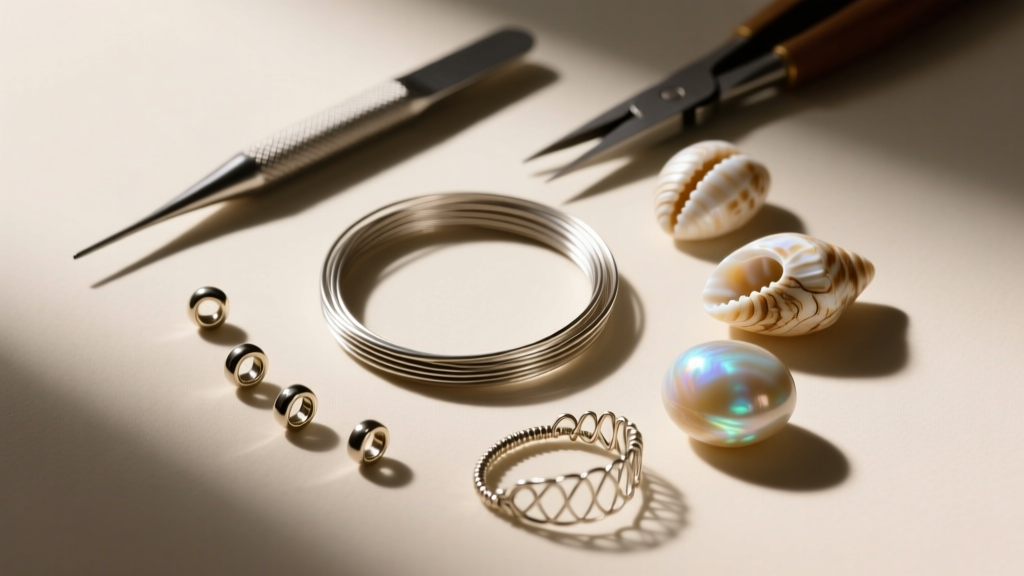
When using beading wire, always employ French wire (bullion) or nylon wire guardians at the clasp connection point. This prevents the metal clasp from shearing against the abrasive shell edge and protects the wire from metal-on-metal fatigue. Resources like Fire Mountain Gems highly recommend using a micro-burr or a diamond-coated bead reamer to smooth the interior of the drill hole before stringing any shell bead.
Solving the Floating Clasp Problem
Shell is remarkably lightweight. A standard 15mm brass lobster clasp will often outweigh the shell beads, causing the clasp to constantly migrate to the front of the neck. To solve this, jewelers use a micro-lobster clasp (10mm or smaller) crafted from lightweight 925 sterling silver or titanium. Alternatively, add a dense counterweight bead—such as a 6mm hematite or silver sphere—directly opposite the clasp to anchor the necklace at the nape of the neck.
Real vs. Resin: Identifying Counterfeit Shell
When repairing a vintage shell pieces necklace, you may discover that a replacement bead is actually poured resin. Identifying the imposter is crucial, as resin requires entirely different polishing compounds and will melt if exposed to certain solvents.
- Thermal Conductivity: Real shell feels distinctly cold to the touch and takes longer to warm up against the skin compared to resin, which is an insulator.
- UV Fluorescence: Under a 365nm UV flashlight, real shell often fluoresces a pale blue or green due to trace organic proteins. Resin, conversely, may fluoresce a bright milky white (if optical brighteners were added) or remain completely inert.
- The Pin Test: In an inconspicuous area, touch the bead with a heated needle. Resin will melt and emit a sweet or acrid chemical odor; real shell will not melt but may smell faintly of burning bone or calcium.
Preventative Maintenance and Storage Protocols
Pro Tip: Never store shell jewelry in an airtight plastic bag or a safety deposit box with desiccant packets. Shells require a slight amount of ambient moisture to prevent the conchiolin protein from drying out, which leads to spontaneous micro-cracking.
To maintain the structural integrity of your shell pieces necklace, store it in a breathable cotton pouch. If you live in an arid climate or use central heating during the winter, place a slightly damp (not wet) cotton ball in the corner of your jewelry box to maintain a micro-humidity level of around 40-50%. Wipe the beads down with a dry, soft cloth after every wear to remove acidic skin oils, and apply perfumes and hairsprays at least 15 minutes before putting the necklace on. By understanding the unique chemistry and structural limits of organic nacre, you can ensure your shell jewelry remains a staple in your collection for decades.