How to Safely Restore a Vintage Goldette Necklace
Learn how to safely clean, repair, and style a vintage Goldette necklace. Expert steps for preserving gold plating and foil-back stones.

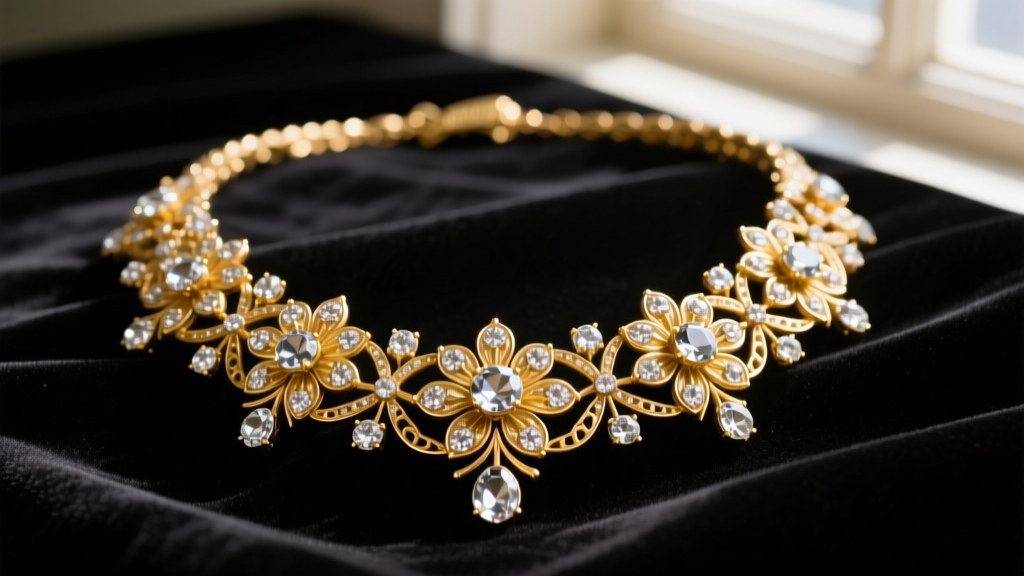
The Legacy of Goldette: Understanding Mid-Century Construction
Before you begin any restoration process, it is crucial to understand the materials you are working with. Goldette, a prominent costume jewelry brand founded by Israel R. Stern, produced highly sought-after pieces primarily between the 1940s and 1960s. According to the Vintage Fashion Guild, Goldette was renowned for mimicking the look of fine jewelry through intricate gold electroplating and the use of high-quality glass rhinestones. Unlike solid gold or modern gold vermeil (which requires a thick 2.5-micron layer over sterling silver), vintage Goldette necklaces typically feature a brass or zinc-alloy (pot metal) base plated with a very thin layer of gold, often less than 1 micron thick.
The rhinestones used in these pieces are frequently glass with delicate foil backings designed to maximize light refraction. Some later pieces feature an Aurora Borealis (AB) coating. Because the gold plating is thin and the stone backings are highly sensitive to moisture, standard modern jewelry cleaning methods will permanently destroy a vintage Goldette necklace. This step-by-step guide will walk you through the professional techniques required to clean, repair, and preserve these mid-century masterpieces without compromising their historical integrity or market value, which can range from $150 to over $450 for mint-condition bib and fringe styles on the 1stDibs vintage jewelry market.
Step 1: Assessing Condition and Clasp Integrity
The first step in any restoration is a meticulous structural assessment. Lay the necklace flat on a clean, lint-free microfiber cloth under a bright, daylight-balanced LED lamp. Use a 10x jeweler's loupe to inspect the following critical areas:
- Hallmarks: Locate the Goldette signature. It is typically stamped on a small, applied rectangular cartouche soldered to the back of the clasp or on a pendant drop.
- Prongs and Bezels: Check the metal prongs holding the rhinestones. Pot metal can become brittle over time. If a prong is lifted, do not use steel tweezers to push it back; you risk snapping the metal or scratching the gold plate.
- Clasp Tension: Goldette frequently used fold-over safety clasps and barrel clasps. If a fold-over clasp fails to snap shut securely, the hinge has likely loosened over decades of wear.
Expert Fix: To tighten a loose fold-over clasp, use nylon-jaw pliers. The nylon coating prevents the steel teeth from marring the soft gold plating. Gently squeeze the hinge area to restore tension, testing the snap mechanism after every minor adjustment.
Step 2: The Dry-Clean Method for Foil-Back Stones
Water is the ultimate enemy of vintage costume jewelry. When moisture seeps beneath the glass rhinestone and into the metal bezel, it oxidizes the delicate foil backing. This causes the stone to turn cloudy, gray, or black—a condition collectors call "dead stones," which significantly devalues the piece. Therefore, the stones must only be cleaned using a dry method.
Tools Required for Stone Cleaning
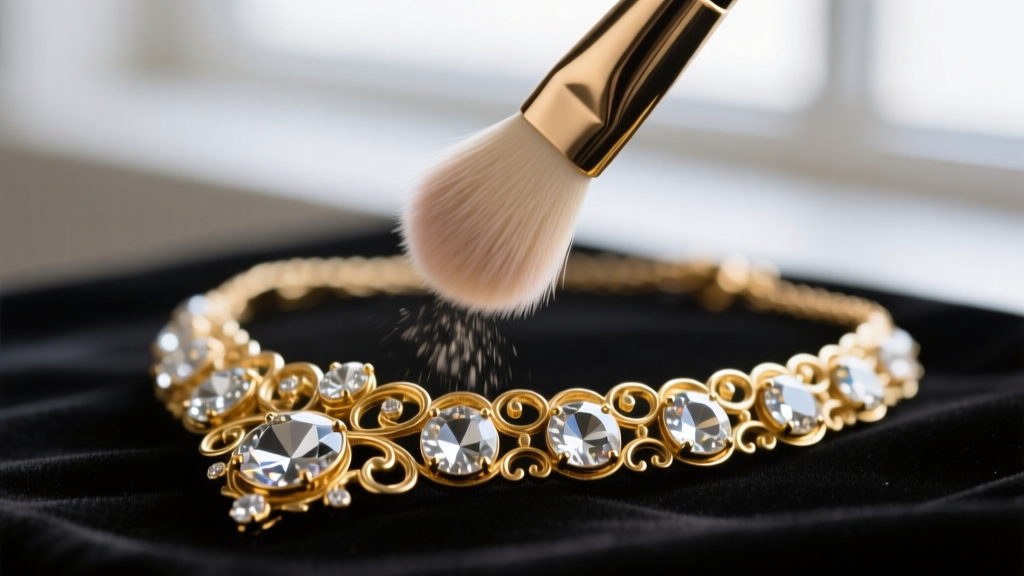
- Soft-bristled, clean makeup blending brush (natural or high-quality synthetic)
- Wooden toothpicks or bamboo skewers
- Compressed air duster (used at a safe distance)
Gently sweep the makeup brush across the surface of the rhinestones to dislodge decades of accumulated skin oils, cosmetics, and dust. For stubborn grime trapped in the crevices between the glass and the gold bezel, carefully use the tip of a wooden toothpick. Wood is softer than glass and gold, ensuring you will not scratch the stone or strip the plating. Finish by using short, controlled bursts of compressed air from at least six inches away to blow out any remaining particulate matter.
Step 3: Deep Cleaning the Gold-Plated Chain and Settings
While the stones must remain dry, the gold-plated brass chain and structural settings can be carefully cleaned to remove tarnish and oxidation. According to conservation guidelines outlined by the Victoria and Albert Museum, mild, non-ionic surfactants are safest for historical metalwork.
Mix a solution of lukewarm distilled water and a single drop of pH-neutral baby shampoo. Dip a cotton swab (Q-tip) into the solution and squeeze it out until it is merely damp, not dripping. Carefully swab the gold-plated links and the backs of the settings, avoiding any contact with the rhinestones. Immediately follow with a dry cotton swab to absorb any residual moisture. Never submerge the necklace, and never use a toothbrush, as the stiff bristles will leave micro-scratches on the soft gold electroplate.
Cleaning Agents: What to Use vs. What to Avoid
| Cleaning Agent | Safe for Gold Plate? | Safe for Foil Stones? | Expert Notes |
|---|---|---|---|
| Ultrasonic Cleaner | No | No | High-frequency vibrations will shatter glass stones and strip thin electroplating instantly. |
| Ammonia / Silver Dip | No | No | Harsh chemicals will dissolve the gold layer and turn the brass base metal black. |
| Baking Soda Paste | No | No | Highly abrasive; will permanently scratch the gold finish and leave white residue in crevices. |
| Diluted Baby Shampoo | Yes | No (Avoid Contact) | Mild enough to lift oils from the brass base without degrading the gold layer. |
| Dry Makeup Brush | Yes | Yes | The only safe method for removing dust and oils from the surface of glass rhinestones. |

Step 4: Re-plating and Professional Restoration Options
If your Goldette necklace suffers from severe brass show-through (where the base metal is visibly exposed due to worn plating), DIY polishing will only make the problem worse. At this stage, you must decide between professional restoration or accepting the patina of age.
For high-value pieces, seek a jeweler who specializes in costume jewelry and offers pen plating (also known as brush plating). Unlike bath plating, which requires the removal of all rhinestones to prevent chemical damage, pen plating uses a specialized wand wrapped in a cotton swab soaked in a 24k or 18k gold solution. The jeweler applies an electrical current directly to the worn areas, depositing a fresh layer of gold only where needed. This localized restoration typically costs between $75 and $150, depending on the surface area, and preserves the original stones and structural integrity of the piece.
Styling Your Restored Goldette Piece for 2026
Once your vintage Goldette necklace is cleaned and stabilized, it is time to integrate it into a modern wardrobe. The 2026 styling ethos heavily favors "high-low" mixing—pairing historical costume jewelry with contemporary fine jewelry and minimalist apparel.
"The key to wearing mid-century bib or fringe necklaces today is contrast. Let the intricate, heavy gold-plated vintage piece serve as the sole focal point against a structured, monochromatic silhouette, like a tailored black silk blouse or a stark white poplin shirt."
For layering, avoid tangling the delicate Goldette chain with modern, heavier link chains. Instead, pair your restored Goldette pendant or choker with a single, ultra-think 14k solid gold snake chain worn slightly lower (e.g., a 16-inch Goldette piece layered with an 18-inch solid gold chain). This creates a curated, multi-dimensional neckline that honors the craftsmanship of the past while remaining firmly rooted in contemporary fashion.
FAQ: Maintaining Your Goldette Jewelry
How should I store my vintage Goldette necklace?
Store the piece flat in an acid-free, archival-quality tissue paper pouch. Avoid hanging the necklace, as the weight of the glass stones can stretch the vintage links or weaken the solder joints over time. Keep it in a climate-controlled environment; high humidity accelerates the oxidation of the brass base metal.
Can I use a jewelry polishing cloth on the gold plate?
Only use a dry, untreated, ultra-soft microfiber cloth. Never use chemically treated polishing cloths (like Sunshine cloths), as they contain mild abrasives and tarnish-removing chemicals that will strip the remaining microscopic layer of gold electroplate right off the brass base.


