Rhodonite Necklace Style Guide: 2026 Trends and Layering
Discover 2026 rhodonite necklace trends, from mixed-metal layering to bead sizing. Expert styling tips for the striking pink and black gemstone.

The 2026 Resurgence of Earthy Opaque Gemstones
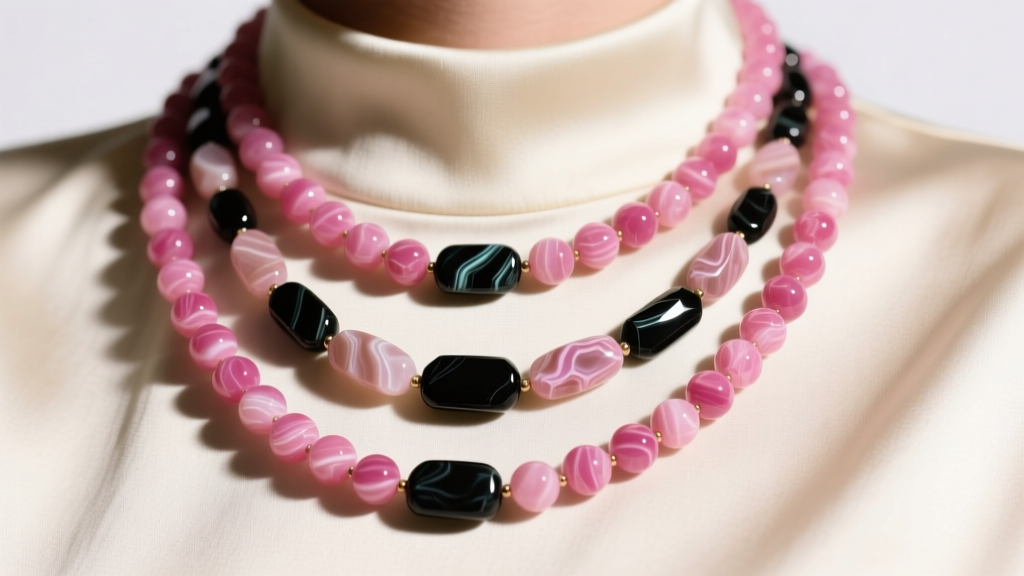
The jewelry landscape of 2026 has decisively pivoted from the hyper-sparkly, faceted diamond dominance of the early 2020s toward grounded, tactile, and earthy gemstones. At the forefront of this organic renaissance is the rhodonite necklace. Once relegated to niche metaphysical shops and souvenir bead strands, rhodonite has been reclaimed by high-fashion jewelry designers and artisan metalsmiths who appreciate its striking, graphic contrast. Unlike transparent gems that rely on light refraction, rhodonite commands attention through its opaque, matte-to-waxy luster and the dramatic interplay between its bubblegum-pink matrix and stark black dendritic inclusions.
This shift toward earthy, organic gemstones reflects a broader cultural desire for jewelry that feels personal, grounding, and visually textured. A well-crafted rhodonite necklace is no longer just a bohemian staple; it is a sophisticated statement piece that bridges the gap between raw, natural beauty and refined, contemporary styling. Whether worn as a solitary raw-slice pendant or integrated into a complex, multi-strand layered stack, rhodonite offers a unique color palette that flatters a wide array of skin tones and wardrobe choices.
Anatomy of a High-Quality Rhodonite Necklace
To understand how to style and care for rhodonite, one must first understand its gemological profile. Rhodonite is a manganese inosilicate, and its signature pink coloration is directly tied to its manganese content. The black veins that give the stone its distinctive, marbled appearance are inclusions of manganese oxide. According to mineralogical data from Mindat.org, these dendritic inclusions are not flaws; rather, they are highly sought-after features that dictate the stone's value and aesthetic appeal. A premium rhodonite bead will feature a vibrant, saturated rosy-pink base with sharp, well-defined black veining, rather than a washed-out pale pink with muddy, grayish inclusions.
On the Mohs scale of mineral hardness, rhodonite sits at a 5.5 to 6.5. This makes it reasonably durable for everyday wear as a necklace, provided it is protected from hard impacts. However, its most critical structural vulnerability is its perfect cleavage in two directions. This means that if struck at a specific angle, the stone can split or chip cleanly along its internal crystal planes, a vital consideration when setting rhodonite in metal bezels or drilling it for bead strands.
Bead Sizing and Strand Lengths
The diameter of the rhodonite beads fundamentally alters the necklace's visual weight and appropriate use case. Below is a breakdown of standard bead sizes and their styling applications in 2026:
| Bead Diameter | Visual Weight | Best Use Case | 2026 Avg. Price Range |
|---|---|---|---|
| 3mm - 4mm | Delicate, Fine | Layering chokers, minimalist everyday wear | $35 - $65 |
| 6mm - 8mm | Medium, Classic | Standard pendants, standalone 18-inch strands | $50 - $120 |
| 10mm - 12mm | Bold, Heavy | Statement pieces, masculine jewelry, prayer beads | $90 - $180 |
| Raw Slices (Irregular) | Organic, Textured | Focal pendants on heavy chains, bohemian stacks | $75 - $250+ |
Metal Pairings: Oxidized Silver vs. Matte Gold
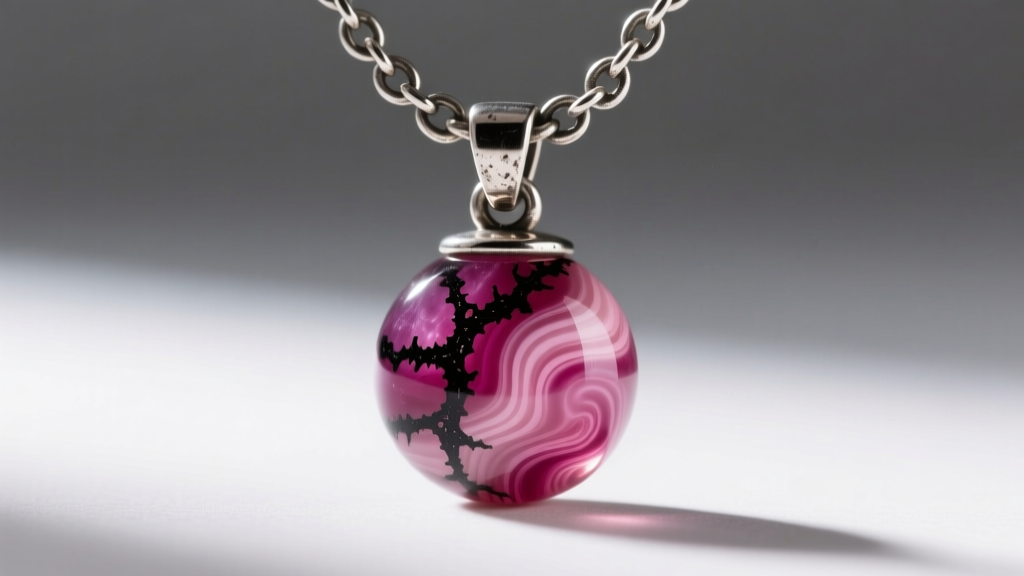
The metals you pair with rhodonite will either elevate the stone or completely wash out its natural warmth. Because rhodonite possesses an inherently earthy, muted color profile, high-polish, ultra-reflective metals like rhodium-plated white gold or bright platinum often create a jarring, disconnected contrast. Instead, the 2026 trend heavily favors metals with depth, texture, and warmth.
Oxidized 925 Sterling Silver: This is arguably the ultimate pairing for rhodonite. The darkened, blackened crevices of oxidized silver perfectly echo the manganese oxide inclusions within the stone, creating a cohesive, moody aesthetic. A 2.5mm oxidized rolo chain or a 3mm oxidized box chain provides enough visual weight to support an 8mm or 10mm rhodonite bead without overpowering it. The dark metal acts as a frame, making the pink matrix appear significantly more vibrant by contrast.
Matte or Hammered 14k Yellow Gold: For a warmer, more luxurious approach, matte-finished yellow gold is the standard. The soft, buttery tones of unpolished 14k or 18k gold enhance the rosy, warm undertones of the pink silicate. A 1.5mm matte gold rope chain or a hammered gold bar link chain introduces a subtle, artisanal texture that complements the organic feel of the stone. Avoid high-polish yellow gold, as the sharp reflections can distract from the subtle, waxy luster of the rhodonite.
Advanced Layering Frameworks for Rhodonite
Layering opaque gemstones requires a strategic approach to texture and length to prevent the neck from looking cluttered or heavy. The goal is to create a cascading effect where each piece has room to breathe. Here are three expert-approved layering frameworks utilizing rhodonite:
- The 'Desert Dusk' Stack: Start with a 15-inch choker made of 3mm rhodonite beads interspersed with tiny, faceted black spinel rondelles. Add a 20-inch oxidized silver chain featuring a single, raw rhodonite slice pendant. Finish with a 24-inch matte gold lariat chain ending in a simple gold teardrop. This stack balances the dark, moody tones of the spinel and oxidized silver with the warmth of the gold and pink stone.
- The 'Earth & Bone' Stack: Pair an 18-inch strand of 6mm rhodonite beads with a 22-inch necklace of carved bone or matte white howlite beads. The stark white/pink contrast is visually striking and highly contemporary. Anchor the stack with a 26-inch heavy, antiqued bronze chain. This framework leans heavily into organic, tactile materials and is perfect for casual, bohemian, or festival styling.
- The 'Minimalist Contrast' Stack: Wear a delicate, 16-inch 14k yellow gold snake chain with a tiny, 4mm bezel-set rhodonite cabochon. Layer it with an 18-inch gold paperclip chain and a 20-inch gold rolo chain holding a small, asymmetric baroque pearl. The soft pink of the rhodonite bridges the gap between the bright gold and the iridescent white pearl, creating a sophisticated, office-appropriate stack.
Durability, Failure Modes, and Care
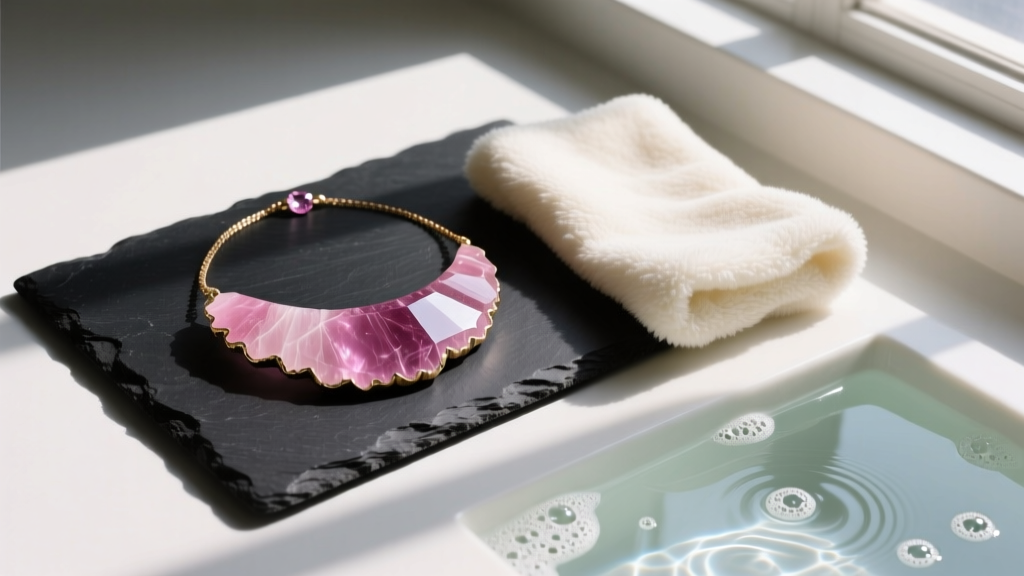
While rhodonite is a beautiful and relatively hard stone, its specific crystal structure demands careful maintenance. The most common catastrophic failure mode for rhodonite necklaces occurs during cleaning. Never place a rhodonite necklace in an ultrasonic cleaner. The high-frequency vibrations generated by ultrasonic machines will exploit the stone's perfect cleavage planes, causing internal fracturing, micro-chipping, or complete shattering of the beads. Similarly, steam cleaners should be avoided, as sudden thermal shock can induce stress fractures.
For routine cleaning, use only lukewarm water, a drop of mild, phosphate-free dish soap, and a soft microfiber cloth or a baby-hair brush to gently clean the crevices around the black inclusions. Dry the beads immediately and thoroughly; prolonged exposure to moisture can degrade the stringing material and, in some cases, cause the manganese inclusions to oxidize further, dulling the stone's surface.
Stringing material is another critical point of failure. Cheap nylon threads or rigid memory wires will eventually snap or wear through the bead holes due to the micro-movements of the necklace against the skin. For high-quality rhodonite bead strands, jewelers should use a 49-strand, .019-inch flexible stainless steel beading wire (such as Soft Flex) coated in nylon, finished with sterling silver or gold-filled crimp beads and wire guardians. This ensures the necklace drapes beautifully like silk but possesses the tensile strength to support the weight of dense silicate beads for decades.
Market Pricing and Sourcing in 2026
The market for rhodonite has bifurcated into commercial-grade bead strands and premium, artisan-cut pieces. Commercial-grade necklaces, often featuring heavily included, paler pink beads with excessive black matrix, are mass-produced and widely available in the $20 to $45 range. However, the 2026 trend heavily favors premium sourcing. High-grade rhodonite, often sourced from select mines in Peru, Russia, or Australia, features a deep, saturated 'watermelon' pink with sharp, graphic black veining. Artisan jewelers setting these premium beads in custom 14k gold or heavily oxidized silver settings command prices ranging from $150 to over $400 for a single, well-crafted pendant necklace.
"When investing in a rhodonite necklace, prioritize the saturation of the pink matrix and the sharpness of the black inclusions over sheer size. A small, vibrantly colored 6mm bead will always look more luxurious and intentional than a large, muddy 12mm bead." — Senior Gemologist, Jewel Style Radar
As the demand for grounded, nature-inspired jewelry continues to dictate the trends of 2026, the rhodonite necklace remains a versatile, durable, and deeply stylish choice for those looking to incorporate organic color into their daily rotation.


