Rosary Fashion Necklace Materials: Properties & Guide
Compare metals and beads for your rosary fashion necklace. Discover gauge sizes, Mohs hardness, and 2026 material trends for lasting style.

The Evolution of the Rosary Fashion Necklace
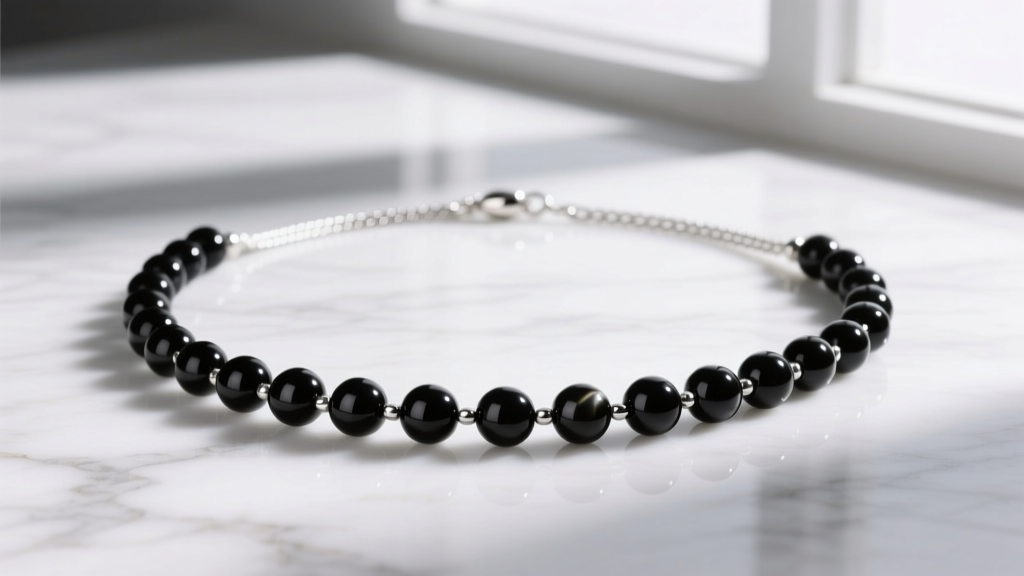
The rosary fashion necklace has completely transcended its traditional religious origins to become a staple of modern streetwear, high fashion, and layered everyday styling. Unlike standard chain necklaces, a rosary necklace integrates a rhythmic alternation of metal links and beads, typically culminating in a centerpiece pendant or a distinct drop chain. As we navigate the 2026 jewelry market, the divide between fast-fashion accessories and heirloom-quality pieces is defined entirely by material science. Understanding the specific properties of the metals and beads used in your rosary fashion necklace is the only way to ensure proper drape, tarnish resistance, and structural longevity.
Anatomy and Proportions: Chain-to-Bead Ratios
Before diving into metallurgy, it is crucial to understand the structural ratios that define a rosary necklace. The classic configuration features a 1:3 or 1:5 ratio—one bead for every three to five chain links. This ratio dictates the necklace's flexibility and weight distribution. A higher concentration of beads creates a rigid, collar-like drape, while a sparse bead distribution allows the metal chain to articulate fluidly around the clavicle. For a standard 24-inch streetwear rosary, a 1:4 ratio using 6mm beads and 1.5mm cable chain links provides the optimal balance of kinetic movement and visual weight.
Metal Chain Properties: Tarnish, Weight, and Gauge
The chain is the structural spine of any rosary fashion necklace. Because the chain must bear the localized stress of the bead wire-wraps or jump rings, the choice of alloy and wire gauge is critical.
Sterling Silver (925) vs. Argentium 935
Traditional 925 sterling silver consists of 92.5% pure silver and 7.5% copper. While copper provides necessary tensile strength, it is highly reactive to sulfur and moisture, leading to the inevitable formation of silver sulfide (tarnish). In 2026, premium jewelers are increasingly pivoting to Argentium silver. Argentium replaces a portion of the copper with germanium, which forms a transparent, self-healing oxide layer that drastically slows tarnishing and eliminates firescale during soldering. For a high-end rosary fashion necklace, Argentium 935 is the superior choice for long-term wear without constant polishing.
316L Surgical Steel vs. Brass Base Metals
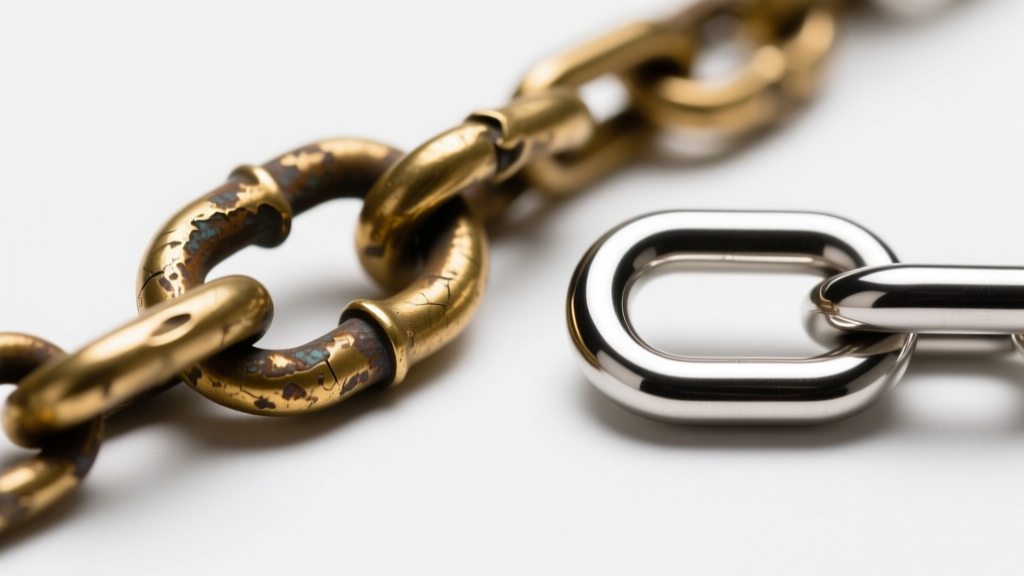
Fast-fashion rosary necklaces frequently utilize brass or zinc alloy base metals coated in a micro-layer of gold or silver. These flash-plated chains typically fail within three to six months of daily wear, as the friction from the beads wears through the plating, exposing the reactive brass underneath. Conversely, 316L surgical stainless steel contains molybdenum, which provides exceptional resistance to chloride corrosion (sweat and saltwater). While steel cannot be easily soldered and requires laser welding for repairs, its high tensile strength allows for thinner, lighter wire gauges that still support heavy stone beads without stretching.
Chain Gauge Sizing Matrix
Selecting the correct wire gauge ensures the chain does not snap under the pendulum effect of a heavy centerpiece. Below is the recommended gauge matrix based on bead weight:
| Chain Material | Wire Gauge (mm) | Max Bead Size | Tensile Strength | Best Use Case |
|---|---|---|---|---|
| 925 Sterling Silver | 1.2mm - 1.5mm | 6mm (Glass/Pearl) | Moderate | Delicate layering pieces |
| 316L Surgical Steel | 1.5mm - 2.0mm | 8mm - 10mm (Stone) | High | Heavy streetwear rosaries |
| Solid 14k Gold | 1.8mm - 2.2mm | 10mm+ (Hardstone) | Very High | Heirloom investment pieces |
Bead Material Breakdown: Hardness and Drape
The beads in a rosary fashion necklace are not merely decorative; they alter the specific gravity and kinetic behavior of the piece. According to the Gemological Institute of America (GIA), understanding the Mohs hardness scale and specific gravity of bead materials is essential for predicting wear and tear.
Natural Stones: Onyx and Hematite
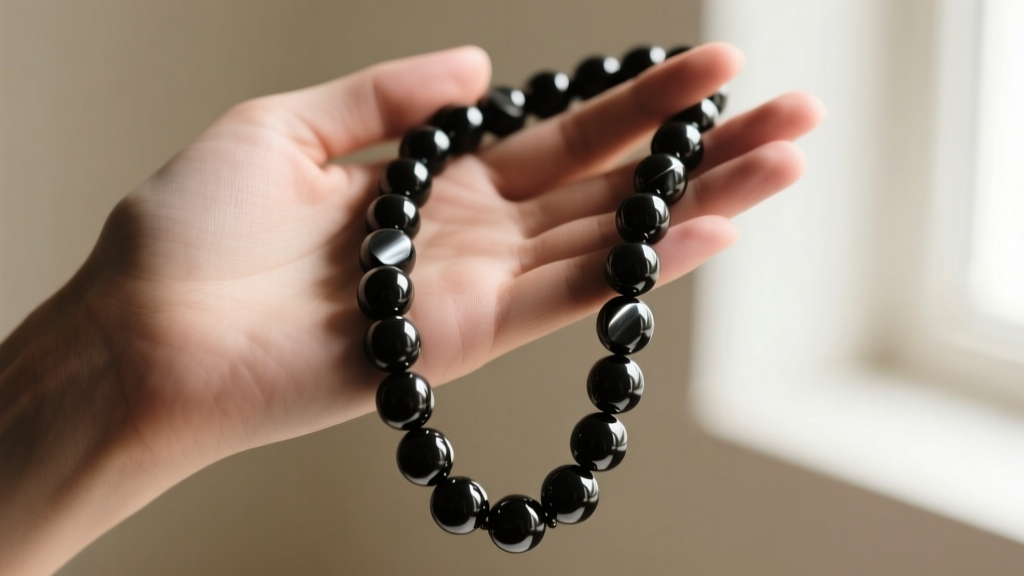
Black onyx (a dyed chalcedony) and hematite are the undisputed heavyweights of the rosary fashion world. Onyx ranks at a 7 on the Mohs scale, making it highly resistant to scratching from everyday environmental dust (which contains quartz, hardness 7). Hematite, an iron oxide, ranks lower at 5.5 to 6.5, making it more susceptible to surface abrasion. However, hematite's defining characteristic is its extreme specific gravity (5.0 to 5.3). A hematite bead rosary will possess a heavy, luxurious drape that pulls the chain taut, but this weight will accelerate the fatigue of softer metal links like pure silver or low-karat gold.
Organic and Synthetic: Freshwater Pearl and Czech Glass
For a softer, more romantic aesthetic, designers utilize freshwater pearls and precision-cut Czech glass. Pearls are incredibly soft (Mohs 2.5) and are highly porous. They will absorb skin oils and perfumes, eventually losing their orient (luster) if not wiped down after wear. Czech glass, specifically from manufacturers like Preciosa, offers a Mohs hardness of around 5.5 but provides unparalleled color consistency and light refraction. Unlike natural stones, glass beads have uniform drill holes, reducing the risk of internal chain friction and wire-wrap failure.
Bead Failure Modes and Prevention
- Equatorial Chipping: Common in hematite and natural agate. Caused by beads striking each other during movement. Fix: Use micro-knots or 0.5mm silicone spacers between beads.
- Drill Hole Fracture: Occurs when a thick chain link (over 2.0mm) is forced through a standard 1.0mm bead drill hole. Fix: Always verify drill hole calipers before assembly.
- UV Fading: Dyed onyx and colored glass can bleach under prolonged UV exposure. Fix: Store in opaque, anti-tarnish flannel pouches.
Hardware and Clasps: The Hidden Failure Points
The clasp and the jump rings connecting the beads are the most common points of catastrophic failure in a rosary fashion necklace. Standard spring ring clasps are prone to internal spring fatigue and should be avoided on any rosary weighing over 40 grams. Instead, opt for a forged lobster clasp with a minimum length of 12mm. Furthermore, the jump rings used to attach the beads to the chain must be soldered closed or utilize a split-ring mechanism. Open jump rings will inevitably twist and separate under the torsional stress created by the alternating bead-and-chain pattern.
Styling and Care Frameworks for 2026
As layering remains the dominant styling paradigm in 2026, integrating a rosary fashion necklace into a multi-chain stack requires careful material pairing. Never layer a harder metal chain (like titanium or steel) directly against a softer bead material (like pearl or turquoise), as the metal links will act like a file, slowly grinding away the bead's surface. When cleaning your rosary, avoid ultrasonic cleaners if the piece features hematite, pearls, or any porous organic stones, as the high-frequency vibrations can cause internal micro-fractures. Instead, use a mild, phosphate-free dish soap and a soft-bristled brush to clean the chain links, drying immediately with a microfiber cloth to prevent water spots on the beads.
True luxury in a rosary fashion necklace is not defined by the brand name on the clasp, but by the intentional harmony between the tensile strength of the chain and the specific gravity of the beads.


