Rosary Necklace Silver Value: 2026 Buyer's Budget Guide
Discover the true value of a rosary necklace silver piece in 2026. We break down metal grades, wire gauges, and pricing tiers for smart buyers.

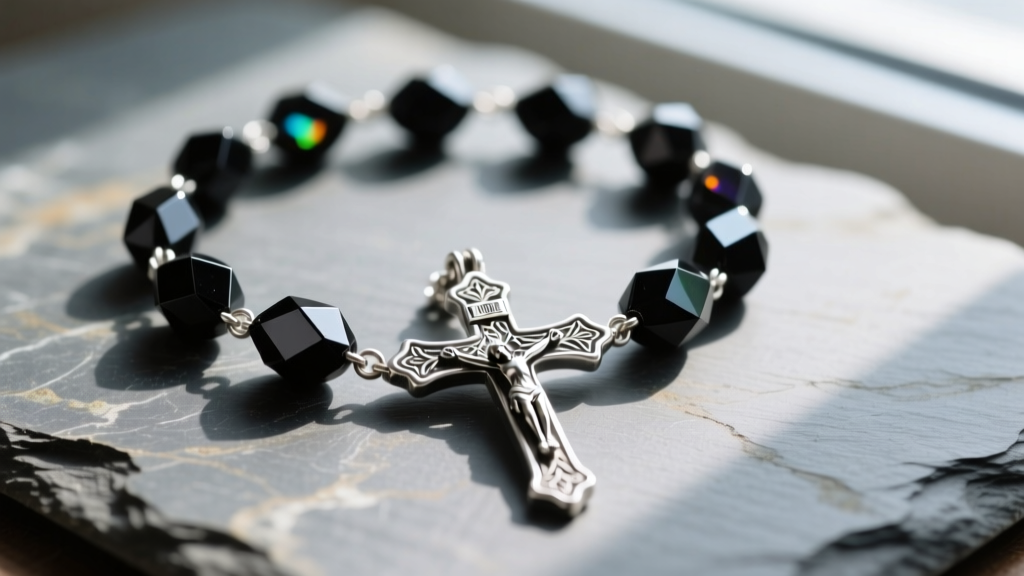
The True Cost of a Silver Rosary Necklace in 2026
The transition of the rosary from a strictly devotional tool to a mainstream fashion staple has completely reshaped its market value. In 2026, a rosary necklace silver piece is just as likely to be layered over a quiet-luxury cashmere sweater as it is to be used for prayer. However, this surge in demand has flooded the market with deceptive pricing and subpar metallurgy. Whether you are buying for spiritual reasons, gothic aesthetic layering, or as a durable everyday pendant, understanding the actual material and construction costs is vital to avoiding overpriced fashion jewelry masquerading as fine silver.
With silver spot prices experiencing notable volatility over the last few years, the baseline cost of raw materials has shifted. A standard 24-inch rosary weighs between 15 and 30 grams. At current 2026 precious metal markets, the raw silver value alone for a 25-gram piece hovers around $25 to $30. When you factor in labor, gemstone beads, and retail markup, any "solid silver" rosary selling for $35 should immediately trigger your skepticism. Below, we break down exactly what you should be paying and how to assess the true value of your purchase.
Material Breakdown: Sterling vs. Plated vs. Argentium
The term "silver" is heavily abused in jewelry e-commerce. According to the Federal Trade Commission (FTC) Jewelry Guides, specific purity thresholds must be met to legally market a piece as solid silver. Here is how the three most common silver types compare in the context of rosary chains.
| Metal Type | Purity Grade | Tarnish Resistance | 2026 Avg. Price (25g) | Durability Verdict |
|---|---|---|---|---|
| Silver-Plated | <1% Ag (Brass Core) | Very Low | $15 - $40 | Poor (Prone to flaking) |
| Sterling (925) | 92.5% Ag, 7.5% Cu | Moderate | $65 - $130 | Good (Requires polishing) |
| Argentium (935) | 93.5% Ag, Germanium | Very High | $120 - $190 | Excellent (Highly durable) |
The Argentium Advantage: Traditional sterling silver uses copper as an alloy, which reacts with sulfur and moisture in the air to create black tarnish. Argentium silver replaces some of that copper with germanium. As noted by the Gemological Institute of America (GIA), this creates a transparent, protective oxide layer that drastically slows tarnishing. For a rosary necklace—which features dozens of intricate wire loops that are a nightmare to polish with a cloth—Argentium is vastly superior and worth the 30% price premium.
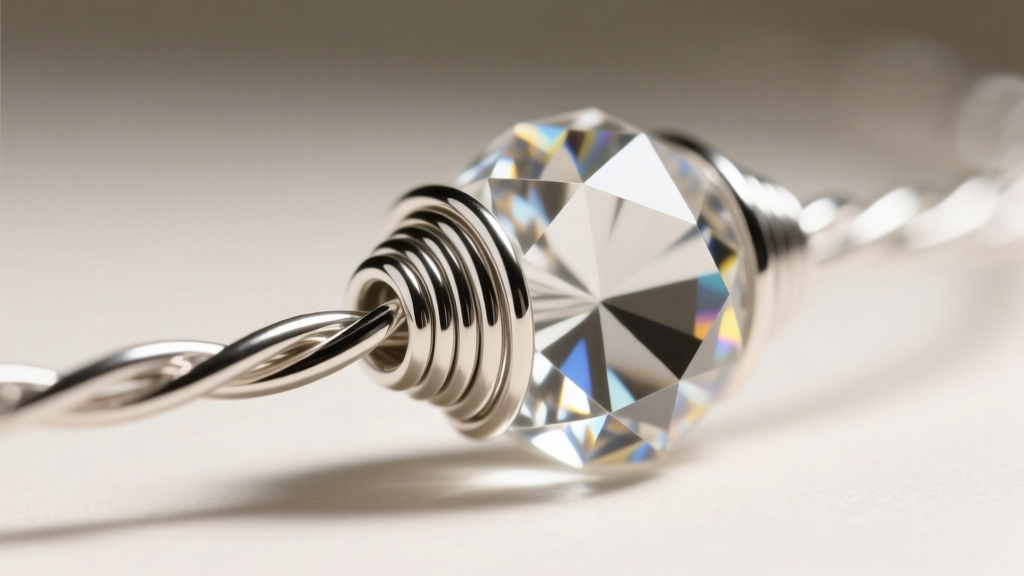
Wire Gauge and Construction: Where Cheap Necklaces Fail
The most common point of failure in a silver rosary is not the clasp or the crucifix, but the wire links connecting the beads. Assessing the wire gauge and the temper of the silver is the ultimate test of a piece's longevity.
Gauge Sizes and Tensile Strength
- 22-Gauge (0.64mm): Frequently used in mass-produced, budget rosaries. It is thin enough to pass through small glass or seed beads but lacks the tensile strength to support heavier gemstone drops. Over time, the weight of the crucifix will stretch and warp 22g wire loops.
- 20-Gauge (0.81mm): The gold standard for artisan and high-quality commercial rosaries. It provides a robust structural integrity while still fitting through most 4mm to 8mm drilled beads.
- 18-Gauge (1.02mm): Reserved for heavy, oversized rosaries featuring large gemstones or solid cast silver centers. It is highly durable but limits bead choices due to the thicker wire profile.
Wire Temper: Dead-Soft vs. Half-Hard
Silver wire is sold in different "tempers" (hardness levels). Cheap manufacturers use dead-soft wire because it is easier for machines to bend. However, dead-soft wire will easily pull open under tension. A high-value silver rosary must be constructed using half-hard tempered wire, which possesses the "spring" necessary to keep the wire-wrapped loops tightly closed, even when the necklace is snagged on clothing.
The Bead Factor: How Gemstones and Glass Impact Price
The beads dictate up to 40% of the final retail cost. Mass-market rosaries utilize molded glass or acrylic beads dyed to resemble gemstones (costing pennies per bead). Mid-tier value is found in genuine semi-precious stones like matte onyx, natural amethyst, or lapis lazuli. When evaluating value, hold the beads up to a light source; natural gemstones will show internal inclusions, color banding, and slight imperfections, whereas glass will be perfectly uniform and may contain tiny, perfectly spherical air bubbles.
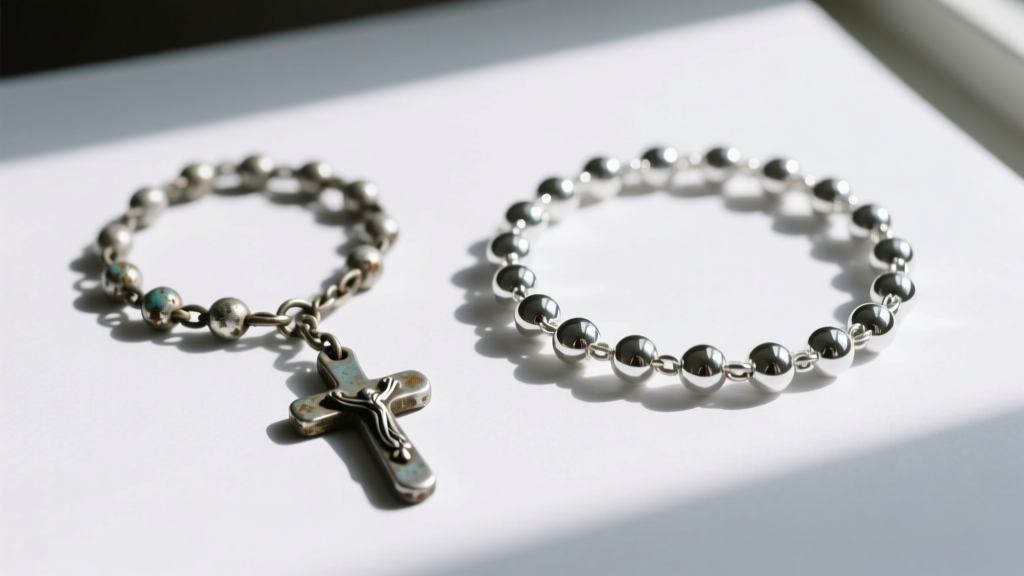
2026 Pricing Tiers: What Should You Actually Pay?
To accurately assess a rosary necklace silver investment, map the piece to one of these three market tiers:
- The Fast-Fashion Tier ($20 - $45): These are almost exclusively silver-plated over brass or copper. The "925" stamp is often illegally applied only to the clasp, while the chain is plated. Expect the plating to wear off the wire loops within 3 to 6 months of daily wear, exposing the base metal which will turn your skin green due to galvanic corrosion.
- The Artisan & Specialty Tier ($75 - $160): This is the sweet spot for value. You are paying for genuine 925 sterling or 935 Argentium silver, 20-gauge half-hard wire, and genuine semi-precious stone beads. These pieces are often hand-wire-wrapped, meaning each bead is individually secured with a custom loop, eliminating the need for fragile jump rings.
- The Luxury & Designer Tier ($250 - $800+): At this price point, you are paying for brand prestige, heavy 18-gauge construction, and premium gemstones like natural diamonds, sapphires, or high-grade turquoise. The crucifix and center piece are usually cast in solid silver rather than stamped from sheet metal, offering deep, three-dimensional relief details.
Red Flags and Value Killers in Silver Rosaries
Protect your budget by actively looking for these warning signs before checking out:
- The "Tibetan Silver" Trap: Despite the name, Tibetan silver contains zero actual silver. It is a base-metal alloy (often containing nickel, lead, or zinc) that is antiqued to look like oxidized silver. It is a severe allergen risk and holds no intrinsic melt value.
- Unsoldered Jump Rings: If the rosary chain is made of interlocking jump rings (O-rings) rather than wire-wrapped beads, inspect the seams. If the seams are not soldered shut, the chain will inevitably pull apart when subjected to the weight of the pendant.
- The Magnet Test Failure: Silver is paramagnetic (essentially non-magnetic). If a seller claims a rosary is solid sterling silver, but the chain or crucifix sticks to a neodymium magnet, it contains a ferromagnetic core like steel or iron and is a counterfeit.
- Missing Hallmarks on Components: A reputable maker will stamp "925" on the clasp, the center medal, and the crucifix. If only the tiny clasp is stamped, it is a common tactic used to bypass customs and marketplace filters while the rest of the necklace is cheap alloy.
Final Verdict: Maximizing Your Investment
A high-quality silver rosary is an heirloom piece that can easily last a lifetime if the metallurgy and construction are sound. In 2026, the smartest budget allocation is to bypass the ultra-cheap plated options entirely and target the $80 to $140 range. In this bracket, insist on 925 Sterling or 935 Argentium silver, verify the use of 20-gauge wire, and look for genuine stone beads. By focusing on structural integrity over brand names, you secure a piece that offers both profound aesthetic beauty and genuine, long-term material value.


