Sabyasachi Necklace Trends 2026: Styling Heritage Polki & Meenakari
Explore 2026 Sabyasachi necklace trends. Learn to style heritage Polki and Meenakari bridal chokers with modern necklines and verify authentic 22k gold.

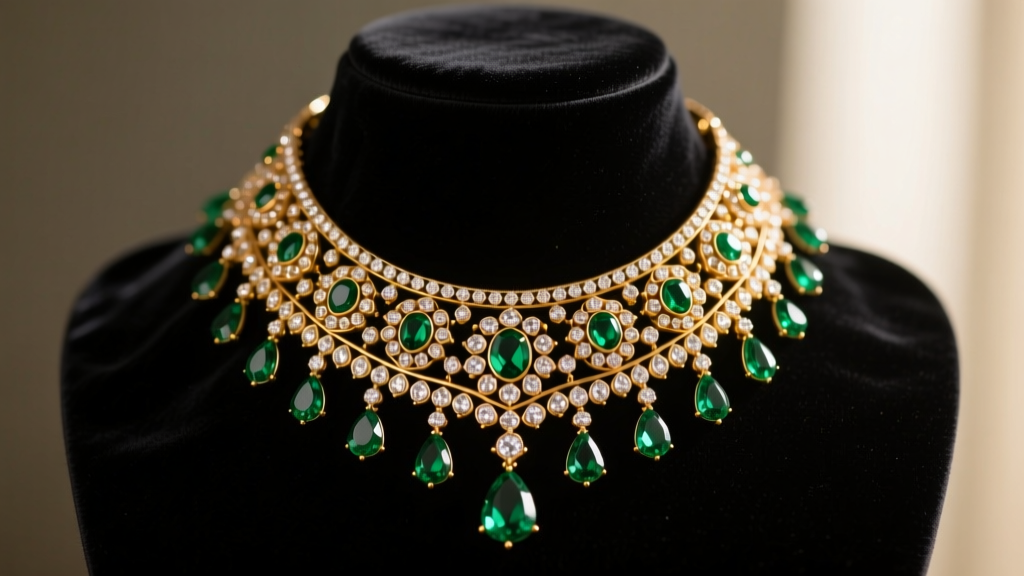
The 2026 Renaissance of Sabyasachi Heritage Jewelry
In the upper echelons of global fine jewelry, few names command the reverence of Sabyasachi Mukherjee. Known for reviving ancient Indian artisanal techniques, the Sabyasachi Fine Jewellery house has become synonymous with opulent bridal trousseaus and high-fashion editorial statements. As we navigate the 2026 bridal and red-carpet landscape, the Sabyasachi necklace has evolved from a rigid, heavy heirloom into a masterclass of modular luxury. Today’s collectors and brides are demanding 'heirloom modularity'—pieces that can transition from a multi-tiered ceremonial rani haar to a sleek, single-strand polki choker for the reception.
This year's trend analysis reveals a distinct shift away from overly saturated ruby-and-emerald palettes toward nuanced, antique-finish gold paired with subtle champagne polki diamonds and jadeite accents. Whether you are a high jewelry investor, a stylist dressing a celebrity, or a bride curating a generational trousseau, understanding the anatomy, styling geometry, and authentication markers of a genuine Sabyasachi necklace is essential. This guide breaks down the technical specifications and 2026 styling frameworks for these masterpieces.
Decoding the Anatomy: Polki, Meenakari, and 22k Gold
To truly appreciate a Sabyasachi necklace, one must understand the Mughal-era techniques that define its architecture. Unlike contemporary fine jewelry that relies on laser-cut stones and cast 18k gold prongs, Sabyasachi’s heritage pieces are built using the Kundan and Meenakari traditions. According to the Gemological Institute of America (GIA), the historical Kundan method involves setting stones not with prongs, but with highly refined, malleable 24k gold strips that are burnished around the gemstone's girdle.
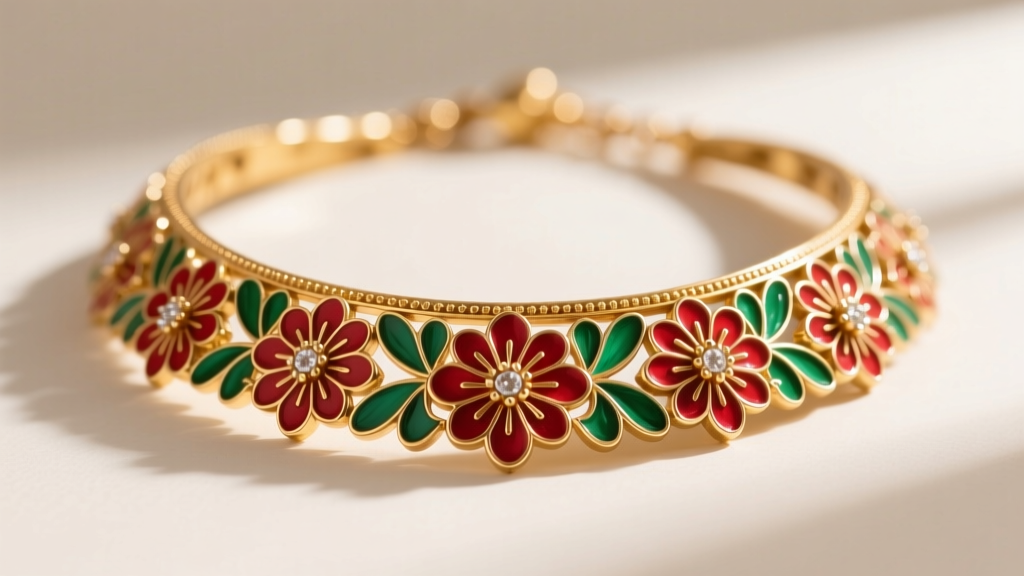
The reverse of these necklaces is equally important. Sabyasachi utilizes Jaipur-style Meenakari (vitreous enamel) to decorate the back of the jewelry, ensuring the piece looks exquisite even when it flips against the skin. Below is a technical comparison of Sabyasachi’s heritage materials versus standard commercial fine jewelry.
| Feature | Sabyasachi Heritage Polki | Modern Commercial Brilliant Cut |
|---|---|---|
| Stone State | Uncut, raw, polished diamonds | Faceted, laser-cut diamonds |
| Setting Method | Kundan (24k gold strips & lac) | Prong or Bezel (18k/14k soldered) |
| Light Return | Silver or Gold Foil Backing | None (relies on pavilion facets) |
| Base Metal | 22k Gold (91.6% purity) | 18k or 14k Gold |
| Reverse Finish | Meenakari (fired glass enamel) | Polished or Rhodium-plated metal |
Expert Insight on Foil Backing: The brilliance of a Sabyasachi polki necklace comes from the precious metal foil placed behind the uncut diamond, sealed with natural lac (a tree resin). In 2026, top-tier Sabyasachi pieces increasingly use 22k gold foil instead of silver, as silver foil is prone to oxidation and blackening when exposed to humidity and skin oils over time.
Neckline Pairings: Styling the Sabyasachi Necklace
Styling a heavily ornate, heritage-inspired necklace requires a strict understanding of visual weight and neckline geometry. The wrong pairing can obscure the jewelry or overwhelm the wearer's frame. Here is the 2026 stylist’s framework for matching Sabyasachi necklaces to specific silhouettes.
1. The Sweetheart Neckline
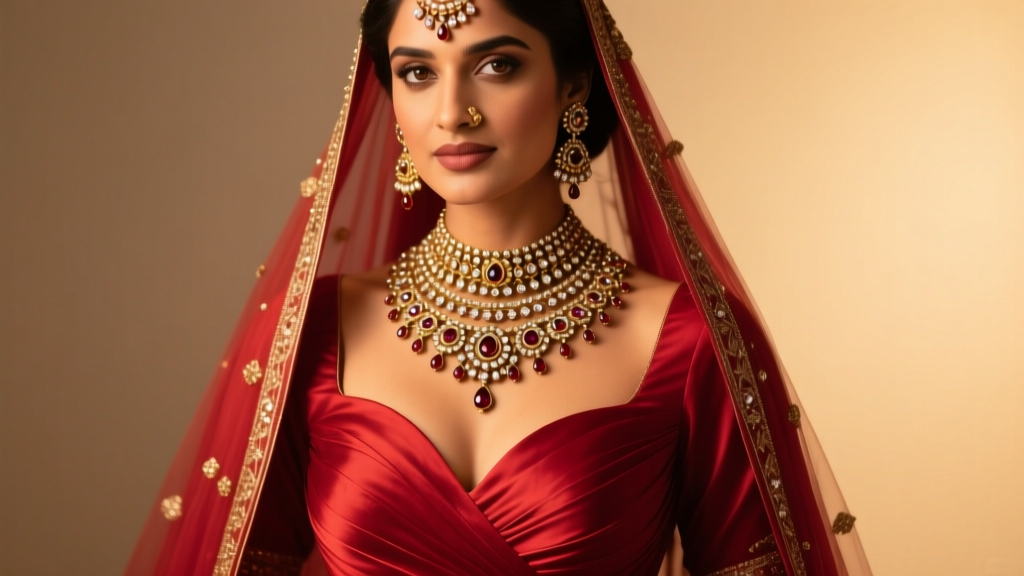
The sweetheart neckline mimics the top half of a heart, exposing the collarbone and upper chest. This is the ideal canvas for a 14-inch to 16-inch Sabyasachi Polki Choker. The curved bottom edge of the choker should run parallel to the dip of the sweetheart cut. Avoid long, sweeping malas here, as they will bisect the bodice and create visual clutter.
2. The Illusion or High-Neck Silhouette
High necklines, often featuring sheer netting and intricate zardozi embroidery, leave zero skin exposed for a choker. In 2026, stylists are bypassing the neck entirely, opting instead for a 24-inch to 28-inch Sabyasachi Opera-Length Pearl and Polki Mala. The long pendant should rest below the embroidered bust line, creating a vertical elongation that balances the high collar.
3. The Off-Shoulder and Bardot Neckline
Off-shoulder garments widen the visual plane of the upper body. To anchor this, you need horizontal volume. A broad, collarbone-grazing Sabyasachi Bib Necklace or a multi-strand layered rani haar works best. The width of the necklace should ideally match the distance between the wearer's pupils to maintain facial harmony.
4. The Deep V-Neck or Plunge
A deep V demands a Y-shaped silhouette. Look for Sabyasachi necklaces that feature a detachable central pendant or a graduated polki mala that funnels the eye downward. Ensure the lowest point of the necklace sits at least two inches above the garment's hemline to prevent the jewelry from getting lost in the fabric's drape.
Investment & Authentication: Spotting Genuine Craftsmanship
With entry-level Sabyasachi pendants starting around $4,000 and multi-tiered bridal rani haars easily surpassing $150,000, the secondary market is flooded with high-quality replicas. Authenticating a Sabyasachi necklace requires looking beyond the brand stamp and examining the micro-details of the craftsmanship. Retail partners like Bergdorf Goodman provide pristine provenance, but estate and vintage buyers must be vigilant.
The Hallmark, Foil, and Lac Tests
- The Laser Hallmark: Genuine Sabyasachi pieces feature a discreet, laser-engraved logo, usually hidden on the back of the primary clasp or on a small 22k gold tag near the hook. Stamped or cast logos are immediate red flags.
- The Meenakari Dome Test: Authentic Jaipur meenakari is fired glass enamel. Under a 10x jeweler's loupe, it should have a slightly domed, glassy surface with microscopic air bubbles. Fakes often use cold enamel or painted resin, which appears perfectly flat, plasticky, and lacks depth.
- The Kundan Softness Check: Because traditional Kundan setting uses 24k gold strips (which are exceptionally soft), the metal framing the stones should show slight, organic tooling marks. If the metal framing is rigid, perfectly uniform, and hard, it is likely cast 14k or 18k gold masquerading as heritage work.
- The Resin vs. Lac Smell Test: Fakes often use synthetic epoxy to hold the foil and stone in place. If a jeweler applies a mildly heated thermal probe to an inconspicuous area of the backing, synthetic resin will emit a sharp, chemical odor. Natural lac (traditional tree resin) smells faintly of pine or wood smoke when warmed.
Conclusion: Wearing History in the Modern Era
The Sabyasachi necklace is not merely an accessory; it is a wearable archive of Indian metallurgical and lapidary history. The 2026 styling ethos encourages collectors to break the rules of traditional bridal wear—pairing a heavy, uncut diamond choker with a structured ivory blazer for a gala, or layering a delicate polki pendant over a simple silk slip dress. By understanding the precise anatomy of Kundan settings, the geometry of neckline pairings, and the rigorous tests for authentication, you can confidently invest in and style these generational masterpieces.


