How to Safely Choose and Fit an Amber Baby Necklace
Learn how to safely select, authenticate, and fit an amber baby necklace. Expert guide on Baltic amber testing, safety clasps, and pediatric guidelines.

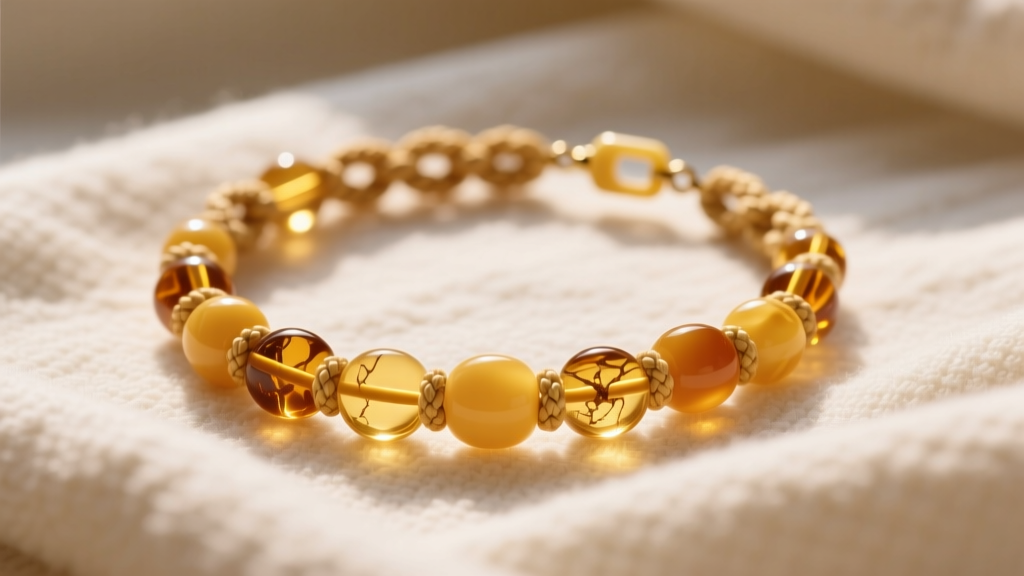
The Appeal and the Controversy of Amber Teething Jewelry
For centuries, Baltic amber has been cherished in European cultures as a natural remedy for teething infants. The underlying theory is that succinite—the fossilized resin containing succinic acid—releases trace amounts of its analgesic properties when warmed against the skin. Today, the amber baby necklace remains a highly sought-after accessory for parents seeking holistic alternatives to synthetic teething gels.
However, as jewelry experts and child safety advocates, we must address the elephant in the room: major pediatric organizations strongly caution against infant jewelry. The American Academy of Pediatrics (AAP) and the U.S. Food and Drug Administration (FDA) warn of severe strangulation and choking hazards. If you choose to use an amber baby necklace, it is absolutely critical to prioritize structural safety, rigorous authentication, and strict supervision. This step-by-step guide will show you exactly how to navigate these requirements without compromising your child's well-being.
Step 1: Verifying Baltic Amber Authenticity
The market is flooded with counterfeit amber, primarily made from copal (immature tree resin), glass, or dyed plastics. Copal lacks the millions of years of fossilization required to stabilize the resin and contains virtually no succinic acid. Before purchasing, ensure the seller provides a certificate of authenticity, and perform these at-home gemological tests:
The Saturated Saltwater Test
Genuine Baltic amber has a specific gravity of 1.05 to 1.10, meaning it will sink in fresh water but float in heavily saturated saltwater. Dissolve one part table salt into two parts warm water until no more salt can dissolve. Drop a loose bead into the solution; genuine amber will float to the top, while plastic and glass will sink immediately. Copal may also float, so this test must be combined with others.
The UV Fluorescence Test
Under a standard ultraviolet (blacklight) flashlight, authentic Baltic amber will fluoresce a pale, milky blue or soft green. Copal typically glows a stark, bright white, while plastic imitations will not fluoresce at all or will absorb the UV light entirely.

Step 2: Understanding Amber Colors and Heat Treatment
When shopping for an amber baby necklace, you will encounter various color grades. The color does not inherently change the safety profile, but it does indicate how the resin was processed, which affects its structural integrity over time.
- Lemon / Yellow: The most natural, untreated state of Baltic amber. It is opaque and retains the highest concentration of its original resin matrix.
- Honey / Gold: Slightly translucent. Often achieved through gentle, traditional heating that clarifies the resin without compromising its molecular structure.
- Cognac / Cherry: Dark, rich, and highly translucent. These beads are typically heat-treated and sometimes subjected to pressure to achieve their deep colors. While beautiful, heavily heat-treated amber can become slightly more brittle over decades, though this is rarely an issue for the short lifespan of a teething necklace.
Expert Tip: For infants, opt for opaque Lemon or Honey amber. The natural inclusions and opaque nature mean the beads are less likely to have been subjected to extreme pressure treatments that could introduce microscopic stress fractures.
Step 3: Inspecting the Anatomy of a Safe Necklace
A genuine amber bead is useless if the necklace's construction poses a hazard. When evaluating an amber baby necklace, you must inspect three critical structural components:
1. Individual Hand-Knotting
Every single bead must be individually hand-knotted on a high-tensile, hypoallergenic cord (such as cotton or silk). If the cord snaps, individual knotting ensures that only one bead is released, drastically reducing the choking hazard. Never buy a necklace where beads are strung continuously without knots.
2. The Breakaway Safety Clasp
Traditional screw-clasps are a massive strangulation risk. A safe amber baby necklace must feature a plastic, screw-and-pop breakaway clasp. These are engineered to release and pop open when subjected to roughly 1.5 to 2 pounds of tension—enough to hold the necklace during normal movement, but weak enough to snap open if the necklace catches on a crib rail or toy.
3. Bead Shape and Size
Avoid perfectly round, large beads. Baroque (irregularly shaped) or small, rounded chip beads (4mm to 6mm) are standard. Irregular shapes are less likely to lodge perfectly in a child's airway in the rare event of a breakage, and smaller beads reduce the overall weight and choking risk.
Step 4: Measuring for the Perfect, Safe Fit
An amber baby necklace should never hang loosely. A loose necklace can easily be pulled into the mouth, chewed on, and broken, or worse, slipped over the chin and caught on an object. The necklace must fit snugly against the collarbone, allowing exactly two adult fingers to slide comfortably between the beads and the baby's skin.
| Age Range | Necklace Length | Recommended Bead Size |
|---|---|---|
| 3 - 6 Months | 11 - 12 Inches | 4mm - 5mm (Baroque/Chips) |
| 6 - 12 Months | 12 - 13 Inches | 5mm - 6mm (Rounded Chips) |
| 12 - 24 Months | 13 - 14 Inches | 6mm - 7mm (Rounded) |
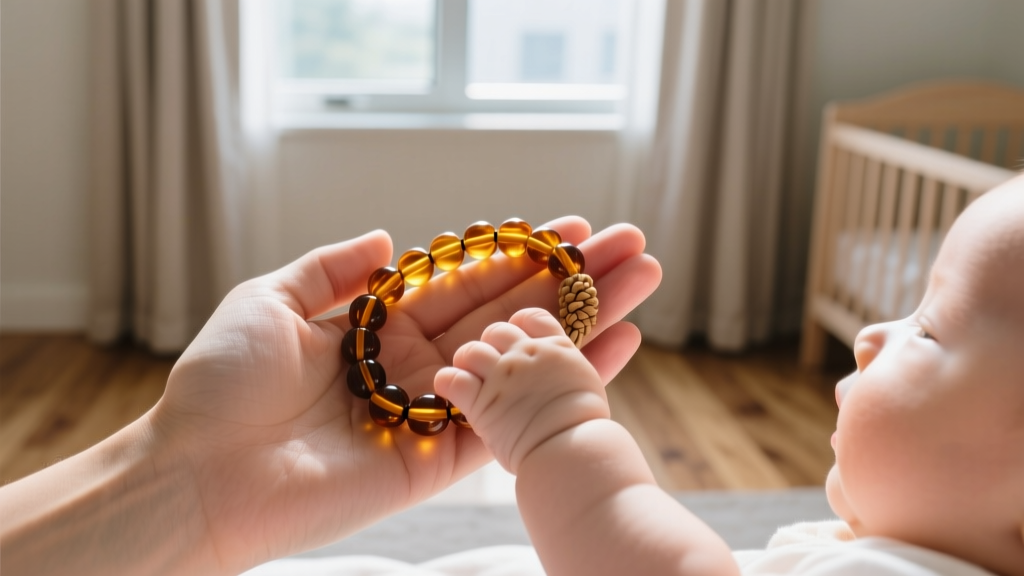
Step 5: Strict Rules for Supervised Wear
To align with the best practices recommended by pediatric health authorities, you must adhere to a strict protocol when using an amber baby necklace. The American Academy of Pediatrics maintains that no jewelry should be worn by infants during sleep due to the risk of asphyxiation.
CRITICAL SAFETY PROTOCOL: An amber baby necklace must never be worn during naps, nighttime sleep, or while the child is in a car seat or stroller unsupervised. It is strictly a daytime, actively supervised accessory. Many parents choose to wrap the necklace around the baby's ankle (under a sock) or tuck it securely beneath a tight-fitting onesie so the child cannot pull it into their mouth.
Step 6: Cleaning and Maintenance
Baltic amber is an organic gemstone, ranking at a mere 2.0 to 2.5 on the Mohs hardness scale. It is easily scratched and degraded by harsh chemicals. To maintain the structural integrity of the beads and the cotton cord:
- Wipe Down: Clean the necklace weekly using a soft, lint-free flannel cloth dampened with lukewarm water. Do not use soap, as it can strip the amber's natural oils.
- Avoid Chemicals: Keep the necklace away from baby lotions, diaper creams, and chlorine, which can cause the resin to become cloudy and brittle.
- Polishing: Every few months, rub a microscopic drop of extra virgin olive oil into the beads and buff it dry. This restores the amber's luster and prevents the resin from drying out and cracking.
Final Verdict: Balancing Tradition with Modern Safety
Choosing an amber baby necklace requires a careful balance between honoring holistic traditions and adhering to modern pediatric safety standards. By rigorously authenticating your Baltic amber, demanding individual knotting and breakaway clasps, measuring for a snug fit, and enforcing strict supervision rules, you can mitigate the inherent risks of infant jewelry. Always prioritize your child's physical safety over aesthetic or traditional preferences, and consult with your pediatrician if you are unsure about introducing any accessory to your baby's routine.


