Safety Pin Necklace Meaning Mental Health & Care Guide
Discover the safety pin necklace meaning mental health advocates love, plus expert care, cleaning, and maintenance tips for daily wear.

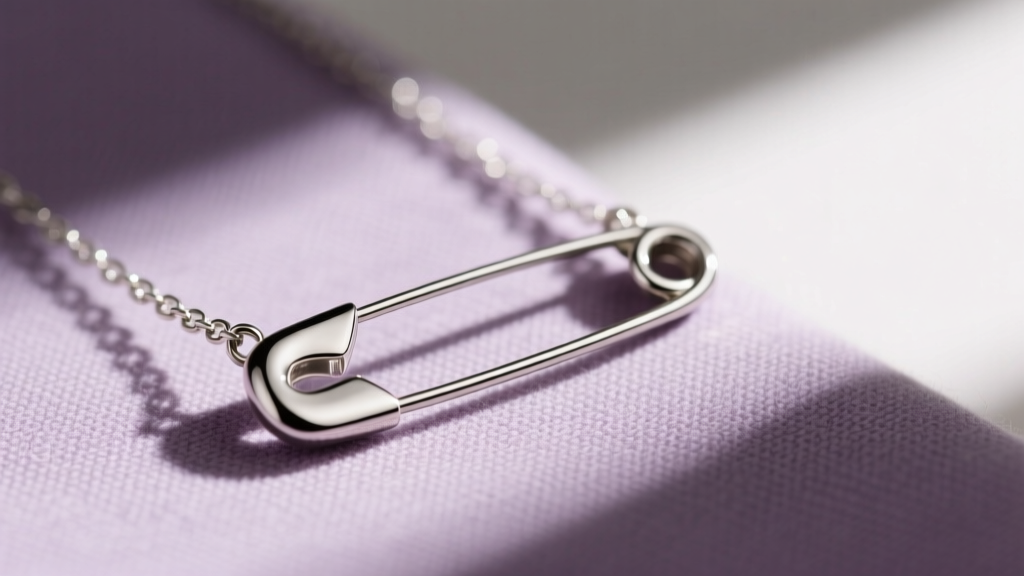
Jewelry has long served as a silent language, allowing wearers to broadcast their values, struggles, and triumphs without saying a word. Among the most powerful of these modern symbols is the humble safety pin. When exploring the safety pin necklace meaning mental health advocates and allies cherish, we uncover a profound narrative of solidarity, resilience, and the promise of being a "safe space." However, because this specific pendant is often worn daily as a deeply personal talisman, it is subjected to continuous friction, environmental exposure, and skin contact. Preserving the physical integrity of your safety pin necklace is just as important as honoring its symbolic weight.
The Profound Safety Pin Necklace Meaning Mental Health Advocates Cherish
Historically rooted in the punk rock movement of the 1970s as a symbol of rebellion and anti-establishment sentiment, the safety pin underwent a massive cultural shift in 2016. It was reclaimed as a symbol of solidarity and allyship, signaling to marginalized groups that the wearer was a safe, supportive presence. Over the last decade, this symbolism has deeply intertwined with mental health awareness.
For many in the mental health community, the safety pin represents "holding it together" during periods of intense psychological distress. It is a physical reminder of resilience—a small, utilitarian object designed to secure and protect. According to the National Alliance on Mental Illness (NAMI), visible symbols of support and shared identity can significantly reduce the stigma surrounding mental health struggles, fostering environments where individuals feel seen and validated. Wearing a safety pin necklace is a daily commitment to that visibility.
Material Breakdown: What Is Your Symbol Made Of?
Because a mental health talisman is typically worn close to the skin every day, the metallurgical grade of your safety pin pendant dictates its lifespan, hypoallergenic properties, and required maintenance. Flimsy, mass-market pins are often stamped from low-grade brass or zinc alloys, which degrade quickly. High-quality jewelry-grade safety pins are cast or machined from specific alloys.
| Material Grade | Standard Gauge | Tarnish Risk | Allergy Profile | Best Cleaning Method |
|---|---|---|---|---|
| 316L Surgical Steel | 16G (1.2mm) or 18G (1.0mm) | Very Low | Hypoallergenic (Nickel-free binders) | Warm water & mild dish soap |
| 925 Sterling Silver | 18G (1.0mm) | High (Reacts to sulfur/sweat) | Generally safe, check copper alloy | Silver polish cloth & chemical dips |
| 14K Gold Vermeil | 18G (1.0mm) | Moderate (Plating wears at friction points) | Safe unless plating wears to brass core | Dry microfiber wiping only |
Note on Gauge Size: For a pendant that mimics a functional safety pin, look for a wire thickness of at least 18-gauge (1.0mm). Thinner 20-gauge or 22-gauge wires are prone to work hardening and snapping at the base bend, which poses a severe puncture hazard if the pin breaks while clasped.
Daily Maintenance: Preserving Your Mental Health Talisman
The primary enemy of any safety pin necklace is the accumulation of sebum (skin oils), dead skin cells, and cosmetic products. Because the safety pin design inherently features a coiled spring mechanism and a capped clasp, it acts as a magnet for microscopic debris.
The Clasp Mechanism: A Hidden Dirt Trap
The most critical failure point on a safety pin pendant is the clasp cap. Inside this tiny metal hood sits a microscopic tension spring that keeps the pin point secured. When lotions, perfumes, and sweat seep into this hood, they mix with dust to form a hardened paste. Over time, this paste corrodes the spring, causing the clasp to lose its tension. A loose clasp means the sharp point of the pin can slip out, potentially scratching your skin or damaging your clothing.
To prevent this, adopt a "last on, first off" rule. Put your safety pin necklace on after applying perfumes, hairsprays, and lotions, and remove it before showering or exercising. The chloride in sweat is particularly aggressive against sterling silver and can cause pitting in lower-grade stainless steels.
Deep Cleaning Protocols by Material Grade
When your safety pin pendant loses its luster or the clasp mechanism becomes stiff, it requires a deep clean. However, you must tailor your approach to the specific metal to avoid irreversible damage.
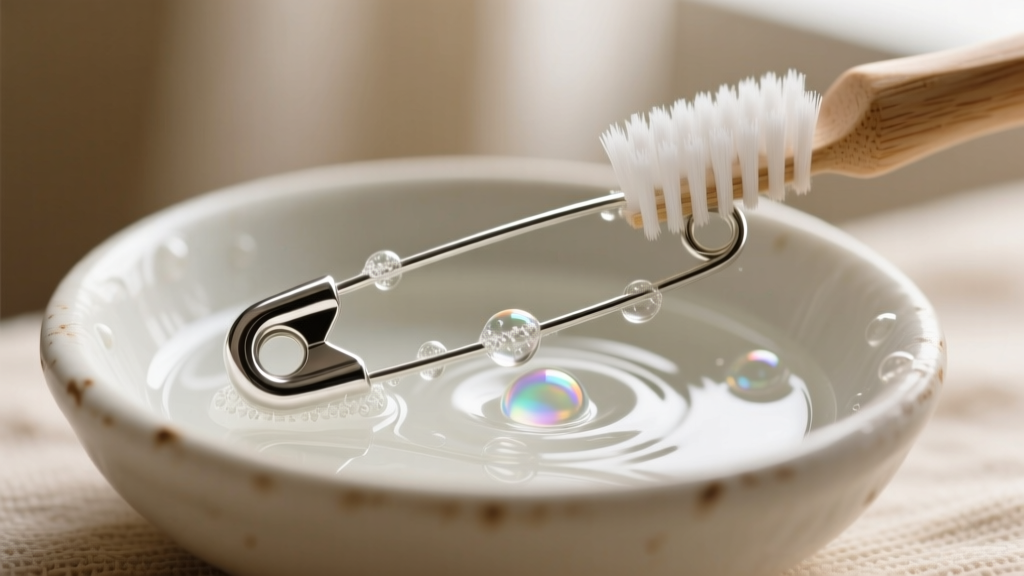
- For 316L Surgical Stainless Steel: Create a solution of warm water and a few drops of degreasing dish soap (like Dawn). Submerge the pendant for 10 minutes. Use a soft-bristled baby toothbrush to gently agitate the area around the coiled spring and inside the clasp hood. Rinse thoroughly with distilled water to prevent hard water spots, and dry completely with a microfiber cloth.
- For 925 Sterling Silver: Avoid harsh liquid dips if your safety pin has any oxidized (blackened) detailing, as dips will strip the intentional patina. Instead, use a dedicated silver polishing cloth. For stubborn tarnish inside the clasp, dip a cotton swab in a mild baking soda and water paste, carefully swab the interior, and rinse immediately. According to the Silver Institute, storing silver in anti-tarnish flannel bags when not in wear drastically reduces sulfur exposure.
- For 14K Gold Vermeil: Never submerge vermeil in water or use abrasive brushes. The gold layer is typically only 2.5 microns thick, and the friction of a brush will wear it away, exposing the brass or silver core. Simply wipe the pendant down with a clean, dry, lint-free jewelry cloth after each wear.
A Warning Against Ultrasonic Cleaners
While ultrasonic jewelry cleaners (operating at 40kHz frequencies) are excellent for solid gold and platinum, they are highly risky for safety pin pendants. The high-frequency vibrations can easily dislodge the tiny internal tension spring inside the clasp hood, rendering the safety pin mechanism completely useless. Always stick to manual cleaning methods for articulated or spring-loaded jewelry components.

When to Replace: Recognizing Metal Fatigue and Corrosion
A safety pin necklace is subjected to unique mechanical stresses. Every time the pin is opened and closed, the metal at the base coil undergoes bending stress. Over months or years of daily wear, this leads to metal fatigue.
Inspect the base coil of your pendant once a month. If you notice micro-fractures, a visible crease in the metal, or if the pin point no longer aligns perfectly with the center of the clasp hood, the structural integrity is compromised. Do not attempt to bend it back into shape; this will only accelerate the work hardening and cause it to snap. Furthermore, if you spot any orange or brown rust (a sign that your jewelry is not true 316L surgical steel, but rather a plated base metal), discard it immediately. Rusty metal harbors bacteria and poses a tetanus and infection risk if it accidentally scratches the skin.
Supporting Mental Health Beyond the Jewelry
Caring for your safety pin necklace is a beautiful ritual of self-care and a way to honor your mental health journey. The physical maintenance of the piece mirrors the ongoing, daily maintenance required for our own psychological well-being. Both require patience, the right tools, and a gentle touch.
However, jewelry is only a symbol. If you or someone you love is navigating a mental health crisis, professional support is vital. The American Foundation for Suicide Prevention (AFSP) and the National Alliance on Mental Illness (NAMI) offer extensive, free resources, support groups, and crisis helplines. Let your safety pin necklace be a conversation starter, a beacon of empathy, and a reminder that no one has to hold it together entirely on their own.