Sailboat Necklace Styling: 2026 Nautical Trend Guide
Explore 2026 sailboat necklace trends, from maritime minimalism to material grades. Learn how to layer, style, and choose the perfect nautical pendant.

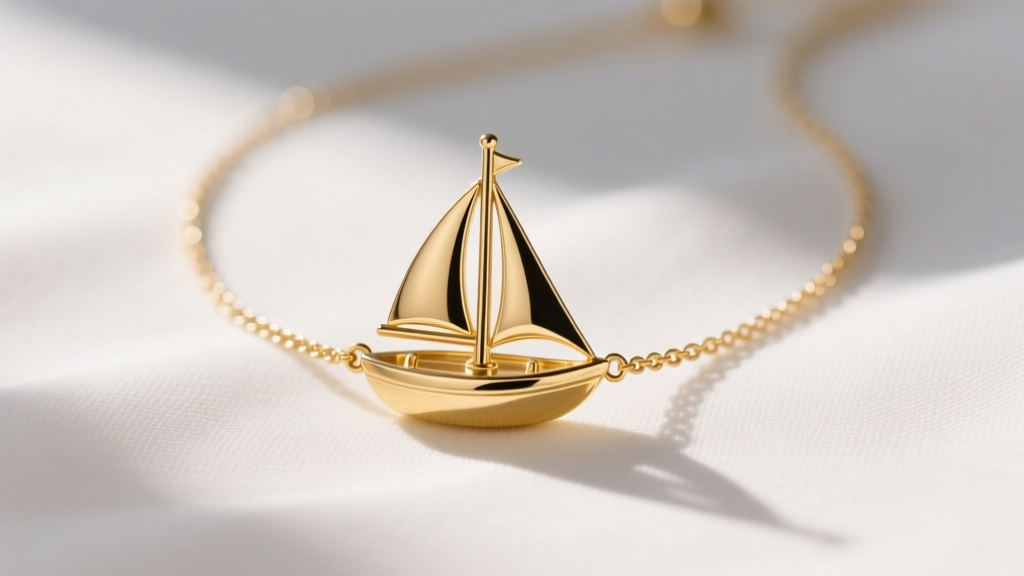
The nautical jewelry category has undergone a radical transformation over the last decade. Gone are the days of heavy, kitschy ship wheels and overly ornate anchor pendants that scream 'tourist gift shop.' As we navigate through 2026, the sailboat necklace has emerged as the definitive staple of maritime minimalism. Blending the romanticism of coastal living with the clean lines of modern quiet luxury, the sailboat motif offers a sophisticated nod to the sea without sacrificing everyday elegance.
Whether you are drawn to the 'coastal grandmother' aesthetic, the refined 'old money' Riviera look, or simply appreciate the geometric balance of a hull and mast, choosing the right sailboat pendant requires an understanding of proportion, metallurgy, and styling mechanics. This comprehensive guide breaks down the 2026 trends, material grades, and layering frameworks you need to master this timeless motif.
The 2026 Shift: Maritime Minimalism and Geometric Sails
In previous years, nautical jewelry leaned heavily into hyper-realistic detailing—tiny rigging lines, textured wooden hulls, and complex enamel work. The 2026 trend cycle, however, favors maritime minimalism. Today's premier sailboat necklaces utilize negative space and geometric abstraction. The hull is often represented by a simple, sleek crescent or a sharp triangular wedge, while the sail is an unadorned right triangle.
This shift is largely driven by the demand for versatile, gender-neutral jewelry that transitions seamlessly from a linen beach shirt to a cashmere boardroom sweater. Designers are also experimenting with asymmetrical sail placements and hidden bails (where the chain threads directly through a hollowed mast or hull), creating a floating illusion that feels distinctly modern.
Material Grades and Pricing Tiers
The marine environment is notoriously harsh on jewelry. Saltwater, high humidity, and constant UV exposure demand specific material considerations. According to the Gemological Institute of America (GIA), understanding your gold alloys and base metals is critical for longevity. Below is a breakdown of the most common materials used for sailboat pendants in 2026, complete with pricing expectations and durability metrics.
| Material Grade | Average Price Range | Durability & Tarnish Resistance | Best For |
|---|---|---|---|
| 316L Surgical Steel (PVD Coated) | $35 - $85 | Exceptional. PVD coating prevents saltwater corrosion and scratching. | Everyday wear, beach trips, active lifestyles. |
| 925 Sterling Silver (Rhodium Plated) | $60 - $150 | Moderate. Rhodium delays tarnish, but requires polishing if scratched. | Office wear, evening layering, budget-conscious luxury. |
| 14k Solid Gold (Yellow, White, Rose) | $250 - $600 | High. 14k offers the perfect balance of pure gold luster and alloy strength. | Lifetime investment pieces, sensitive skin, daily wear. |
| 18k Gold with Micro-Pavé Diamonds | $1,200 - $3,500+ | High, but requires care to prevent dirt buildup in pavé settings. | High-end gifting, luxury stacking, formal coastal events. |
Chain Mechanics: Proportion and Bail Types
A common mistake when purchasing a sailboat necklace is ignoring the chain-to-pendant ratio. Because sailboat pendants are inherently vertical (due to the mast), pairing them with the wrong chain can cause the pendant to flip constantly or sit awkwardly on the sternum.
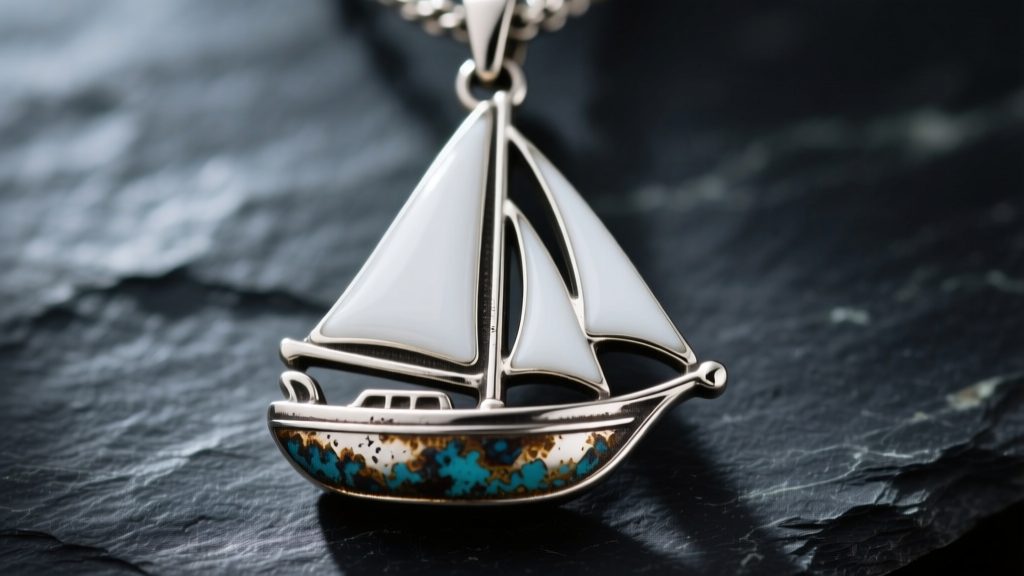
For a standard minimalist sailboat pendant measuring between 12mm and 18mm in height, a 1.2mm to 1.5mm cable chain is the gold standard. The cable chain's simple, uniform links do not compete with the geometric lines of the boat. Avoid heavy Figaro or thick Cuban link chains, which visually anchor the delicate mast and ruin the nautical illusion of 'floating' on the collarbone.
Pay close attention to the bail (the loop connecting the pendant to the chain). In 2026, the hidden bail is highly sought after. By threading the chain directly through a hollowed section of the mast, the pendant sits flatter against the skin, reducing the 'pendulum effect' that plagues traditional loop-bail pendants.
Layering Frameworks: Beyond the Solitary Pendant
While a solitary sailboat necklace on a 16-inch chain is a classic look, the current trend radar points heavily toward curated, asymmetric stacking. Layering nautical motifs requires a strict adherence to the 'Rule of Thirds' to avoid looking like a costume. Here are three expert-approved layering frameworks for 2026:
- The Coastal Minimalist (3 Chains): Start with a 14-inch oxidized silver bead chain, follow with an 18-inch 14k gold sailboat pendant, and finish with a 22-inch simple horizontal bar necklace. The mixed metals (silver and gold) intentionally break the 'matchy-matchy' rule, creating a collected-over-time aesthetic.
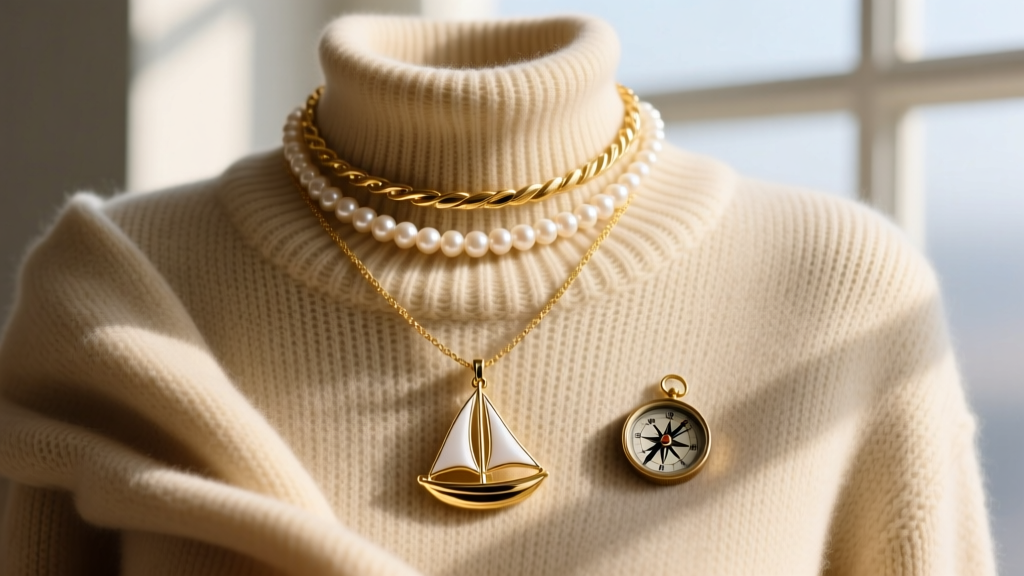
- The Riviera Stack (2 Chains): Pair a 15-inch freshwater pearl choker (4mm-5mm irregular baroque pearls) with an 18-inch gold sailboat pendant featuring a single micro-pavé diamond on the sail. The organic texture of the pearls contrasts beautifully with the sharp, geometric lines of the boat.
- The Navigator's Trio (3 Chains): Combine a 16-inch compass coin pendant, an 18-inch sailboat necklace, and a 20-inch minimalist anchor or knot motif. Ensure all three pieces share the exact same metal color and chain thickness (e.g., all 1.2mm yellow gold cable chains) to maintain visual cohesion.
Styling by Neckline and Occasion
The verticality of the sailboat pendant makes it a unique tool for manipulating visual proportions. Here is how to pair your necklace with specific necklines:
The V-Neck and Deep Plunge
A V-neck naturally draws the eye downward, mimicking the shape of a sail. Pair a deep V-neck linen dress with an 18-inch or 20-inch sailboat pendant. The mast of the boat will align with the plunge of the fabric, elongating the neck and torso. Avoid choker-length (14-inch) chains here, as they will visually clash with the garment's lines.
The Boatneck and Bateau
Ironically, the boatneck sweater requires careful styling when wearing nautical jewelry. Because the neckline runs horizontally across the collarbones, a short chain will get lost in the fabric folds. Opt for a 20-inch chain that rests entirely below the fabric line, allowing the sailboat pendant to sit against the skin or a contrasting under-layer.
The Classic Crewneck
A standard crewneck t-shirt or cashmere sweater provides a blank canvas. This is where the 16-inch 'collarbone' length shines. The sailboat will sit just below the hollow of the throat, acting as a focal point without overwhelming the casual nature of the garment.
Enamel vs. Diamond Sails: Aesthetic Choices
When selecting the 'sail' portion of the pendant, you generally have two high-end options in the demi-fine and fine jewelry markets: cold enamel and diamond micro-pavé.
Cold Enamel: Often rendered in stark white, navy blue, or deep emerald, enamel provides a bold, graphic contrast against gold or silver hulls. However, enamel is susceptible to chipping if dropped on hard surfaces and can degrade over time with prolonged exposure to chemical sunscreens and chlorinated pools.
Micro-Pavé Diamonds: For a more luxurious, light-catching effect, designers are setting 1mm to 1.5mm melee diamonds into the sail. This creates a 'sunlight on water' effect that elevates the piece from daywear to evening-appropriate. According to care guidelines from Jewelers of America, pavé settings require regular cleaning with a soft brush and mild soap to prevent lotion and salt buildup from dulling the stones.
Longevity and Care for Marine-Inspired Pieces
If you intend to wear your sailboat necklace as a true companion for seaside travels, maintenance is non-negotiable. Saltwater is highly corrosive, particularly to sterling silver and lower-karat gold alloys. Always rinse your jewelry with fresh, lukewarm water after ocean swimming to remove salt crystals that can cause micro-abrasions.
Furthermore, be mindful of your skincare routine. Chemical UV filters found in modern sunscreens can leave a stubborn, cloudy film on both polished metals and enamel sails. Apply your sunscreen and perfume at least 15 minutes before putting on your necklace to allow the chemicals to absorb and dry, preserving the brilliant finish of your maritime investment.
Ultimately, the sailboat necklace in 2026 is less about literal representation and more about capturing the feeling of freedom, movement, and coastal elegance. By focusing on premium materials, precise chain proportions, and intentional layering, you can anchor your personal style with a piece that is both deeply meaningful and effortlessly chic.


