Sapphire Bead Necklace Trends 2026: Style & Layering Guide
Discover 2026 sapphire bead necklace trends, layering techniques, and expert buying tips on gem grades, stringing durability, and pricing.

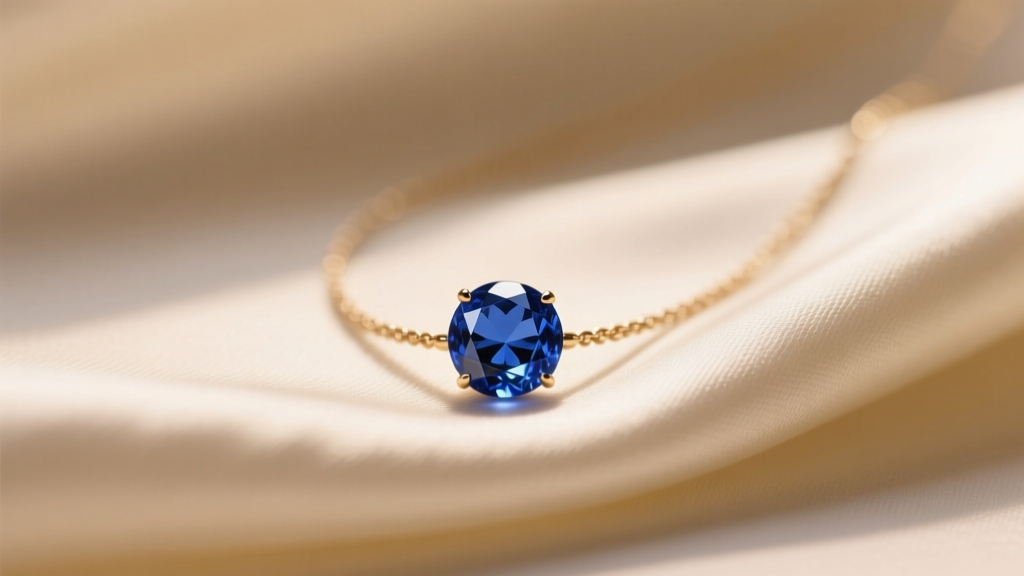
The 2026 Shift: From Rigid Tennis Chains to Fluid Sapphire Beads
In the landscape of fine jewelry, 2026 marks a definitive pivot away from the hyper-structured, diamond-heavy tennis necklaces that dominated the early 2020s. Today’s collectors and style icons are gravitating toward organic, fluid silhouettes, and the sapphire bead necklace has emerged as the undisputed centerpiece of this movement. Unlike faceted gems that demand constant light refraction, sapphire beads offer a deep, velvety saturation that absorbs and reflects light in a more subdued, intellectual manner. This shift aligns with the broader 'quiet luxury' evolution, where tactile weight and historical resonance outshine sheer brilliance.
However, purchasing a sapphire bead necklace is fraught with hidden complexities. Because beads are often carved from lower-grade rough that cannot be faceted, the market is saturated with heavily treated stones. Understanding the nuances of bead grading, stringing mechanics, and modern layering configurations is essential for making an informed investment this year.
Decoding Sapphire Bead Quality: Treatments and Origins
Not all sapphire beads are created equal. The Gemological Institute of America (GIA) frequently warns consumers about the prevalence of extreme treatments in bead-form corundum. When evaluating a sapphire bead necklace, you must look past the surface color and investigate the stone's structural integrity.
The Beryllium Diffusion Trap
A massive percentage of commercial-grade sapphire beads on the market are subjected to beryllium diffusion. This process introduces beryllium into the crystal lattice during high-heat treatment, transforming pale, worthless rough into vivid cornflower or padparadscha hues. While the American Gem Trade Association (AGTA) mandates disclosure of this treatment, many online and overseas vendors fail to do so. Diffused beads are worth a fraction of naturally colored or merely heat-treated stones.
Lead-Glass Fracture Filling
An even more dangerous failure mode in sapphire beads is lead-glass fracture filling. Because beads are drilled, they often originate from heavily included, fractured rough. Manufacturers fill these cracks with high-lead-content glass to improve transparency. Expert Warning: If you wear a fracture-filled sapphire bead necklace and accidentally spray it with perfume, hairspray, or even mild citrus-based cleaners, the acid will etch the glass filling, leaving the beads looking cloudy, pitted, and permanently damaged within weeks.
Stringing Mechanics: The Hidden Vulnerability of Corundum
The most overlooked aspect of any sapphire bead necklace is the stringing material. Sapphire is corundum, ranking a 9 on the Mohs hardness scale. This means the edges of the drill holes are essentially microscopic knives.
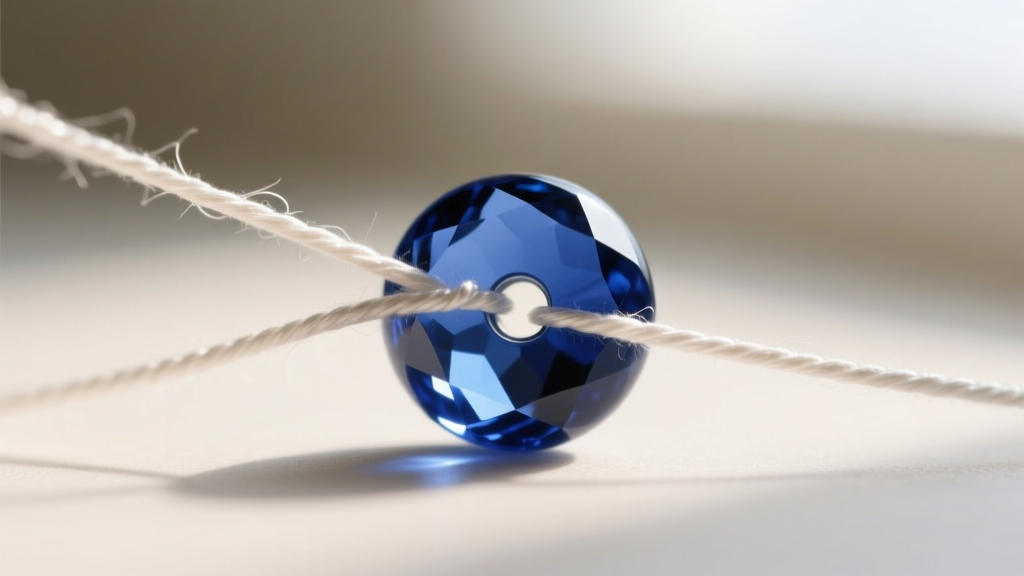
- The Friction Problem: If beads are strung tightly on standard nylon or cheap silk without knots, the daily friction of the beads rubbing against each other will saw through the thread in 12 to 18 months, leading to catastrophic breakage and lost gems.
- The Knotting Solution: High-end sapphire bead necklaces must be individually knotted. For 6mm beads, jewelers should use Griffin Size F (0.90mm) natural silk cord. The knot prevents bead-on-bead friction and ensures that if the strand breaks, only one bead is lost.
- French Wire Gimp: The transition point where the silk cord meets the metal clasp is a high-stress zone. Authentic luxury pieces will use 'French wire' (a microscopic coiled metal spring) to protect the silk from being cut by the metal clasp jump ring.
A master stringer will always ensure the drill hole of a sapphire bead is slightly countersunk or chamfered at the edges. If you run a piece of cotton thread through the bead and it snags or shreds, the hole has sharp edges and will eventually cut your necklace cord.
2026 Styling Matrix: Necklines and Layering Configurations
The versatility of the sapphire bead necklace lies in its ability to bridge the gap between casual daywear and formal evening attire. In 2026, the trend is 'asymmetrical layering'—pairing a tight, small-bead choker with a longer, heavier opera-length strand. Below is a strategic framework for pairing bead sizes with necklines.
| Bead Size | Necklace Length | Ideal Neckline Pairing | 2026 Styling Vibe |
|---|---|---|---|
| 4mm - 5mm | 15 to 16 inches (Choker) | Scoop neck, Boat neck, Off-shoulder | Minimalist, office-appropriate, pairs well with delicate gold pendants. |
| 6mm - 7mm | 18 inches (Princess) | Deep V-neck, Open collar button-down | Classic elegance, draws the eye downward, ideal for silk blouses. |
| 8mm - 10mm | 24 to 28 inches (Opera) | Turtleneck, Plunge, Solid color sheath | Bold, editorial, high-impact statement piece for evening galas. |

Color Theory: Pairing Metals with Blue Sapphire
While yellow gold was the default for decades, 2026 sees a strong preference for platinum or white gold clasps on sapphire bead necklaces. The cool, icy undertones of platinum amplify the velvety blue saturation of the beads. If you prefer warm metals, 18k rose gold provides a striking, modern contrast to Ceylon blue sapphires, though it can clash with darker, inky Australian blue sapphires.
Market Realities: Pricing Tiers for Sapphire Bead Necklaces
Pricing a sapphire bead necklace is highly dependent on the origin of the rough, the uniformity of the bead matching, and the presence (or absence) of treatments. Here is what you should expect to pay in the current market for an 18-inch princess strand:
- Commercial Tier ($300 - $800): Beads are heavily included, opaque, and likely beryllium-diffused or fracture-filled. Color may be slightly uneven. Drill holes are often rough.
- Fine Tier ($2,500 - $6,000): Translucent to semi-transparent beads. Standard heat treatment (no diffusion). Good color matching, likely sourced from Madagascar or Sri Lanka. Professionally knotted on high-grade silk.
- Investment Tier ($12,000+): Untreated, natural sapphires with verified origins (e.g., Kashmir or Montana). Beads are perfectly matched in color and tone, featuring smooth, chamfered drill holes and custom-fabricated diamond-set clasps.
Care and Maintenance for Longevity
To preserve the luster of your sapphire bead necklace, avoid ultrasonic cleaners entirely. Even if the beads are untreated, the high-frequency vibrations can cause micro-fractures around the drill holes, leading to bead splitting. Instead, clean your necklace by gently wiping it with a lint-free microfiber cloth dampened with distilled water and a drop of pH-neutral baby shampoo. Always store the necklace flat in a soft pouch; hanging a heavy bead necklace on a jewelry stand for months at a time will stretch the silk cord, causing the beads to gap and the structural integrity to fail.


