Sea Glass Leather Necklace Care: Cleaning & Maintenance
Learn expert care and cleaning tips for your sea glass leather necklace. Discover how to safely wash frosted glass and condition leather cords.

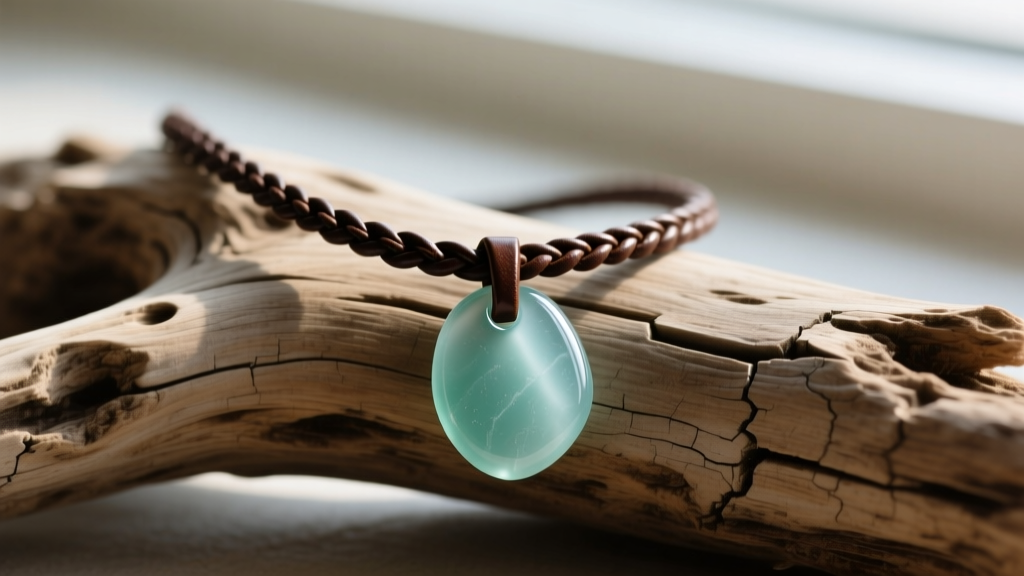
A beautifully crafted sea glass leather necklace is a masterclass in contrasting textures: the smooth, ocean-tumbled matte finish of frosted glass paired with the rugged, organic warmth of a leather cord. However, this striking combination presents a unique challenge for jewelry enthusiasts. The very elements that clean and preserve one material can rapidly degrade the other. Water and mild detergents are ideal for reviving the luster of sea glass, but they are the primary catalysts for dry rot and structural failure in leather.
To maintain the integrity of your jewelry, you must abandon standard, one-size-fits-all cleaning methods. This comprehensive guide breaks down the precise chemical and physical care protocols required to maintain a sea glass leather necklace, ensuring both the pendant and the cord remain pristine for decades.
The Dual-Material Dilemma: Why Standard Cleaning Fails
Understanding the material science behind your necklace is the first step in proper maintenance. According to the Gemological Institute of America (GIA), standard glass possesses a Mohs hardness of 5.5 to 7. However, genuine sea glass undergoes a process called devitrification, where the ocean leaches soda and lime from the glass matrix, leaving behind a micro-pitted, frosted surface. This frosted patina is delicate; harsh alkaline cleaners or ultrasonic vibrations can cause micro-fractures, permanently clouding the glass.
Conversely, the leather cord—typically ranging from 2mm to 4mm in thickness—relies on natural lipids and tanning oils for its tensile strength. Submerging a leather cord in water strips these essential oils, causing the collagen fibers to bind together, stiffen, and eventually snap under the weight of the glass pendant. Therefore, the golden rule of cleaning a sea glass leather necklace is strict isolation: never submerge the entire piece.
Step-by-Step Sea Glass Cleaning Protocol
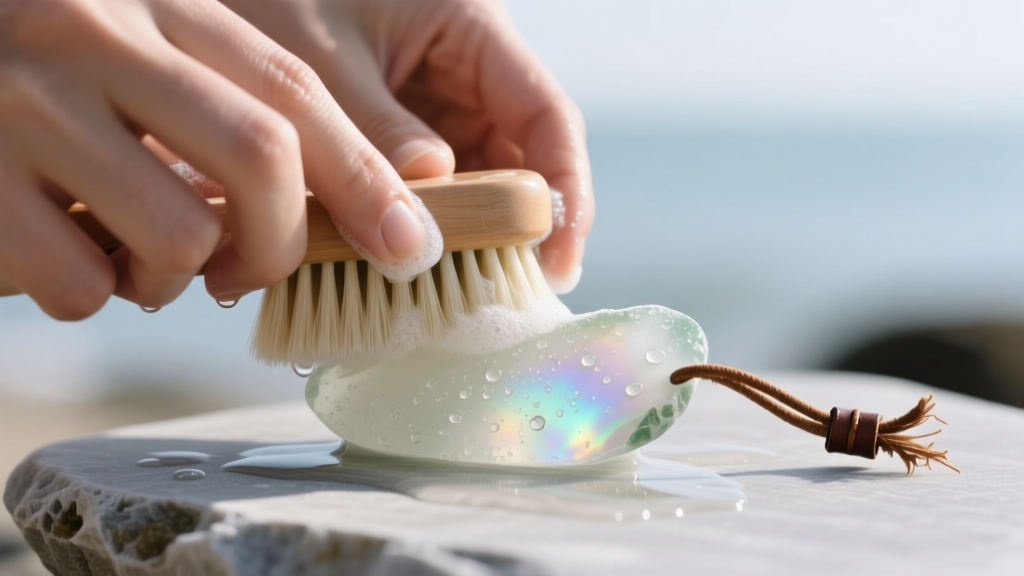
When the frosted surface of your sea glass pendant accumulates skin oils, sunscreen, or environmental dust, it requires a gentle, targeted approach that keeps the leather completely dry.
1. Isolate the Pendant
Before introducing any moisture, wrap the leather cord in a dry microfiber cloth or secure it away from the cleaning basin using a silicone clip. If your necklace features a sliding square knot or a lark's head bail, ensure the knot is pushed as far away from the glass as possible to prevent capillary action from drawing water into the leather fibers.
2. Prepare a pH-Neutral Bath
Mix a few drops of pH-neutral dish soap (such as original Dawn) into a bowl of distilled water. Avoid tap water, as the chlorine and dissolved minerals can leave hard water spots that are difficult to remove from the micro-pitted surface of sea glass without aggressive scrubbing.
3. Soft Agitation and Rinsing
Using a baby toothbrush or a ultra-soft makeup brush, gently agitate the soapy water over the glass. Do not use baking soda, toothpaste, or any abrasive pastes; these will polish away the highly coveted frosted patina, reducing the sea glass to a shiny, less valuable state. Rinse the glass briefly under a slow stream of distilled water, immediately patting it dry with a lint-free cloth.
Leather Cord Conditioning and Moisture Defense
Leather is a porous, organic material that requires periodic replenishment of its natural oils. The American Institute for Conservation emphasizes that improper leather care is a leading cause of artifact degradation, a principle that applies equally to fine jewelry.
Choosing the Right Conditioner
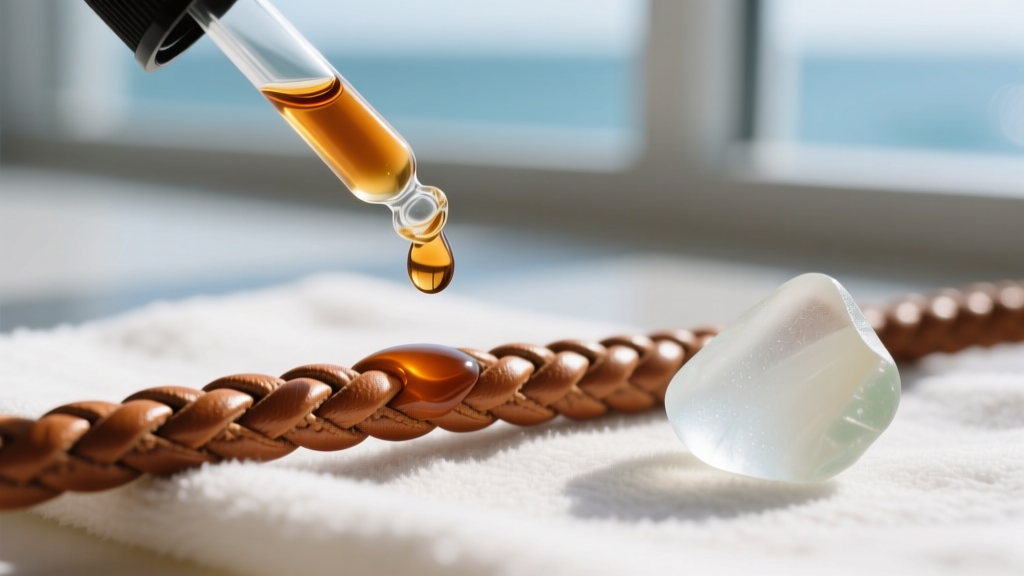
Not all leather conditioners are suitable for jewelry cords. Heavy waxes and pure neatsfoot oil can over-soften thin 2mm leather cords, compromising their tensile strength and causing them to stretch or snap under the weight of a heavy sea glass shard. Instead, opt for a lightweight, penetrating conditioner like Lexol or a highly refined mink oil.
- Vegetable-Tanned Leather: Highly susceptible to water spots and darkening. Use a dedicated, pH-balanced leather cream applied sparingly with a cotton swab.
- Chrome-Tanned Leather: More water-resistant and colorfast. A light application of refined mink oil will maintain its flexibility without drastically altering the dye.
- Suede or Nubuck Cords: Never apply liquid oils to suede leather cords, as it will mat the nap. Use a dry suede eraser and a brass-bristle brush to lift dirt and restore the texture.
Application Technique
Apply a pea-sized amount of conditioner to a soft, lint-free cloth. Rub the cloth along the length of the leather cord, avoiding the hardware and the knots. Excess oil on the knots will act as a lubricant, causing adjustable sliding knots to slip and fail to hold the necklace at your desired length.
Hardware and Clasp Maintenance Matrix
The metal components connecting the sea glass to the leather—such as bail caps, jump rings, and lobster clasps—require their own specific care routines. Liquid silver dips are strictly forbidden, as the chemical runoff will instantly stain the leather and etch the sea glass.
| Component | Material Type | Cleaning Agent | Protectant | Avoid At All Costs |
|---|---|---|---|---|
| Pendant Bail | Sterling Silver (925) | Untreated polishing cloth | Anti-tarnish strip in storage | Liquid silver dip, baking soda paste |
| Jump Rings | Brass or Copper | Mild lemon juice on a Q-tip | Micro-crystalline wax | Ammonia-based cleaners |
| Clasp | Stainless Steel | Isopropyl alcohol wipe | None required | Bleach or chlorine exposure |
| Wire Wrap | Gold-Filled Wire | Warm soapy water (isolated) | None required | Ultrasonic cleaners, abrasive pads |
When polishing the metal bail cap that hugs the sea glass, use a wooden toothpick wrapped in a polishing cloth to reach the crevices without scratching the adjacent glass surface.
Troubleshooting Common Failure Modes
Even with meticulous care, sea glass leather necklaces are subject to specific mechanical and environmental stresses. Here is how to identify and resolve the most common issues.
Dry Rot and Cord Stiffening
If your leather cord feels rigid or exhibits a whitish, powdery residue, it is suffering from severe moisture depletion or salt accumulation from sweat. The Fix: Gently wipe the cord with a slightly damp cloth to remove salt, let it air dry away from direct heat, and immediately follow up with a high-quality leather conditioner to restore lipid balance.
Patina Degradation (Shiny Spots on Glass)
Constant friction against the skin or improper cleaning can wear away the frost on the back of the sea glass, leaving a smooth, shiny patch. The Fix: While you cannot naturally re-frost the glass, you can apply a microscopic layer of matte acrylic sealer or a jewelry-safe wax to the shiny spot to visually blend it with the surrounding frost and protect it from further wear.
Knot Slippage
Adjustable macrame knots rely on friction to hold their position. If they begin to slide freely, the cord has likely become too smooth from conditioning oils. The Fix: Wipe the knot area with a cotton swab dipped in isopropyl alcohol to strip the oils and restore the leather's natural grip. Do not apply glue, as it will permanently ruin the cord's flexibility.
Proper Storage for Longevity
How you store your sea glass leather necklace when it is not being worn is just as critical as how you clean it. Leather requires a specific humidity range to prevent mold growth (if too damp) or cracking (if too dry). The ideal relative humidity (RH) for leather storage is between 45% and 55%.
Never store your necklace in a sealed plastic bag, as this traps moisture and accelerates the oxidation of metal hardware while promoting mold on the leather. Instead, store the necklace flat in a breathable cotton pouch or a lined jewelry box. If the necklace features a heavy, asymmetrical shard of sea glass, always store it flat rather than hanging; hanging a heavy pendant for prolonged periods will cause the leather cord to stretch permanently and conform to a curved shape, weakening the structural integrity of the fibers over time.
"The secret to preserving mixed-media jewelry lies in respecting the individual boundaries of each material. Treat the sea glass like a delicate gemstone, and the leather like a living skin, and your necklace will outlast the fleeting trends of fast fashion."


