Severe Necklace Knot Repair: Cost and Value Guide
Discover the true cost of severe necklace knot repair. We assess jeweler fees, metal fatigue risks, and when to replace your tangled chain.

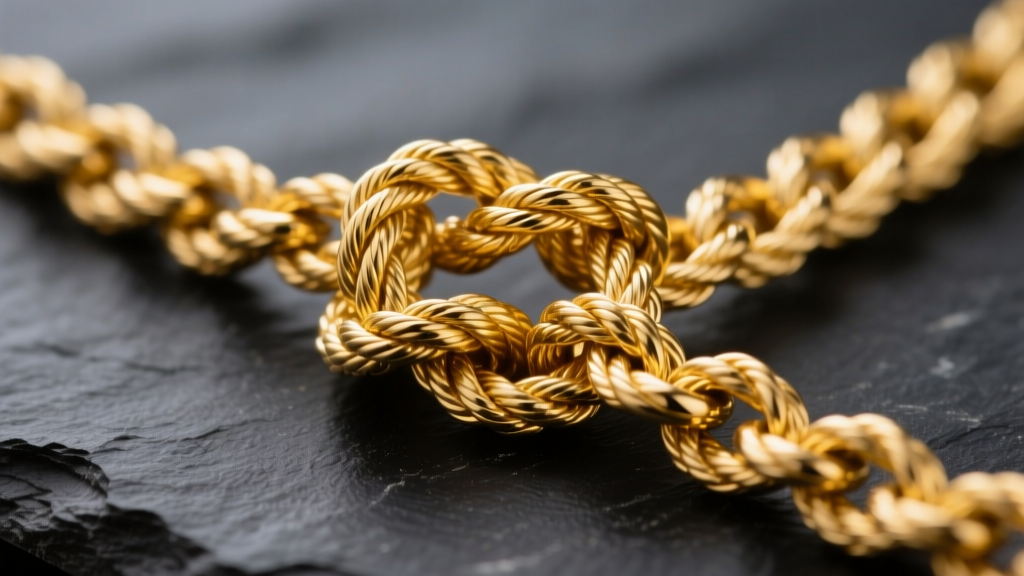
The Anatomy of a Severe Necklace Knot
A tangled chain is a universal frustration for jewelry wearers, but a severe necklace knot in a fine gold, platinum, or sterling silver piece is more than just an annoyance—it is a structural liability. When a delicate chain folds in on itself and is subjected to tension, the individual links undergo immense localized stress. According to the Gemological Institute of America (GIA), the malleability of precious metals means that pulling on a knotted chain doesn't just tighten the knot; it physically alters the crystalline structure of the metal, leading to permanent deformation.
Understanding the mechanics of a necklace knot is the first step in assessing whether your piece is worth saving. Knots typically form when chains are stored loosely in a jewelry box, allowing the microscopic gaps between links to catch on one another. Friction from daily wear, combined with the natural oils from your skin, can act as a mild adhesive, binding the links together. When you attempt to pull the chain straight, the knot compresses, crushing the delicate wire profiles of chains like herringbone, snake, or fine 0.8mm box chains.
The True Cost of Professional Untangling
When faced with a hopelessly jammed necklace knot, many owners wonder if the cost of professional repair outweighs the value of the chain itself. In 2026, the benchmark bench fee for a jeweler to untangle a fine chain under a stereo microscope ranges from $25 to $65, depending on the complexity of the knot and the fragility of the metal.
Jewelers use specialized tools, including ultra-fine titanium tweezers, micro-needles, and sometimes a drop of specialized, non-corrosive synthetic lubricant to ease the links apart without stressing the metal. However, if the knot has been pulled tight by the wearer, the links are often crushed or warped. In these cases, simple untangling is not enough; the damaged links must be carefully snipped out and the chain reconnected using laser welding.

Metal Fatigue: The Hidden Value Destroyer
The most critical factor in a budget and value assessment of a knotted necklace is metal fatigue. When a wire is bent sharply—as happens in the center of a tight knot—it experiences plastic deformation. For 18k and 24k yellow gold, which are highly malleable, the wire will stretch and thin out at the apex of the bend. This creates a weak point that is highly susceptible to snapping under the weight of a pendant.
Platinum, conversely, is a dense, durable metal, but it is prone to work-hardening. When a platinum chain is forced into a tight necklace knot, the metal at the stress point becomes brittle. If a jeweler attempts to bend a work-hardened platinum link back into its original shape without first annealing it with a torch, the link will simply snap. Therefore, the value assessment must factor in the cost of annealing and potential laser welding, which can add $45 to $120 to the final repair bill.
Chain Weave Vulnerability and Repair Matrix
Not all chains react to knotting in the same way. The weave pattern dictates both the likelihood of a knot forming and the financial viability of repairing it once it does. Below is a breakdown of common chain types and their associated repair economics.
| Chain Type | Knot Risk | Avg Untangle Fee | Laser Weld Cost | Value Retention |
|---|---|---|---|---|
| Herringbone | Extreme | $35 - $60 | $80 - $120 | Low (Kinks permanently) |
| Box Chain | High | $25 - $45 | $50 - $90 | Medium (Links crush easily) |
| Cable Chain | Moderate | $20 - $35 | $40 - $75 | High (Easy to fix) |
| Rope Chain | Low | $25 - $40 | $60 - $100 | High (Resists tangling) |
DIY Untangling vs. Bench Repair: A Risk Assessment
The internet is flooded with DIY hacks for fixing a necklace knot, ranging from dusting the chain with baby powder to soaking it in olive oil. From a value preservation standpoint, these methods are highly discouraged. Baby powder can become trapped in the microscopic crevices of a rope or box chain, creating a gritty paste that accelerates wear and tear on the links. Olive oil and other household lubricants can degrade the silk cores of certain pearl necklaces or leave a rancid residue that is difficult for jewelers to clean without using harsh ultrasonic baths, which can damage porous gemstones like turquoise or opals.
Attempting to pry a severe knot apart with sewing needles or safety pins often results in deep scratches across the polished surface of the gold or platinum. Refinishing a chain to remove these scratches requires abrasive polishing, which removes a microscopic layer of the precious metal. Over time, or after a single aggressive DIY attempt, this can reduce the overall weight and intrinsic melt value of your fine jewelry.
When to Replace Instead of Repair
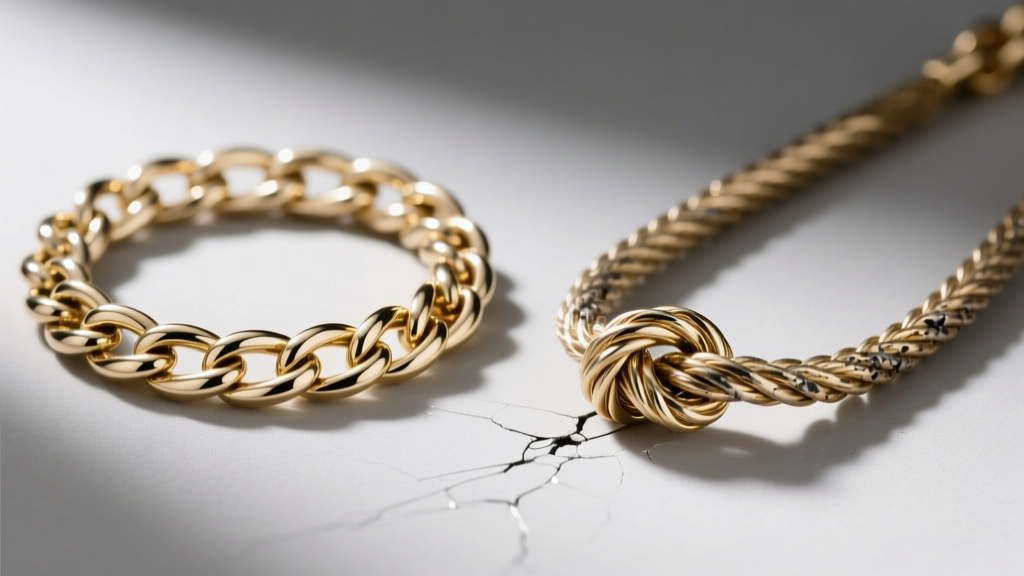
There is a definitive threshold where the cost of repairing a necklace knot exceeds the financial and sentimental value of the piece. If you are dealing with a mass-produced, hollow-core sterling silver chain or a gold-plated brass necklace, the structural integrity of the plating is permanently compromised the moment a knot is pulled tight. The plating will flake, and the base metal will oxidize. In these scenarios, paying a $40 bench fee for a chain that cost $60 to replace is a poor allocation of your jewelry budget.
Furthermore, if the knot is located near the clasp or the jump ring, the repeated stress of unclasping the necklace will continue to aggravate the weakened metal. According to the Jewelers of America, a reputable bench jeweler will always advise you on the structural viability of a repair before taking your money. If the chain is solid 14k or 18k gold, or platinum, and holds a valuable diamond or sapphire pendant, the investment in professional laser welding and ultrasonic cleaning is almost always justified to protect the broader value of the ensemble.
Final Verdict: Assessing Your Necklace's True Value
A severe necklace knot is a test of your chain's craftsmanship and your patience. When evaluating whether to repair or replace, calculate the current scrap value of the metal, the replacement cost of an identical chain, and the sentimental value of the piece. For solid precious metals, professional untangling and laser welding preserve the integrity and value of your investment. For hollow, plated, or highly complex weaves like herringbone that have suffered sharp kinks, redirecting your repair budget toward a more durable, knot-resistant chain—such as a solid cable or wheat chain—is the smartest financial decision for your jewelry collection.


