Shark Teeth Necklace Materials: Fossil vs Modern Enamel
Compare fossilized dentin, modern shark enamel, and hypoallergenic metal mounts for your teeth necklace. Expert material science and care tips inside.

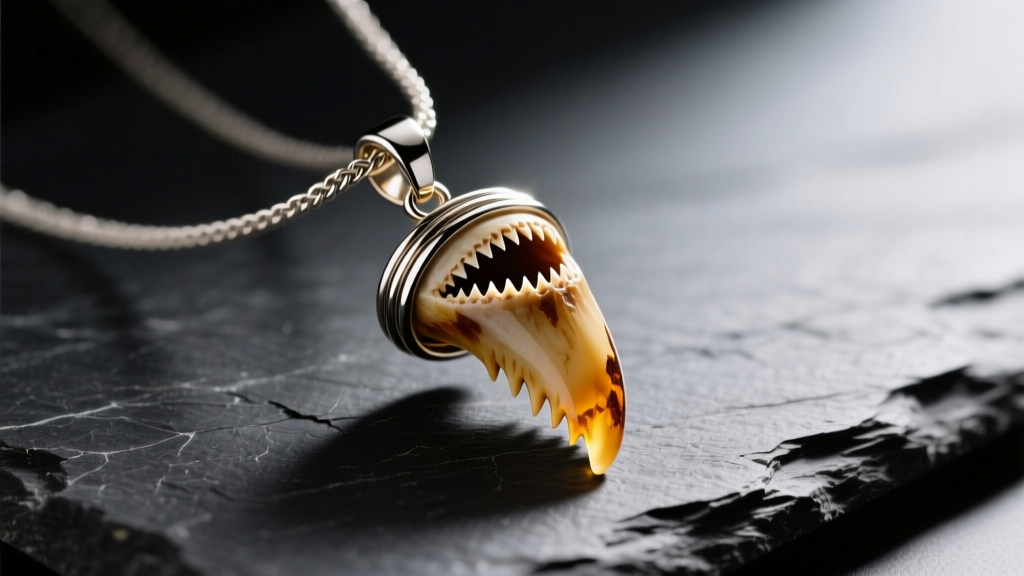
The allure of the teeth necklace spans across cultures and eras, serving as a talisman of strength, a connection to the natural world, and a striking statement of personal style. However, beneath the rugged aesthetic of shark, bear, and fossilized tooth pendants lies a complex world of material science. Designing and wearing a teeth necklace requires a deep understanding of organic gemology, mineralogy, and metallurgy. Whether you are mounting a modern mako shark tooth or a multi-million-year-old megalodon fossil, the interaction between the tooth’s biological structure and the metal hardware dictates the longevity and safety of the piece.
The Anatomy of a Teeth Necklace: Enamel, Dentin, and Fossilization
To properly mount and care for a teeth necklace, one must first understand the substrate. Modern shark teeth are primarily composed of fluorapatite, a calcium phosphate mineral that is significantly more resistant to acid and decay than the hydroxyapatite found in human teeth. The outer enamel layer is incredibly dense, scoring a 5.0 on the Mohs hardness scale, while the inner root and dentin are highly porous and organic.
When a tooth fossilizes, it undergoes a process called permineralization. Over thousands to millions of years, groundwater rich in dissolved minerals—typically silica, calcite, or pyrite—seeps into the porous dentin. The organic collagen matrix is entirely replaced by stone, fundamentally altering the pendant's weight, structural integrity, and thermal properties. According to the Florida Museum of Natural History, the specific mineral replacement dictates the fossil's final color and brittleness, which directly impacts how a jeweler must approach the wire-wrapping or bail-setting process.
Modern vs. Fossilized Shark Teeth: A Material Breakdown
Choosing between a modern and fossilized specimen for your teeth necklace changes the physical parameters of the jewelry. Below is a comparative analysis of their material properties:
| Property | Modern Shark Tooth | Fossilized Shark Tooth |
|---|---|---|
| Primary Composition | Fluorapatite & Organic Dentin | Permineralized Silica/Calcite |
| Mohs Hardness (Enamel) | 5.0 | 6.0 - 7.0 |
| Porosity | Low (crown), High (root) | Variable (micro-fractures common) |
| Weight (avg 2-inch tooth) | 4 - 8 grams | 15 - 40+ grams |
| Moisture Content | Trace organic oils | 0% (fully mineralized) |
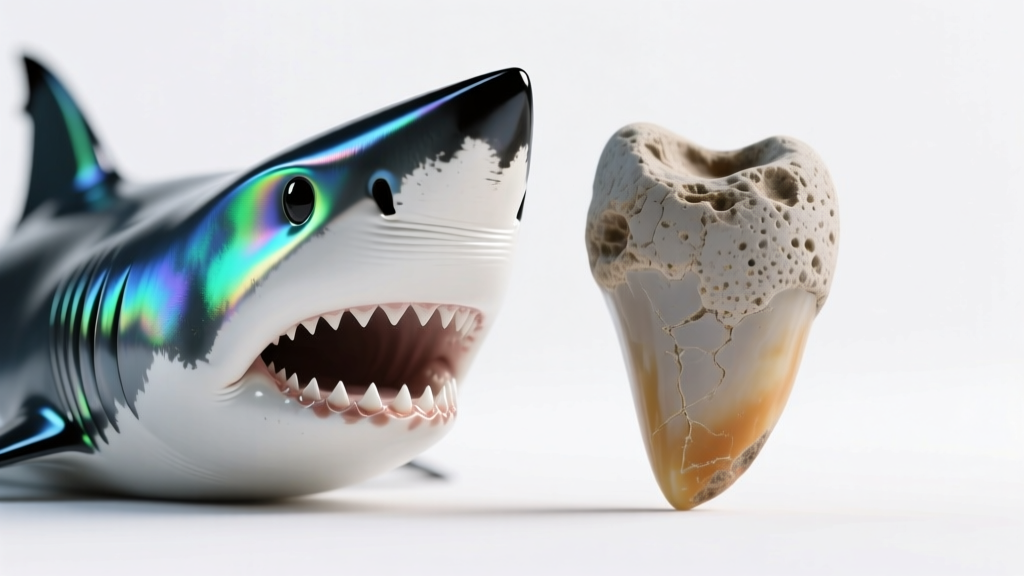
As seen in the data above, fossilized teeth are substantially heavier and harder, but they are also more brittle due to microscopic fault lines created during geological compression. Modern teeth, while lighter, contain organic oils that can react poorly with certain base metals.
Metallurgy of Mounts: Choosing the Right Wire and Bail
In 2026, the jewelry industry's shift toward hypoallergenic and inert metals has revolutionized how organic pendants are mounted. The most common failure point in a teeth necklace is galvanic corrosion—a chemical reaction triggered when reactive metals interact with the moisture, salts, and trace organics present in a modern tooth's root.
Why Sterling Silver and Copper Are Problematic
While sterling silver (92.5% silver, 7.5% copper) is a jewelry staple, the copper content makes it highly reactive. When wrapped tightly around the porous root of a modern shark tooth, the copper can oxidize rapidly, leaving a green verdigris stain on both the tooth and the wearer's skin. Furthermore, the sulfur compounds in human sweat can cause the silver to tarnish, transferring black sulfide stains onto the porous dentin that are nearly impossible to remove without damaging the organic matrix.
Titanium and Niobium: The Inert Standards
For high-end, preservation-grade teeth necklaces, aerospace-grade titanium (specifically Grade 5 Ti-6Al-4V or Grade 23 ELI) and pure niobium are the superior choices. These metals possess a passive oxide layer that renders them entirely inert. They will not react with the organic oils of a modern tooth, nor will they degrade when exposed to saltwater or acidic sweat. The Gemological Institute of America (GIA) frequently notes that inert metals are mandatory for preserving the chemical integrity of porous organic gems like bone, antler, and teeth.
Wire Gauge and Tension Metrics
- 20-Gauge (0.81mm) Dead-Soft Titanium: Ideal for intricate, non-marring wire wrapping around the delicate enamel edges of modern teeth.
- 16-Gauge (1.29mm) Half-Hard Wire: Required for forming the structural bail loop that connects the pendant to the chain, ensuring it does not bend under the pendulum swing of a heavy fossil.
Chain Alloys and Gauge Thickness for Heavy Pendants
A fossilized megalodon or large great white tooth can easily exceed 50 to 100 grams. Suspending this kind of kinetic weight requires a chain with high tensile strength and a smooth surface profile.
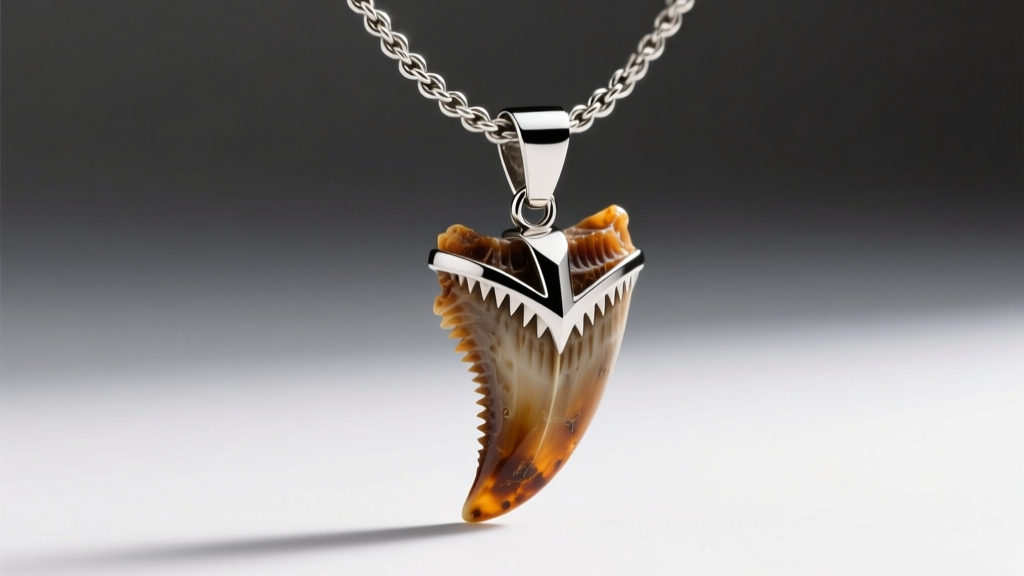
Marine-grade 316L stainless steel or solid 14k white gold wheat chains are the optimal choices. A minimum thickness of 3.0mm to 4.0mm is required to prevent the chain from snapping at the clasp spring-ring, which is usually the weakest link under dynamic load. Avoid rope chains entirely. The twisted, multi-faceted links of a rope chain act like a micro-saw against the porous root of a modern tooth, slowly grinding away the dentin through friction over months of wear.
Preservation and Material Degradation Troubleshooting
Maintaining the structural integrity of a teeth necklace requires abandoning traditional jewelry cleaning methods. The organic and mineral structures of teeth are highly sensitive to standard chemical cleaners.
The Dangers of Bleach and Ultrasonics
A common mistake among amateur collectors is attempting to whiten a modern shark tooth using household bleach (sodium hypochlorite). Bleach aggressively breaks down the collagen proteins in the dentin root. While the enamel crown may look whiter temporarily, the root will become chalky, brittle, and eventually crumble into dust. Similarly, ultrasonic jewelry cleaners use high-frequency cavitation bubbles that can easily propagate existing micro-fractures in fossilized teeth, causing the specimen to split cleanly in half.
Proper Cleaning Protocol
- Dust Removal: Use a soft-bristled makeup brush to dislodge debris from the serrations and root crevices.
- Surface Wiping: For modern teeth, use a microfiber cloth lightly dampened with distilled water. Avoid tap water, as the chlorine and fluoride can slowly alter the surface chemistry of the fluorapatite.
- Sealing (Modern Only): If the dentin root is degrading, apply a micro-thin layer of museum-grade Paraloid B-72 consolidant (an ethyl methacrylate copolymer) to stabilize the organic structure without altering its natural matte appearance.
By respecting the material science of both the biological specimen and the metallurgical hardware, you ensure that your teeth necklace remains a durable, striking, and historically preserved piece of wearable art for decades to come.


