How to Understand Shark Tooth Necklace Meaning and Style It
Discover the true shark tooth necklace meaning across cultures. Learn how to choose, authenticate, and style real vs. cast teeth for any outfit.

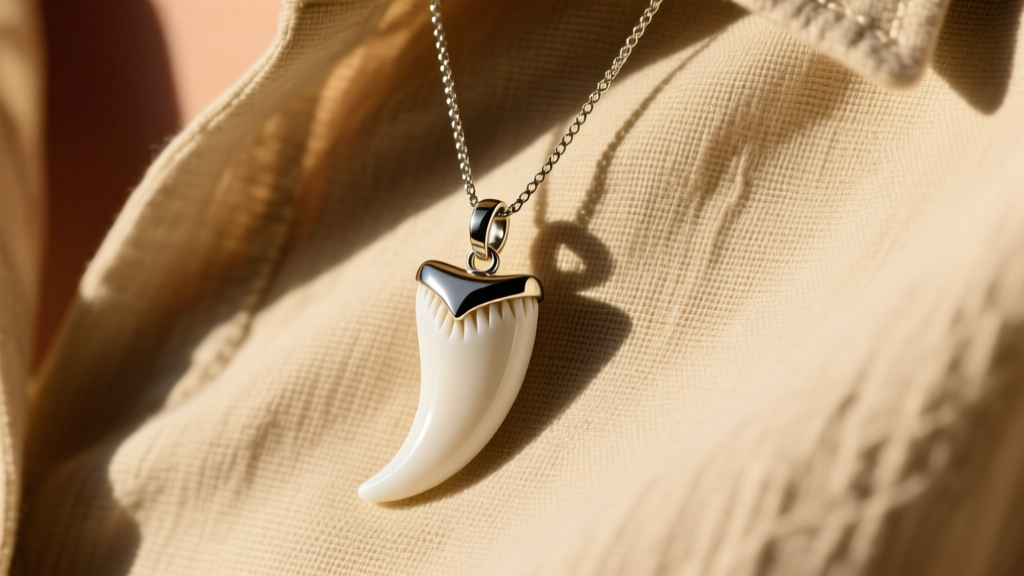
The resurgence of coastal and surf-inspired jewelry has brought a legendary pendant back to the forefront of men's and women's fashion. However, wearing this iconic piece is about more than just capturing a laid-back aesthetic. Understanding the true shark tooth necklace meaning requires looking past 1990s surf movies and diving into centuries of Polynesian heritage, maritime folklore, and marine biology. Whether you are holding a fossilized Megalodon relic or a modern Mako tooth, how you source, mount, and style your pendant speaks volumes about your respect for the ocean.
In this comprehensive step-by-step guide, we will decode the cultural significance of the shark tooth, teach you how to authenticate real dentin from mass-produced resin, and provide exact metallurgical specifications for mounting your pendant securely.
Step 1: Decoding the Shark Tooth Necklace Meaning
Before you style your pendant, it is crucial to understand the historical and spiritual weight it carries. The shark tooth necklace meaning varies significantly depending on the cultural lens through which it is viewed.
Polynesian and Hawaiian Heritage
In traditional Hawaiian culture, the shark (mano) is revered as an aumakua, or ancestral spirit guide. Wearing a shark tooth was historically believed to offer protection against drowning and shark attacks, while also channeling the creature's adaptability, ferocity, and navigational prowess. The tooth was not merely a trophy; it was a talisman of survival and a physical connection to the ocean's apex predators.
Modern Surfer and Maritime Culture
In the mid-20th century, the shark tooth necklace meaning shifted within global surf culture. It became a badge of honor for those who spent their lives in the lineup, symbolizing a deep respect for the marine ecosystem and an acceptance of the inherent risks of the ocean. Today, ethical surfers and marine biologists wear them to signal a commitment to ocean conservation rather than dominance over nature.
"To wear the tooth of the shark is to accept the ocean's terms: respect its power, and it will guide you; fear it blindly, and it will consume you." — Traditional Polynesian Maritime Proverb
Step 2: Authenticating Real vs. Replica Shark Teeth
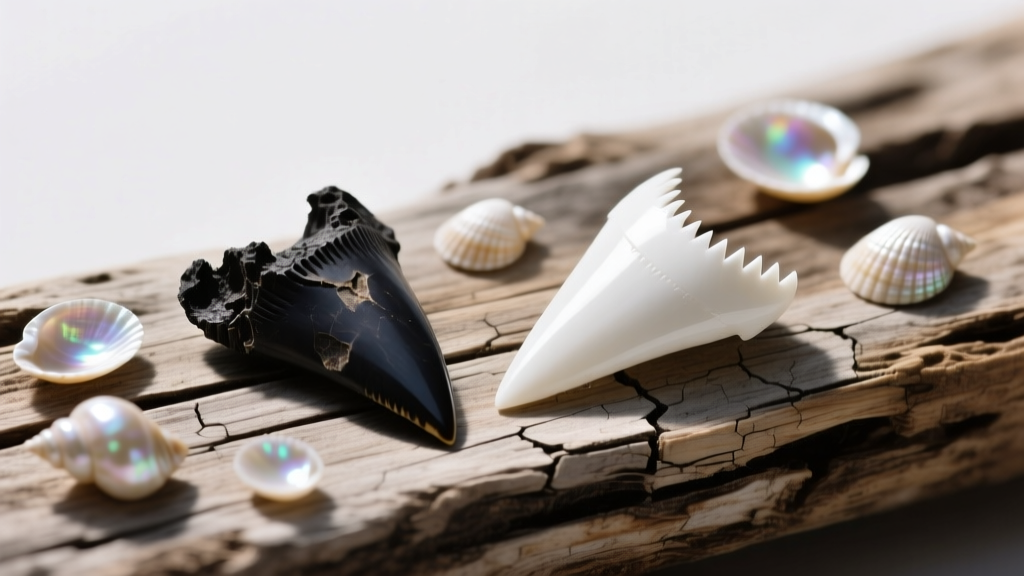
The market is flooded with polyurethane and epoxy resin replicas. If you are investing in a genuine piece to honor the shark tooth necklace meaning, you must know how to authenticate the materials. Real shark teeth are composed of a dentin core covered by a hard, enamel-like outer layer called enameloid.
The Sensory and Visual Tests
- The Temperature Test: Real enameloid and fossilized minerals are thermally conductive. When pressed against your lower lip or the inside of your wrist, a real tooth will feel distinctly cool and take several seconds to absorb your body heat. Resin replicas will feel room-temperature immediately.
- The Grain Inspection: Under a 10x jeweler's loupe, modern real teeth exhibit microscopic vertical striations near the root (the bourrelet). Cast resin will often show tiny air bubbles or a perfectly smooth, artificial gloss.
- The Weight Factor: A genuine Great White or Tiger shark tooth (roughly 2 to 2.5 inches in length) typically weighs between 12 and 25 grams. Hollow-feeling pendants are almost certainly synthetic.
Material Comparison Chart
| Material Type | Composition | Color Profile | Weight (Avg 2-inch) | Best Chain Pairing |
|---|---|---|---|---|
| Modern Real Tooth | Dentin & Enameloid | White, Cream, or Grey | 12g - 25g | 2.0mm - 3.0mm Metal |
| Fossilized Tooth | Mineralized (Iron/Phosphate) | Black, Brown, Blue, Red | 20g - 45g+ | 3.0mm+ Rope or Leather |
| Cast Resin Replica | Polyurethane / Epoxy | Stark, Uniform White | 3g - 8g | 1.0mm - 1.5mm Thin Chain |
Step 3: Selecting the Right Bail and Chain Gauge
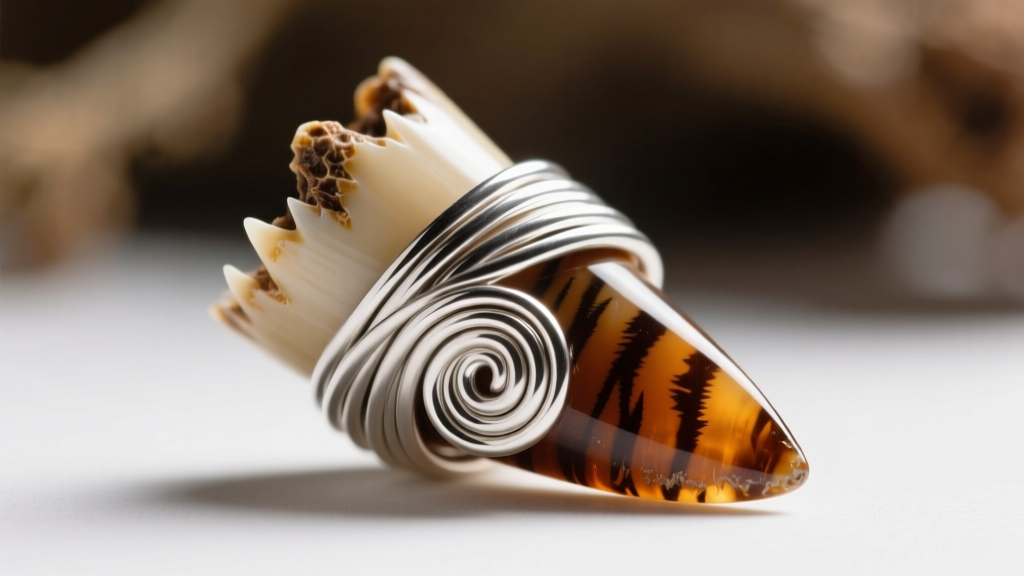
A common mistake that ruins both the pendant and the jewelry is drilling a hole through the root of a real shark tooth. Drilling compromises the structural integrity of the dentin, leading to catastrophic cracking over time. Instead, you must use a wire-wrap bail or a custom-forged cage.
Wire Wrapping Specifications
For a secure, non-destructive bail, use 18-gauge or 20-gauge Argentium silver or Grade 5 Titanium wire. Argentium silver is highly recommended over standard sterling because its germanium content makes it highly resistant to tarnish, which is vital for jewelry exposed to salt air and sweat. The wire should be woven tightly around the bourrelet (the ridge where the blade meets the root) to distribute the weight evenly without relying on adhesives.
Chain Gauge and Material Guidelines
Because real teeth are dense and heavy, standard 1.0mm chains will snap under the pendulum effect of daily wear. Follow these gauge rules:
- For Modern Teeth (12-25g): Use a 2.0mm to 2.5mm Sterling Silver Rope chain or a 1.5mm braided Hemp cord with a titanium clasp.
- For Fossilized Teeth (25g+): Upgrade to a 3.0mm to 4.0mm Cuban Link or Figaro chain in stainless steel or solid gold. Ensure the clasp is a heavy-duty lobster or a magnetic neodymium safety clasp.
- Avoid: Hollow-curb chains and aluminum alloys, which will deform under the concentrated point-load of a heavy tooth.
Step 4: Styling Frameworks for the Modern Wardrobe
Translating the shark tooth necklace meaning into a modern wardrobe requires balancing its rugged origins with contemporary tailoring. Here is how to style your pendant based on the environment.
The Coastal Casual (Beach & Resort)
Embrace the surf heritage by layering your shark tooth with organic textures. Pair a 2.5-inch white Mako tooth on a hemp cord with a 20-inch strand of matte freshwater pearls or wooden bead necklaces. This creates a textured, bohemian silhouette that works perfectly over unbuttoned linen shirts or heavyweight cotton tees. Keep the tooth resting at the sternum (roughly a 22-inch drop) to avoid tangling.
The Urban Minimalist (Smart Casual & Streetwear)
In an urban setting, contrast the organic shape of the tooth with sharp, industrial metals. Mount a dark, fossilized Megalodon or Sand Tiger tooth in a minimalist, geometric Argentium silver cage. Hang it on a sleek 2.5mm box chain worn at a shorter 18-inch length, allowing it to sit just above the collarbone. This looks exceptionally sharp peeking out from under a dark turtleneck, a structured denim jacket, or an oversized heavyweight hoodie.
Step 5: Ethical Sourcing and Maintenance
You cannot authentically honor the shark tooth necklace meaning if your pendant contributes to the decline of shark populations. Sharks are vital to marine ecosystems, and many species are currently threatened by overfishing and the fin trade.
Sourcing Ethically
Always verify the provenance of modern teeth. According to NOAA Fisheries, bycatch remains a significant issue in commercial fishing. Ethical jewelers source modern white teeth exclusively as a byproduct of regulated, sustainable fisheries where the meat is utilized, or from naturally shed teeth collected by divers. Organizations like the Ocean Conservancy provide extensive resources on marine protection; supporting brands that donate a percentage of their proceeds to such charities is a strong indicator of ethical business practices.
Alternatively, fossilized teeth (which are millions of years old and mined from ancient riverbeds or ocean floors) offer a zero-impact alternative that carries a profound connection to Earth's ancient history.
Cleaning and Preservation
Real enameloid is durable but porous. Never clean a real shark tooth with bleach, ultrasonic jewelry cleaners, or harsh chemical dips, as these will strip the natural luster and cause the dentin to become brittle. Instead, use a soft-bristled toothbrush with a drop of mild castile soap and lukewarm water. Gently brush the serrations and root, rinse thoroughly, and pat dry with a microfiber cloth. If you live in a humid or coastal climate, occasionally rub a microscopic drop of mineral oil into the root to prevent it from drying out and cracking over time.
By understanding the deep cultural roots, authenticating your materials, and mounting your pendant with precision, you transform a simple accessory into a meaningful, lifelong talisman of the sea.


