SHB Necklace Materials: Semi-Hollow vs Solid Bead Chains
Compare SHB necklace materials and properties. Learn the durability, weight, and pricing differences between semi-hollow bead and solid gold chains.

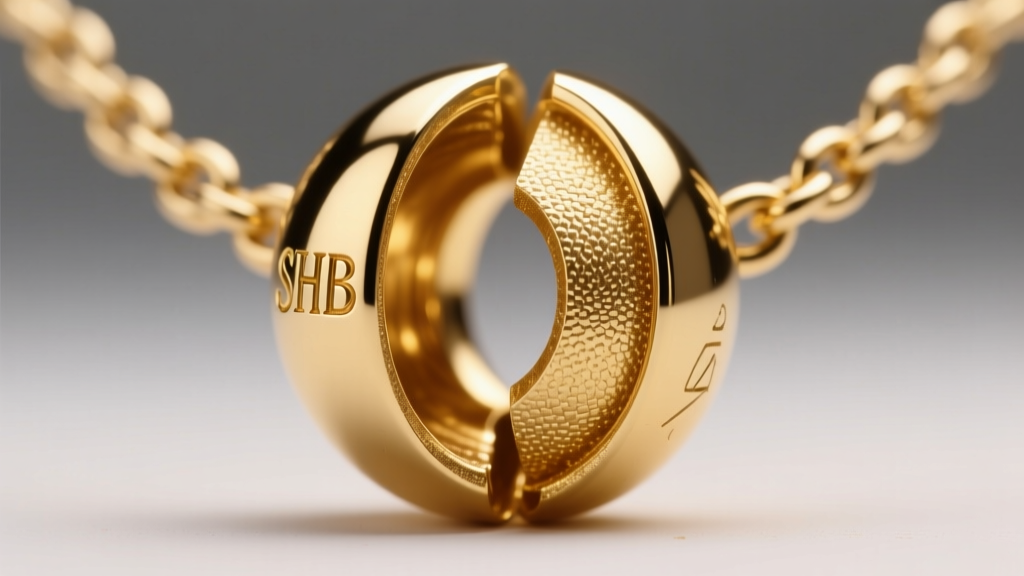
The Anatomy of an SHB Necklace
When navigating the fine jewelry market, understanding construction techniques is just as critical as evaluating karatage or gemstone quality. The term 'SHB necklace' refers to a Semi-Hollow Bead necklace, a sophisticated manufacturing category that bridges the gap between the luxurious volume of solid gold and the affordability of lightweight alternatives. Unlike fully hollow beads, which are prone to catastrophic crushing, or solid beads, which carry a massive premium due to raw metal weight, SHB construction utilizes a reinforced outer shell with a hollow or resin-supported interior.
According to the Gemological Institute of America (GIA), consumer demand for voluminous yet wearable gold chains has surged, making semi-hollow manufacturing techniques a cornerstone of modern jewelry design. An SHB necklace typically features beads with a wall thickness ranging from 0.15mm to 0.40mm, providing enough structural integrity to resist minor impacts while keeping the overall gram weight down by 60% to 75% compared to a solid equivalent.
Material Properties: Solid vs. SHB vs. Fully Hollow
To truly understand the value proposition of an SHB necklace, we must compare its material properties against traditional solid bead chains and cheaper fully hollow alternatives. The differences in density, tensile strength, and thermal conductivity dictate how these pieces wear over time.
| Property | Solid Bead Chain | SHB (Semi-Hollow) Chain | Fully Hollow Chain |
|---|---|---|---|
| Average Weight (20-inch, 5mm) | 42 - 48 grams | 12 - 16 grams | 6 - 9 grams |
| Crush Resistance | Extreme (Deforms slightly) | Moderate (Dents under pressure) | Poor (Collapses completely) |
| Wall Thickness | Solid Core | 0.15mm - 0.40mm | 0.05mm - 0.10mm |
| Solderability | Excellent (Torch safe) | Complex (Laser required) | Very Poor (Melts instantly) |
| Relative Price Point | $$$$ | $$ | $ |
As the data illustrates, the SHB necklace occupies the 'Goldilocks zone' for everyday wearers who want the visual impact of a 5mm or 6mm bead chain without the neck fatigue associated with a 45-gram solid gold piece.
Metallurgical Manufacturing: Electroforming vs. Stamping
The physical properties of an SHB necklace are entirely dependent on how the beads are formed. There are two primary manufacturing methods used in the industry today: traditional stamping and advanced electroforming.
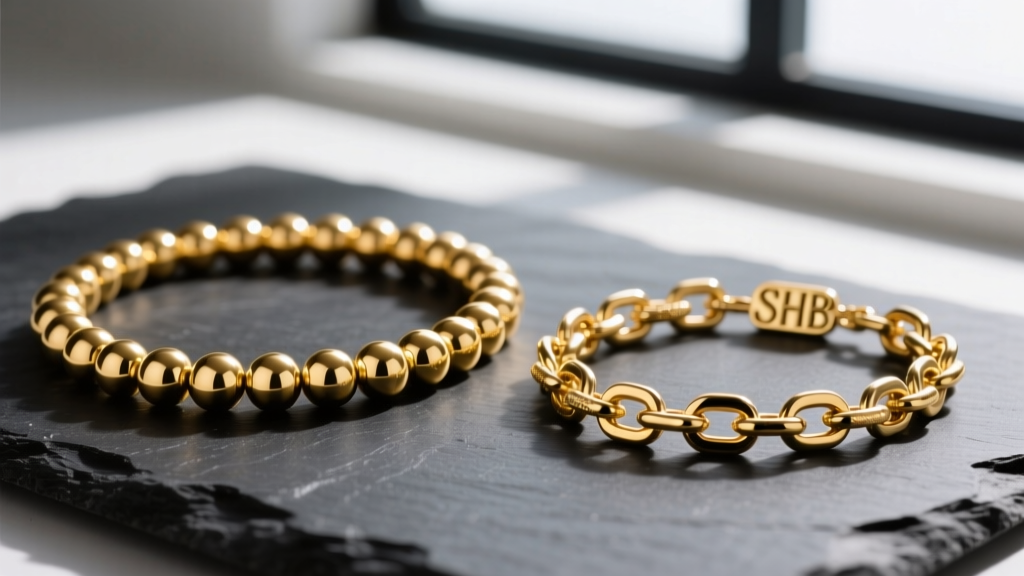
The Stamping and Soldering Method
In traditional manufacturing, flat sheets of 14k or 18k gold alloy are stamped into hemispheres using high-pressure hydraulic presses. Two hemispheres are then aligned and soldered together to form a hollow sphere. While this method is cost-effective, the seam where the two halves meet creates a structural weak point. Furthermore, the wall thickness is limited by the gauge of the original metal sheet, usually capping out at 0.20mm for cost-efficiency.
The Electroforming Advantage
High-end SHB necklaces utilize electroforming, a process detailed by the Society of Manufacturing Engineers. A wax or resin mandrel in the shape of the bead is submerged in an electrolyte bath and coated with gold via an electrical current. Once the desired wall thickness (often a robust 0.35mm) is achieved, the core is melted or dissolved away. Electroformed SHB beads are seamless, meaning they distribute kinetic energy from impacts evenly across the entire sphere, vastly improving dent resistance compared to stamped counterparts.
Durability, Failure Modes, and Repair Realities
While an SHB necklace offers incredible visual volume, it introduces specific failure modes that owners must understand. Because the interior is empty, the beads are susceptible to localized deformation.
- Compression Denting: If caught between a heavy object and a hard surface (e.g., leaning against a granite countertop), the thin gold shell will dent inward. Unlike solid gold, which can be hammered and polished back into shape, a dented SHB bead usually requires specialized micro-pushing tools or complete replacement.
- Work Hardening at the Linkages: The jump rings connecting the semi-hollow beads endure high friction. Over years of wear, the wire links can work-harden and snap, even if the beads themselves remain intact.
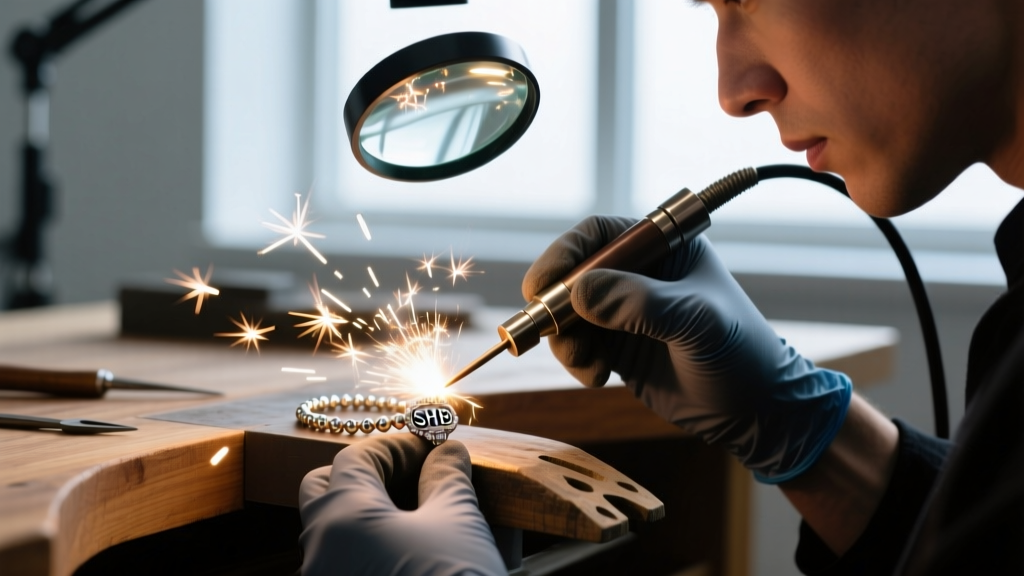
- The 'Flux Explosion' Risk: Traditional jewelry repair using an oxygen-acetylene torch is highly dangerous for SHB necklaces. If a jeweler applies borax flux to a bead and heats it, the flux can seep through microscopic porosities. When heated, the trapped moisture in the flux turns to steam, causing the bead to violently pop or warp. This is why Jewelers of America strictly recommends laser welding for any repairs on semi-hollow jewelry.
The Economics of SHB Jewelry in 2026
With precious metal markets experiencing sustained volatility, the economic argument for the SHB necklace has never been stronger. The pricing of gold jewelry is a combination of raw material cost (melt value) and manufacturing labor. A solid 18k gold 5mm bead chain might contain over $2,500 worth of raw gold alone, pushing the retail price well past $4,000.
Conversely, an 18k SHB necklace of the exact same dimensions uses roughly 70% less gold. However, the labor and technology required for electroforming and precision laser-linking increase the manufacturing premium. As a result, you are paying for advanced metallurgical engineering rather than raw commodity weight. For buyers who view jewelry primarily as an aesthetic accessory rather than a bullion investment, the SHB route offers vastly superior cost-per-wear value.
Maintenance and Care Protocols
To preserve the structural integrity of a semi-hollow bead chain, specific care protocols must be followed. Never use ultrasonic cleaners on SHB necklaces if the beads have been treated with surface sealants or if there are any microscopic cracks, as the high-frequency vibrations can exacerbate structural flaws. Instead, clean the piece using a soft-bristled brush, warm water, and a mild, phosphate-free dish soap. Always store the necklace laid flat or hung vertically; tossing it into a jewelry box where it can be crushed under heavier items is the leading cause of premature SHB failure.
Final Verdict: Who Should Buy an SHB Necklace?
The SHB necklace is a triumph of modern jewelry engineering, offering the bold, luxurious aesthetic of heavy gold chains without the prohibitive cost and physical weight. It is the ideal choice for fashion-forward individuals who want to layer statement pieces, create dramatic focal points, or wear large-diameter bead chains comfortably for 12+ hours a day. However, it is not recommended for those who work with heavy machinery, frequently lift weights, or prefer 'buy it for life' indestructible heirlooms. By understanding the material properties, manufacturing methods, and care requirements of semi-hollow beads, you can confidently invest in pieces that deliver maximum visual impact and enduring style.


