Shield Necklace Men: Technical Guide to Metals & Sizing
An expert technical guide to shield necklace men's styles, covering metal grades, pendant dimensions, chain gauges, and clasp mechanics for daily wear.

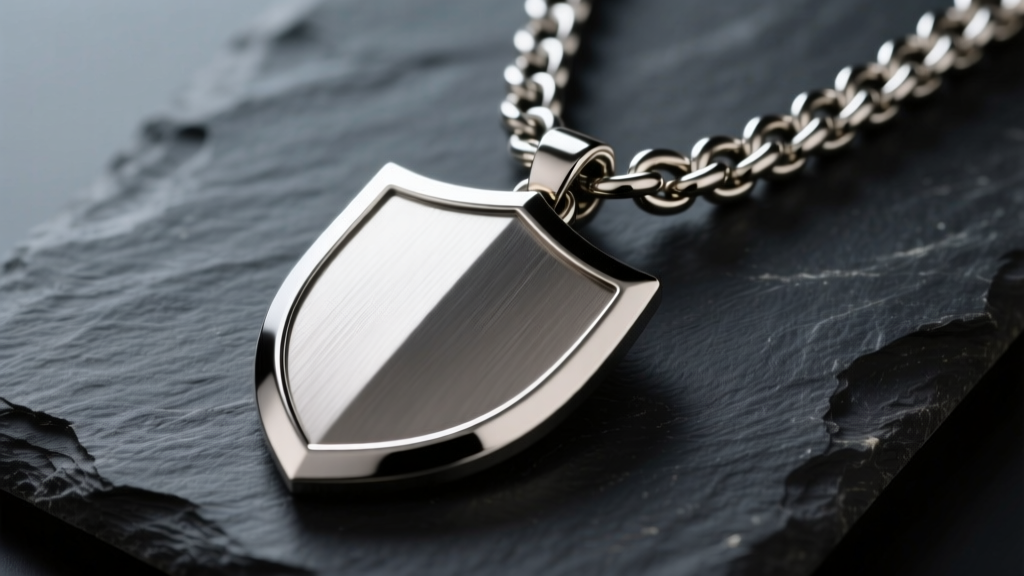
The Anatomy of a Men's Shield Pendant
The shield necklace men's category has evolved far beyond simplistic dog tags or costume jewelry. Today, a well-engineered shield pendant serves as an architectural anchor in a man's wardrobe, blending historical heraldic motifs with modern metallurgical standards. To evaluate a shield necklace properly, one must look past the surface finish and examine the dimensional tolerances, weight distribution, and structural integrity of the bail.
Dimensional Standards and Weight Distribution
A proportional shield pendant for men typically falls within a specific dimensional matrix. Pendants that are too thin will dent upon impact, while those that are overly thick will hang with an unnatural, bottom-heavy pendulum effect. The industry standard for a premium men's shield pendant dictates a height between 32mm and 45mm, with a width ranging from 22mm to 35mm. Thickness is the most critical variable; a high-quality cast or CNC-milled shield should measure between 2.5mm and 4.0mm at its thickest point, tapering slightly at the beveled edges to catch the light.
Weight is equally important. A solid metal shield in this size range should weigh between 18 grams and 35 grams. Anything lighter suggests a hollow electroformed construction or a thin stamped sheet, both of which are prone to crushing and irreversible deformation. Conversely, pendants exceeding 45 grams require specialized heavy-duty chain configurations to prevent cervical strain and accelerated clasp wear.
Metallurgy and Material Grades
The longevity of a shield necklace is dictated by its base metal. According to the Gemological Institute of America (GIA), understanding alloy compositions is vital for predicting how a piece will react to environmental stressors, skin acidity, and kinetic friction.
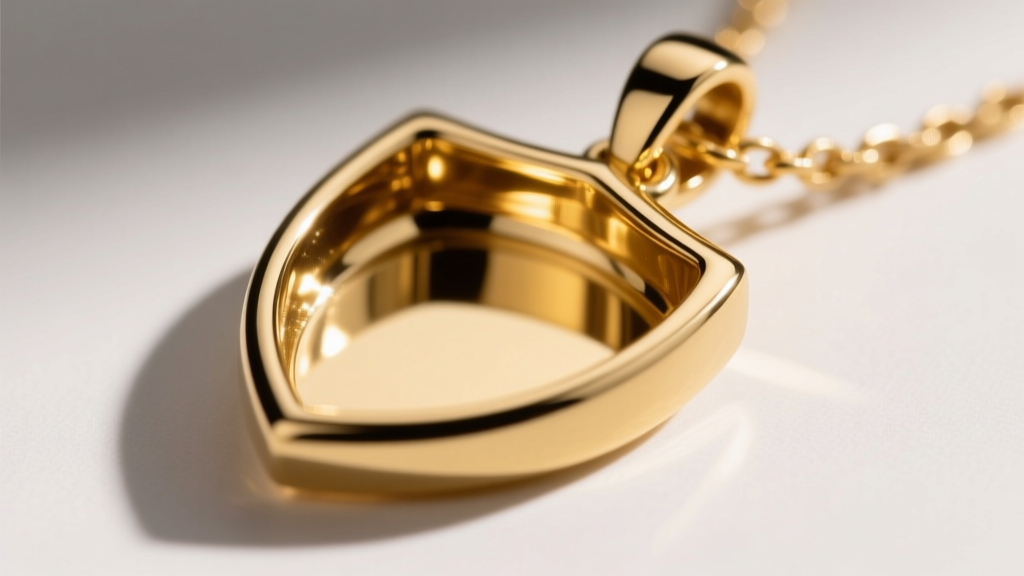
| Material Grade | Density (g/cm³) | Mohs Hardness | Maintenance Level | Typical Price Range |
|---|---|---|---|---|
| 316L Surgical Steel | 8.00 | 5.5 | Low | $45 - $140 |
| 925 Sterling Silver | 10.40 | 2.5 | High | $90 - $280 |
| Grade 5 Titanium (Ti-6Al-4V) | 4.43 | 6.0 | Low | $120 - $350 |
| 14k Solid Gold (585) | 13.00 | 3.5 | Medium | $650 - $1,800+ |
316L Stainless Steel: The workhorse of men's jewelry. It contains molybdenum, which drastically increases corrosion resistance against chlorides and industrial solvents. It is virtually impervious to tarnish but heavier than titanium.
925 Sterling Silver: Comprising 92.5% pure silver and 7.5% copper, this alloy is prized for its luster. However, as noted by The Silver Institute, the copper content makes it highly susceptible to oxidation (tarnish) when exposed to sulfur compounds in the air and sweat. Regular polishing is mandatory.
Grade 5 Titanium: An aerospace-grade alloy that is remarkably lightweight and entirely hypoallergenic. The trade-off is that titanium cannot be easily soldered or resized by traditional jewelers if the bail breaks.
14k Solid Gold: Offering the best balance of prestige, malleability, and scratch resistance. 14k gold (58.5% pure gold) is significantly more durable for daily wear than 18k or 24k gold, which are too soft for heavy shield pendants.
Inlay Materials and Adhesive Failure Modes
Many shield necklaces feature inlaid materials such as black onyx, mother of pearl (MOP), or malachite. The technical execution of these inlays separates heirloom-quality pieces from disposable fashion jewelry.
- Bezel Setting vs. Epoxy Adhesive: High-end shields utilize a mechanical bezel or a precisely milled channel where the stone is friction-fit or secured with jeweler's cement. Cheap alternatives rely on industrial epoxy.
- Thermal Expansion Mismatch: Metals and stones expand at different rates when exposed to heat (e.g., leaving the necklace in a hot car or wearing it in a sauna). If the tolerance gap is too tight and no flexible bonding agent is used, the stone will crack under thermal stress.
- Ultrasonic Cleaning Risks: Never place an inlaid shield pendant in an ultrasonic cleaner. The high-frequency cavitation bubbles will shatter porous stones like malachite and dissolve the adhesives holding onyx in place.
Chain Mechanics: Gauge, Link Type, and Clasps
A 30-gram shield pendant generates significant kinetic energy as it swings against the chest. The chain must possess adequate tensile strength and abrasion resistance to handle this dynamic load.
Optimal Chain Configurations
For shield pendants weighing over 20 grams, the chain gauge should never drop below 4.0mm. The ideal range is 4.5mm to 6.0mm. The three most structurally sound link types include:
- Cuban Link: Interlocking, flat-surfaced links that distribute weight evenly. Highly resistant to kinking.
- Figaro Link: A pattern of three short links and one long link. Offers excellent drape but the varying link sizes can create micro-abrasions on the pendant's bail over time.
- Wheat (Spiga) Link: Woven, braided links that offer immense tensile strength and a smooth surface that prevents hair-snapping, making it ideal for men with chest hair.
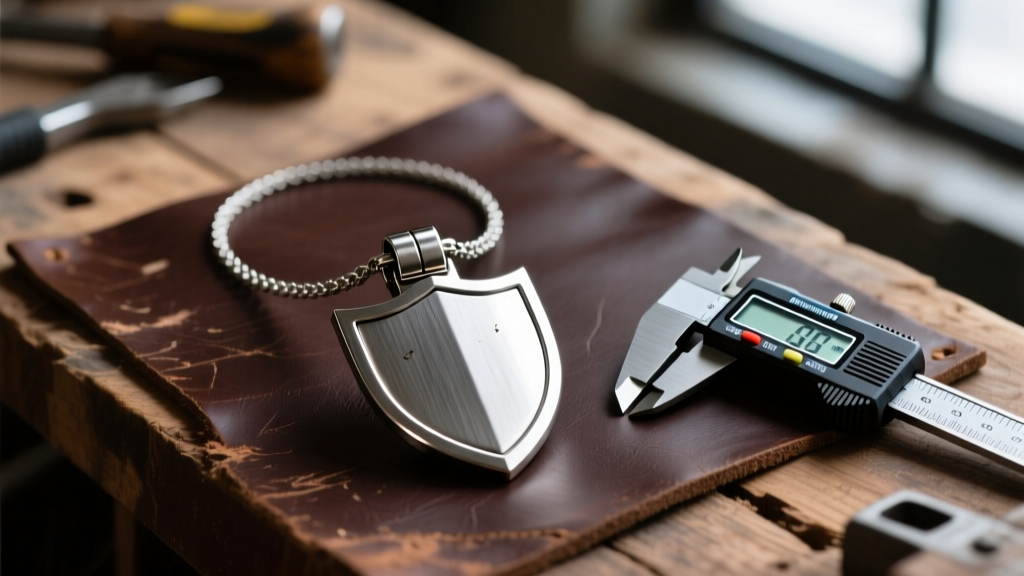
Preventing Bail Wear and Clasp Failure
The most common failure point in any pendant necklace is the bail—the loop connecting the shield to the chain. Constant friction acts like a microscopic saw, slowly cutting through the metal of the bail or the chain links. To mitigate this, premium manufacturers polish the interior of the bail to a mirror finish and sometimes line it with a hardened steel or ceramic sleeve.
Regarding clasps, the standard lobster clasp is insufficient for heavy shields due to its reliance on a tiny internal steel spring. For pendants exceeding 30 grams, a Box Clasp with a Figure-8 Safety Latch is mandatory. The box mechanism locks the tongue into a grooved chamber, while the figure-8 wire provides a secondary fail-safe in the event the primary latch is snagged on clothing.
"A men's shield necklace is an exercise in kinetic engineering. If the clasp and bail are not rated for the pendulum weight of the pendant, structural failure is not a matter of if, but when." — Master Jeweler's Bench Manual
Maintenance and Patina Management
Maintaining a shield necklace requires a targeted approach based on its material profile. For raw 925 sterling silver shields, a chemical dip might remove tarnish instantly, but it also strips the intentional oxidation (antiquing) from the shield's engraved crevices. Instead, use a treated micro-abrasive polishing cloth, applying directional pressure only to the raised, polished surfaces of the shield to preserve the contrast in the recessed areas.
For brushed or matte-finished steel and titanium shields, avoid abrasive polishes entirely. A simple wash with warm water, a drop of mild dish soap, and a soft-bristled toothbrush is sufficient to remove sebum and environmental grit from the chain links and the back of the pendant. Always dry the piece completely with a microfiber towel to prevent water spots, particularly on high-polish gold surfaces.


