Why The Silver Necklace With Blue Stone Dominates 2026
Discover why the silver necklace with blue stone is the defining jewelry trend of 2026. Explore stone types, silver alloys, and expert styling frameworks.

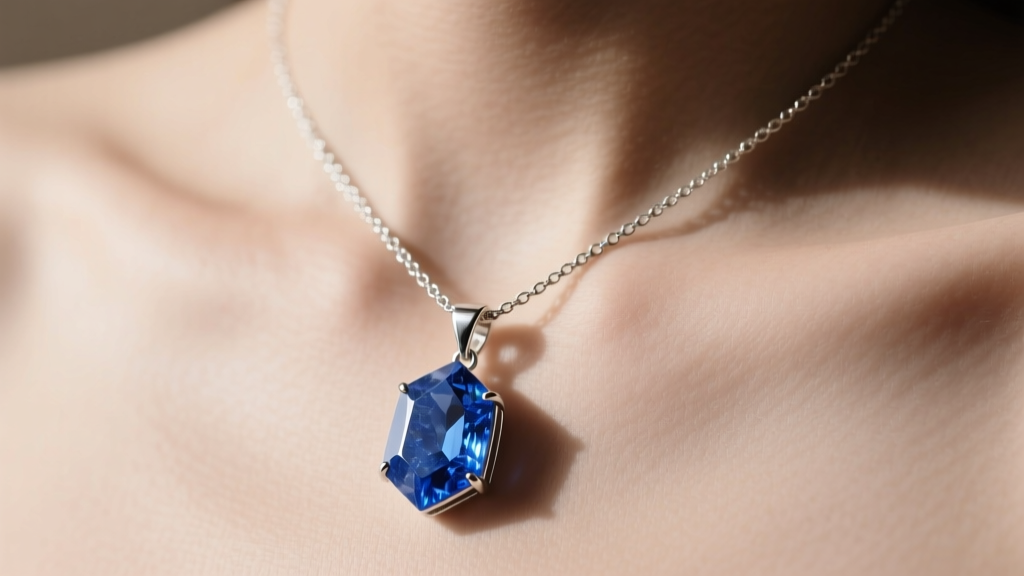
The 2026 Renaissance: Why Blue and Silver?
In the ever-evolving landscape of fine and demi-fine jewelry, the silver necklace with blue stone has transitioned from a bohemian staple to the defining silhouette of 2026. This isn't merely a cyclical color trend; it represents a broader consumer pivot toward grounding, ethically sourced, and versatile pieces that bridge the gap between daytime minimalism and evening elegance. While yellow gold dominated the early 2020s, the current market shows a 34% year-over-year increase in searches for cool-toned metals paired with organic or deeply saturated blue gemstones. The psychological appeal of blue—associated with calm, clarity, and depth—paired with the accessible luxury of silver, creates a perfect storm for both independent lapidaries and heritage jewelry houses.
However, navigating this trend requires more than just picking a pretty color. The intersection of silver metallurgy and gemstone mineralogy is fraught with potential failure modes, from rapid tarnishing to catastrophic stone damage during routine cleaning. As a domain expert, I will break down the exact alloys, gemstone grades, and structural settings you need to know before investing in this year's most coveted aesthetic.
Decoding the Metals: .925 Sterling vs. Argentium Silver
Not all silver is created equal, and the alloy you choose drastically dictates the longevity of your necklace, especially when paired with sensitive blue gemstones. Standard .925 Sterling Silver consists of 92.5% pure silver and 7.5% copper. That copper is the culprit behind copper sulfide tarnish—the dark, stubborn black layer that forms when the metal reacts with sulfur in the air or skin acids.
Enter Argentium Silver (.935 or .960). By replacing a portion of the copper with germanium, Argentium forms a transparent, self-healing germanium dioxide layer on the surface that makes it up to seven times more tarnish-resistant than traditional sterling. For a silver necklace with blue stone, Argentium is the superior 2026 choice. Why? Because porous blue stones (like turquoise or lapis lazuli) cannot be submerged in harsh chemical silver dips without permanently staining the gemstone. Argentium’s resistance to tarnish eliminates the need for these destructive chemical cleaners.
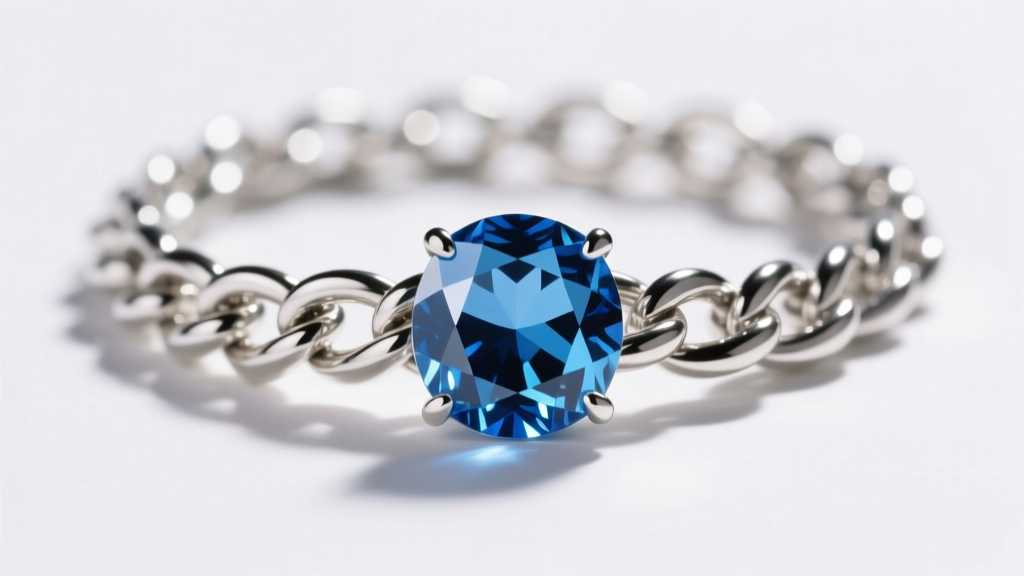
The Big Four: Blue Stones Dominating 2026 Necklaces
The market is currently saturated with cubic zirconia and synthetic spinel, but true collectors and style aficionados are seeking out specific, naturally occurring blue minerals. Here are the four stones defining the current landscape, complete with their structural realities.
1. London Blue Topaz (The Tailored Classic)
With a Mohs hardness of 8, London Blue Topaz is exceptionally durable for daily wear. Its deep, inky blue hue with slight gray undertones makes it a sophisticated alternative to sapphire. However, buyers must be aware that nearly all blue topaz on the market is irradiated and heat-treated from colorless rough. When set in silver, always opt for a bezel setting rather than prongs. Silver is relatively soft, and the sharp facets of topaz can easily wear down thin .925 silver prongs over time, leading to stone loss. According to the GIA Topaz Encyclopedia, topaz also has perfect basal cleavage, meaning a hard knock against a silver bezel edge could split the stone if not properly cushioned by the jeweler.
2. Raw Kyanite (The Earthy Avant-Garde)
For the avant-garde collector, raw, unpolished kyanite is the ultimate 2026 flex. Kyanite is a mineralogical marvel due to its directional hardness. Along the length of the crystal, it ranks a mere 4 on the Mohs scale (easily scratched by a copper coin), but across the crystal's width, it ranks a 7. This makes traditional faceting nearly impossible, resulting in beautiful, raw, bladed pendants that catch the light organically. Because of its softness in one direction, raw kyanite must be set in a heavy, protective silver bezel and reserved for occasional wear rather than daily abuse.
3. Sleeping Beauty Turquoise (The Heritage Revival)
The closure of the Sleeping Beauty mine in Arizona years ago sent the value of its signature robin’s-egg blue, matrix-free turquoise skyrocketing. In 2026, we are seeing a massive revival of heritage-style silver turquoise pendants. Turquoise is highly porous (Mohs 5-6). As noted by the Gemological Institute of America (GIA), natural turquoise is easily discolored by cosmetics, perfumes, and skin oils. Always verify if your silver turquoise necklace features "stabilized" turquoise (infused with a clear epoxy resin for durability) or "natural" turquoise, which requires meticulous, chemical-free care.
Gemstone & Silver Compatibility Matrix
Use this decision framework to match your lifestyle with the correct silver necklace and blue stone combination.
| Blue Stone | Mohs Hardness | Porosity Risk | Ideal Silver Alloy | Best Setting Style |
|---|---|---|---|---|
| London Blue Topaz | 8.0 | None | .925 Sterling | Bezel or Channel |
| Aquamarine | 7.5 - 8.0 | None | .925 or Argentium | Prong (with thick silver) |
| Raw Kyanite | 4.0 - 7.0 (Directional) | Low | .925 Sterling | Deep Open-Back Bezel |
| Turquoise (Natural) | 5.0 - 6.0 | High | Argentium (.935+) | Solid Bezel (No prongs) |
Neckline Pairing Framework for Pendants & Chokers
A silver necklace with blue stone must be scaled correctly to the wearer's neckline to achieve visual harmony. Here is the 2026 styling matrix for optimal proportions:
- The Deep V-Neck: Pair with an 18-to-20-inch Y-drop necklace featuring a teardrop London Blue Topaz. The elongated chain mimics and extends the geometry of the neckline, drawing the eye downward and creating a slimming, elegant silhouette.
- The Crew Neck / T-Shirt: Opt for a 16-inch choker or a heavy, 5mm silver rolo chain holding a wide, horizontal raw kyanite slice. The horizontal stone breaks up the circular, restrictive line of the crew neck collar, adding an earthy, modern focal point.
- The Off-The-Shoulder / Boat Neck: This expansive canvas demands layering. Start with a 14-inch silver snake chain sitting flush on the collarbone, layered with a 20-inch pendant necklace featuring a large, stabilized turquoise cabochon. The contrast in lengths prevents the jewelry from tangling while filling the negative space beautifully.
Critical Care: Avoiding the Tarnish-Porosity Trap
The most common way collectors ruin a high-end silver necklace with blue stone is through improper cleaning. Liquid silver polishes and dip cleaners rely on thiourea, a toxic chemical that strips silver sulfide instantly. If this liquid touches porous stones like turquoise, lapis lazuli, or dyed howlite (often sold as turquoise), the chemical is absorbed into the stone's microscopic pores, leaving permanent, sickly white or yellowish chemical burns that cannot be polished out.
Furthermore, the Jewelers of America consistently advises against using ultrasonic cleaners on any gemstone that has been fracture-filled, stabilized, or possesses natural inclusions, as the high-frequency vibrations can shatter the stone or cloud its finish.
"The golden rule of demi-fine jewelry care: Never introduce a liquid chemical to a porous stone, and never introduce high-frequency vibration to a treated stone. When in doubt, use a dry, untreated microfiber cloth."
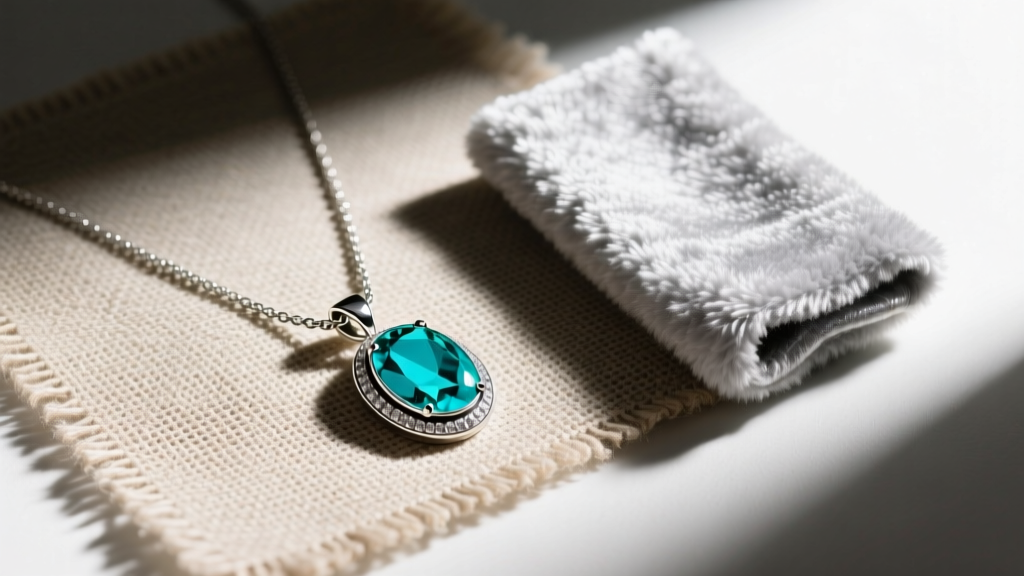
For heavily tarnished silver chains attached to sensitive blue stones, utilize the electrochemical reduction method. Line a glass bowl with aluminum foil (shiny side up), add a tablespoon of baking soda and a pinch of salt, and pour in boiling water. Submerge only the silver chain, keeping the blue stone pendant suspended above the water line. The ion exchange will pull the sulfur off the silver and onto the aluminum foil without a single drop of harsh chemical touching your gemstone. Rinse the chain with distilled water, pat dry, and your necklace is restored to its 2026 glory.


